
Itinerary
London with Kids: A Family Itinerary Built Around a Hop-On Hop-Off Bus
- Routes3
- Stops48
- Shortest loop70M
- Sights8
Plan at a glance: pick one walkable cluster of sights per half-day and let the hop-on hop-off bus do the long hauls between them, so nobody walks further than the youngest can manage. Aim for two or three real stops a day, with the bus as a seat, a snack break and a moving viewpoint rather than a checklist.
London with kids works best when the plan is loose. Children of mixed ages run out of patience at different moments, and a bus that lets you step off at one stop and rejoin later gives you an easy way to adjust. The sections below group sights by what can be walked together, say which suit smaller children and which suit teenagers, and cover the practical side: buggies, snacks, toilets and wet weather.
Sights in this guide


How the bus fits a family day
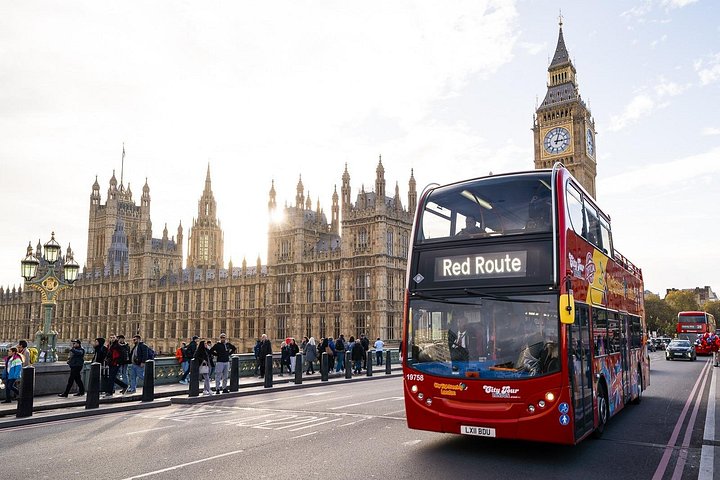
Three routes run in London. The Red Route is the central loop and takes about 2 hours 30 minutes without getting off. The Blue Route is a longer loop of about 3 hours 35 minutes, taking in the South Kensington museums, Kensington Palace and Hyde Park Corner area. The Green Link is a short loop of about 70 minutes around the Euston, King's Cross and St Pancras area, calling at the British Museum.
For a family, the full loop is rarely the point. Children tend to tolerate one ride of 20 to 40 minutes, then need to move. Treat each ride as a hop between clusters, and get off when someone starts to flag instead of waiting for a better stop. Buses on the Red Route run every 15 to 20 minutes and on the Blue Route every 20 minutes, so a missed bus after a toilet stop is a short wait, not a lost afternoon.
Stop numbers differ between the timetable, the route map and the service pages, so go by stop names when you plan. Compare tickets before you travel to see what suits your group.
Three clusters that work on foot
Build each half-day around one group of sights that sit close together, and you spend your energy on the sights rather than on transfers.
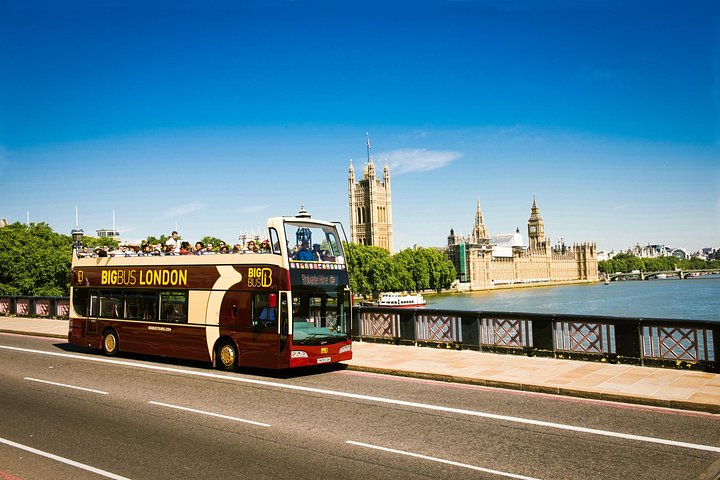
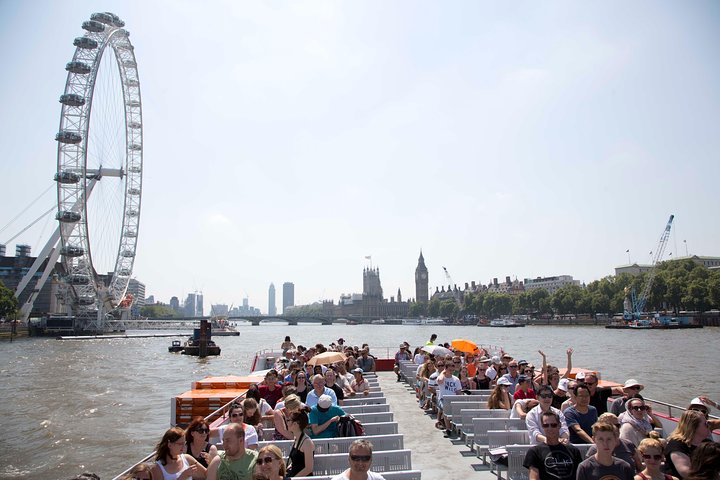
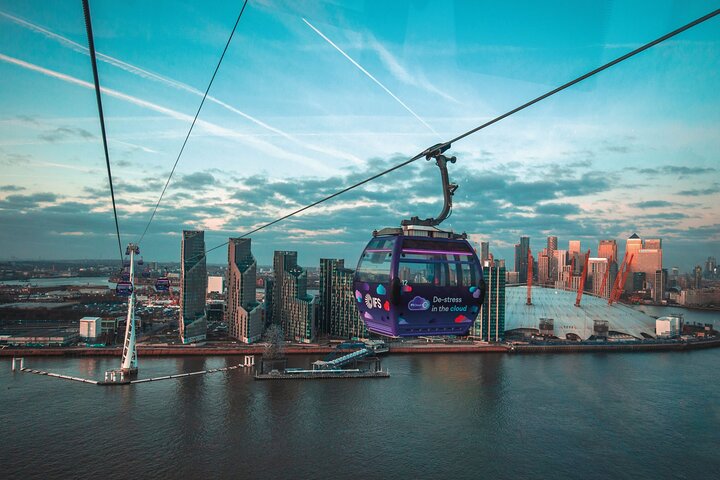
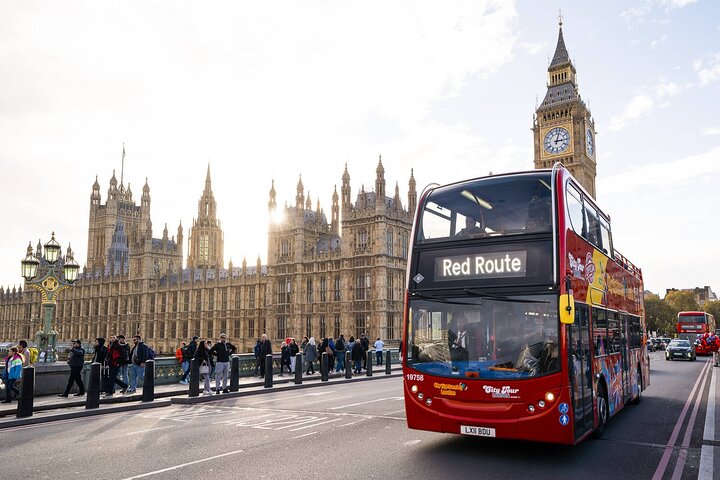
The river and Westminster cluster is the largest: the London Eye, Houses of Parliament and Big Ben, Westminster, Westminster Abbey, Trafalgar Square and the Thames River frontage. The London Eye and Trafalgar Square both have a stop on the Red and Blue routes. For Parliament and Big Ben, the Red Route's Westminster Pier stop is about 150 metres away, and the Abbey is about 400 metres from it. This is the best cluster for a first morning, because much of the interest is outdoors and you can stop whenever a child wants to.
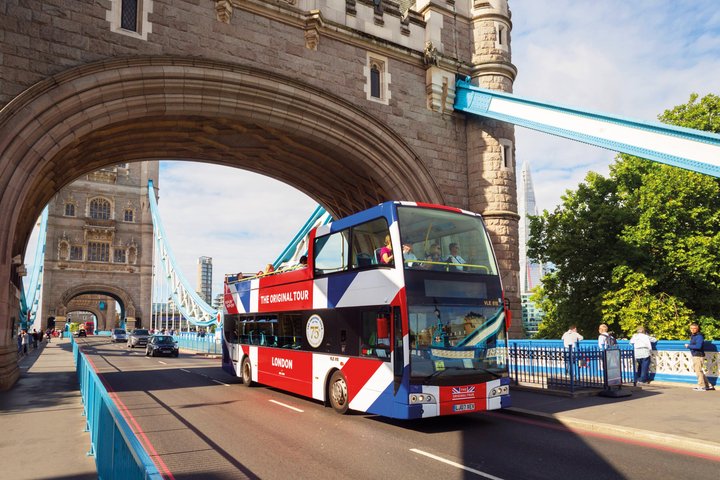
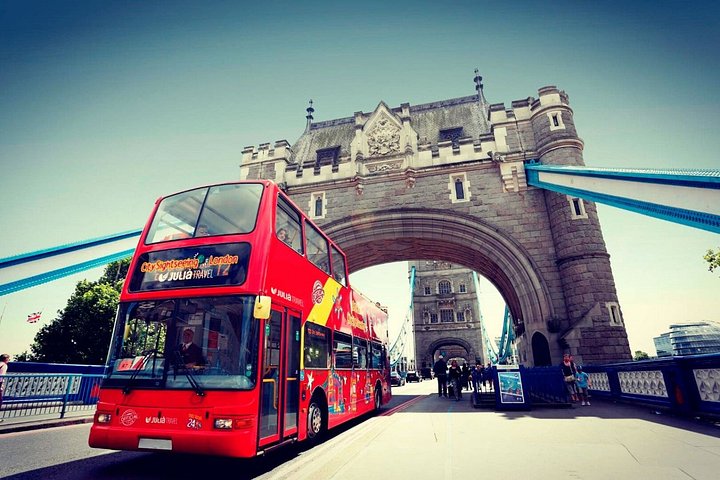
The Tower cluster pairs the Tower of London with Tower Bridge and Borough Market. Both the Red and Blue routes stop at the Tower of London, and Tower Bridge is about 300 metres from that stop. Borough Market is about 400 metres from the London Bridge stop on both routes. That makes it a natural lunch stop.
The palace cluster is the smallest: Buckingham Palace and the Changing of the Guard. The Red Route's Buckingham Palace stop is right at the palace, and the Changing of the Guard is about 100 metres from it. It needs the least walking of the three, so it suits a tired afternoon.
What suits younger children and what suits teenagers
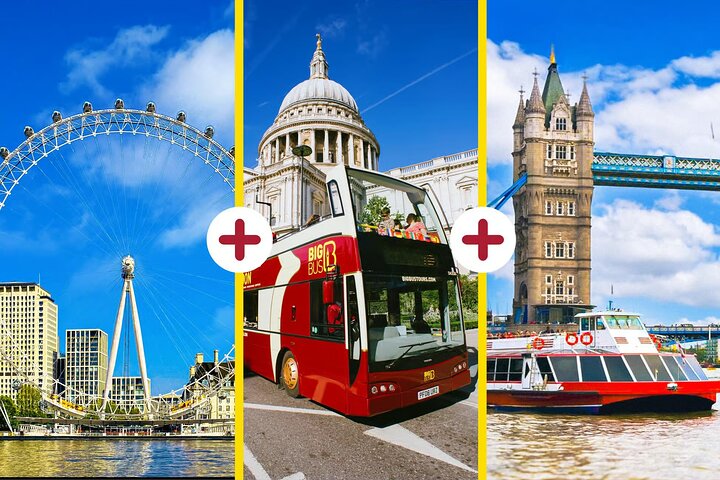
For younger children, favour sights where the experience is visual and the visit can be short. The Tower of London gives them a fortress to explore, and Tower Bridge is easy to appreciate from the outside. The London Eye turns the city into a model, and Buckingham Palace with the Changing of the Guard offers ceremony and noise without needing much explanation. Trafalgar Square is open ground where small legs can wander.
Teenagers usually respond to scale and stories. Houses of Parliament and Big Ben, Westminster Abbey and St Paul's Cathedral give them history they can connect to what they have studied. Borough Market suits a teen who wants to choose their own lunch from many stalls. The Blue Route also reaches the South Kensington museums, a good place for children to get off and rejoin later.
With mixed ages, give each child one choice per day. A seven-year-old picks the ceremony; a fourteen-year-old picks the lunch. It keeps complaints down and the schedule honest.
Open-top deck: when it helps and when it hinders
The upper deck is where children get the view: rooftops, river bridges, guards and landmarks at eye level with the tops of buses and trees. It is also good for the first ride of the day, when everyone is fresh and interested in the passing city.
It is less good when the weather turns or when a small child is tired. Wind on the top deck can feel colder than the forecast suggests, and a sleepy child will not enjoy it. Bring a light layer for everyone, since rain can arrive in any month. Keep the ride short in poor weather. Check the ticket page for the vehicle details you care about, such as cover and seating.
If the sky closes in, switch to indoor sights: St Paul's Cathedral and Westminster Abbey are both indoor visits and sit on or near the routes. The British Museum is the Green Link's named stop and works as a wet-weather half-day on its own.
Buggies, snacks and toilet breaks
Buggies are easier on some days than others. Check accessibility and buggy arrangements on the ticket page before booking, because the details depend on the vehicle and the operator.
Snacks are your pacing tool. Carry water and something dry and filling, and use a seat on the bus as a planned break rather than an emergency. Borough Market is the obvious place for a proper meal, though it gets busy at midday, so go early or late if your children dislike crowds.
Toilets are best planned before you need them. Use them at museums, cafes and larger attractions when you arrive, and again before you get back on the bus. A quick stop every time you step off saves a difficult moment on the move.
A sample day with four stops
Start with the river cluster in the morning while energy is high. Spend your first stop at the London Eye, then walk along the river to Houses of Parliament and Big Ben for the second. If little legs have had enough of walking, the Westminster Pier stop is close by.
For the third stop, head to Buckingham Palace and see the palace and the Changing of the Guard. Keep this one flexible: if the crowd is heavy, watch from the edge and move on.
Finish with the Tower of London in the late afternoon, ending with a look at Tower Bridge, about 300 metres away. If you still have energy, Borough Market is a short walk from there. Do not add a fifth stop; four is plenty with children, and a short day leaves room for a playground or a quiet evening.
Route and stops
- Red Route
- Blue Route
- Green Link
Red Route
Show all 25 stops
Blue Route
Show all 33 stops
Green Link
Show all 10 stops
Hop-on hop-off in London




Questions about London sightseeing
Is a hop-on hop-off bus a good idea for London with kids?
It suits families who want to cut walking between distant sights and give children somewhere to sit and see the city. It is less useful if your plans sit inside one walkable cluster, because you would only ride for a stop or two. Compare tickets to see which options match the days you have.
Which route gets us to the museums with children?
The Blue Route is the one that reaches the South Kensington museums, and the Green Link calls at the British Museum. Both let children get off at a stop near a museum and rejoin later. Pick one museum per day, since both are large enough to tire out young visitors.
How many days do we need for these sights with young children?
Three clusters can be covered in about two relaxed days, with a morning and afternoon for each, or in one long day if your children cope well with busy schedules. Spreading them over three days leaves room for parks and rest. Choose the pace that matches your youngest child, not the sights list.
What if it rains during our London day?
Move to indoor sights such as St Paul's Cathedral, Westminster Abbey or the British Museum, and shorten your time on the top deck. Pack a light layer and a compact waterproof for each child. Check the ticket page for vehicle details.
Can older children go off on their own for a stop?
That is a family decision. A better approach with teenagers is to agree a meeting stop and a time, such as the Tower of London stop or Trafalgar Square. Make sure everyone has a charged phone and the stop name.
Compare hop-on hop-off tours in London