
Itinerary
3 Days in London: A First-Timer's Itinerary
- Routes3
- Stops48
- Shortest loop70M
- Sights8
Plan at a glance: spend day one around Westminster and the river, day two on the royal sights and the City and Tower end of town, and day three on a flexible mix of museums, markets and neighbourhoods. A hop-on hop-off bus links the pieces so you walk the clusters and ride between them.
Three days in London is enough to see the headline sights without sprinting. The trick is to group sights that sit close together, then use the bus for the longer gaps instead of working out the Underground for every hop. Each half-day below is built around a cluster you can cover on foot, with the bus as the connector.
Sights in this guide


Day 1 morning: Westminster and the river
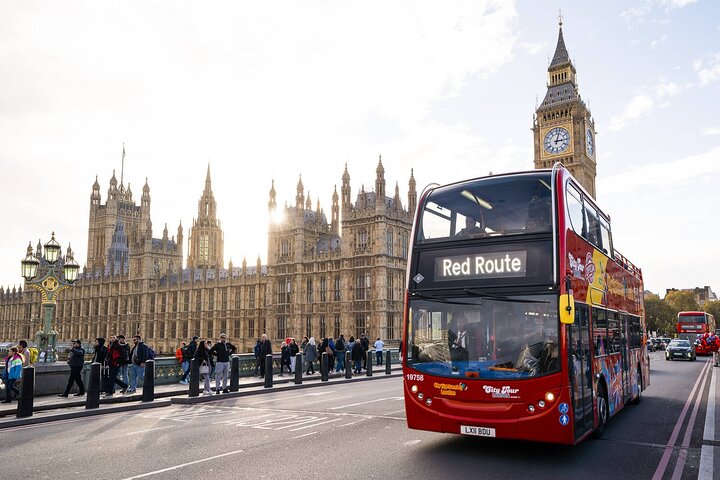
Start where London's political and religious history sits side by side. The Houses of Parliament and Big Ben, Westminster, Westminster Abbey, Trafalgar Square and the Thames riverside are all in one walkable group, so this is the best place to begin and the one cluster you should not split up.
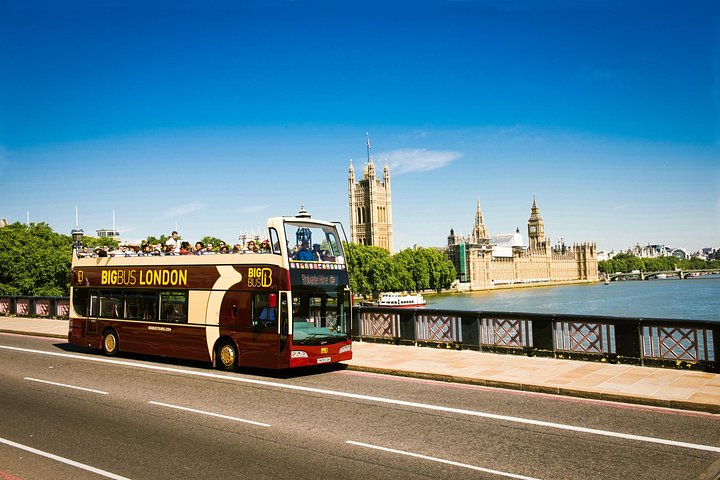
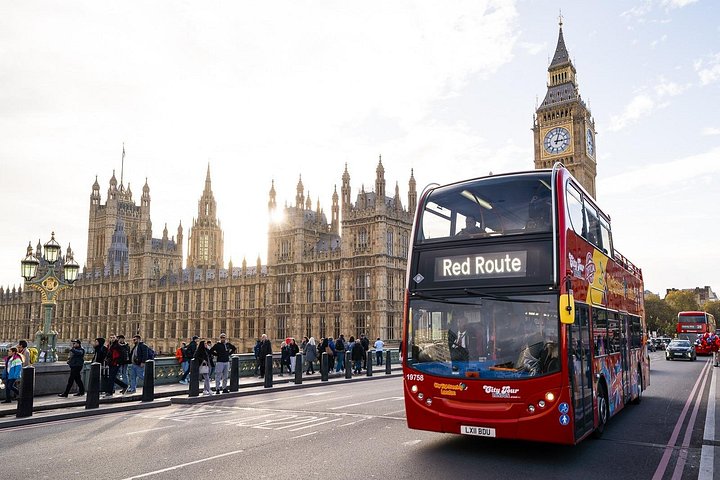
The Red Route calls at Westminster Pier, right at Westminster itself, about 150 metres from the Houses of Parliament and Big Ben and about 400 metres from Westminster Abbey. Get off there and take the first part of the morning on foot: the Parliament frontage and the bridge, then the Abbey. If you want to go inside the Abbey, book ahead and give it a generous slice of the morning, because it rewards slow looking.
After the Abbey, wander toward Trafalgar Square, which the Red and Blue routes both stop at. It makes a natural pause point, with Nelson's Column and the fountains, and it is the kind of place where you can sit for a few minutes and let the morning sink in before lunch.
Day 1 afternoon: London Eye and the South Bank
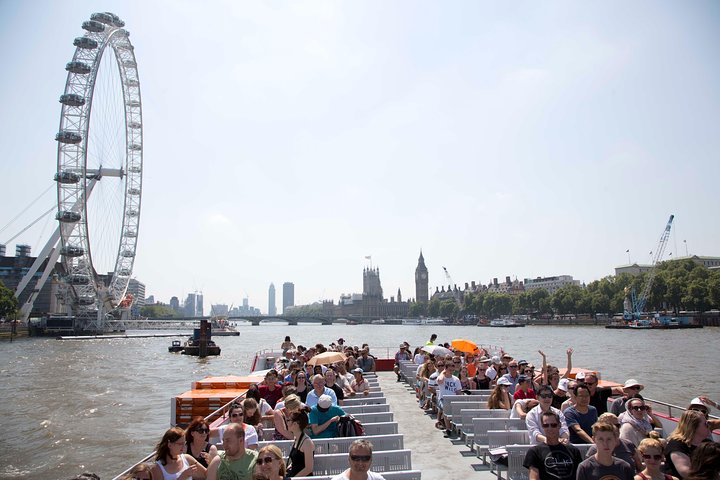
Cross the river for the afternoon. The London Eye is on the same cluster as Westminster, and both the Red and Blue routes have a stop at it, so you can ride there if your legs have had enough of the morning. The wheel is best treated as a slow, seated half-hour that gives you the layout of the city: you will recognise much of what you walked past earlier.
From there, follow the Thames on foot. The river path is the easy part of London walking, flat and busy with street performers, and it gives you a sense of the city that no road can.
Keep the pace loose. One interior (the Abbey or the Eye) plus a long riverside stroll is plenty for a first day, especially if you arrived the day before.
Day 1 evening idea
Stay near the river as the light drops. Parliament and the bridges look quite different after dark, and the South Bank stays lively in the evening. A relaxed dinner nearby and a last walk along the water makes a gentler finish than hunting for a West End table straight away.
Day 2 morning: Buckingham Palace and the Changing of the Guard
Day two begins with the royal London group: Buckingham Palace and the Changing of the Guard. The Red Route has a stop named Buckingham Palace that is right at the palace gates, and the Changing of the Guard is about 100 metres from it.
Arrive early. The ceremony draws a thick crowd along the railings, and a good spot matters more than anything else you can plan. Check the schedule for the day you go, as the ceremony does not happen every day. Once it finishes, the crowd thins quickly and you can walk through St James's Park toward the Mall, one of the most pleasant short walks in the city.
This cluster is small, so do not try to add much else to it. It is a morning for standing, watching and strolling, and for getting your bearings in the royal parks.
Day 2 afternoon: St Paul's, the Tower and Borough Market
The afternoon moves east, and this is where the bus earns its place. The distance from the palace to the City is longer than you want to walk, so take the bus: the Red Route has stops at St Paul's Cathedral and the Tower of London, and the Blue Route also stops at both.
Pick one of the two as your main stop. St Paul's Cathedral is the stop for a climb and a look at one of London's great domes. The Tower of London needs more time than most people expect, so if you want to see the Crown Jewels and the grounds, make it the focus of the afternoon rather than a quick look.
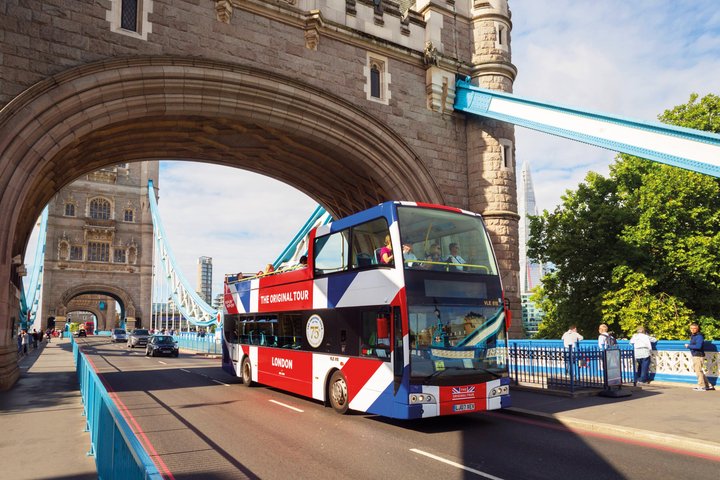
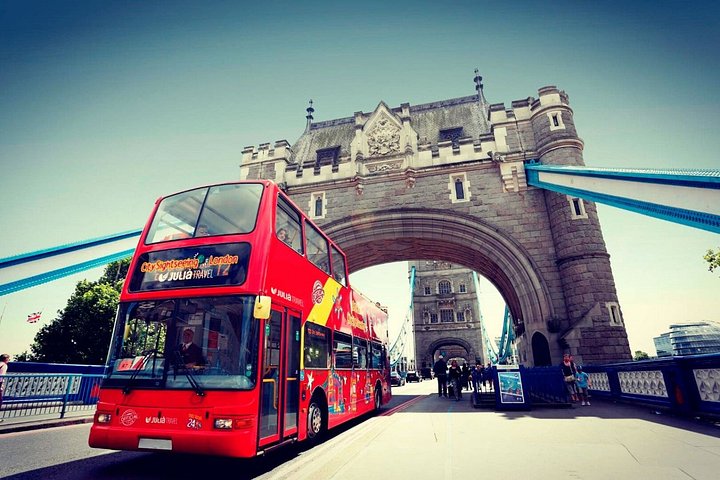
The Tower sits in a compact group with Tower Bridge and Borough Market. Tower Bridge is about 300 metres from the Tower of London stop on both routes, an easy walk for photographs. Borough Market is about 400 metres from the London Bridge stop on both routes, which makes it a good place to end the afternoon with something to eat.
Day 2 evening idea
Head back toward the water for the Thames at dusk, or take a walk across Tower Bridge once the crowds have eased. Borough Market is more of a daytime place, so if you want an evening meal, choose a restaurant in the surrounding streets.
Day 3: museums, neighbourhoods and your own picks
Use the third day for what you personally care about. The British Museum is the strongest option for a morning, and the Green Link, the short loop around the Euston, King's Cross and St Pancras stations area, stops at the British Museum and at Covent Garden. That makes a neat pairing: museum first, then Covent Garden for lunch and an unhurried wander.
If museums are your priority, the Blue Route connects the South Kensington museums, Harrods and Kensington Palace on its wider loop. It is the longest of the three routes, so treat it as a way to reach one or two stops rather than a ride to complete in one sitting.
If you like a gentler pace, a repeat of a favourite area from earlier days is not a waste. Many visitors find that a second, slower visit to the river or a park beats squeezing in another major sight.
Day 3 evening idea
Covent Garden and the West End are the natural finish. The area is full of theatres and restaurants, so a show or a long dinner makes a good final evening. Book a theatre seat early if you want a particular production.
Rainy-day swaps
London rain tends to be passing, so build in a layer and a flexible plan rather than rewriting the trip. Swap the riverside stroll for a museum: the British Museum on day three is an obvious indoor anchor, and the South Kensington museums are another. Westminster Abbey, St Paul's Cathedral and the Tower of London all have substantial indoor sections, so the Day 2 afternoon works in poor weather too.
Save the open-air parts, such as the Changing of the Guard and the river walk, for the drier part of your stay if you can move things around.
Getting the most from the bus
Treat the bus as a flexible pass between clusters, not a fixed tour. You can hop on and off at any stop, so board at whichever stop is nearest your hotel or your first sight rather than travelling to a starting point.
Stop numbers differ between the timetable, route map and service pages, so go by stop names and addresses. Use the first loop for orientation if you arrive with spare time, then switch to hopping on and off for the clusters above. Buses on the Red Route run every 15 to 20 minutes and the Blue Route every 20 minutes, so a short wait is normal and you rarely need to rush for one. The Red Route loop takes about 2 hours 30 minutes, the Blue Route about 3 hours 35 minutes and the Green Link about 1 hour 10 minutes.
Route and stops
- Red Route
- Blue Route
- Green Link
Red Route
Show all 25 stops
Blue Route
Show all 33 stops
Green Link
Show all 10 stops
Hop-on hop-off in London




Questions about London sightseeing
Is 3 days in London enough for a first visit?
Yes, it covers the headline sights at a comfortable pace if you group them by area. You will not see every major museum, so choose one or two that matter most and leave the rest for another trip.
Which route is best for a first-time visitor?
The Red Route is the usual starting point because it links Trafalgar Square, the South Bank, St Paul's, the Tower of London, Westminster and Buckingham Palace. The Blue Route adds the western museums and Kensington Palace, and the Green Link suits a British Museum visit.
Should I do the Changing of the Guard on day one or day two?
Day two works better because Buckingham Palace is its own small cluster and fits a morning on its own. Check the ceremony schedule for your dates, as it does not run every day, and arrive early for a spot near the railings.
Can I skip the bus and walk everything?
The clusters themselves are very walkable, but the gaps between them, such as palace to City, are long. The bus fills those gaps and spares your legs, which matters over three days of sightseeing.
Where should I eat on this itinerary?
Borough Market suits lunch on the City and Tower day, while Covent Garden and the West End suit a relaxed evening. The South Bank is a good option on day one, with plenty of choice along the river.
Compare hop-on hop-off tours in London