
Itinerary
2 Days in London: A Two-Day Itinerary Built Around a Hop-On Hop-Off Bus
- Routes3
- Stops48
- Shortest loop70M
- Sights8
Plan at a glance: spend day one on the river at Westminster and the South Bank, then the Changing of the Guard and Buckingham Palace, and day two in the east with the Tower of London, Tower Bridge and Borough Market, plus St Paul's Cathedral. A hop-on hop-off bus links the clusters so your feet only do the work where walking is the pleasure.
Two days in London is enough to see the headline sights if you resist the urge to see everything. The trick is to treat each half-day as one walkable neighbourhood and let the bus carry you between them. Interiors such as the Tower of London, Westminster Abbey and St Paul's can each absorb a good chunk of time, so the plan below deliberately leaves out the big museums and the outer villages. They deserve a longer stay.
Sights in this guide


Day one morning: Westminster and the river
Start where London's political and royal story is easiest to read. This group is compact: Westminster, the Houses of Parliament and Big Ben, Westminster Abbey, Trafalgar Square, the London Eye and the Thames riverside can all be linked on foot.
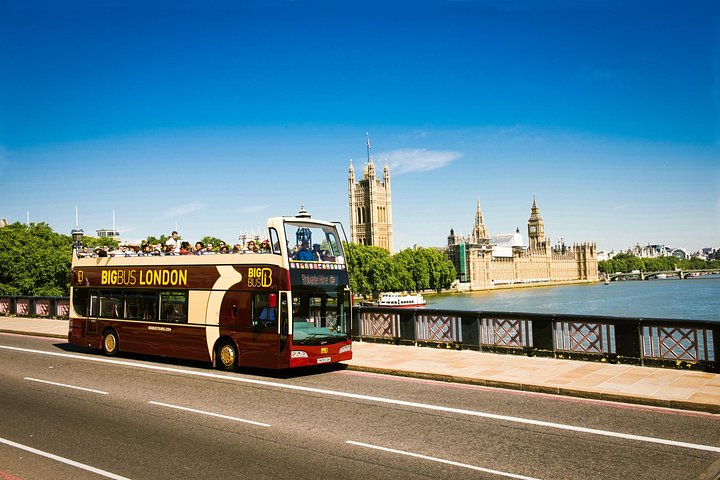
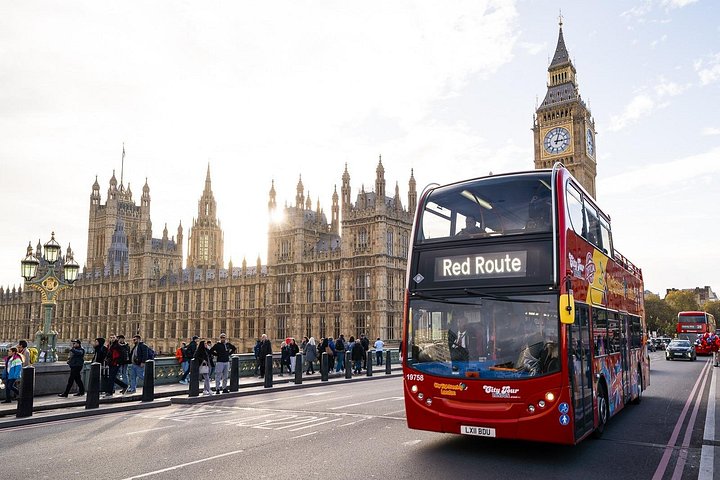
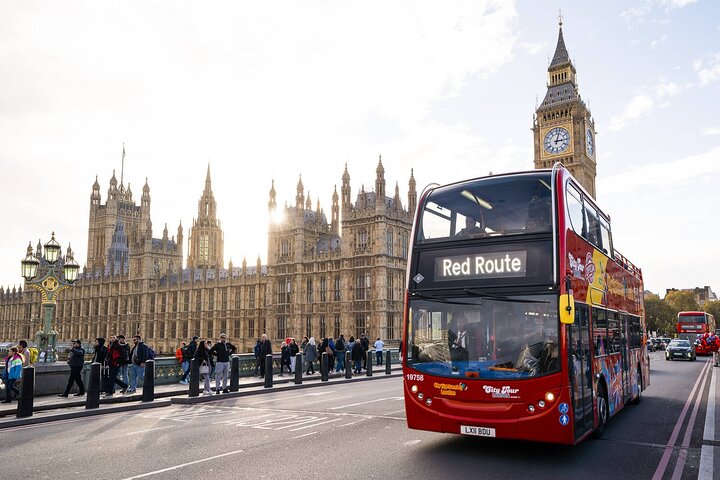
The Red Route stops at Westminster Pier, which is right at Westminster and about 150 metres from the Houses of Parliament and Big Ben. Westminster Abbey is about 400 metres from that same stop. Begin with the view of Parliament and Big Ben from the pavement, then decide whether you want to go inside the Abbey. If you do, treat it as the morning's main event and skip the rest of the indoor options.
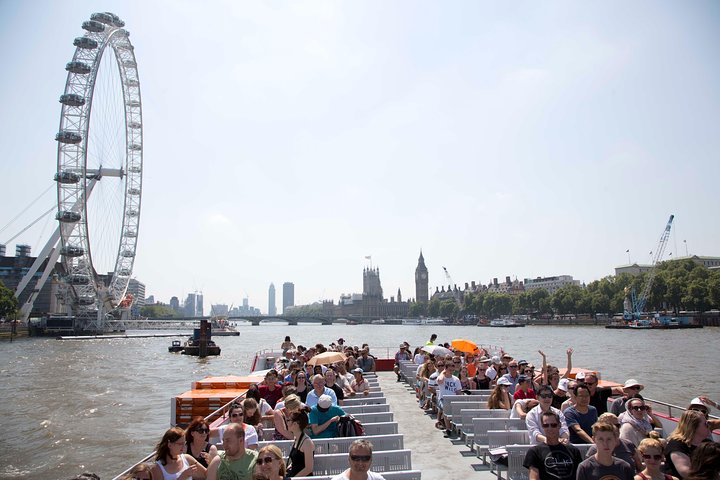
From there the London Eye is the natural next stop. Both the Red and Blue routes have a stop called London Eye, right at the attraction. Walking along the Thames is the better choice when the weather is kind, because the view of Parliament across the water is one of the best in the city.
Keep the pace relaxed. Pick one paid interior at most, and let the rest be exterior views and photographs.
Day one afternoon: Trafalgar Square, the Guard and Buckingham Palace
Move into the second area after a lunch break. Trafalgar Square is served by both the Red and Blue routes, with a stop at the square itself, which makes it an easy place to hop on. It is a good spot to sit, look at the fountains and column, and let your feet rest before the final push.
The last cluster pairs the Changing of the Guard with Buckingham Palace. The Red Route has a Buckingham Palace stop right at the palace, and the Changing of the Guard is about 100 metres from it. Ceremonies draw large crowds, so arrive early enough to find a spot along the railings, and check the schedule for the day before you plan around it.
This is where the bus earns its keep. After a day on your feet, taking the bus to the palace, with the open top deck if the weather allows, is a gentler way to cover the distance than another long walk.
Day one evening idea
Keep the evening easy. A river walk near the London Eye is atmospheric as the light changes, and the South Bank is lively after dark, with plenty of places to eat. In summer the long evenings leave extra daylight, and Shakespeare at the Globe is a memorable option if the season allows. In winter, a West End show around Covent Garden and Soho suits the darker months. Book theatre ahead for popular shows.
Day two morning: Tower of London, Tower Bridge and Borough Market
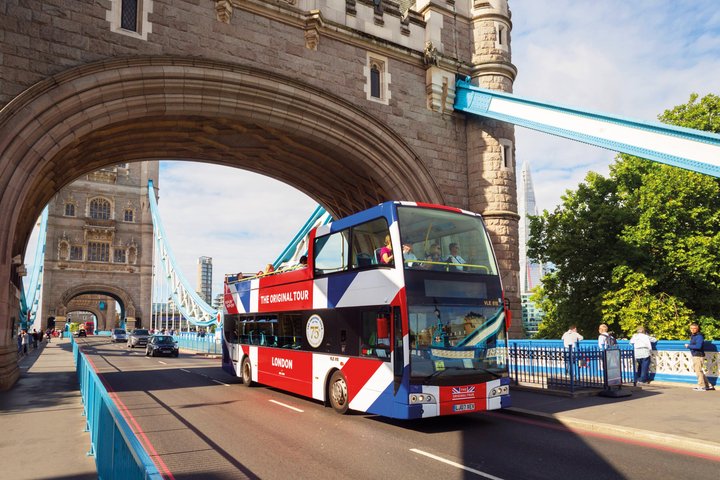
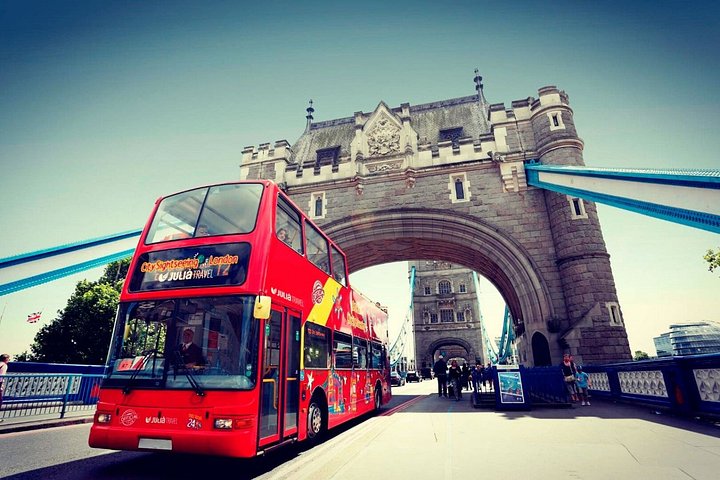
Spend the second morning in the east. The Tower of London, Tower Bridge and Borough Market form a walkable group, and the Tower of London stop is served by both the Red and Blue routes, right at the Tower. Tower Bridge is about 300 metres from that stop.
Do the Tower first, since it is the sight most likely to have queues and the one that rewards unhurried time, with the Crown Jewels and centuries of history to explore. Then walk to Tower Bridge for photographs from the approach and the riverside.
Finish at Borough Market for a food-led break. The Red and Blue routes both have a London Bridge stop about 400 metres from the market, which makes it simple to rejoin the bus afterwards. Arriving hungry works better than eating beforehand, because the stalls are the main attraction.
Day two afternoon: St Paul's and a last loop
St Paul's Cathedral is on both the Red and Blue routes, with a stop directly at the cathedral, so it slots in without any planning gymnastics. It sits between the eastern cluster and the rest of the centre, which makes it a good bridge for the final afternoon.
Go inside if you enjoy architecture and views, or admire the dome from the outside and use the free time for a slower ride. If you have energy left, use the bus as a farewell loop rather than a sprint, watching the West End and the river go by from the top deck. Re-visit anything from day one that you liked, such as Trafalgar Square, simply by hopping off at its stop.
Rainy-day swaps
London weather can turn in any month, so carry a light layer and keep a plan B. If the forecast is poor, swap the outdoor-heavy parts for interiors: Westminster Abbey, St Paul's Cathedral and the Tower of London all keep you under cover for long stretches. Move the river walks and Buckingham Palace railings to whichever dry window appears. Borough Market also has covered areas, which makes it a sensible wet-weather lunch.
If the rain is heavy, shorten the walking and use the bus mainly as a connector between indoor stops.
Getting the most from the bus
The hop-on hop-off format works best when you treat it as transport, not a tour you must finish. Board at the stop nearest your hotel or first sight rather than travelling to a starting point. Red Route buses run every 15 to 20 minutes and Blue Route buses every 20 minutes, so a missed bus costs little, but do not plan tight connections.
The Red Route loop takes about 2 hours 30 minutes, and the Blue Route takes about 3 hours 35 minutes. You will probably ride only parts of each. Stop numbers can differ between the timetable, route map and service pages, so rely on stop names when planning.
The Green Link is a short loop of about 70 minutes around Euston, King's Cross and St Pancras, calling at the British Museum. It is useful only if a museum visit is high on your list, as it sits outside this itinerary.
Route and stops
- Red Route
- Blue Route
- Green Link
Red Route
Show all 25 stops
Blue Route
Show all 33 stops
Green Link
Show all 10 stops
Hop-on hop-off in London




Questions about London sightseeing
Is 2 days in London enough for a first visit?
It is enough for the main landmarks if you group them by area and accept that the big museums will have to wait. This plan covers the river, the royal sights and the Tower area at a steady pace. A third day would add a museum or a village such as Notting Hill or Greenwich.
Should I buy a hop-on hop-off ticket for both days?
The plan uses the bus on both days, since the three clusters are spread across the centre and the east. It helps most between areas and when your legs are tired, not within a cluster. Compare ticket options on the ticket page to see what suits two days of riding.
Which sights are worth booking ahead?
The Tower of London, Westminster Abbey and St Paul's Cathedral are the ones most likely to have queues, and a London Eye flight is worth booking ahead in busy months. Theatre tickets for the evening are best secured early. Buckingham Palace railings and Trafalgar Square need no planning.
Can I swap the days around?
Yes, the two days are independent. Put the east first if the weather is better for the Tower and Tower Bridge, and keep Westminster and the palace for a drier moment. Just keep each walking cluster together within a half-day.
Which is better for London sightseeing: the bus or a walking tour?
A walking tour gives you a guide and detail in one neighbourhood, usually in a couple of hours. The bus covers more ground and lets you choose your own stops. This itinerary uses the bus to connect areas and your own feet inside them, which combines both advantages.
Compare hop-on hop-off tours in London