Porto Paseo in Yacht with Harmonization Chocolate and Porto Wine
Descriptions come from the operator and are translated automatically.
- 2 hours
- Free cancellation up to 24h before
- 3 languages
- Instant confirmation
Highlights
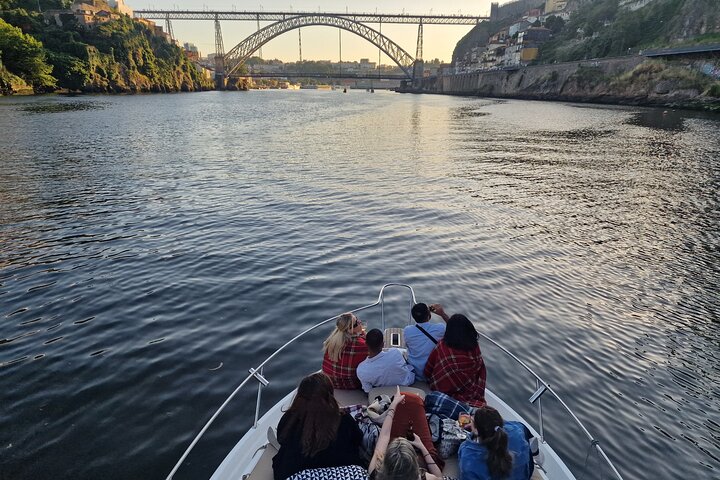
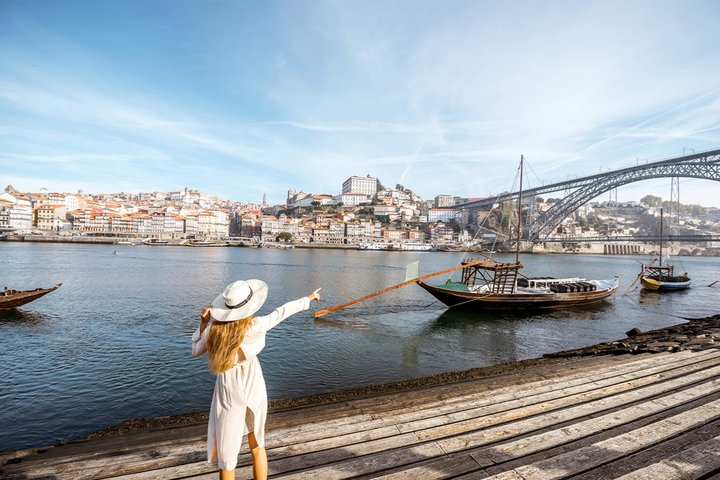
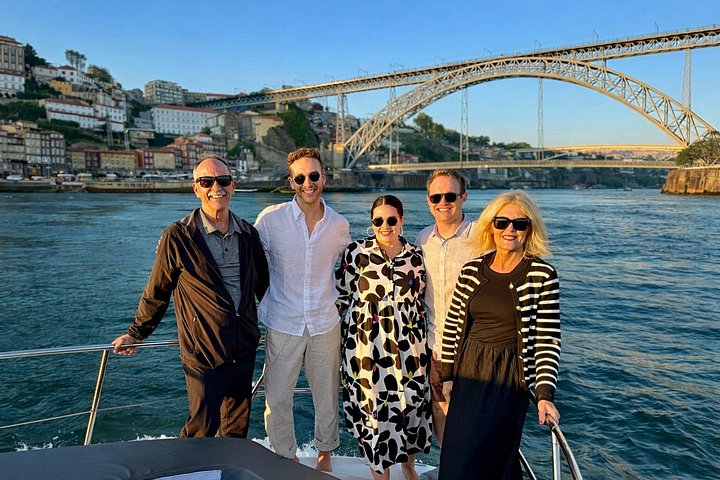
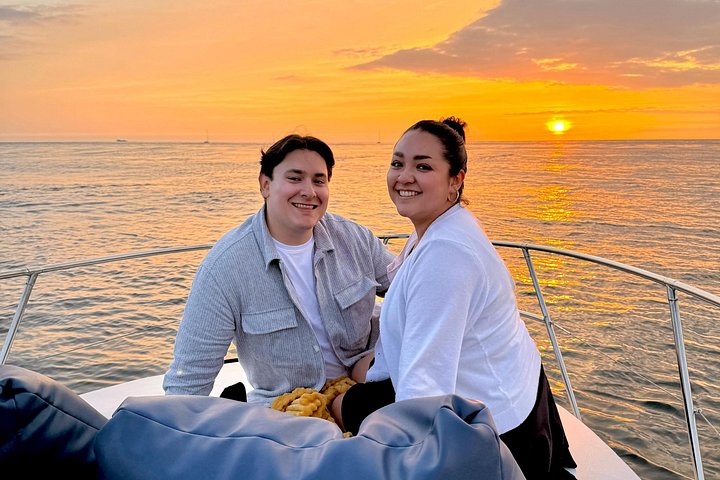
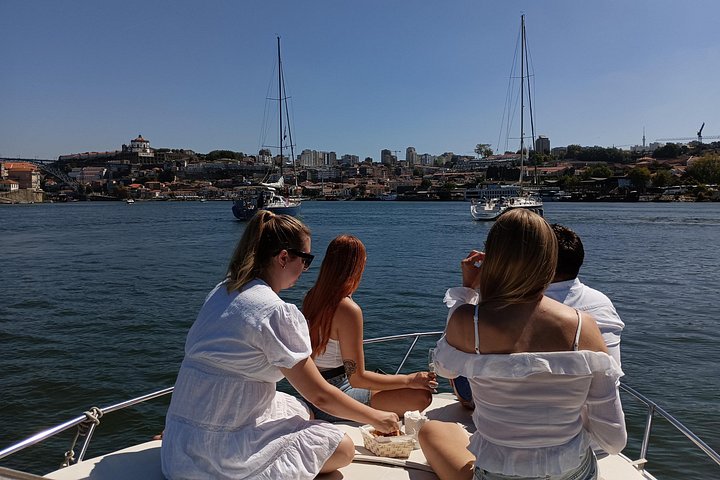
Experience Porto from the water on a cruise along the Douro River, overlooking the iconic bridges of the city. A unique experience of tasting artisanal chocolate and Porto wine. Cruise the river Douro and admire the iconic bridges and historic banks of the city with a unique perspective, with a passage through Ribeira and its UNESCO-protected heritage, the famous wine caves of Porto, the Rabelos boats, the picturesque fishing Villa of Afurada and the foz where the River Douro and the Atlantic Ocean meet. This 2-hour cruise offers unique views of the magnificent city of Porto, the taste of craft chocolate and Porto wine, with a detailed historical explanation of the monuments seen on board.
Inclusions
What's included
- All Fees and Taxes
Itinerary
The D. Maria Pia Bridge is a railway infrastructure that transported the North Line over the Douro River, between the towns of Porto and Vila Nova de Gaia, in northern Portugal. It was inaugurated on 4 November 1877 and closed on 24 June 1991 and was replaced by the St. John Bridge. It is considered, along with the Viaduct of Garabit, as the greatest masterpieces executed by engineer Gustave Eiffel. At the time of its inauguration, it was the bridge with the largest iron bow in the world. It has been classified as a National Monument since 1982.
The D. Louis I Bridge (or Luiz I Bridge, in the original graph in it), is a bridge in metal structure with two boards, built between 1881 and 1886, connecting the cities of Porto and Vila Nova de Gaia (northern and southern bank, respectively) separated by the river Douro, in Portugal. This construction came to replace the old pencil bridge that existed in the same place and was carried out through the project of the Belgian engineer Théophile Seyrig, who had previously collaborated with Gustave Eiffel in the construction of the D. Maria Pia Bridge, a railway plant. The bridge was inaugurated in 1886 (upper board) and 1888 (inferior board and entrance in full operation). The D. Louis I Bridge has been classified as a Public Interest Real Estate since 1982 and as a UNESCO World Heritage Site since 1996.
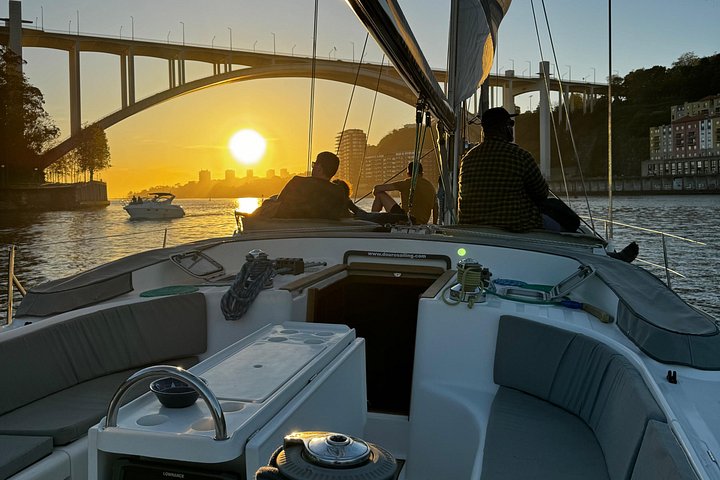
The Arrábida Bridge is a bridge over the Douro River that connects Porto with Vila Nova de Gaia in Portugal. Since the 1930s it was necessary to create alternative connections to the old bridges (bridges D. Maria Pia and D. Louis) in order to respond to the growing flow of road traffic. At the time of its construction in 1963, the bridge had the largest armed concrete bow of any bridge in the world. The total length of the platform is 614,6m, having a width of 26.5m. Its 270 m, and 52 m of arrow, this bow consists of two paralel hollow ribs, 8 m wide linked to each other by longitudinal and transversal contraventation. It had two rolling tracks and two side tracks for pedestrians and cyclists. In the 1990s the number of road lanes was changed.
The River Douro (in Castilian: Duero) is a river that springs from the peaks of the Serra de Urbión, in the Spanish province of Soria, at 2,160 m altitude, and crossing northern Portugal to its foothills near the towns of Porto and Vila Nova de Gaia. It is the third largest river on the Iberian peninsula. It has a length of 897 km, 572 km in Spanish soil, 213 km navigable in Portuguese territory and 112 km of international character, because its course is border. This last stretch, in which the river narrows and its bed deepens, is known as the arribas. Its shores were protected with the creation of the Douro International Natural Parks in Portugal and the Arribas do Douro Natural Parks in Spain. On December 14, 2001, UNESCO included the Vinhateira Region of the High Douro (45°68' N, 5°93' W) in the list of sites that are a World Heritage Site, in the category of cultural landscape.
It is the city that gave the name to Portugal — from very early (c. 200 a.C.), when it was designated Portus Cale, and later became the capital of the Portuguese County, from which Portugal was formed. It is also a city known worldwide for its wine, its bridges and its contemporary and ancient architecture, its historic centre, classified as a World Heritage Site by UNESCO, the quality of its restaurants and its gastronomy. Porto, together with the neighboring municipalities of Vila Nova de Gaia and Matosinhos, form the Atlantic Front of Porto, located on the coastline, delimited, to the west, by the Atlantic Ocean, with the structural influence of the Estuary of the River Douro.
Ribeira is one of the oldest and most typical sites DA Porto in Portugal. Located in the parish DE São Nicolau, by the River Douro, it is part of the Historic Center of Porto, a World Heritage Site DA UNESCO. It is currently a very frequented area POR tourists and a place DE concentration DE bars and restaurants.
Cancellation
Free cancellation up to 24 hours before the experience starts, for a full refund.
Know before you go
- Meeting point
- Marina do Freixo - Entrance to the Cais das Embarcações
- Pickup
- Everyone meets at the starting point; there is no pickup.
- Ticket type
- Mobile or paper ticket accepted
- Group size
- Up to 10 travellers
- Operated by
- Douro Charter
- Service animals allowed
- Public transportation options are available nearby
- Infants and small children can ride in a pram or stroller
- Wheelchair accessible
- Suitable for all physical fitness levels
How it compares in Porto
- Its from-price is 69% below the median of the 340 food tours we list in Porto.
- It is shorter than most of them.
- The operator lists free cancellation on it.
About Porto
Porto tumbles down steep hills to the Douro River, a granite city of tiled churches, riverside cellars and port wine aged across the water.
The Ribeira district lines the riverbank with colourful houses, cafés and boats, part of a UNESCO-listed old centre beneath the iron arches of the Dom Luís I Bridge. Above it, the São Bento station hall is covered in blue-and-white azulejo tiles, the Clérigos Tower rises above the rooftops, and the Sé cathedral stands on its hill.
Top-ranked sights in Porto: Clérigos Church and Tower (Torre & Igreja dos Clérigos), Dom Luis Bridge (Ponte de Dom Luis I), Porto Cathedral (Sé Catedral do Porto).
Special offers in Porto
Was/now prices come from the operator, never from us.
Similar experiences
 10% offFree cancellation


Hop-on hop-off in Porto
 Likely to sell outFree cancellation
