Introduction to Barcelona's Old Town Gothic Quarter Walking Tour
- 2h 35m
- Free cancellation up to 24h before
- Guided in English
- Instant confirmation
Highlights
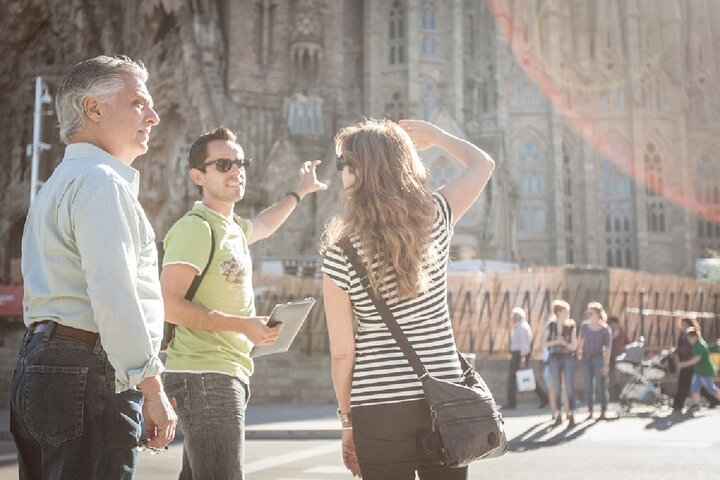
This tour isn’t just about seeing the sights – it’s about understanding the city. We bring 2,000 years of Barcelona’s history to life with engaging stories, local legends, and sharp insights that connect the past to the present. You'll explore both hidden corners, iconic landmarks, and the real heart of the Gothic Quarter – led by a passionate, personable local who knows the streets like the back of their hand. With group sizes kept small, we create space for questions, conversation, and a truly personal connection. Whether you’re here for a day or a week, you’ll leave with a deeper understanding of Catalan culture, practical tips for your visit, and plenty of memorable moments. We don’t use scripts or umbrellas – just thoughtful storytelling, humour, and genuine love for this city. If you’re looking for something beyond the basics, this is the tour you’ve been hoping for.
Inclusions
What's included
- Small-group experience of max 10 adults for a more personal and relaxed atmosphere
- Ideal introduction to the city for first-timers and curious return visitors
- Personalized post-tour tips on where to eat, explore, and experience more
- Local advice on what to avoid and how to skip the tourist traps with confidence
- Expert local host with deep knowledge of Barcelona’s history and culture
What's not
- Food and drinks (though you’ll get great local recommendations!)
- Transportation to and from the meeting point
- Personal purchases along the route (souvenirs, snacks, etc.)
- Gratuities (always appreciated, never expected)
- Admission fees are not included, as we typically do not enter buildings that require a fee for entry.
Itinerary
What sets this tour apart, earning it over 2,500 glowing five-star reviews on other platforms, is that it goes beyond mere sightseeing. It's about immersing yourself in the vibrant culture of Barcelona and Catalonia. We don't offer a cookie-cutter itinerary; instead, we tailor each tour based on your interests, the time of year, day of the week, and even the weather.
Our Meeting Point is Edifici de Correus | Most people walk past this building without a second glance – but it’s a beauty hiding in plain sight. Built in the early 20th century, the Edifici de Correus (Old Town Post Office) is a fine example of Spanish eclectic architecture, mixing classical columns with ornate sculptural details. It was designed to impress, and it still does, especially once you notice the carved eagles, symbolic crests, and grand staircases. The four massive columns on the eastern façade mark the perfect meeting point – calm, central, and easy to spot. While it’s still a functioning post office, for us it’s also a symbolic gateway: this is where the tour begins, where we step out of the present and into 2,000 years of Barcelona’s past. It’s the first of many buildings that has more to say than meets the eye.
El Cap de Barcelona | You can’t miss this one – a massive, colorful head standing cheerfully near the port. Designed by American pop artist Roy Lichtenstein for the 1992 Olympics, El Cap (The Head) was his tribute to Barcelona and to Spanish modernism, especially Miró and Picasso. It’s made of concrete and covered in ceramic mosaic, a nod to the city’s love affair with tilework. The face is abstract – cartoonish red lips, a squiggly blue line for hair – and deliberately playful. While it’s often debated whether this kind of art fits with the city's older styles, it’s a reminder that Barcelona didn’t freeze in time. It embraced the modern, the bold, and the occasionally weird. Love it or not, it marks a turning point – when the city turned outward again, reintroducing itself to the world with color and confidence.
Santa Maria del Mar | This Gothic basilica is one of Barcelona’s most beloved churches – and one of its most honest. Built between 1329 and 1383, it was funded not by royalty or bishops but by local merchants, sailors, and stonemasons. That community spirit is still visible in the clean, soaring interior and the carved figures of porters on the entrance – a nod to the men who carried the stones from Montjuïc. From the outside, its solid, fortress-like appearance is a reminder that faith here was as much about protection as devotion. The name means “Saint Mary of the Sea,” and for centuries, this was the spiritual anchor for those whose lives depended on the Mediterranean. While we admire it from the outside, the story is unforgettable: a church built by the people, for the people – and somehow still standing, despite earthquakes, fires, and war.
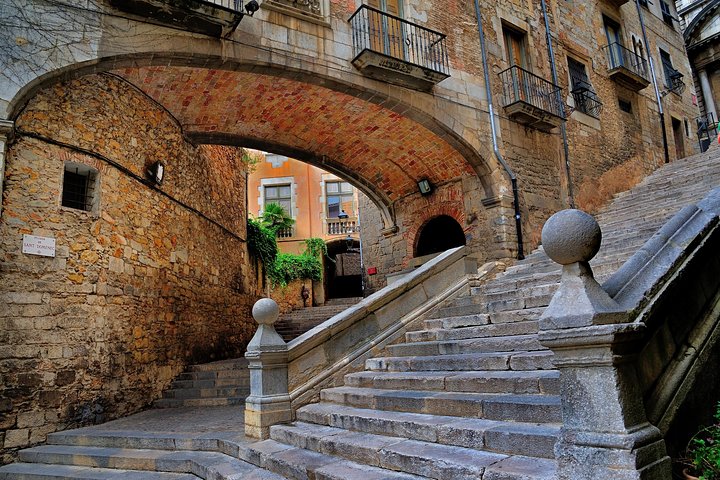
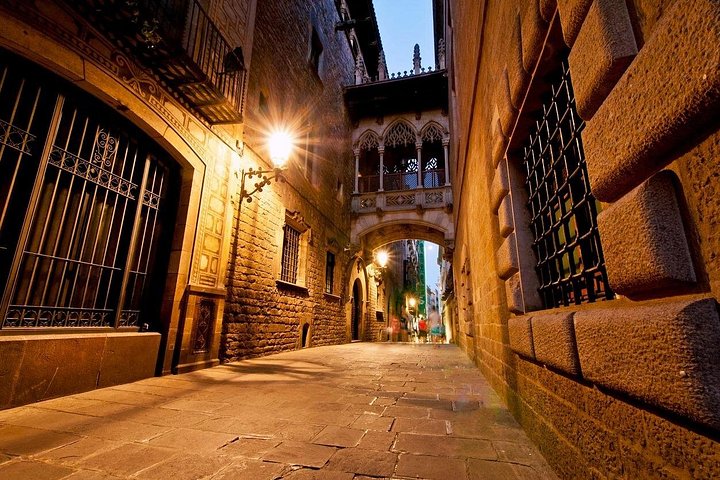
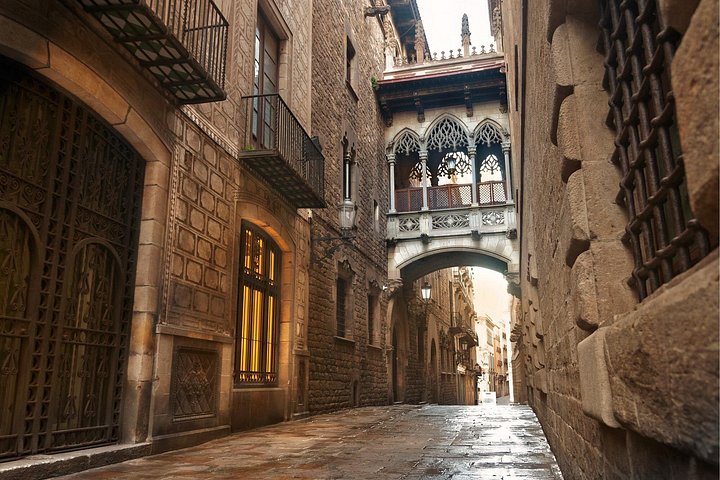
El Pont del Bisbe | This elegant neo-Gothic bridge looks like it’s been here since the Middle Ages—but it’s actually a 20th-century invention. Built in 1928 to connect two government buildings over Carrer del Bisbe, the bridge was part of a larger effort to “medievalize” the Gothic Quarter during a wave of romantic restoration. Designed by architect Joan Rubió i Bellver, a disciple of Gaudí, it’s beloved by visitors and locals alike for its intricate stonework and photogenic charm. But it comes with a dark twist: beneath the bridge, carved into the underside, you’ll find a skull pierced by a dagger. Some say removing it would bring disaster to the city. Truth or not, it adds a satisfying bit of Gothic flair to this already theatrical street. Like much of Barcelona, it’s part history, part storytelling – and all in stone.
Casa de l’Ardiaca | Tucked right beside the cathedral, this elegant little building looks like a quiet side note – but it’s full of layers. Originally a Roman house, later a medieval archdeacon’s residence, it now hosts the city’s historical archive. The inner courtyard is peaceful and photogenic, with a fountain, palm tree, and a few Gothic flourishes that feel straight out of a film set. But the most curious detail is the modernist mailbox on the outer wall. Designed in 1902 by Domènech i Montaner (yes, the same guy behind Palau de la Música), it features birds, ivy, and… a turtle. Why? It’s a subtle protest: the turtle represents how slowly bureaucracy moves. A century later, the joke still holds up. This is Barcelona: history, art, and civic sarcasm – all on one wall.
Ajuntament de Barcelona | Facing the Palau de la Generalitat across Plaça de Sant Jaume, City Hall represents the other side of Barcelona’s power structure – the municipal government. The building’s façade is neoclassical, all symmetry and stone confidence, but behind it lies a complex blend of architectural styles, including Gothic halls and modern additions. The city’s coat of arms – with the cross of Saint George and the crown of the Aragonese kings – appears over the entrance, and the two large flags flying above often say a lot about the political mood of the moment. Like much of Barcelona, this building is more than it appears: it’s a layered reflection of civic pride, resistance, negotiation, and no shortage of drama. We don’t go inside, but standing here puts you face to face with where Barcelona governs itself – and where many of its biggest celebrations and protests play out.
Casa Padellàs | At first glance, this looks like just another handsome medieval mansion – and it is, sort of. But its story is pure Barcelona. Originally built in the 15th century, Casa Padellàs was dismantled stone by stone in the 1930s and moved here from a few blocks away to save it from demolition. Today it houses part of the MUHBA (Barcelona’s History Museum), but even from the outside it offers a glimpse into the life of the city’s former elite. Think stone balconies, inner courtyards, and a door that once said “wealth lives here.” More importantly, it sits atop a vast underground archaeological site – the ruins of Roman Barcino. Though we don’t visit the museum on this tour, Casa Padellàs reminds us that in Barcelona, the past isn’t just preserved – it’s actively rearranged when necessary. Even the buildings move to keep the story going.
Palau de la Generalitat | This isn’t just another grand old building – it’s the political heart of Catalonia. The Palau de la Generalitat has been the seat of Catalan government for over 600 years, one of the few in Europe to have maintained its function through so many twists of history. The façade on Plaça de Sant Jaume is Renaissance in style, calm and balanced, while the interior (not open to the public except on rare days) holds a rich mix of Gothic and Baroque. Look closely and you’ll spot Saint George – the dragon-slaying patron of Catalonia – standing proudly above the entrance. He’s everywhere in this city, but this is one of his most symbolic perches. The building faces the Ajuntament (City Hall), which represents the local city council. Together, the two create a perfect visual metaphor: city and region, side by side, sometimes in agreement… sometimes not. Welcome to Catalonia.
Aqüeducte Romà | You won’t find dramatic arches stretching across the skyline here – what remains of Barcelona’s Roman aqueduct is modest, hidden in plain sight, and incredibly easy to miss. Which makes it all the more satisfying when you spot it. Built nearly 2,000 years ago to supply water to the Roman city of Barcino, this aqueduct once brought fresh water from the Collserola hills into the city walls. Today, a short reconstructed stretch appears near the old city entrance at Plaça Nova, arching toward a modern building like it forgot the city changed around it. While the full structure is long gone, these few remaining stones still tell a bigger story – of Roman engineering, infrastructure, and the invisible systems that kept ancient urban life running. Blink and you’ll miss it. But once you see it, it’s hard to unsee.
Font dels Senyors | Tucked quietly into the side of a building near the Plaça del Rei, the Font dels Senyors – or “Fountain of the Lords” – is easy to miss and easy to underestimate. But this little Gothic fountain offers a rare glimpse into the everyday life of medieval Barcelona. Originally part of the water system that fed noble residences, it’s one of the few public fountains from that era still in place. The stonework is simple, but look closely and you’ll see signs of wear – grooves from centuries of use, and perhaps even the echo of a long-vanished coat of arms. It’s not grand, but it’s deeply human. In a city filled with palaces, cathedrals, and monuments, this humble fountain reminds us that water was once a daily ritual, and that even lords had to line up sometimes.
Els Tres Frisos de la Mediterrània | Facing the cathedral from across Plaça Nova, these three large concrete friezes are some of the boldest public artworks in Barcelona – and some of the most controversial. Designed by Pablo Picasso and carved by Carl Nesjar in the 1960s, they adorn the walls of the Architects’ Association building and depict playful Mediterranean themes: children, mythological creatures, and everyday life. The figures were sandblasted into raw concrete, giving them a rough, sketch-like appearance. At the time, the mix of brutalist architecture and Picasso’s wild lines shocked many. Some still don’t love them. But that’s kind of the point. In a city of carefully preserved heritage, this piece refuses to blend in. It’s a reminder that Barcelona doesn’t just celebrate its past – it also dares to provoke, even from the steps of the cathedral.
Cancellation
Free cancellation up to 24 hours before the experience starts, for a full refund.
Reviews
5.0
- 598
- 41
- 30
- 20
- 10
Ratings come from 99 reviews collected by our booking partner. They are travellers' own words, in the order they were written — never reordered to flatter the experience.
Know before you go
- Meeting point
- We will meet at Plaça de Correus, outside the Old Town Post Office (Edifici de Correos y Telégrafos). Look for me by the grand staircase with four imposing columns on the main façade. I don’t carry signs, flags, or umbrellas – just a warm smile and a friendly, relaxed vibe.
- Pickup
- Everyone meets at the starting point; there is no pickup.
- Ticket type
- Mobile or paper ticket accepted
- Group size
- Up to 10 travellers
- Operated by
- myBCN – Local Barcelona Experts & Storytellers
- Wheelchair accessible
- Infants and small children can ride in a pram or stroller
- Service animals allowed
- Public transportation options are available nearby
- Transportation options are wheelchair accessible
- All areas and surfaces are wheelchair accessible
- Suitable for all physical fitness levels
- Admission fees are not included, as we typically do not enter buildings that require a fee for entry.
How it compares in Barcelona
- Its from-price is 62% below the median of the 3008 experiences we list in Barcelona.
- Its length is typical for the group.
- By number of reviews it ranks 377 of 3008.
- The operator lists free cancellation on it.
About Barcelona
Barcelona sets Gaudí's fantastical buildings and a medieval Gothic Quarter between Mediterranean beaches and green hills, with food and nightlife to match.
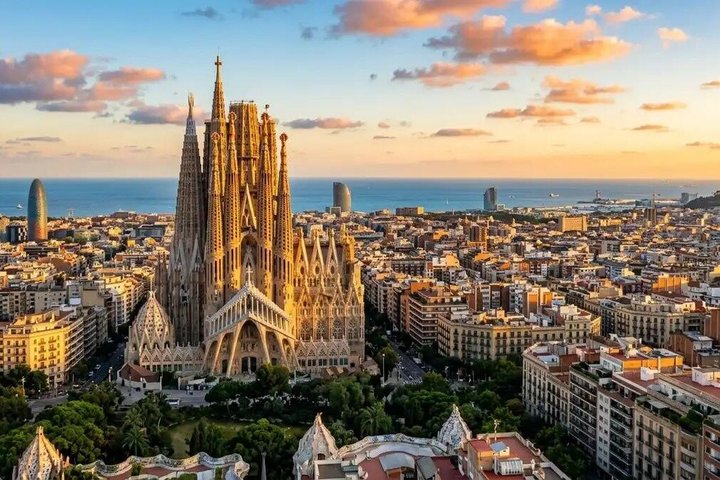
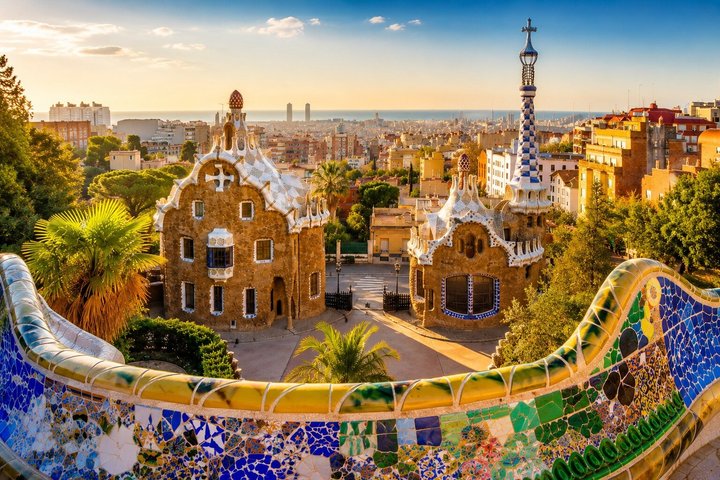
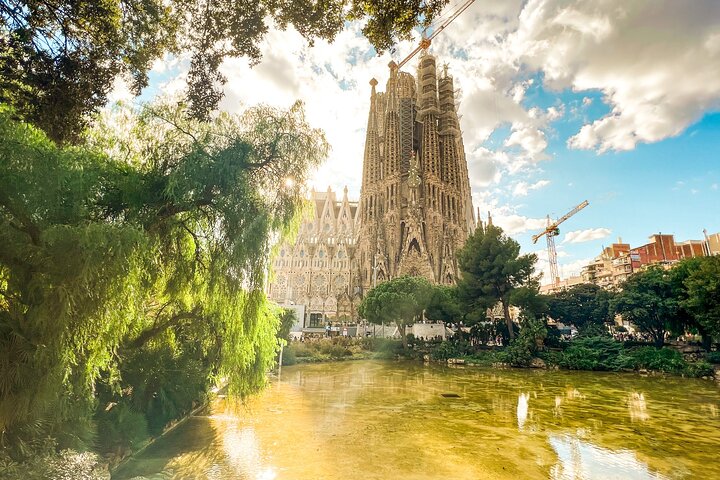
Antoni Gaudí's work defines the city's image. The Sagrada Família rises over the Eixample, Casa Batlló and Casa Milà line the elegant Passeig de Gràcia, and Park Güell's mosaic terraces look out over the rooftops. The Gothic Quarter keeps its cathedral, narrow lanes and hidden squares, and El Born adds the Picasso Museum and the soaring church of Santa Maria del Mar.
Top-ranked sights in Barcelona: Sagrada Família, Montserrat Mountain, Gothic Quarter (Barri Gòtic).
Special offers in Barcelona
Was/now prices come from the operator, never from us.


Similar experiences
![Park Guell and Sagrada Familia Tour with Skip the Line Tickets]() Free cancellationSkip the line