Ho Chi Minh Most Historical Spots & War Museum Tour (Private & All-Inclusive)
- 6–7 hours
- Free cancellation up to 24h before
- Guided in English
- Instant confirmation
Highlights
Our Ho Chi Minh Most Historical Spots & War Museum Tour will give you a full day of history and education regarding Vietnam as you visit various historical spots in Ho Chi Minh City. If you want to experience another side of Vietnam and learn more about this beautiful country then this is the perfect tour for you. The morning will start with a private pickup directly from your hotel by one of our friendly, English speaking guides. From there your tour will begin as you start your drive in one of our comfortable, spacious and air-conditioned vehicles. ==== Tour Schedule 9:00 AM – Pick up at your hotel (exact time may vary depending on your location) 9:20 AM – Visit the War Remnants Museum 11:30 AM – Lunch Time! 1:00 PM – Visit The Venerable Thich Quang Duc Monument 1:30 PM – Get spiritual at Wat Chantaransay - Khmer pagoda 2:30 PM – Visit Fito Medicine Museum 3:30 PM – Return back to your hotel 4:30 PM – Arrive back at your hotel (exact time may vary depending on your location)
Inclusions
What's included
- Private transportation
- Bottled water
- All entrance fees
- Wet napkins
- English speaking driver and tour guide
- Lunch
- Air-conditioned vehicle
Itinerary
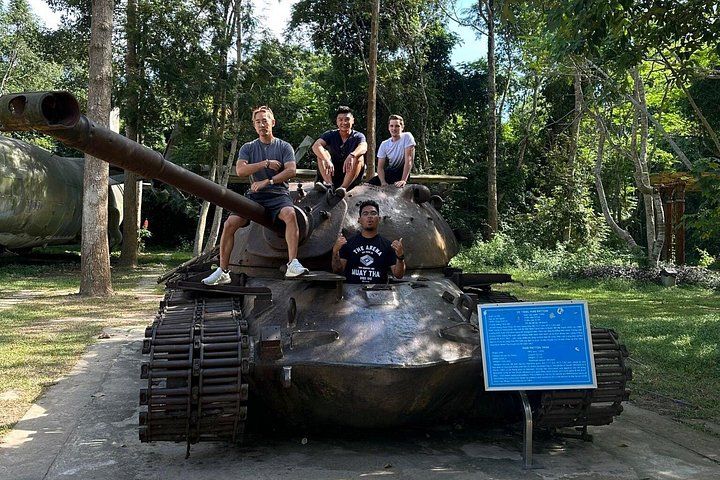
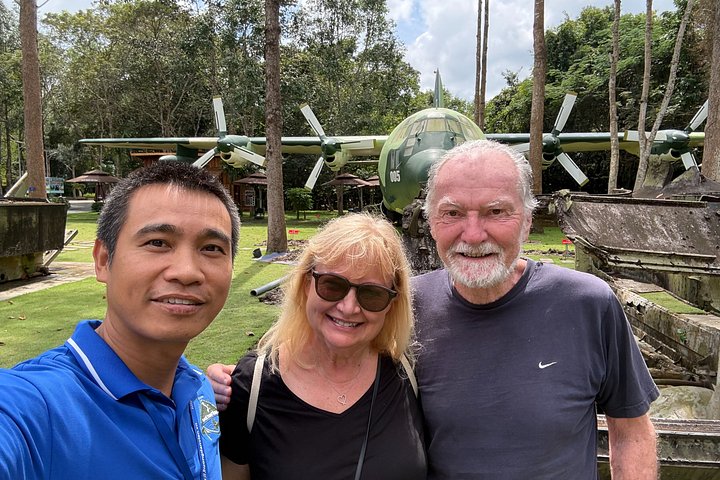
The War Remnants Museum in Ho Chi Minh City first opened to the public in 1975. Once known as the ‘Museum of American War Crimes’, it's a shocking reminder of the long and brutal Vietnam War. Graphic photographs and American military equipment are on display. There's a helicopter with rocket launchers, a tank, a fighter plane, a single-seater attack aircraft. You can also see a conventional bomb that weighs at 6,800kg. American troops had used these weapons against the Vietnamese between 1945 and 1975. The most talked-about exhibits at the War Remnants Museum are the ‘tiger cages'. The South Vietnamese government kept their political prisoners in these confinements. Locals believe the cages imprisoned up to 14 people at a time. The museum also has a guillotine brought in by the French government. Both the French and South Vietnamese used it to execute their prisoners until 1960. Also featured are grisly photos of victims that had suffered ‘Agent Orange’. As many as 4.8 million people were exposed to strong pesticide and chemical spray. The Vietnamese Ministry of Foreign Affairs believed 500,000 children were born with birth defects.
This peaceful memorial park is dedicated to Thich Quang Duc, the Buddhist monk who self-immolated in protest at this intersection not far from the Presidential Palace (today's Reunification Palace) in 1963. The memorial was inaugurated in 2010, displaying Thich Quang Duc wreathed in flames before a bas-relief.
The Chantarangsay Pagoda is a religious and cultural haven for the Khmer people in the south of Vietnam. The pagoda also houses monks from Theravada sect, the most ancient branch of Buddhism.
A unique blend of traditional and modern architecture, the museum includes one ground floor and five upper floors that are home to 18 exhibition rooms. You may see a delicately carved wooden pictures with different captions that illustrate different types of traditional medicine. This was a place where over a 50 skillful engravers have worked hard to complete these carved pictures for nearly 3 years. The architecture of this museum shows the typical features of traditional architecture in different regions of Vietnam. It reflects many features of the Northern house in the basin of Red River, of the Hue style and some of the Cham ethnic minority group styles. In the Cham tower are exhibited some Linga - a ritual sculptures which represent a power, a diligence and a vital force in the Cham religion. This museum is equipped with modern audio-visual technology, which regularly shows "A Century of Health Care Experiences" - a documentary film about the history of Traditional Vietnamese Medicine.
Turtle Lake roundabout is located at the crossroads of Vo Van Tan, Pham Ngoc Thach, Tran Cao Van Streets. The street surrounding the lake is named Cong Truong Quoc Te and the lake is officially named Cong Truong Quoc Te roundabout. It is located in the city center, 800 m from the Independence Palace, 400 m from Notre Dame Cathedral and 2 km from Ben Thanh Market.
Once a hiding place for nearly two tons of Saigon Commandos weapons during the spring offensive and 1968 uprising, the Nguyen Dinh Chieu Street little house was declared a National Monument of Culture in 1988. The bunker is located in a house on Nguyen Dinh Chieu Road, District 3, HCMC, and was used to hide the arsenal of Sai Gon Commandos. Among them are about 2 tons of weapons, which were prepared for the Tet Offensive (January 1968). Previously, this house was bought by Tran Van Lai (Lai Lai - May Hong Que) and he secretly trained there. At that time, to avoid suspicion, he used the excuse to repair the toilets. He took his wife and children to Go Vap (another district of Ho Chi Minh City), stayed alone in the house and spent the nights building his bunker.
Tan Dinh Church Saigon is a Romanian-style church in Ho Chi Minh City, where you can see intricate Gothic and Renaissance elements that have managed to survive Vietnam’s turbulent periods. Built in 1876 and spanning 60 metres in height, it’s widely regarded as the second biggest church in Ho Chi Minh City, after Notre Dame Cathedral. Nearby the gate are two massive bell towers, while the bright pink church is fitted with three beautifully-decorated Italian marble altars. In 1877, Father Donatien Éveillard invited the Sisters of Saint-Paul de Chartres to set up an orphanage and boarding school beside the church, which had housed over 300 youths in the span of three years. A publishing house is then added to the cathedral grounds, where disadvantaged children were educated for the publishing trade. To honour his contributions to the local community, he was buried beneath the nave of Tan Dinh Church following his death in 1883.
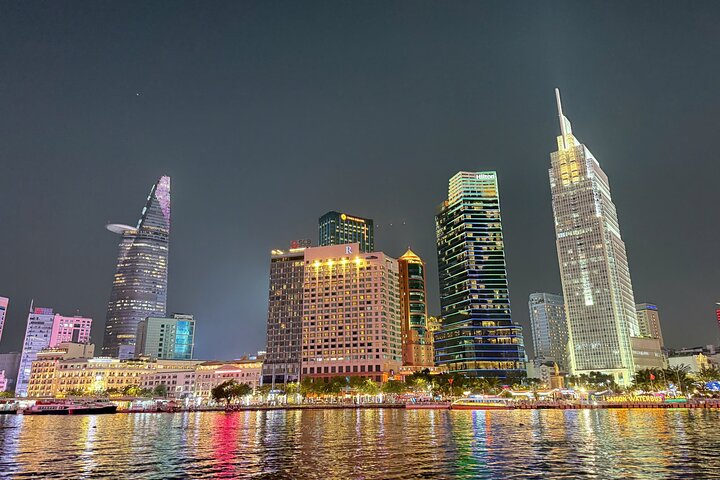
Ho Chi Minh City’s Bitexco Financial Tower & Sky Deck stands 262 metres high at the centre of the city’s business district and offers visitors an unparalleled city view from its Sky Deck. Designed by renowned American Architect Carlos Zapata, this 68-storey tower houses offices, shops, restaurants, and a helipad. CNNGo recently ranked the building fifth in their listing of the world’s 20 most iconic skyscrapers.
À Ố Show is one of Vietnamese Bamboo Circus performances.
Home to many French colonial buildings, Dong Khoi Street has witnessed many changes in Ho Chi Minh City. During the French occupation, it was the centre of glamour and was called Rue Catinat. It became Tu Do or Freedom Street during the Vietnam War. When the Communists took over Saigon in the late 1970s, the name changed again to Dong Khoi, which means Total Revolution.
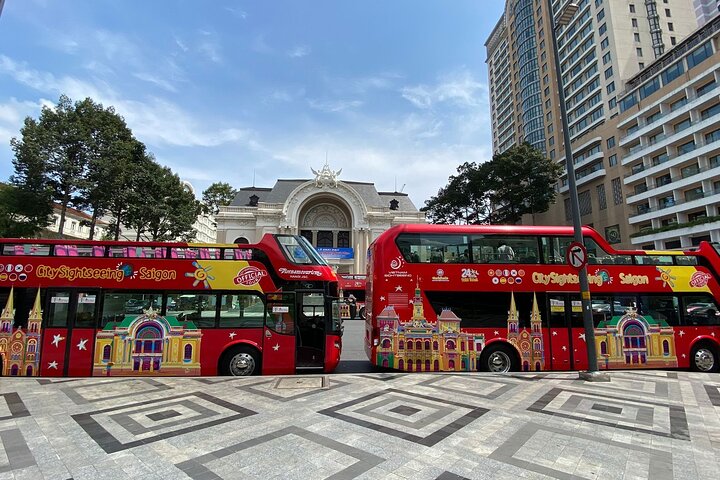
The Saigon Opera House in Ho Chi Minh is an elegant colonial building at the intersection of Le Loi and Dong Khoi Street in District 1, very close to the famous Notre Dame Cathedral and the classic Central Post Office. The restored three-storey 800-seat Opera House was built in 1897 and is used for staging not only opera but also a wide range of performing arts including ballet, musical concerts, Vietnamese traditional dance and plays. Performances are advertised around the building and information can be found in the state-operated tourist information centre close by.
Ben Thanh Market in Ho Chi Minh City's District 1 is a great place to buy local handicrafts, branded goods, Vietnamese art and other souvenirs. Here, you’ll find eating stalls inside the market where you can get a taste of hawker-style Vietnamese cuisine or simply cool off with a cold drink when the bargaining becomes too much. The market is big, difficult to navigate at times and certainly best avoided during the hottest part of the day but all the same its well worth a look. When night falls, restaurants around the perimeter of the market open their doors creating a vibrant street side scene filling the air with the scents of wok-fried noodles, barbecued fish and meats. One of Saigon’s oldest landmarks, Ben Thanh offers a great atmosphere that is absolutely authentically Vietnamese.
Cancellation
Free cancellation up to 24 hours before the experience starts, for a full refund.
Reviews
5.0
- 54
- 40
- 30
- 20
- 10
Ratings come from 4 reviews collected by our booking partner. They are travellers' own words, in the order they were written — never reordered to flatter the experience.
Know before you go
- Pickup
- Pickup is included for everyone.
- Ticket type
- Mobile or paper ticket accepted
- Operated by
- ForeverVacation
- Public transportation options are available nearby
- Suitable for all physical fitness levels
How it compares in Ho Chi Minh City
- Its from-price is 68% above the median of the 518 day trips we list in Ho Chi Minh City.
- It is shorter than most of them.
- By number of reviews it ranks 183 of 518.
- The operator lists free cancellation on it.
About Ho Chi Minh City
Ho Chi Minh City, still widely called Saigon, is Vietnam's buzzing commercial hub of French colonial landmarks, war history and superb street food.
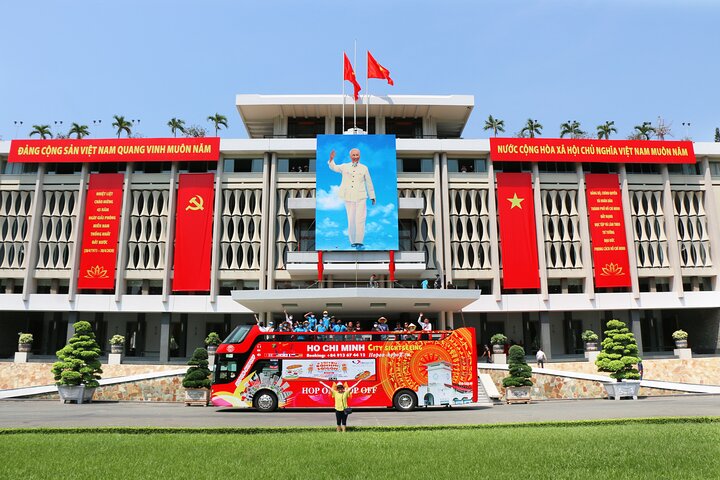
District 1 holds the main sights within walking distance: the red-brick Notre-Dame Cathedral, the elegant Central Post Office with its vaulted hall, the colonial Opera House and the ornate City Hall. The Independence Palace preserves its rooms as they were at the end of the war, and the War Remnants Museum tells the story of the conflict with sobering directness.
Top-ranked sights in Ho Chi Minh City: Cu Chi Tunnels, Saigon Opera House (Opéra de Saïgon), Saigon Central Post Office.
Special offers in Ho Chi Minh City
Was/now prices come from the operator, never from us.