Full Day London Pick & Mix Customized Tour
- 8 hours
- 2 languages
- Private tour
- Mobile ticket
Highlights
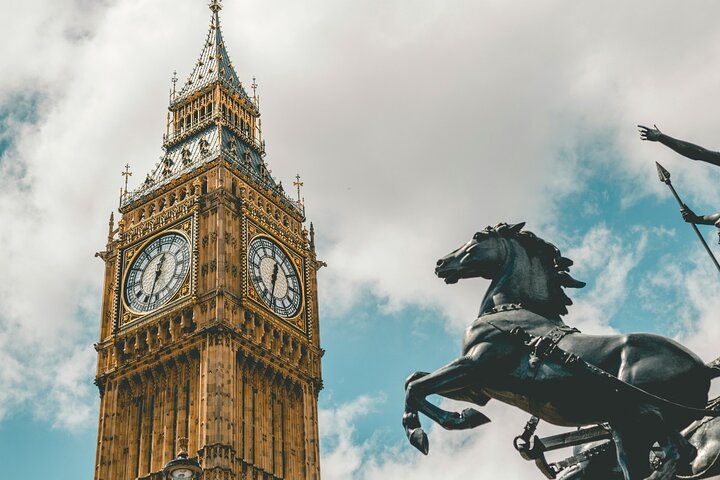
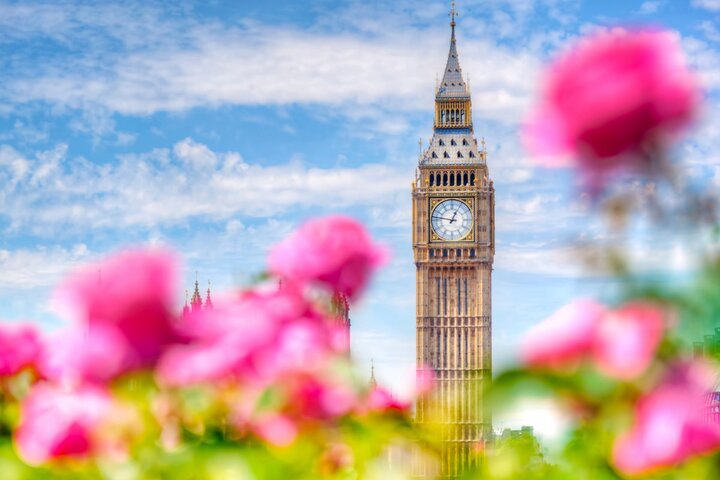
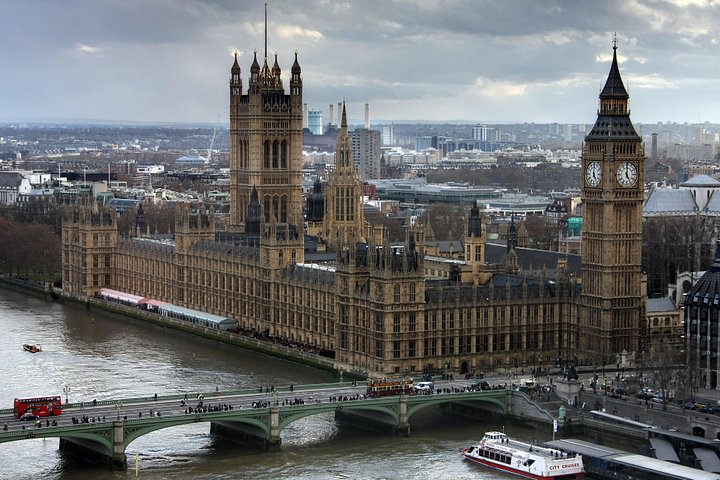
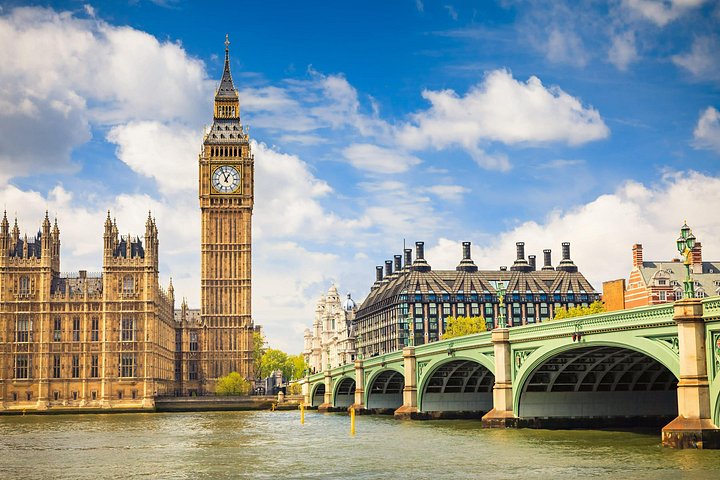
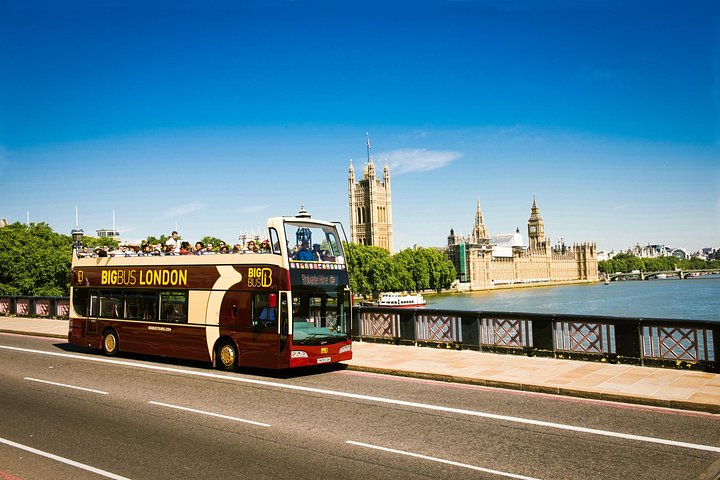
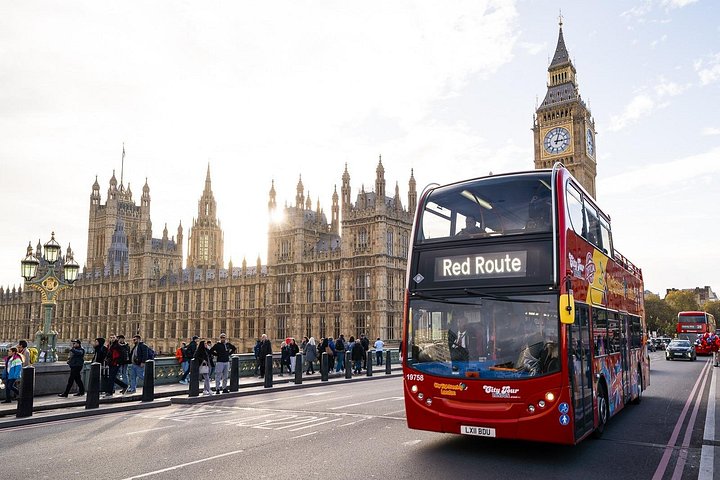
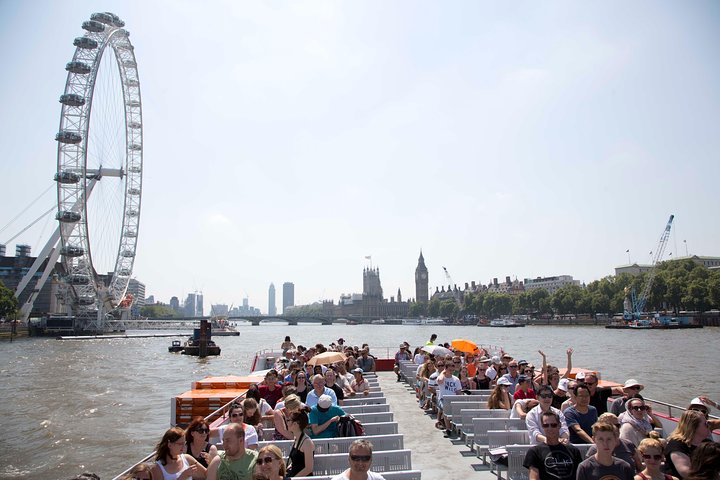
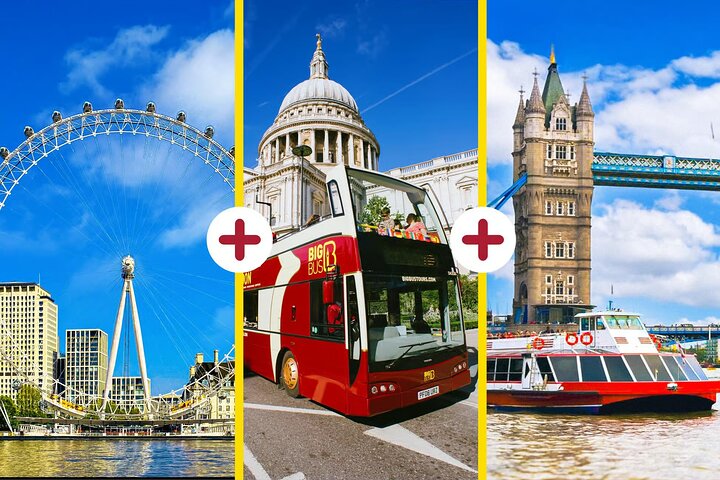
This is the London tour program that you desire. Your choices with no hassle and no time wasted and simply for the person who is tired of comparing agency tours only to find you always have to give up one thing for something else. Just pick the highlights you wish to see & visit from the list below and we will create your very private and bespoke dream itinerary in London with our APTG qualified blue badge tourist guides. Now you can have it all with "Tour it your way" Tell us what you want to see and we will carefully plan and customize your full-day London dream-tour with everything you can imagine Select from places like the Big Ben, London Eye, the British Museum, the Tower of London, St. Paul's Cathedral, Westminster Abbey and many more. Transportation in the city is no problem at all. We will use our massive public transportation for you. No waiting in long lines - No traffic - More time for fun and frolic. Just ask us.
Inclusions
What's included
- Touristic Guide
- Pick Up
What's not
- Lunch
- Gratuities
- Private transportation
Itinerary
The British Museum was founded in 1753 and today has approximately eight million objects from ancient history to modern technology giving you a glimpse into ancient cultures and civilisations. The tour will begin in Lord Foster's Great Hall. Here you will see ancient scripts on the Rosetta Stone from Egypt, architectural relics from temples and mausoleums in Mesopotamia, Assyria, Greece etc., the huge statues of Pharaoh Rameses the Great, many pieces of the friezes showing the pan-Athenic festival of the ruins of the Parthenon at the Acropolis in Greece and a special hall was constructed so they could be on permanent display to all.
Buckingham Palace is still the official residence of Britain's monarchy, as it has been since Queen Victoria's designation in 1837. Much of the Buckingham Palace was constructed as early as 1703 for the Duke of Buckingham. Buckingham House (as it was then known) was purchased in 1762 by George III, who used it as a private residence. Over the following 75 years the house was expanded to form three wings around a central courtyard. When Queen Victoria discovered Buckingham Palace lacked several 'necessary' rooms - such as a formal ballroom, a nursery, visitor's bedrooms and others - major additions were undertaken, including adding an entire wing to form a quadrangle. Buckingham Palace is the home of the Changing Guard Ceremony in London. The Changing of the Guard has been a tradition for hundreds of years whereby the Household Regiment, the Queen’s Guards at Buckingham Palace, change shift in a fascinating show of pomp and circumstance.
Westminster Abbey is a Church, burial ground, coronation site and much more and continues to attract visitors over 900 years after its founding. In many respects the architecture is common. There's the traditional cross-shaped floor plan with a nave, north and south transepts and several round side areas but both its execution and use raise The Collegiate Church of St Peter, Westminster (the official name) to among the highest examples of church construction. Here at Westminster Abbey lie buried kings and poets, scientists and philosophers who have themselves raised humankind to the highest levels. Isaac Newton and James Clerk Maxwell (discoverer of electromagnetic theory, which later lead to radio and TV), Chaucer and Kipling, Dr. Samuel Johnson (creator of the first English dictionary) and many other justly famous names are interred here.
The British novelist, journalist, editor, illustrator and social commentator, Charles Dickens is famous for such beloved classic novels as Oliver Twist, A Christmas Carol, Nicholas Nickleby, David Copperfield, A Tale of Two Cities and Great Expectations. His dedicated building at 48 Doughty Street was founded by the Dickens Fellowship, in 1902. The mansion was renovated and the Dickens House Museum was opened in 1925, under the direction of an independent trust. The well-known exhibit is the portrait of Dickens known as Dickens's Dream by R. W. Buss, an original illustrator of The Pickwick Papers. Other notable artefacts in the museum include numerous first editions and original manuscripts as well as original letters by Dickens, and many personal items owned by Dickens and his family. The only known item of clothing worn by Dickens still in existence is also displayed at the museum. This is his Court Suit and sword, worn when Dickens was presented to the Prince of Wales in 1870.
The Churchill War Rooms is a historic underground complex and museum that housed a British government command centre throughout the Second World War, and the Churchill Museum, a biographical museum exploring the life of British statesman Winston Churchill. Here you will have the chance to discover the secrets hidden beneath the streets of Westminster in the underground nerve centre where Winston Churchill and his inner circle directed the Second World War. Construction of the Cabinet War Rooms became fully functional on 27 August 1939, just a week before Britain declared war on Germany. The War Rooms remained in operation throughout the Second World War, before being abandoned in August 1945 after the surrender of Japan. After the war, the historic value of the Cabinet War Rooms was recognised. Don't miss the opportunity of visiting this WWII shrine once very limited numbers of the public were able to visit by appointment.
Explore the official entrance to St James and Buckingham Palace, since the Restoration of King Charles II in 1660. Life Guards have stood guard at Horse Guards and ready to offer you a true British ceremony. Although Changing The Queen's Lifeguard is not as well known as Changing the Guard at Buckingham Palace smaller crowds and no railings between you and the men and horses taking part make it ideal for those with younger children and those looking for some amazing pictures. The ceremony lasts about half an hour, and the mounted sentries change every hour, or half hour in very cold weather during the day until 16:00 when a dismounting ceremony takes place. The Queen's Life Guard is normally provided by men of the Household Cavalry Mounted Regiment which consists of a Squadron of The Life Guards, who wear red tunics and white plumed helmets, and a Squadron of The Blues and Royals with blue tunics and red plumed helmets.
Few prisons can claim to be as popular as the Tower of London, an attraction - unpleasant for some - for over 900 years. Its twenty towers are filled with an ancient tradition of royal blood, armor and jewels and the history to match. The Tower of London central structure began as a fort - used by the original builder William the Conqueror who completed the first tower around 1100 AD. At its completion it was the tallest building in London. Henry III had it whitewashed in the 13th century and the name, White Tower, has stuck. Later it evolved into a prison, used by Henry VII (and many others).
Tower Bridge is probably the city's most distinctive symbol of today. The Bridge shows a lot to its medieval predecessor London Bridge with its starlings and elaborate twin towers that give the bridge its name but it's not just a homage to the past, hidden inside that medieval-looking exterior there's a rather wonderful piece of Victorian engineering and in its day it was the biggest and most sophisticated lifting bridge in the world. Unlike London Bridge, the genius of the design is that the bridge can act as a gateway swinging open to allow tall ships to pass through. We will tell you plenty of things about this masterpiece in London, just follow us!
HMS Belfast is the last remaining vessel of her type and one of the largest and most powerful light cruisers ever built. 80 years old HMS Belfast is now a popular museum and tourist attraction in London. Built by Messrs Harland & Wolff in 1936, HMS Belfast was launched by Anne Chamberlain, wife of the then Prime Minister Neville Chamberlain, on St Patrick's Day in 1938. Ths Warship is designed for the protection of trade and offensive action from Germany. Two months at sea when HMS Belfast hit a magnetic mine unfortunately and this masterpiece of Windsorian engineering got the damage to her hull was so severe she was out of action for three years. On rejoining the home fleet in 1942 she was still the largest and most powerful cruiser in the Royal Navy and most importantly she was equipped with the most advanced radar systems.
This masterpiece of naval engineering, Cutty Sark, represents the pinnacle of clipper ship design and was one of the fastest ships of its day. Aged 14 years, Cutty Sark started recording remarkably fast passage times, under her Master Richard Woodget, and became the dominant ship in bringing wool from Australia to England. Cutty Sark was built for China tea trade but would carry a vast array of cargoes during its career. Cutty Sark, the Ferrari of the seas carried almost 10 million lbs of tea between 1870 and 1877. The opening of the Suez Canal marked the end for sailing ships in the tea trade and so Cutty Sark had to find new employment. Delve into the fascinating history of Cutty Sark, now an award-winning visitor attraction in Greenwich by our APTG qualified blue badge tourist guides. We celebrated Cutty Sark's 150th anniversary in 2019.
Camden Town where you will fall in love with the dynamics of this lovely town. This city is just a cultural sanctuary for teens, tourists and punks. Live music in alternative and old-school clubs and major stars at the Jazz Cafe and the Roundhouse are part of the flourishing nightlife scene. During the day, cafés bustle, with hundreds and hundreds of stalls on the market with souvenirs you will be able to buy. At international food stalls, you will also admire the street food selection or you can experience shopping in a disco environment under neon lights with dancers, then in the Stables area, don't miss Cyberdog. Here you can also join Canal Boat Tour for an Italian home away from home experience right in the heart of the city.
What a brilliant Royal saga. Hampton Court Palace, also known as Hampton Court, Tudor Palace in Richmond Upon Thames, Greater London Borough. It faces the northern bank of the Thames River. In the 1520's, Cardinal Henry VIII (reigned 1509–47) gave the palace to Thomas Cardinal Wolsey, who enlarged it for his preferred residence. Throughout its large grounds trees and shrubs have been planted, and several buildings and springs have also been added. For William III (reigned 1689–1702), the garden had been redesigned in Holland; for William and his wife, Queen Mary II, architect Christopher Wren added the wing. It is a fascinating historical tour allowing you to follow the building through the ages. Indulge yourself in a Tudor fashion like Henry VIII. Let our APTG qualified blue badge tourist guides to take you on an immaculate journey throughout the timeline that starts AD 1515 up to the present.
Cancellation
All sales are final. No refund is available for cancellations.
Reviews
5.0
- 51
- 40
- 30
- 20
- 10
Ratings come from 1 reviews collected by our booking partner. They are travellers' own words, in the order they were written — never reordered to flatter the experience.
Know before you go
- Pickup
- Pickup is included for everyone.
- Ticket type
- Mobile or paper ticket accepted
- Operated by
- Londoner
- Wheelchair accessible
- Infants and small children can ride in a pram or stroller
- Service animals allowed
- Public transportation options are available nearby
- Infants are required to sit on an adult’s lap
- Transportation options are wheelchair accessible
- Travelers should have at least a moderate level of physical fitness
How it compares in London
- Its from-price is 1206% above the median of the 26 hop-on hop-off we list in London.
- It is longer than most of them.
- By number of reviews it ranks 16 of 26.
About London
London mixes royal ceremony, world-class museums and riverside landmarks with distinct neighbourhoods, markets and parks to explore on foot.
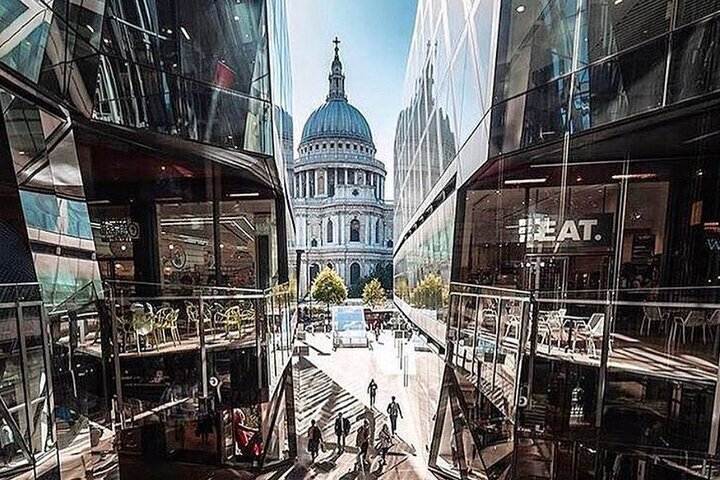
The Thames threads the city together. On its banks stand the Houses of Parliament and Big Ben, the Tower of London with the Crown Jewels, Tower Bridge and the long South Bank walk past the London Eye, Shakespeare's Globe and Tate Modern. St Paul's Cathedral and Westminster Abbey anchor the older skyline, while glass towers crowd the financial district.
Top-ranked sights in London: St. Paul's Cathedral, Stonehenge, Tower of London.
Special offers in London
Was/now prices come from the operator, never from us.