10% offFree cancellation
Enjoy one of the most remarkable religious routes in Greece! Follow the footsteps of Apostle Paul from Athens to Ancient Corinth, an ideal combination of pilgrimage and sightseeing in some of the most beautiful places in Greece. Among the countries he visited to spread Christianity, Apostle Paul came also to Greece, preaching the Holy Gospel and teaching people about Jesus’ mission. His journey in Greece is a route that can touch not only the believers but also everybody who loves history.
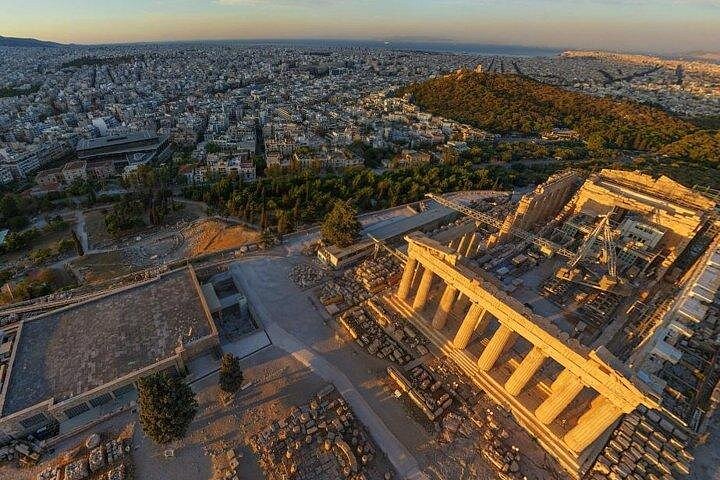
You will walk through the sacred grounds of the Acropolis, with a special stop at Areopagus Hill—also known as Mars Hill—where Apostle Paul delivered one of his most impactful sermons. Addressing the council of Athens, he boldly spoke of the “Unknown God,” challenging the city's prevailing beliefs and introducing the message of Christianity to the philosophical heart of the ancient world. This stop offers a deeply meaningful moment, blending spiritual reflection and historical insight, as you stand where Paul first brought the Gospel to Athens.
Setting off from Athens, your morning begins with the impressive feat of engineering that separates the Peloponnese from the mainland, the Corinth Canal. From high up, you can enjoy the best view of Corinth's isthmus and admire the steep limestone walls while you observe the vessels below you navigate their way through the canal. The Corinth Canal connects the Gulf of Corinth in the Ionian Sea with the Saronic Gulf in the Aegean Sea. It cuts through the narrow Isthmus of Corinth and separates the Peloponnese from the Greek mainland, arguably making the peninsula an island. The canal was dug through the isthmus at sea level and has no locks. It is 6.4 kilometres (4 mi) in length and only 21.4 metres (70 ft) wide at its base, making it impassable for many modern ships. From high up, you can enjoy the best view of Corinth's isthmus and admire the steep limestone walls while you observe the vessels below you navigate their way through the canal.
Dating back to ancient times, this remarkable feat of engineering—the Diolkos—enabled ships to be transported overland across the Isthmus of Corinth, connecting the Aegean and Ionian Seas long before the canal was built. As you explore the remnants of this ancient roadway, you can envision the lively flow of merchants, sailors, and travelers—perhaps even some whom St. Paul encountered during his time in Corinth. With its deep historical roots and strategic role in trade, the Diolkos offers a powerful, tangible connection to the maritime world of Paul’s era, inviting visitors to experience a vital piece of the ancient Mediterranean landscape.
A short distance from the Corinth Canal lies the ancient sanctuary of Isthmia, once the site of the Isthmian Games—second in importance only to the Olympic Games. Held in honor of Poseidon, these athletic and cultural festivals attracted participants and spectators from across the Greek world. Strategically located where the Peloponnese meets mainland Greece, Isthmia was a crossroads of commerce, culture, and religion. Apostle Paul’s connection to Isthmia is both historically and spiritually meaningful. The Bible notes his time in the area, where he is believed to have worked as a tentmaker, likely providing lodging for athletes and visitors. This makes Paul one of the earliest known Christian figures present at a major public gathering in the ancient world. As he worked and engaged with the crowds, Paul used the opportunity to share the message of Christ, turning this bustling event into a moment of early and impactful Christian outreach.
As part of our journey following St. Paul’s footsteps, we explore the Archaeological Museum of Isthmia, which sheds light on the cultural and religious landscape of the region during Paul’s time. The museum displays artifacts from the Sanctuary of Poseidon, the site of the Isthmian Games—an event Paul likely witnessed and may have referenced in his writings. Working nearby as a tentmaker, Paul used the influx of athletes and travelers as an opportunity to share the message of Christ. A highlight of the collection includes glass panels from Kenchreai, the nearby port from which Paul set sail for Syria. These rare finds, along with statues, votive offerings, and burial artifacts, illustrate the vibrant and diverse world in which Paul lived, worked, and preached the Gospel.
Your visit to Ancient Corinth brings you to one of the most significant cities of early Christianity. Positioned on the strategic isthmus connecting mainland Greece and the Peloponnese, Corinth thrived as a major center of trade, culture, and religion in the ancient world. Apostle Paul spent more than 18 months here, as documented in the Acts of the Apostles, establishing a vibrant Christian community. His letters to the Corinthians, later included in the New Testament, addressed the moral and spiritual challenges faced by the early Church and remain foundational to Christian teaching. A highlight of the site is the Bema (judgment seat), where Paul is believed to have stood before Proconsul Gallio. Standing here offers a direct and moving connection to Paul’s mission, where biblical history comes vividly to life.
At the Archaeological Site of Isthmia, you’ll discover a key center of ancient religion and athletics, deeply connected to St. Paul’s mission. The Temple of Poseidon, rebuilt over centuries, stood as a powerful symbol of pagan worship during Paul’s time in the area. Close by is the ancient stadium, where the renowned Isthmian Games were held. Paul likely witnessed these events and worked as a tentmaker, providing shelter for athletes and travelers. These experiences are reflected in his writings, where he often uses athletic metaphors to convey spiritual truths. Also on site is the Sanctuary of Palaimon, devoted to the patron of sailors—further illustrating the diverse spiritual landscape that Paul encountered and boldly addressed through his preaching.
At the ancient theater of Isthmia, originally built for the musical contests of the Isthmian Games, you’ll step into the vibrant cultural setting that surrounded St. Paul’s ministry. Decorated with Roman mosaics portraying sea creatures and scenes from Dionysian mythology, the theater reflects the rich yet deeply pagan traditions of the time. While crowds gathered here for performance and religious celebration, Paul brought a very different message—centered on faith in Christ. This stop powerfully contrasts the spiritual world of ancient Greece with the transformative message of early Christianity that Paul boldly proclaimed.
Isthmia was more than a center of worship and athletic competition—it was also a pivotal site for major political and military decisions in ancient Greece. Its strategic location made it a key meeting place for leaders and city-states throughout history. By the time St. Paul arrived in nearby Corinth, Isthmia was already known for its symbolic and political importance. Paul preached in a region not only rich in religious tradition, but also frequented by rulers, philosophers, and international envoys. His message of unity through Christ stood in contrast to the earthly alliances once forged here, pointing instead to a higher, spiritual kingdom. This stop highlights how Paul’s mission took root in places of real influence—where ideas were exchanged, decisions were made, and history was shaped.
At the heart of Ancient Corinth, you’ll visit the impressive Temple of Apollo, one of the oldest and most important temples in Greece. Built around 560 BC, it stands as a prime example of early Doric architecture, with its massive monolithic columns still rising as a symbol of the city’s ancient splendor. When St. Paul arrived in Corinth, this temple would have dominated the skyline—a prominent center of worship to Apollo, god of prophecy and light. Its presence reflects the deeply polytheistic culture Paul encountered. Amid such grandeur and idol worship, Paul boldly preached the message of one true God and Jesus Christ crucified, challenging the spiritual status quo of this wealthy and diverse city. The Temple of Apollo remains a striking visual reminder of the world Paul entered—and the transformative message he brought.
At Kechries, the location of ancient Cenchreae, the eastern port of Corinth, you’ll walk where St. Paul once stood during his second missionary journey, as recorded in Acts 18:18. Before departing for Syria with Priscilla and Aquila, Paul cut his hair to fulfill a vow—likely a Nazirite vow—signifying a moment of deep personal commitment to God. Cenchreae was also home to one of the earliest Christian communities. In his letter to the Romans, Paul speaks warmly of Phoebe, a trusted servant (diakonos) of the church there, highlighting both the spread of the Gospel and the vital role of women in the early Church. Today, this peaceful seaside location offers a meaningful link to Paul’s mission, marking the place where his message continued its journey—across the sea and into the wider world.
This church stands in tribute to Apostle Paul, who spent 18 months in Corinth around 51–52 AD, establishing one of the first Christian communities in Greece. His time in Corinth—recorded in the Book of Acts and his letters to the Corinthians—was deeply impactful. It was here that Paul preached, taught, and laid the foundation for what would become the metropolitan church of Corinth, shaping the early Christian faith in the region. Today, the church serves as a living reminder of Paul’s mission—a sacred space where faith and history converge in the very city where the Gospel first echoed through his words.
Free cancellation up to 24 hours before the experience starts, for a full refund.
4.9
Ratings come from 99 reviews collected by our booking partner. They are travellers' own words, in the order they were written — never reordered to flatter the experience.
Athens sets the Acropolis above a sprawling modern capital, where ancient ruins, hillside lanes and long taverna evenings sit side by side.
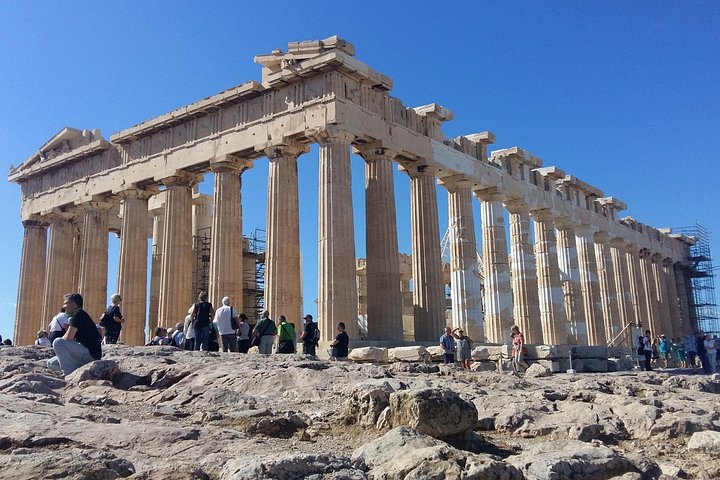
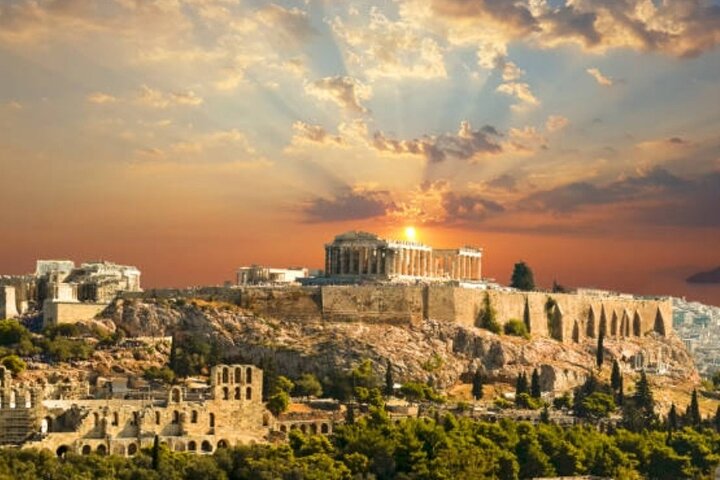
The Parthenon crowns the Acropolis, flanked by the Erechtheion and its porch of caryatids, and the Acropolis Museum at the foot of the hill displays sculpture found on the rock. Around it, the Ancient Agora, the Temple of Olympian Zeus, Hadrian's Arch and the marble Panathenaic Stadium make the classical city easy to walk through.
Top-ranked sights in Athens: Acropolis, Parthenon, Acropolis Museum.
Was/now prices come from the operator, never from us.
from$2,277
Add Ticket Hall to your home screen
Tickets and city guides, one tap away, even offline.
Ticket Hall