Belfast Walking Tour with a Local: History, Stories, and Culture
- 1.5–2 hours
- Free cancellation up to 24h before
- Guided in English
- Instant confirmation
Highlights
Discover Belfast through the eyes of a born-and-bred local on a relaxed, two-hour walking tour through the heart of the city. This experience offers a broad introduction to Belfast's history, culture and character, exploring the people and events that shaped the city. From Belfast's origins and its rise as Linenopolis to shipbuilding, the Titanic, the Second World War, the Troubles and modern regeneration, we'll explore the different chapters of the city's story. Along the way, discover historic landmarks, hidden details and local insights you might otherwise miss. Rather than focusing on one particular period, this tour provides a general overview of Belfast's past and present, helping you understand how the city became what it is today. Expect engaging stories, personal perspectives, humour and plenty of Belfast craic. It's not a formal history lecture, but a friendly dander through the city with someone who calls it home.
Inclusions
What's included
- City centre walking tour with storytelling, history, and local tips
- Visits to key landmarks
- Personalised commentary tailored to your interests
- Engaging storytelling with historical facts, legends, and local insights
- Optional audio headset to ensure you can hear your guide clearly throughout the tour
What's not
- Transportation (this is a walking tour; no vehicle provided)
- Hotel pickup/drop-off (you meet at a fixed starting point)
- Personal expenses (e.g., souvenirs, extra purchases)
- Gratuities
Itinerary
We begin at the grand Belfast City Hall — a symbol of the city’s explosive rise during the Industrial Revolution. At the turn of the 20th century, Belfast was one of the most powerful cities in the British Empire, driven by linen, shipbuilding, and engineering. Here, we set the stage: how a small settlement transformed into an industrial giant — and how that rapid growth would shape everything that followed, from prosperity to division.
Just beside City Hall, we step into the Titanic Memorial Garden — a quieter, more reflective space. Here, we explore Belfast’s most famous creation, RMS Titanic, not just as a ship of engineering brilliance, but as a human story. We’ll discuss the pride the city felt in building her, the devastating impact of her sinking, and the names of the local people who never returned. This is where industrial triumph meets tragedy — and where Belfast’s global reputation was forever sealed.
At the Linen Hall Library, we step into one of Belfast’s oldest cultural institutions — founded in 1788, long before the city reached industrial dominance. Originally created to support the booming linen trade, it evolved into a hub of political debate, literature, and radical thought. Today, it houses one of the world’s most important collections on the Troubles. Here, we explore how ideas, identity, and opposing visions for Ireland shaped the tensions that would later erupt into conflict.
At Kelly’s Cellars — one of Belfast’s oldest pubs, dating back to 1720 — we step into the city’s social and revolutionary past. These stone walls have witnessed rebellion, political meetings, music, and working-class life for over 300 years. Here, we explore the rise of Irish nationalism, the United Irishmen, and how pubs like this were not just places for drink — but places where ideas spread, loyalties formed, and resistance was whispered long before it was shouted.
In the Cathedral Quarter, we see a different side of Belfast — creative, colourful, and constantly reinventing itself. Once an area of trade and warehouses, it is now the city’s cultural heartbeat, filled with street art, music venues, and independent businesses. Standing in the shadow of St Anne’s Cathedral, we explore how Belfast has transformed since the peace process — from a city defined by division to one shaping a new identity through art, culture, and expression.
Standing beside the Albert Memorial Clock — Belfast’s own leaning landmark — we explore the city at the height of its Victorian confidence. Built in 1869 during a period of extraordinary industrial wealth, it honoured Prince Albert and symbolised Belfast’s loyalty to the British Crown. Yet the clock’s slight lean, caused by the soft ground beneath it, offers a subtle metaphor: beneath the city’s grand exterior, tensions and instability were already forming. From here, we connect industrial pride, unionist identity, and the foundations of division that would later shape the Troubles.
At McHugh’s — one of Belfast’s oldest surviving buildings, dating back to the early 1700s — we step into the city’s pre-industrial past. Long before shipyards and linen mills, this area was shaped by trade along the River Lagan, where merchants, labourers, and travellers passed through these stone vaults. Here, we explore the foundations of Belfast as a port town — and how class, commerce, and community shaped the city’s identity long before political conflict dominated its story.
At the Big Fish — inspired by the ancient Irish legend of the Salmon of Knowledge — we explore the stories etched into Belfast itself. Covered in tiles that reference key moments from the city’s past, the sculpture symbolises memory, identity, and the power of storytelling. Standing beside the River Lagan, we reflect on how this waterway shaped Belfast’s rise as a trading port, and how the city continues to evolve while carrying the weight of its history.
At the Beacon of Hope — affectionately known by locals as “Nuala with the Hula” — we encounter one of modern Belfast’s most recognisable symbols. Standing at the edge of the River Lagan, this golden figure represents peace, renewal, and a city looking outward once again. Here, we explore Belfast’s transformation since the peace process — from decades of division to regeneration, investment, and a growing confidence on the global stage.
At the Spirit of Belfast, located in the heart of the city centre, we explore a modern interpretation of Belfast’s identity. This stainless-steel sculpture represents energy, transformation, and a city constantly reshaping itself. Surrounded by busy shopping streets and contemporary life, it offers a contrast to the industrial wealth, political division, and historic struggles we’ve discussed — showing a Belfast that is forward-looking, resilient, and still evolving.
Cancellation
Free cancellation up to 24 hours before the experience starts, for a full refund.
Reviews
4.9
- 5118
- 45
- 31
- 20
- 12
Ratings come from 126 reviews collected by our booking partner. They are travellers' own words, in the order they were written — never reordered to flatter the experience.
Know before you go
- Meeting point
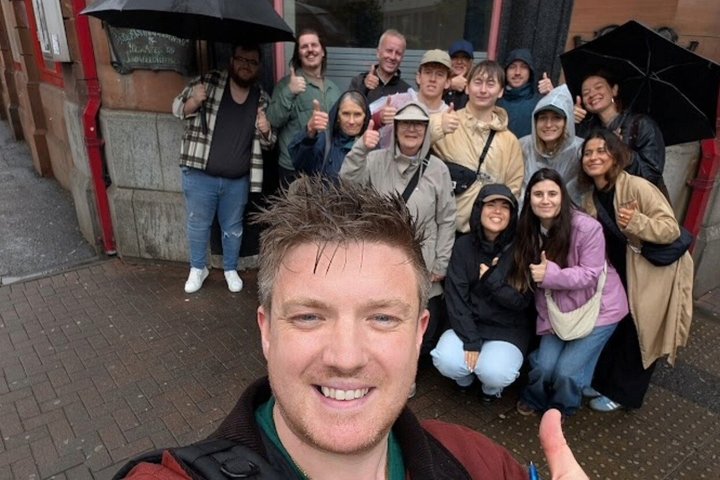
- We’ll meet inside the grounds of City Hall, beside the Queen Victoria statue, directly facing the main entrance. I’ll email or text beforehand so you won’t miss it. Look for the bright blue school bag — easy to spot. A beautiful historic spot to start our dander
- Pickup
- Everyone meets at the starting point; there is no pickup.
- Ticket type
- Mobile or paper ticket accepted
- Group size
- Up to 25 travellers
- Operated by
- Corey
- Wheelchair accessible
- Infants and small children can ride in a pram or stroller
- Service animals allowed
- Public transportation options are available nearby
- Transportation options are wheelchair accessible
- All areas and surfaces are wheelchair accessible
- Not recommended for travelers with spinal injuries
- Not recommended for pregnant travelers
How it compares in Belfast
- Its from-price is 93% below the median of the 62 city tours we list in Belfast.
- It is shorter than most of them.
- By number of reviews it ranks 11 of 62.
- The operator lists free cancellation on it.
About Belfast
Belfast is Northern Ireland's capital, a harbour city between hills and lough, known for shipbuilding, Victorian pubs, murals and the Titanic story.
Belfast grew with the linen and shipbuilding trades, and the giant yellow cranes of the old shipyard still stand over the docks where the Titanic was built and launched in 1911. The Titanic Quarter now holds a large museum on that story. In the centre, the domed City Hall, completed in 1906, stands in a square of Victorian and Edwardian buildings, and the Cathedral Quarter has cobbled lanes and old pubs.
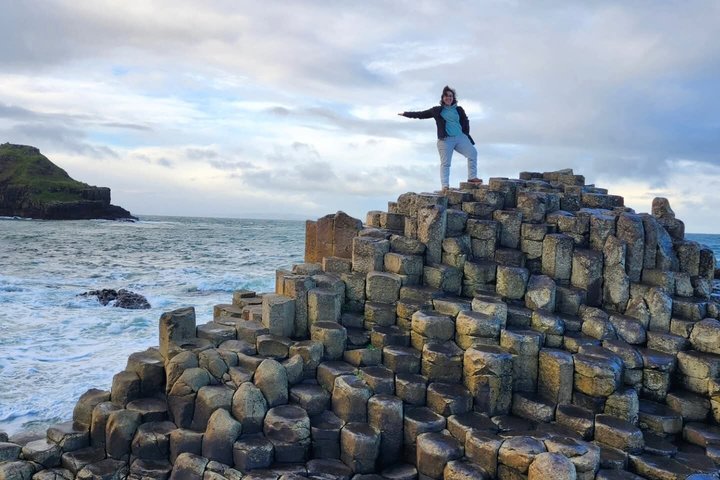
Top-ranked sights in Belfast: Giant's Causeway, Dunluce Castle, Dark Hedges.
Special offers in Belfast
Was/now prices come from the operator, never from us.