Vitoria and Añana salt valley small group tour lunch included
- 8 hours
- Free cancellation up to 24h before
- 2 languages
- Instant confirmation
Highlights
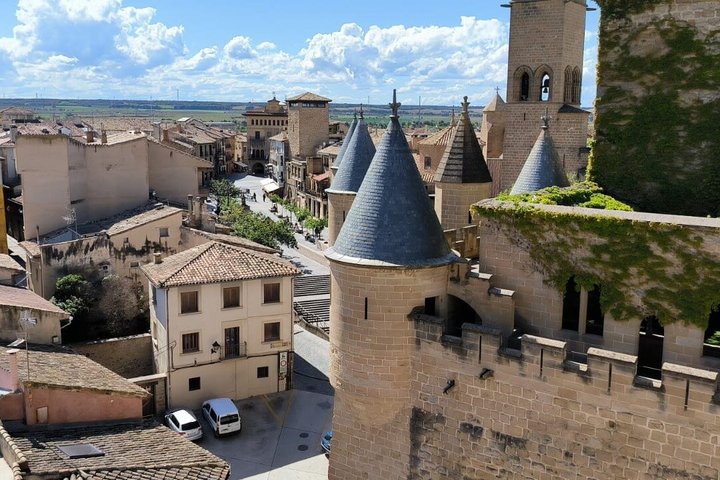
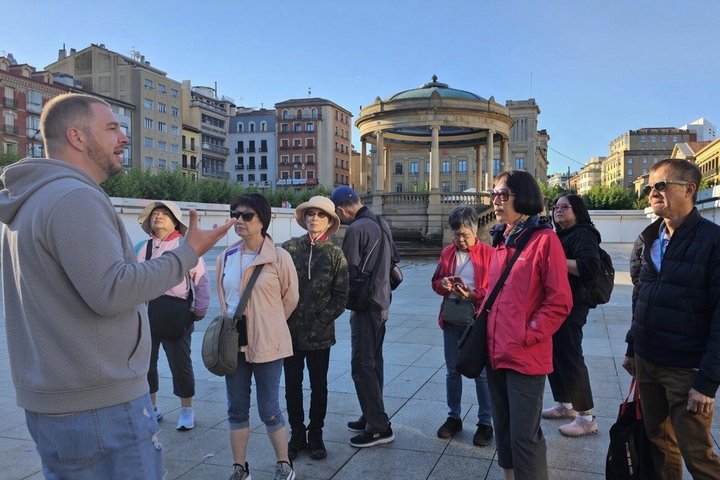
We pick you up at your hotel and head first to Añana Salt Valley, where we will learn everything about the traditional way of producing the 'white gold' from local experts (visit lasts around 1.5 hours). Later we will go to Vitoria-Gasteiz, the capital of the Basque autonomic region. After lunch there, we will go sightseeing, admiring the medieval old town on top of a hill among other spots (total visit time around 2 hours). At around 17:00pm we will head back to Pamplona and drop you off at your hotel
Inclusions
What's included
- small group tour
- Air-conditioned vehicle
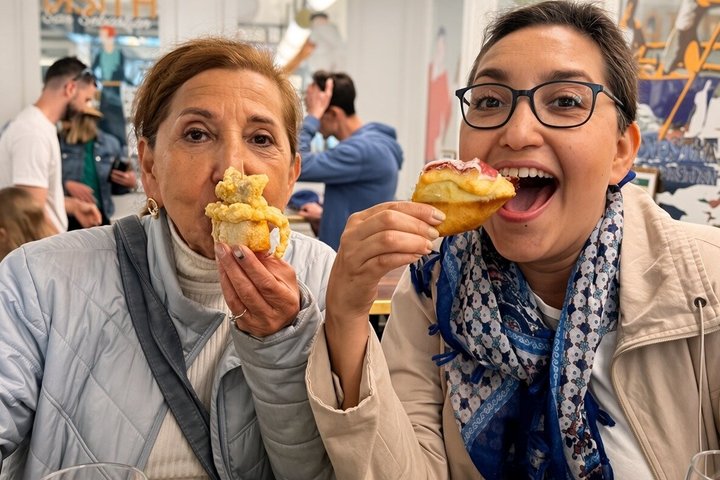
- Two main course, dessert and wine
Itinerary
One of the most important cultural, architectural, environmental, vlandscape and archaeological sites in the world. From our current perspective, it is almost impossible to understand how salt, such an abundant and low-cost product, could be so important historically. We must bear in mind that salt was and is essential in many industrial processes as well as in human food and animal feed; more so when industrial cooling systems had not been developed, as it was one of the most effective methods of preserving food. Salt has been the cause of many wars and enforced peace processes, of death and success, of wealth and poverty, of the creation and destruction of towns and cities and, of course, of greed but also a cause for joy among human beings. Valle Salado is one of the best examples worldwide of the history of salt, known since antiquity as "white gold". The natural emergence of the salt springs caused the establishment of a settlement in the surrounding area that has developed uninterruptedly for thousands of years and that, based on the production of salt, has learned to adapt to the conditions and specificities of each historical period.
Vitoria-Gasteiz is located in Spain’s Basque Country, and although it may not be as well known as Bilbao or San Sebastian, it’s definitely worth a visit. From its own modern art museum to its magnificent cathedral
Plaza de la Virgen Blanca is one of the oldest meeting points in Vitoria-Gasteiz in the Basque Country of Spain. In the middle of it there is the monument to La batalla de Vitoria a battle which took place in the city in 1813 during the Napoleonic wars.
Fernán López de Escoriaza, the doctor of the English King Henry VIII, and his wife, Victoria de Anda y Esquivel, ordered to build this palace in the mid-16th century. Due to its architectonic and decorative richness, it is one of the best examples of the civil Renaissance-style architecture. The palace, built with masonry stone, is arranged around a square yard surrounded by a double series of arches group of arches placed on top of three of its sides and a staircase. The columns have many decorated elements. It is also remarkable that the main façade, placed opposite a little square, features a Plateresque-style part containing a bust of the landlord and his wife.
This is your opportunity to travel through time and feel like a Ken Follett character, in the Santa María Cathedral in Vitoria-Gasteiz.
Cancellation
Free cancellation up to 24 hours before the experience starts, for a full refund.
Know before you go
- Pickup
- Pickup is included for everyone.
- Ticket type
- Mobile or paper ticket accepted
- Group size
- Up to 8 travellers
- Operated by
- Local Experts Tours
- Specialized infant seats are available
- Suitable for all physical fitness levels
- A minimum of 2 people per booking is required. If a booking for only 1 person is made a confirmation message from the tour operator will be required to confirm the tour.
How it compares in Pamplona
- Its from-price is 10% above the median of the 17 day trips we list in Pamplona.
- Its length is typical for the group.
- The operator lists free cancellation on it.
About Pamplona
Pamplona is the capital of Navarre in northern Spain, a walled city known for the running of the bulls at the San Fermín festival and for pintxos.
Pamplona stands on the plain of Navarre, with the Pyrenees to the north, and its old quarter is ringed by walls and the star-shaped Ciudadela, a sixteenth-century fortress now a park. The Gothic cathedral has a fine cloister, and the Plaza del Castillo, with its cafés and arcades, is the city's meeting place. Pamplona lies on the Camino de Santiago, and pilgrims pass through its streets before heading west.
Special offers in Pamplona
Was/now prices come from the operator, never from us.