Toledo Walking Tour with Audioguide on Your Smartphone
- 2h 30m
- Free cancellation up to 24h before
- 6 languages
- Instant confirmation
Highlights
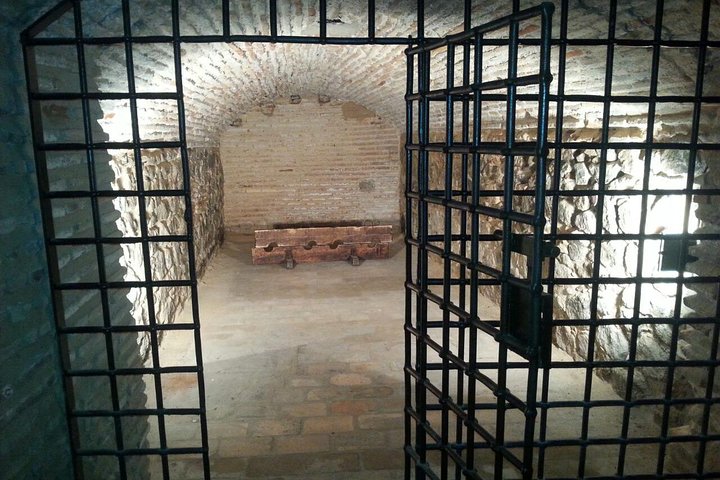
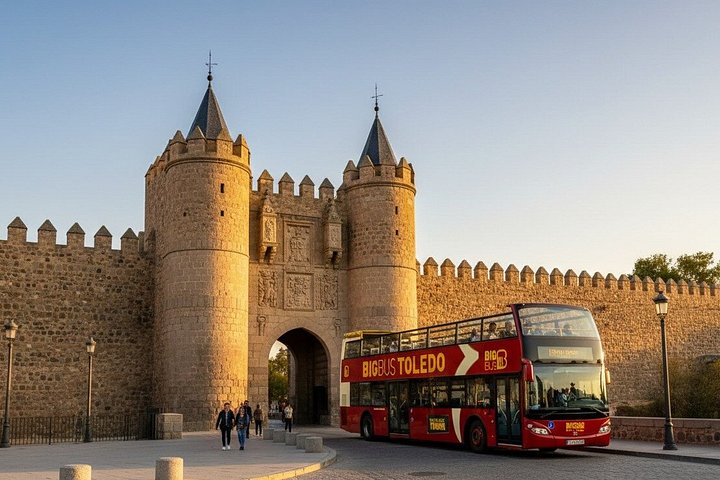
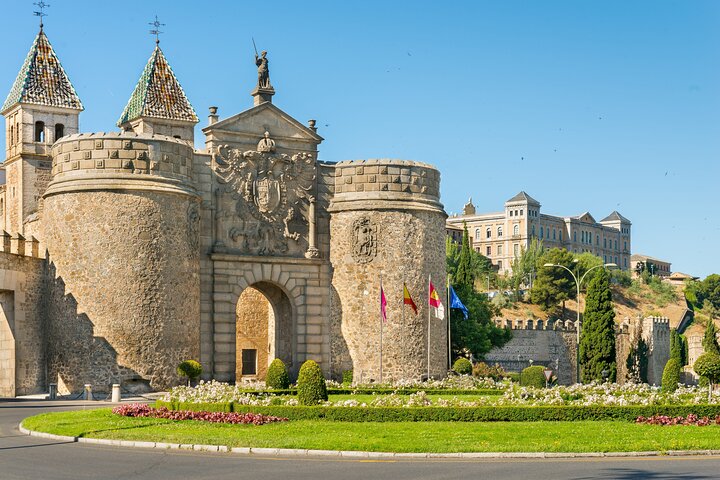
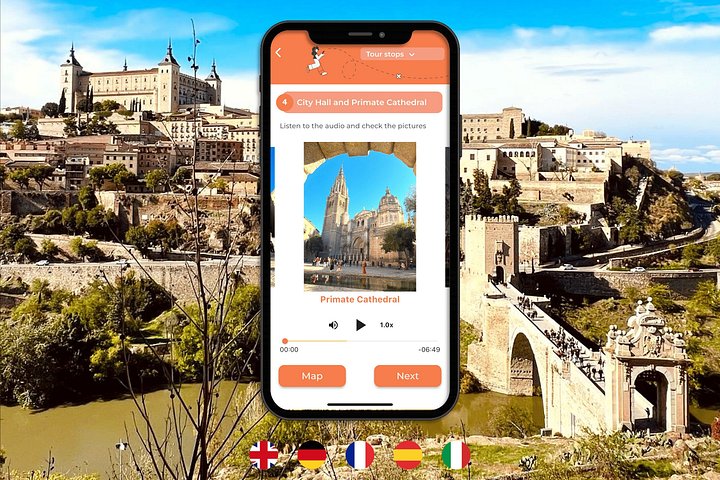
The audio guide is a convenient mobile companion for exploring the city in a limited amount of time. This route through the historic town of Toledo should take between two to three hours. A GPS map will guide you, highlighting interesting landmarks to observe, shops to visit, and local delicacies to try in nearby cafes. You will certainly visit: The Toledo Cathedral, The El Greco Museum, The Cheese Museum, The fortress walls and city gates, Dungeons with Roman Thermae, Opulent Moorish palaces, The Jewish Quarter. The itinerary includes 28 points of interest, each accompanied by an audio commentary and an illustration. Wander around Toledo at your leisure, pausing, observing, discovering, and sampling without the need to keep up with a guide.
Inclusions
What's included
- Landmark Illustrations
- One-year access to the tour in your preferred language
- Audio guide app for iPhone and Android
- Offline map featuring a route for effortless GPS navigation
- 28 audio recordings narrated by a professional historian
What's not
- In-person tour guide
- Smartphone and Headphones
- Admission Tickets
- Transportation
- Food and Beverages
Itinerary
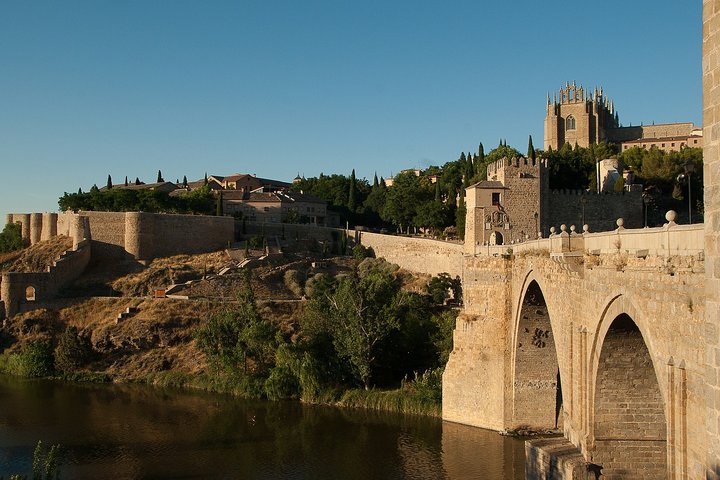
The Alcántara Bridge (Puente de Alcántara) in Toledo, Spain, is a remarkable Roman bridge that spans the Tagus River, connecting the old town to the rest of the region. Built in the 2nd century AD, the bridge is an impressive feat of ancient engineering, featuring a series of grand arches and towering stone supports. It was originally constructed by the Romans to facilitate military and trade movements, and it has stood the test of time, enduring through centuries of wars, renovations, and changes in the city. The bridge is an essential part of Toledo’s historical landscape and provides spectacular views of both the city and the river. It is particularly notable for its graceful arches, which complement the surrounding scenery of the medieval town. The Alcántara Bridge also has a historical significance, as it was used by several military figures throughout history. Today, it stands as a symbol of Toledo's rich Roman heritage, offering visitors a direct link to the city’s ancient past.
San Servando Castle in Toledo, Spain, is a medieval fortress dating back to the 11th century. Originally built as a military stronghold, it later became a convent. The castle’s strategic location offers panoramic views of the Tagus River and the surrounding countryside, making it a picturesque historical site. Today, it stands as a peaceful landmark, reflecting Toledo's rich history and architectural heritage.
Museo de Santa Cruz in Toledo is housed in a former 16th-century hospital and showcases art, archaeology, and religious artifacts. Highlights include works by El Greco and stunning Mudejar and Gothic architecture. It’s a compact yet rich introduction to Toledo’s cultural heritage.
Zocodover Square is the historical and social heart of Toledo. Once a bustling marketplace for livestock in Moorish times, it later hosted public celebrations, royal visits, and even inquisitorial trials. Surrounded by arcades and cafés, it remains the main gathering place for locals and visitors alike. From here, narrow streets lead into the old town’s labyrinth, making it the perfect starting point for exploring Toledo’s rich history. Today, it’s a lively space where centuries of culture meet daily life.
The Alcázar of Toledo is a massive fortress that crowns the city’s highest point, dominating the skyline with its square towers and imposing stone walls. Originally a Roman palace, it was rebuilt and expanded over the centuries, serving as a royal residence, military academy, and symbol of Spanish power. It played a key role during the Spanish Civil War, becoming a national icon of resistance. Today, it houses the Army Museum, offering exhibits on Spanish military history alongside stunning views of the city. The Alcázar is not just a monument, but a living chronicle of Toledo’s strategic and political importance.
The Manchego Cheese Museum in Toledo offers a tasty and informative journey into one of Spain’s most iconic products. Set in a traditional building, the museum explores the history, production, and cultural importance of Manchego cheese, made from the milk of Manchega sheep. Exhibits include tools, vintage labels, and displays on aging techniques. The visit often ends with a guided tasting, where you can sample cheeses of different maturations. It’s a flavorful stop that connects food lovers with the rich rural traditions of Castilla–La Mancha.
Toledo Cathedral, also known as the Primate Cathedral of Spain, is one of the finest examples of Gothic architecture in the country. Built between the 13th and 15th centuries, it stands on the site of a former mosque and earlier Visigothic church. The cathedral is vast and richly decorated, featuring a stunning altarpiece, rose windows, and the awe-inspiring Transparente—a Baroque skylight carved into the apse. It houses important artworks by El Greco, Goya, and Velázquez, and its sacristy and treasury hold centuries of religious heritage. More than a monument, the cathedral is a living symbol of Toledo’s spiritual and artistic legacy.
The Museo de los Concilios y la Cultura Visigoda is dedicated to the Visigothic heritage of Toledo, the ancient capital of the Visigothic Kingdom. Housed in the beautiful 8th-century Church of San Román, the museum features archaeological finds, stone carvings, inscriptions, and liturgical objects that trace the development of Visigothic culture and early Christianity in Spain. The church itself, with its elegant Mozarabic arches and medieval frescoes, is a major part of the experience. It’s a quiet, atmospheric museum that sheds light on a lesser-known yet foundational chapter of Iberian history.
The Taller del Moro Museum is a small yet fascinating space in Toledo that preserves one of the city’s few surviving examples of Mudejar civil architecture from the 14th century. Once a workshop for artisans—possibly even used in the decoration of the cathedral—the building features delicate geometric designs, horseshoe arches, and intricate stucco work that reflect the blend of Islamic and Christian artistic traditions. Though modest in size and collection, the museum offers a unique glimpse into the craftsmanship and cultural synthesis that defined medieval Toledo. It’s a quiet, elegant stop for lovers of art and architecture.
The Palacio de Fuensalida is a 15th-century palace located in the Jewish Quarter of Toledo, known for its beautiful Mudéjar and Gothic architecture. Built by Pedro López de Ayala, it served as a noble residence and later hosted prominent figures, including Emperor Charles V. The palace features a serene courtyard with slender columns and intricate plasterwork that blends Islamic and Christian design. Though not always open to the public, the palace today houses the presidency of Castilla–La Mancha. It stands as a graceful reminder of Toledo’s noble past and its unique architectural fusion.
The El Greco Museum in Toledo offers an intimate look into the life and work of the renowned painter Doménikos Theotokópoulos, known as El Greco. Located in the Jewish Quarter, the museum is housed in a recreated 16th-century residence near where El Greco once lived. Inside, visitors can explore several of his original paintings, including portraits and religious scenes, alongside works by his followers. The museum also displays period furniture and offers insight into Toledo’s artistic and cultural atmosphere during the Spanish Renaissance. It’s a must-visit for art lovers seeking to connect with one of Spain’s most singular artistic voices.
The Synagogue of El Tránsito is one of the finest preserved examples of Sephardic Jewish architecture in Spain. Built in the 14th century under the patronage of Samuel ha-Leví, treasurer to King Pedro I, the synagogue features a stunning Mudéjar interior with intricate stucco work, Hebrew inscriptions, and wooden ceilings that blend Islamic and Gothic styles. After the expulsion of the Jews in 1492, it was converted into a church, but much of its original beauty remains. Today, it houses the Sephardic Museum, offering powerful insight into the history, culture, and legacy of Jewish life in medieval Spain.
Cancellation
Free cancellation up to 24 hours before the experience starts, for a full refund.
Reviews
5.0
- 54
- 40
- 30
- 20
- 10
Ratings come from 4 reviews collected by our booking partner. They are travellers' own words, in the order they were written — never reordered to flatter the experience.
Know before you go
- Meeting point
- - The tour begins at Paseo de la Rosa - This is a self-guided tour; there will be no guide present at the meeting point - Open the TouringBee app, initiate the Toledo City Tour, and proceed along the designated route
- Pickup
- Everyone meets at the starting point; there is no pickup.
- Ticket type
- Mobile or paper ticket accepted
- Group size
- Up to 20 travellers
- Operated by
- TouringBee
- Public transportation options are available nearby
- Suitable for all physical fitness levels
- The audio guide is available through a mobile app for iOS and Android
- Entry tickets to the museums are not included and must be purchased separately in advance
- The tour does not cover all the sights in Toledo
- This is a self-guided tour — you will need to download the audio guide mobile app, activate your purchase, and follow the route on the app's map (without a human guide)
- The audio guide can be accessed at any time. The date and time provided during checkout are merely approximate
How it compares in Toledo
- Its from-price is 92% below the median of the 15 city tours we list in Toledo.
- Its length is typical for the group.
- By number of reviews it ranks 8 of 15.
- The operator lists free cancellation on it.
About Toledo
Toledo is a hilltop city in central Spain, ringed by the River Tagus, where Christian, Jewish and Muslim monuments stand side by side.
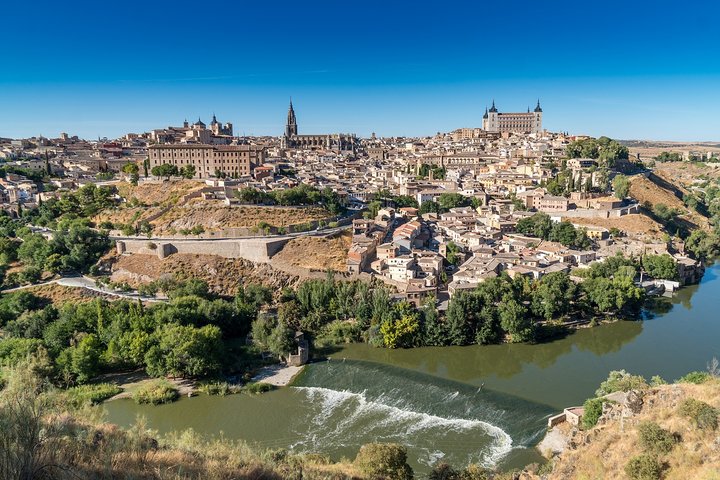
Toledo sits on a rocky hill almost encircled by a bend of the Tagus river, its skyline crowned by the Alcázar fortress and the Gothic cathedral. Toledo was the seat of the Spanish court until 1561, and it is known as the city of three cultures, with churches, synagogues and mosques from the Christian, Jewish and Muslim past. The historic centre is a World Heritage Site, a tangle of steep lanes.
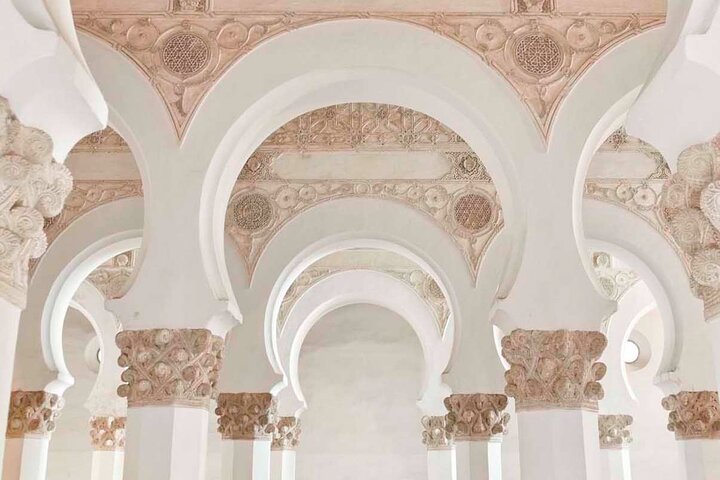
Top-ranked sights in Toledo: Zocodover Square (Plaza de Zocodover), Mirador del Valle, Santa María la Blanca Synagogue.
Special offers in Toledo
Was/now prices come from the operator, never from us.
Similar experiences
 Likely to sell outFree cancellation