The Real Manchester from a Real Mancunian | a walking tour
- 2 hours
- Free cancellation up to 24h before
- Guided in English
- Instant confirmation
Highlights
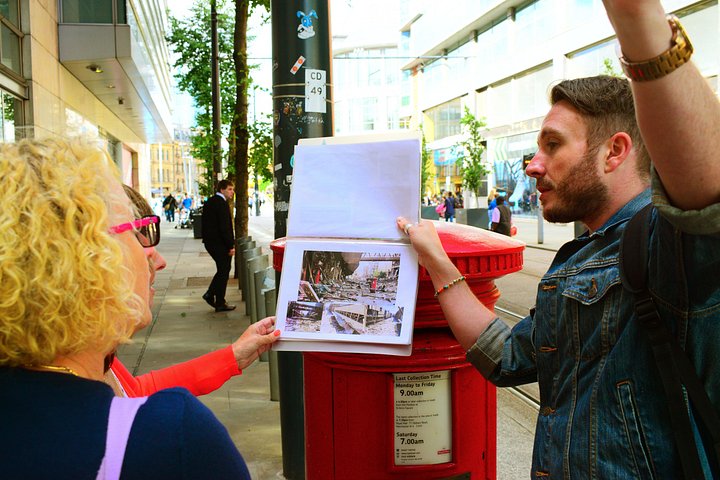
Discover the Manchester most visitors, and even many locals, walk straight past. Led by a lifelong Mancunian, this relaxed, small-group tour uses archive photographs, historic maps and on-location visuals to reveal the stories hidden in the city’s streets. From protest, music and innovation to pubs, homelessness and Manchester’s constant reinvention, this is much more than a checklist of landmarks. There’s plenty of time for questions, conversation and looking at the city in a completely different way.
Inclusions
What's included
- Insights into Manchester’s architectural and urban evolution
- Small group size for an interactive experience
- Guided walking tour led by a qualified architect
- Follow-up email with key references and recommended reading
- Use of archival maps, photos and diagrams during the tour
Itinerary
Start outside the former Free Trade Hall, on the site of the 1819 Peterloo Massacre. This opening stop sets the scene for Manchester’s story of protest, reform, civic pride and reinvention.
Beside the site of the Peterloo Massacre, we explore one of the defining moments in Manchester’s history and how it shaped the city’s political identity. This is not just a stop about a tragic event, but about how its legacy still echoes through Manchester’s public spaces, institutions and values. We’ll also connect Peterloo to later developments in the city, showing how one event influenced everything from civic change to the later story of the Free Trade Hall.
See the Midland Hotel, one of Manchester’s grand railway-age landmarks, and hear how travel, ambition and civic confidence reshaped this part of the city.
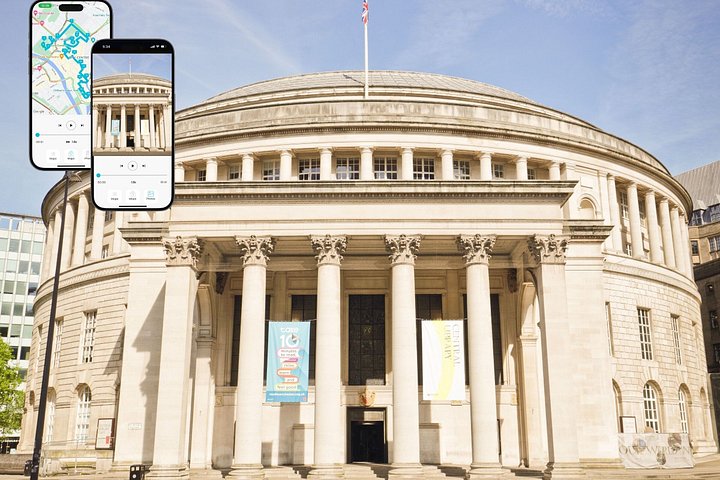
We pass between two of Manchester’s major civic buildings, at Library Walk, a controversial modern link that says a lot about how the city continues to change. We then explore Manchester’s long relationship with public learning, radical ideas and civic identity. Hidden around the building are subtle references to the Peterloo Massacre, offering a powerful reminder that Manchester’s story is not only about industry and growth, but also about protest, memory and who gets remembered.
Albert Square is often introduced through the Town Hall alone, but this stop goes further. Alongside the building’s history, restoration and symbolism, we look at the emblems and details that help define Manchester’s civic identity. We also focus on less obvious features in the square, including public artworks and overlooked design elements, using them to explore how the city presents itself, what it chooses to celebrate, and how the past is carried into the present.
This part of the tour looks at a quieter but revealing side of the city centre. Around St Mary’s, known as the Hidden Gem, we explore old passages, alleyways and fragments of historic street patterns that survive among larger modern blocks. It is a chance to think about how cities evolve: what gets preserved, what gets widened, what disappears completely, and how much of old Manchester still survives in unexpected corners. It is also where the city’s lost ginnels and intimate spaces become part of the story.
St Ann’s Square opens up another chapter of Manchester’s story. Here we look at the church, the surrounding architecture and the statues that reveal changing attitudes to religion, politics, commerce and public memory. The square also allows us to talk about what stood here before - Acres Field - and how this part of the city evolved from a more open landscape into one of central Manchester’s key historic spaces. It is a great example of how layers of the city remain visible if you know where to look.
Here the tour looks at power, punishment and changing urban life. Around King Street, we trace Manchester’s housing story, from Georgian townhouses and residential streets to the changing city centre of today. Nearby Back Pool Fold reveals a darker, lesser-known layer of Manchester’s past, where punishment and control once played out in public space. It is a stop that shows how even quiet corners can hold stories most people would never guess.
Here the tour shifts into Manchester’s cultural history, linking politics, place and music. We explore connections between Peterloo, the Free Trade Hall, the famous Sex Pistols gig, the emergence of Factory Records, and the wider underground scene that helped shape modern Manchester. Corbiere’s becomes part of that story too, not just as a bar, but as a small, characterful venue tied into the city’s creative life. This stop helps show how Manchester’s identity was shaped as much by subculture and sound as by commerce and architecture.
At the Royal Exchange, we look at cotton, trade, conflict and reinvention. This stop explores Manchester’s commercial rise, the legacy of the cotton industry, and the later transformation of the building into a theatre. It is also a chance to talk about how the 69 Theatre Company helped secure a new future for part of the old exchange, showing how historic buildings sometimes survive not by staying the same, but by being imaginatively reused.
Cancellation
Free cancellation up to 24 hours before the experience starts, for a full refund.
Reviews
5.0
- 55
- 40
- 30
- 20
- 10
Ratings come from 5 reviews collected by our booking partner. They are travellers' own words, in the order they were written — never reordered to flatter the experience.
Know before you go
- Meeting point
- We'll meet outside the front of The Edwardian Manchester hotel (the former Free Trade Hall), on Peter Street.
- Pickup
- Everyone meets at the starting point; there is no pickup.
- Ticket type
- Mobile or paper ticket accepted
- Group size
- Up to 15 travellers
- Operated by
- Ric Frankland
- Wheelchair accessible
- Infants and small children can ride in a pram or stroller
- Service animals allowed
- Public transportation options are available nearby
- Transportation options are wheelchair accessible
- All areas and surfaces are wheelchair accessible
- Suitable for all physical fitness levels
How it compares in Manchester
- Its from-price is 75% below the median of the 382 experiences we list in Manchester.
- Its length is typical for the group.
- By number of reviews it ranks 74 of 382.
- The operator lists free cancellation on it.
About Manchester
Manchester, the former cotton capital of north-west England, is a city of red-brick mills, canals, football, music and big museums.
Manchester grew in the nineteenth century as the centre of the cotton trade, and the warehouses, mills and canals of that age still shape the city. The Gothic Revival Town Hall by Alfred Waterhouse dominates Albert Square, the John Rylands Library holds a Victorian reading hall of carved stone and stained glass, and Castlefield has a Roman fort beside the canal basin. The Science and Industry Museum stands at the oldest surviving passenger railway station in the world.
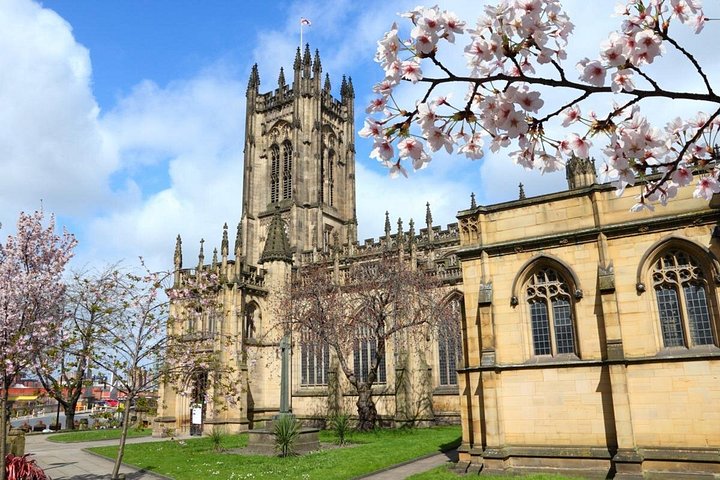
Top-ranked sights in Manchester: Etihad Stadium (City of Manchester Stadium), Manchester Cathedral, Manchester Central Library.
Special offers in Manchester
Was/now prices come from the operator, never from us.
![Arrival Private Transfer: Manchester Airport MAN to Liverpool in Business Car]() 6% offFree cancellation





Similar experiences
 Likely to sell outFree cancellation