The Highlights of Athens Private Shore Excursion 8 Hours
- 8 hours
- Free cancellation up to 24h before
- Guided in English
- Instant confirmation
Highlights
Highlights • An 8 hours private shore excursion in Athens • Visit both the Acropolis of Athens with its Parthenon & the new Acropolis museum • Visit the picturesque neighborhood of Plaka and have a free time to enjoy lunch in a Greek restaurant • Highly recommended for cruise passengers visiting Athens for a whole day or for several hours • Professional English speaking tour driver • Travelers can customize the tour within the itinerary!
Inclusions
What's included
- Transportation by air-conditioned vehicle appropriate for the size of your group
- A professional English speaking tour driver
- Piraeus Port pickup and drop-off
- Hotel pickup and drop-off in Athens
What's not
- Entrance fees to the archaeological sites and museum
- Gratuities
- Food and drinks
- English-speaking licensed tour guide (We can arrange for a tour guide for you with an extra cost)
Itinerary
Pick up from your cruise ship pier at Piraeus port. We will drive along the coastal road of Saronic Gulf to enjoy the Piraeus and Athens riviera. The Port of Piraeus is the chief seaport of Athens, Greece, located on the Saronic Gulf on the western coasts of the Aegean Sea. Piraeus port is the largest port in Greece, home to Europe's biggest passenger port, and as such is a huge draw for cruise ships from around the world bringing tourists eager to explore this centuries-old city, and one of the largest in Europe. But yet another major draw is the fact that it's easy to visit Athens because it's located nearby. The Greek capital city of Athens is just 12 kilometers or 7 miles from Piraeus port. We will drive directly to the Acropolis to admire the Temple of Democracy!
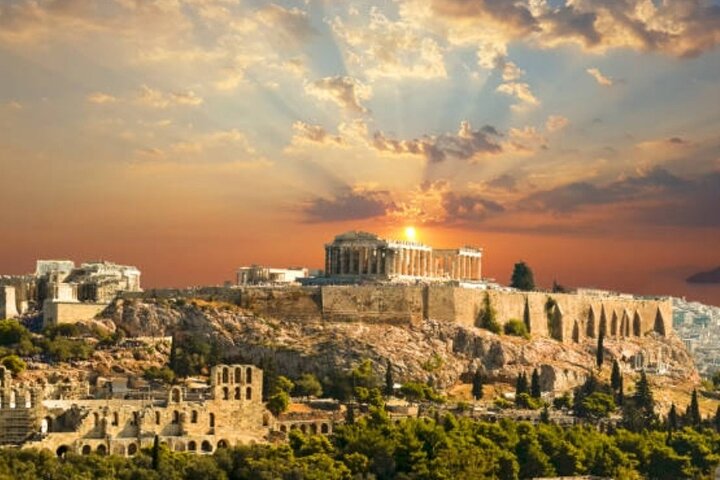
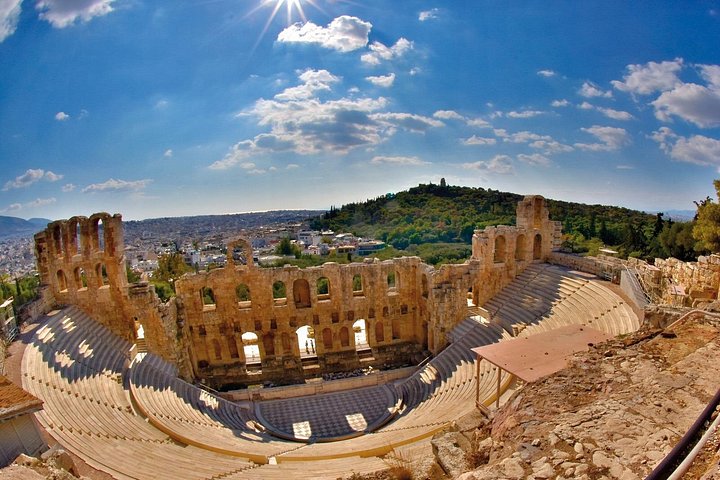
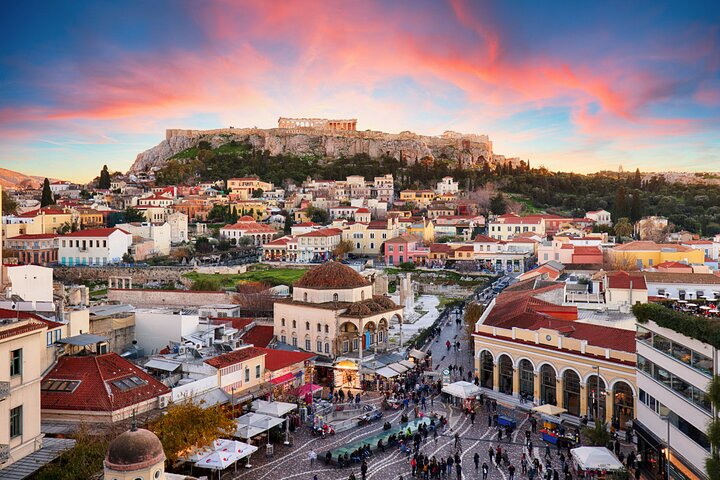
The Acropolis of Athens is an ancient citadel located on a rocky outcrop above the city of Athens, and its monuments are universal symbols of the classical spirit and civilization and form the greatest architectural and artistic complex bequeathed by Greek Antiquity to the world. In the second half of the 5th-century bc, Athens, following the victory against the Persians and the establishment of democracy, took a leading position amongst the other city-states of the ancient world. In the age that followed, as thought and art flourished, an exceptional group of artists put into effect the ambitious plans of Athenian statesman Pericles and, under the inspired guidance of the sculptor Pheidias, transformed the rocky hill into a unique monument of thought and the arts. The most important monuments were built during that time: the Parthenon, built by Ictinus, the Erechtheon, the Propylaea, the monumental entrance to the Acropolis, designed by Mnesicles, and the small temple Athena Nike.
The Propylaea of the Athenian Acropolis was built on the west side of the hill, where the gate of the Mycenaean fortification once stood. The first propylon, or gate, was constructed in the age of Peisistratos (mid-sixth century BC), after the Acropolis had become a sanctuary dedicated to Athena. A new propylon, built-in 510-480 BC, was destroyed by the Persians in 480 BC and repaired after the end of the Persian Wars, during the fortification of the Acropolis by Themistokles and Kimon. The monumental Propylaia admired by modern visitors was part of the great Periclean building program. They have erected in 437-432 BC, after the completion of the Parthenon, by architect Mnesikles. The original building plan was particularly daring both in architectural and artistic terms but was never completed. The pie-shaped building of Pentelic marble frames beautifully the entrance to the sacred precinct. The central section, the propylon proper, had an outer (west) and inner (east) facade...
The temple of Athena Nike stands at the southeast edge of the sacred rock atop a bastion, which in Mycenaean times protected the entrance to the Acropolis. The Classical temple, designed by architect Kallikrates and built-in 426-421 BC, succeeded earlier temples also dedicated to Athena Nike. The first one of these, a mid-sixth century BC wooden temple was destroyed by the Persians in 480 BC. The eschara, the altar believed to have supported the cult statue of the goddess, dates to this period. Under Kimon, c. 468 BC, a small temple of tufa was erected around the base of the statue and a new altar was built outside the temple. The foundations of these early temples and altars are preserved inside the bastion under the floor of the Classical structure. Pausanias (1, 22, 4) refers to this temple as that of the Apteros Nike, or Wingless Victory, and mentions that the cult statue of the goddess had no wings so that she would never leave Athens. Apart from the cult of Athena Nike other...
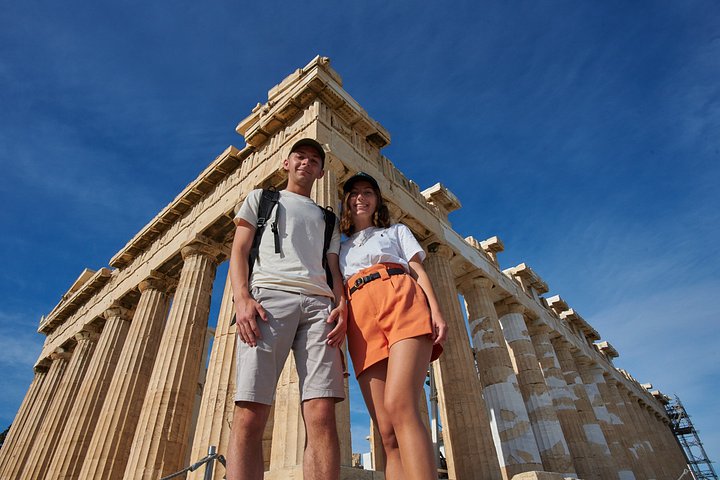
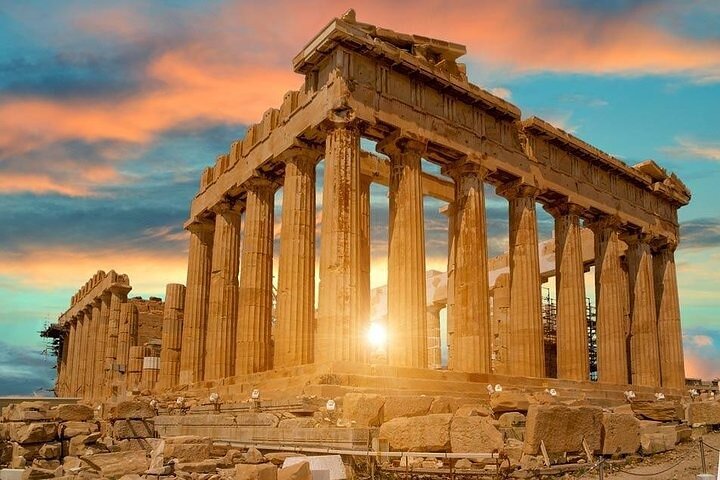
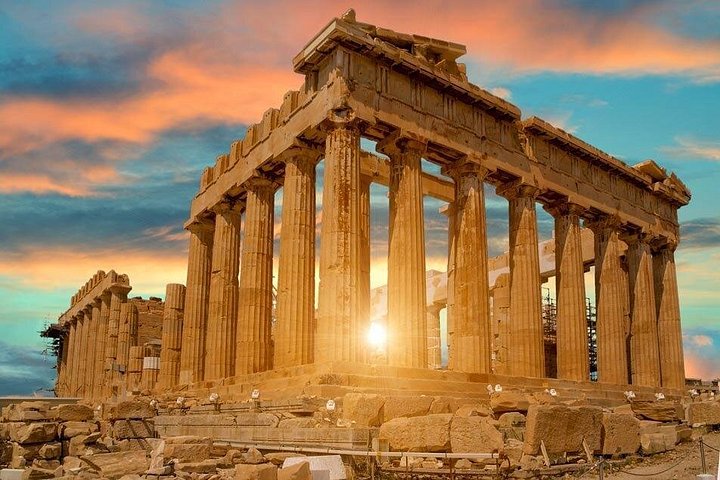
The Parthenon, dedicated by the Athenians to Athena Parthenos, the patron of their city, is the most magnificent creation of Athenian democracy at the height of its power. It is also the finest monument on the Acropolis in terms of both conception and execution. Built between 447 and 438 BC, as part of the greater Periklean building project, this so-called Periklean Parthenon (Parthenon III) replaced an earlier marble temple (Parthenon II), begun after the victory at the battle of Marathon at approximately 490 BC and destroyed by the Persians in 480 BC. This temple replaced the very first Parthenon (Parthenon I) of c. 570 BC from Periklis . The Parthenon was designed by architects Iktinos and Kallikrates, while the sculptor Pheidias supervised the entire building program and conceived the temple's sculptural decoration and a chryselephantine statue of Athena. The Parthenon is a double peripteral Doric temple with several unique and innovative architectural features.
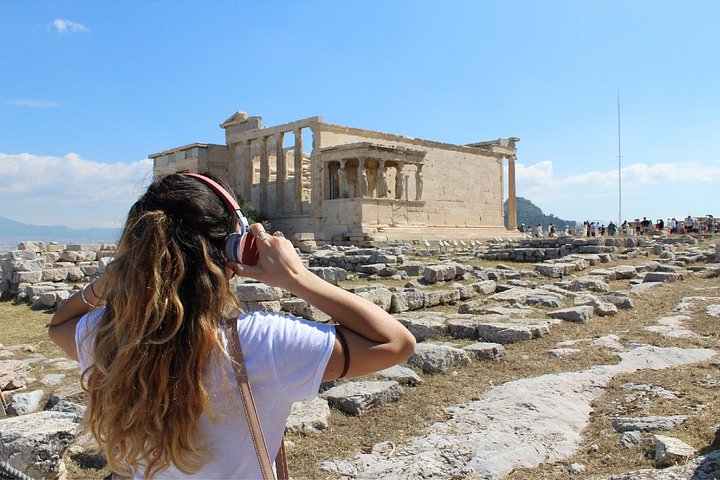
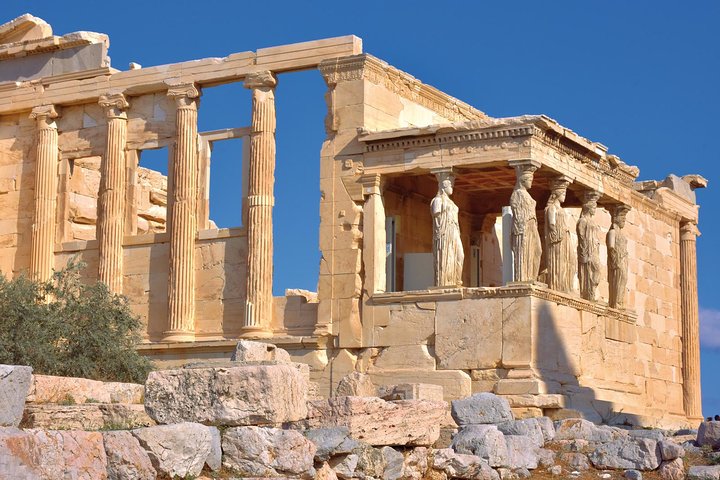
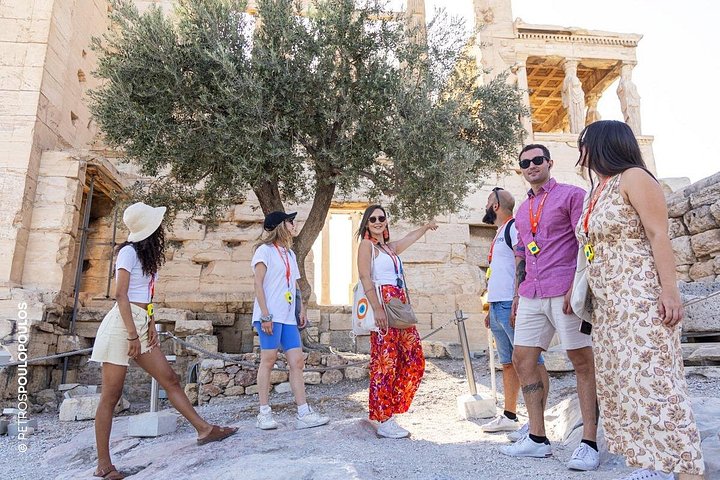
The elegant building known as the Erechtheion, on the north side of the sacred rock of the Acropolis, was erected in 421-406 BC as a replacement of an earlier temple dedicated to Athena Polias, the so-called "Old temple". The name Erechtheion, mentioned only by Pausanias (1, 26, 5), derives from Erechtheus, the mythical king of Athens, who was worshipped there. The sanctuary also contained the grave of Kekrops and the traces of the dispute between Athena and Poseidon for the possession of the city of Athens. Another door on the south facade of the western temple opened onto the porch of the Karyatides, a pi-shaped structure with six female statues instead of columns to support the roof. Created by Alkamemes or Kallimachos, the statues were later named Karyatides after the young women from Karyes of Laconia who danced in honor of the goddess Artemis. Five of them are in the Acropolis Museum and another in the British Museum; those on the building are casts.
Changing of the Greek Guards; The Presidential Guard is a ceremonial infantry unit that guards the Tomb of the Unknown Soldier and the Presidential Mansion in Athens, Greece. The unit is distinguished as the last unit of Evzones in the Hellenic Army and is closely associated with the traditional Evzone uniform, which evolved from the clothes worn by the klephts in the Greek War of Independence. The most visible item of this uniform is the fustanella, a kilt-like garment, which has 400 pleats representing the number of years Greece was under Turkish occupation. They are handmade by special craftsmen taking around 80 days to make. In 1868–1914 and 1937–1973 (with interruptions), the guard also included a cavalry company. They guard the grave of the Unknown Soldier represents the common memory of all unknown soldiers killed at war. The changing of the Greek guards occurs every day at the top of the hour.
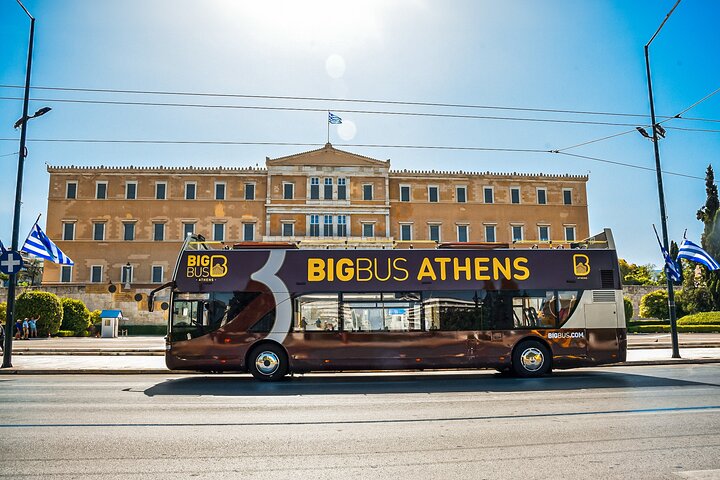
The history of the impressive building of the Hellenic Parliament is intimately linked to the history of the Modern Greek state. Initially, the building served as the palace of Kings Otto and George I. It became the Parliament and Senate building a hundred years after it was constructed and still houses the Hellenic Parliament today. Through all those years, the building has undergone a series of changes and has been modernized. From 1836 to 1862; After the selection of Otto, Prince of Bavaria, as King of Greece, and the relocation of the Greek capital to Athens, it was decided to erect the palace on Boubounistra Hill. It proved an inspired choice. The chosen location was in the center of the new capital, easily defendable and cool. On February 6th, 1836 the founding stone was laid at the highest eastern point of the city. The ancient quarry of Pentele was the source of marble. King and queen Otto, and Amalia, took up residence on July 25th, 1843.
The Tomb of the Unknown Soldier is a war memorial located in Syntagma Square in Athens, in front of the Old Royal Palace. It is a cenotaph dedicated to the Greek soldiers killed during war. It was sculpted between 1930 and 1932 by sculptor Fokion Rok. The tomb is guarded by the Evzones of the Presidential Guard.
The Presidential Mansion is the place to be to see a Changing the Guard ceremony in Athens,Greece. Changing of the Guard ceremonies take place at the Presidential Mansion and at the Tomb of the Unknown Soldier, which is off Syntagma Square below the Hellenic Parliament. The Changing the Guard at the Tomb of the Unknown Soldier in particular has become a popular tourist attraction in Athens. The Evzone's, accompanied by a military band march from their barracks, just behind the Parliament Building, along the Vasilissis Sofias Avenue to the Tomb of the Unknown soldier where a ceremonial change of guards takes place every Sunday at 11:00. The Evzone's provides a 24-hour honor guard, with an hourly sentry change, which is carried out in slow motion, that some say is to allow the troops circulation to resume after standing absolutely motionless. Many smiles when they see the pompoms on the boots of the guards in Athens but make no mistake these men are part of an elite light infantry unit..
The National Garden of Athens, located behind the Parliament and Syntagma Square, is a green oasis in the heart of the city. The National Garden of Athens is a large green space of over 160.000 square meters adorned with over 500 types of plants and trees from all over the world. Former Royal Gardens; The gardens were designed in 1839 by order of Queen Amalia of the Greeks, but were not open to the public until 1923 when they were renamed “National Garden”. The designer of the gardens, Friedrich Schmidt, traveled all over the world in search of the most beautiful, exotic and unique flora. This task was also granted to the Hellenic Navy.
The Academy of Athens was founded with the Constitutional Decree of March 18th, 1926, as an Academy of Sciences, Humanities, and Fine Arts. The same Decree appointed its first Members, who were all eminent representatives of the scientific, intellectual, and artistic circles of that era.
Cancellation
Free cancellation up to 24 hours before the experience starts, for a full refund.
Reviews
4.9
- 537
- 41
- 32
- 20
- 10
Ratings come from 40 reviews collected by our booking partner. They are travellers' own words, in the order they were written — never reordered to flatter the experience.
Know before you go
- Pickup
- Pickup is included for everyone.
- Ticket type
- Mobile or paper ticket accepted
- Operated by
- Athens Tours Greece
- Specialized infant seats are available
- Travelers should have at least a moderate level of physical fitness
- At time of booking, Cruise ship passengers must provide the following information at time of booking: ship name, docking time, disembarkation time and re-boarding time
- Important note: You will have a professional English-speaking driver with good knowledge of the history and culture of Greece, to guide you till you enter archaeological sites and museums according to the program. Tour drivers are not licensed to companion you inside the archaeological sites and museums. If you'd like to have one, we can arrange it for you at an additional cost. Licensed by the state tour guides are freelance and it is subject to availability on bookings day!
- Athens International Airport taxi transfers can be arranged on request at an extra cost!
- We suggest that you have your admission tickets pre-purchased as there is a chance not to find availability, please note that we can buy the tickets for you in advance -under a small service fee.
How it compares in Athens
- Its from-price is 51% above the median of the 335 city tours we list in Athens.
- It is longer than most of them.
- By number of reviews it ranks 48 of 335.
- The operator lists free cancellation on it.
About Athens
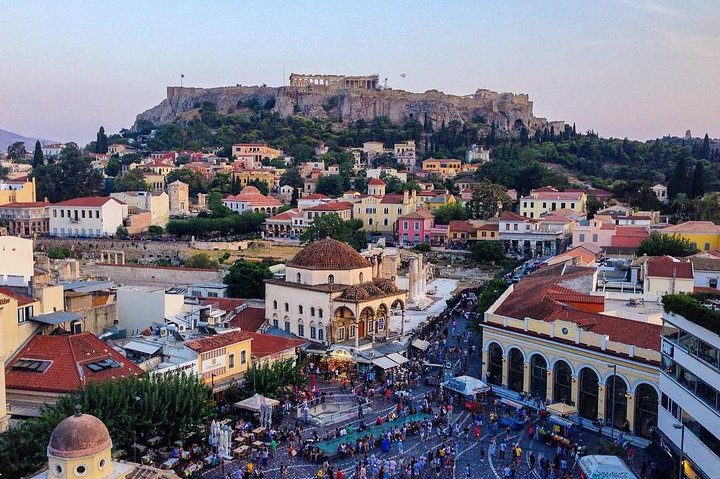
Athens sets the Acropolis above a sprawling modern capital, where ancient ruins, hillside lanes and long taverna evenings sit side by side.
The Parthenon crowns the Acropolis, flanked by the Erechtheion and its porch of caryatids, and the Acropolis Museum at the foot of the hill displays sculpture found on the rock. Around it, the Ancient Agora, the Temple of Olympian Zeus, Hadrian's Arch and the marble Panathenaic Stadium make the classical city easy to walk through.
Top-ranked sights in Athens: Acropolis, Parthenon, Acropolis Museum.
Special offers in Athens
Was/now prices come from the operator, never from us.
Similar experiences

Hop-on hop-off in Athens
![5 Day Mykonos & Santorini Trip]()
5 Day Mykonos & Santorini Trip
from$2,277