Likely to sell outFree cancellation
Categories in Bayeux
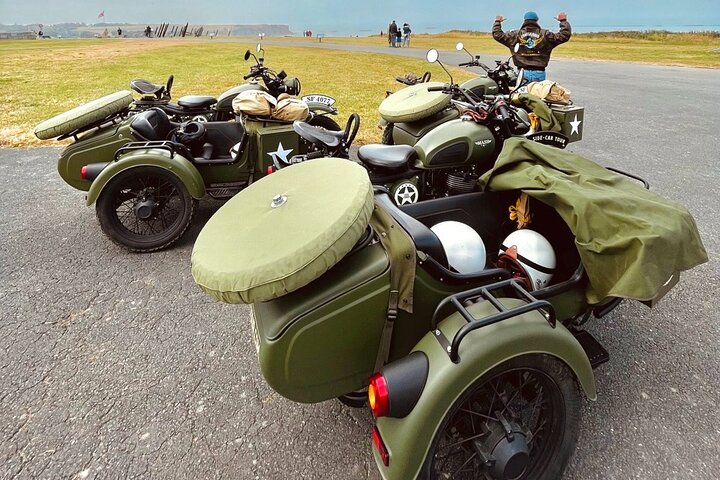
Unfold the D-Day stories with your local tour guide. This tour is designed to bring to life some of the highlights of the Airborne objectives, and follow Easy Company through Normandy. Excellent tour for the fans of Band of Brothers. Strictly private tour. Pick up at the location of your choice Bayeux or Caen area. Other locations please enquire first before booking.
A small and quiet rural community, Saint-Mère-Eglise was of great importance as it straddled all communications to Cherbourg. While nearly 13,000 American paratroops were being dropped under a full moon into the confusion of the surrounding countryside, famously one company was dropped, at about 1:45am, onto the village square and cattle market of this now world-famous village.
In the early hours of June 6, 1944, parachutes on Normandy began. A Douglas C-47 transport aircraft belonging to the 439th Troop Carrier Group and carrying the company officer of the 506th PIR Easy Company, 101st Airborne, is hit by the German anti-aircraft defense and is trying to land. It crashed at 1:12 hitting a hedge, killing all crew members and parachutists on board.
On the morning of June 6, 1944, the battery of Brécourt was active and opened fire on the American troops which landed on Utah Beach: the paratroopers were therefore in charge of seizing the position and destroying the howitzers. It was Lieutenant Richard D. Winters who received this mission, with a handful of men belonging to the Easy Company of the 506th PIR. Winters, in marked net inferiority, knew that the effect of surprise was the best asset of his action. He ordered the opening of the fire which allowed the two groups to move to the base of assault: when the support fire stopped, Winters and Compton stormed the German position while using the trenches network from which they operate from one howitzer to another. Surprised, the Germans were disorganized and reacted late, leaving American paratroopers the opportunity to destroy the guns before retreating. Winters had 4 killed and 6 wounded in his ranks.
Along the causeway to Utah Beach stands a monument to combat leadership, dedicated June 6, in memory of Maj. Richard Winters, who led paratroopers from Company E, 2nd Battalion, 506th Parachute Infantry Regiment, 101st Airborne Division, during the D-Day landings.
Utah Beach was the first beach to be stormed by the Allies on the morning of 6 June 1944. It was chosen to establish a beachhead in the Cotentin region in order to capture the town of Cherbourg and its deep water port. At the end of the day, more than 23,000 American soldiers landed to fight a titanic battle and liberate France.
Visit the museum at Utah Beach.
On June 6, 1944, the American paratroopers quickly seized the village because of its proximity to the jump zone: about thirty German soldiers surrendered. The parasites leave some elements in Angoville-au-Plain and then head towards their respective objectives. Two American medics belonging to the 2nd Battalion of the 501st Parachute Infantry Regiment, Kenneth J. Moore and Robert E. Wright, settled in the small village church two hours after touching the ground of France. They put in place an advanced medical antenna and hang a white flag with a red cross at the door. In the emergency and with the medical equipment that they manage to recover on the zone of release, they treat the wounded, both American and German.
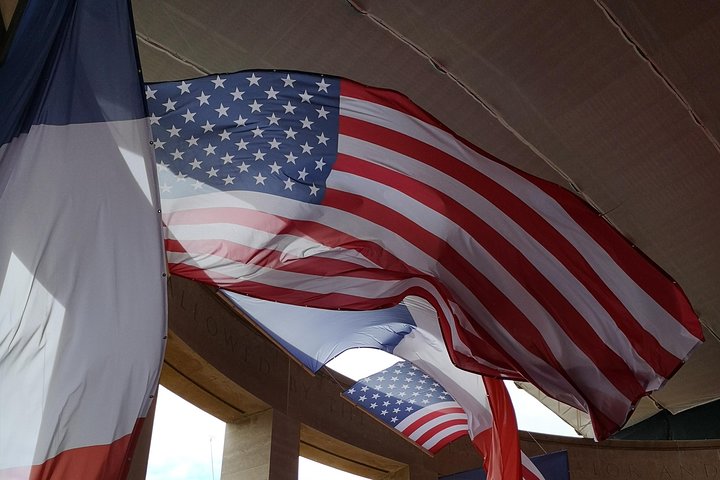
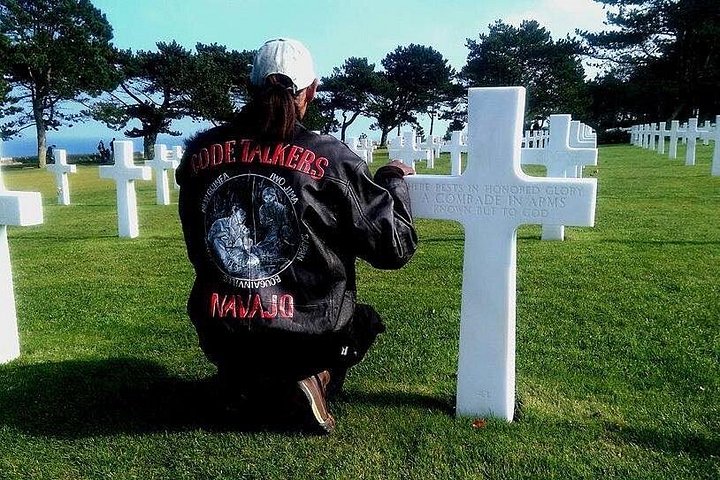
The Normandy American Cemetery and Memorial is a World War II cemetery and memorial in Colleville-sur-Mer, Normandy, France, that honors American troops who died in Normandy during World War II. It is located on the site of the former temporary battlefield cemetery of Saint Laurent, covers 172.5 acres and contains 9,389 burials.
Omaha Beach, second beach from the west among the five landing areas of the Normandy Invasion of World War II. It was assaulted on June 6, 1944 (D-Day of the invasion), by units of the U.S. 29th and 1st infantry divisions, many of whose soldiers were drowned during the approach from ships offshore or were killed by defending fire from German troops placed on heights surrounding the beach.
All sales are final. No refund is available for cancellations.
5.0
Ratings come from 2 reviews collected by our booking partner. They are travellers' own words, in the order they were written — never reordered to flatter the experience.
Bayeux is a small Norman town of medieval lanes and a Gothic cathedral, home to a famous embroidery of the Norman conquest and close to the D-Day beaches.
A strip of embroidered linen almost seventy metres long, made in the eleventh century, tells the story of the Norman conquest of England in 1066 and hangs in its own museum in town. The cathedral, whose crossing spire towers over the rooftops, was consecrated in 1077 with William the Conqueror present. Bayeux escaped bombing in 1944, so its old centre of half-timbered and stone houses along the River Aure is largely intact.
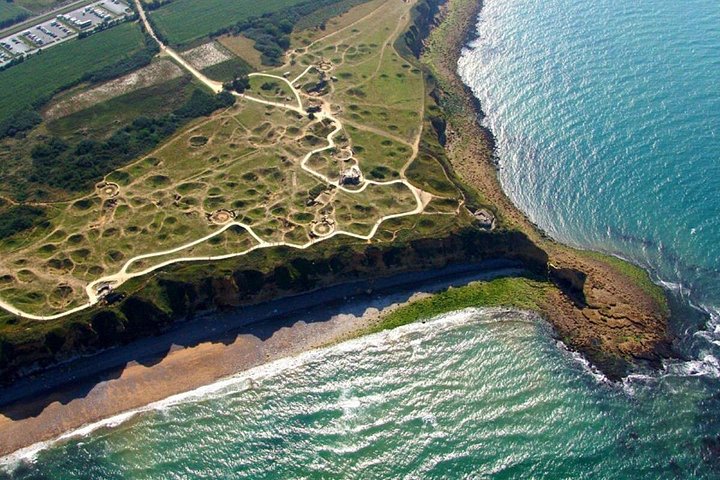
Top-ranked sights in Bayeux: Omaha Beach, Pointe du Hoc, Normandy American Cemetery and Memorial.
Add Ticket Hall to your home screen
Tickets and city guides, one tap away, even offline.
Ticket Hall