Marrakech Souks & Hidden Gems Walking Tour
- 3–4 hours
- Free cancellation up to 24h before
- 2 languages
- Instant confirmation
Highlights
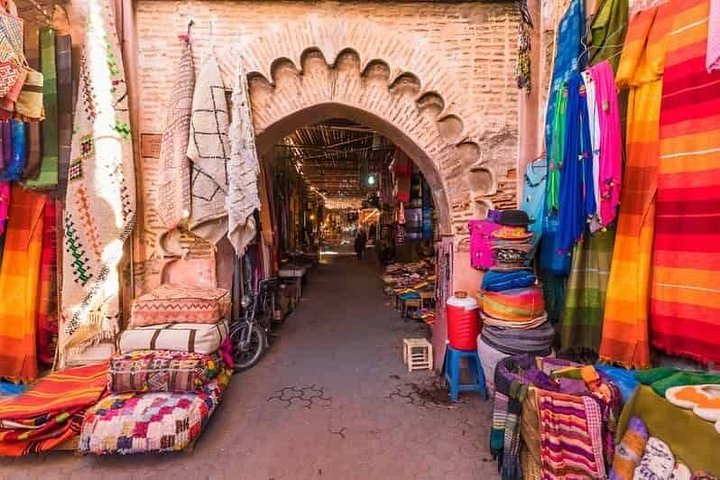
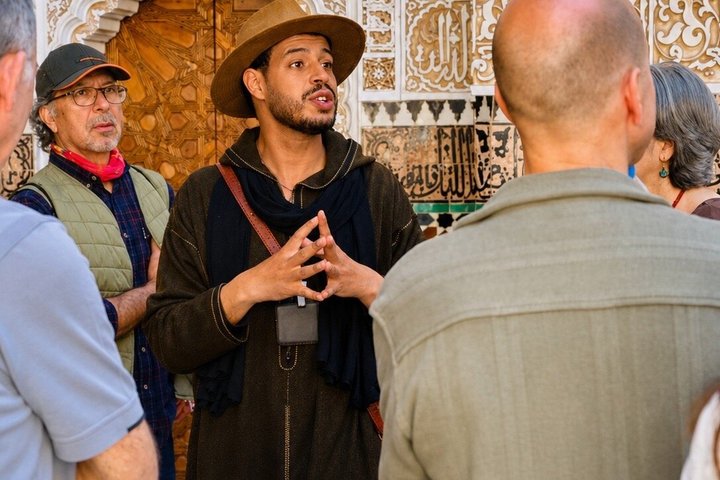
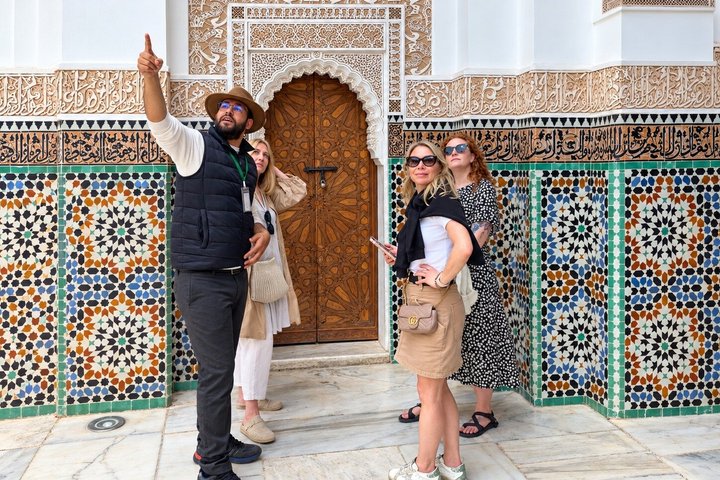
The Uniqueness: Going Beyond the Surface Behind-the-Scenes: Instead of just shopping in the main retail souks (like Souk Semmarine), the guide takes you down winding, unmarked alleys to working artisan quarters. You'll see crafts being made—like watching a metalsmith hammer patterns onto a lantern, observing leather being dyed, or seeing weavers at their loom. Connection to Craft: This offers a profound appreciation for the centuries-old traditional methods that still underpin Moroccan craftsmanship, providing a genuine cultural moment rather than just a transaction. The Local Rhythm: You get a glimpse into the daily life of the Medina residents, seeing where locals shop, eat, and socialize—places you could never find on your own. 3. The Local Guide's Expertise Navigation of the Maze: The souks are a labyrinth. Your guide acts as a vital compass, navigating the complex, unnamed alleyways with ease, eliminating the stress of getting lost.
Inclusions
What's included
- Drink a mint tea at the highest roof top to admir Marrakech beauty.
Itinerary
The Dyers' Souk is a lively, sensory experience defined by a rainbow of colors. As you enter, often through an archway near the historic Mouassine fountain, you'll find yourself surrounded by the workspace of the dyers, an art form that has remained largely unchanged for centuries. A Feast for the Eyes: The most iconic sight is the wool and fabrics hanging to dry. Skeins of freshly dyed wool, fabric, and sometimes leather, are suspended on bamboo poles strung across the narrow alleyways, creating a canopy of dazzling colors overhead. The sight transforms daily based on which colors the artisans are working with. The Artisanal Process: The souk is a working environment where you can observe the dyers in action. They gather around large metal pots or cauldron-like vats, using charcoal fires to boil water and set the dyes. The dye vats contain vibrant pigments extracted from natural sources, such as: Plant-based dyes: woad, saffron, poppy flowers. Mineral dyes: indigo, cochineal.
The tanneries of Marrakesh are one of the city's most ancient and visceral sights, offering a direct view into The Traditional Tanning Process The methods used in the Marrakesh tanneries have remained largely unchanged since the medieval era, dating back to the time of the Almoravid Dynasty. The process has several traditional steps: Preparation (Soaking and De-hairing): Raw hides, which arrive usually via donkey cart, are first soaked in a solution of water and lime to clean and soften them, and to loosen the hair. Next, the hides are submerged in the fermentation pits—the notorious mixture containing pigeon droppings, water, and lime. This solution helps to make the leather supple and flexible. Workers then manually scrape the skins with sharp tools to remove any remaining hair, fat, and flesh. Tanning and Coloring: The cleaned and prepared hides are washed again, and then placed into the vibrant dye pits.
Handmade Craftsmanship: Almost all traditional Moroccan rugs are meticulously hand-woven by Berber women, a skill passed down through generations from mother to daughter. This tradition often means that each rug is a unique, one-of-a-kind piece. Materials: They are typically made from 100% natural materials, most commonly high-quality, hand-spun wool from the sheep of the Atlas Mountains, prized for its softness and durability. Other materials like cotton, silk, or even recycled textiles (in Boucherouite rugs) can be used. Weaving & Climate: The style and thickness of the rug often reflect the climate of its region of origin: Thick, High-Pile: Found in the cold, snowy Atlas Mountains (e.g., Beni Ourain) for warmth and insulation. Flat-Woven (Kilim): Made for the hotter, more nomadic regions as they are lightweight, durable, and easy to transport.
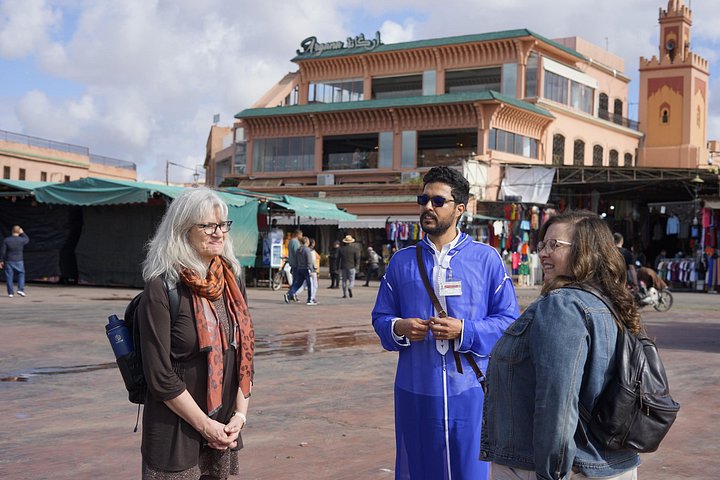
A UNESCO Cultural Space The square was proclaimed a site of Intangible Cultural Heritage of Humanity by UNESCO in 2001 (and inscribed in 2008). It is recognized for representing a unique concentration of popular Moroccan cultural traditions performed through musical, religious, and artistic expressions. Meaning of the Name The translation of "Jemaa el-Fnaa" has several interpretations: "The Last Square" or "The Place Where Everything Ends" "The Mosque of the Square" Poetic, though likely false, interpretations include the "Assembly of the Dead" or "Place of the Vanished Mosque." History and Function Historical Hub: Dating back to the 11th century, the square was originally a trading post for caravans that crossed the Sahara Desert, carrying items such as gold, spices, and medicines. Judicial Center: In ancient times, it was also a place of justice, historically hosting public executions of criminals.
Cancellation
Free cancellation up to 24 hours before the experience starts, for a full refund.
Reviews
4.7
- 514
- 40
- 30
- 20
- 11
Ratings come from 15 reviews collected by our booking partner. They are travellers' own words, in the order they were written — never reordered to flatter the experience.
Know before you go
- Meeting point
- I will waiting for you in front of cafe France.
- Pickup
- Everyone meets at the starting point; there is no pickup.
- Ticket type
- Mobile or paper ticket accepted
- Group size
- Up to 16 travellers
- Operated by
- Az-eddine Ben jouhra
- Public transportation options are available nearby
- Suitable for all physical fitness levels
How it compares in Marrakech
- Its from-price is 35% below the median of the 41 shows & theatre we list in Marrakech.
- Its length is typical for the group.
- By number of reviews it ranks 13 of 41.
- The operator lists free cancellation on it.
About Marrakech
At the foot of the Atlas Mountains, red-walled Marrakech is famed for its maze-like medina, lively main square and tranquil riads and gardens.
Jemaa el-Fnaa, the great square at the centre of the medina, changes character through the day, from juice sellers and snake charmers in the morning to smoke-wreathed food stalls and musicians after dark. The minaret of the Koutoubia Mosque rises nearby as the city's landmark, and the souks spread north in a warren of lanes selling leather, lanterns, carpets and spices.
Top-ranked sights in Marrakech: Atlas Mountains, Tizi-n'Tichka Pass, Jemaa el-Fna (Djemaa el-Fna).
Special offers in Marrakech
Was/now prices come from the operator, never from us.