Marrakech Half-Day Architectural and Historical Tour
- 3–4 hours
- Free cancellation up to 24h before
- 2 languages
- Instant confirmation
Highlights
Discover the architectural gems and historical landmarks of Marrakech on this immersive tour, focusing on the city's unique blend of Moroccan and Berber architectural styles. From the grand mosques and palaces to the intricate details of the medina’s streets, this tour takes you through the heart of Marrakech’s rich history and stunning craftsmanship. Each stop is an opportunity to learn about the influences that have shaped the city's iconic structures. This Architecture and Historical Tour is perfect for anyone interested in understanding the deeper cultural and historical layers of Marrakech. Whether you are an architecture enthusiast or simply someone who appreciates beauty and craftsmanship, this tour will give you a unique perspective on the rich architectural heritage of Morocco.
Inclusions
What's included
- Local Taxes
- Private Professional English or French Speaking Guide.
What's not
- Entrance Fees
- Persenal drinks
- Private transportation
Itinerary
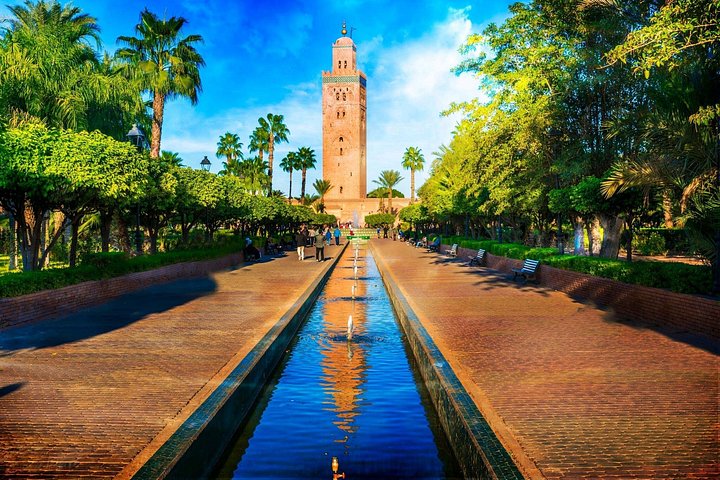
We will start our tour by visiting the Koutoubia Mosque, one of the most iconic landmarks in Marrakech. This 12th-century mosque, built during the reign of the Almohad Caliphate, is a fine example of Moroccan Hispano-Moorish architecture. The mosque’s impressive minaret, which rises 77 meters (253 feet) above the city, is visible from all corners of Marrakech. It is considered a prototype for the design of other minarets in the region, notably the Hassan Tower in Rabat and the Giralda in Seville. Learn about the geometric patterns, horseshoe arches, and stucco carvings that define this Islamic architectural masterpiece.
Next, head to the Bab Agnaou gate, one of the most beautiful and historically significant gates in Marrakech. Built in the 12th century, this entrance to the Kasbah district was designed in a distinctive Almohad style, with intricate stucco work and large stone blocks. As you explore the Kasbah, you’ll see how the Berber architectural influence shapes the area, with narrow alleys, decorative mashrabiyas, and towering kasbahs (fortified homes). The Kasbah was historically home to the royal family and officials, and its architecture reflects both the grandeur and practicality of Berber and Arab designs.
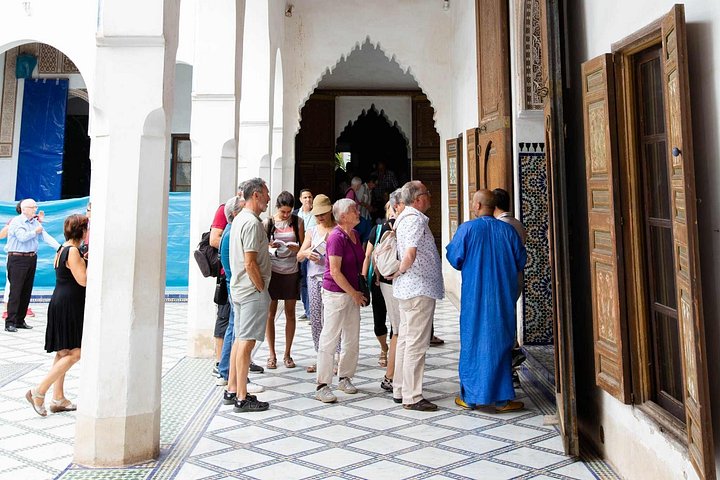
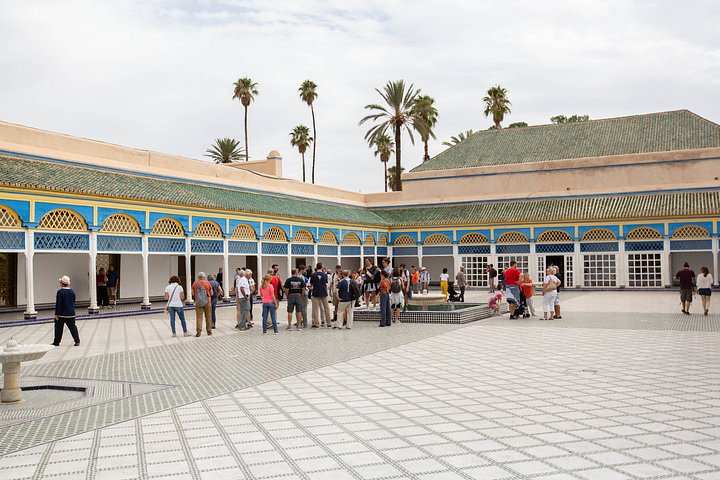
Step into the opulence of the Bahia Palace, an exquisite example of Moroccan architecture from the late 19th century. The palace is a masterpiece of Islamic and Moroccan craftsmanship, combining elements of Andalusian, Moorish, and Berber styles. Wander through its stunning courtyards, tranquil gardens, and beautifully decorated rooms, where intricate zellige tiles, stucco work, and wooden ceilings are showcased at their finest. The layout of the palace is also a perfect representation of traditional Islamic architectural principles, such as symmetry, use of light, and the integration of indoor and outdoor spaces.
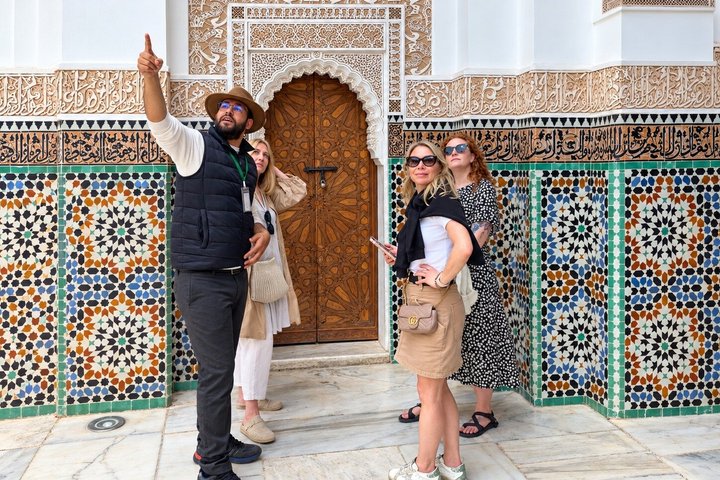
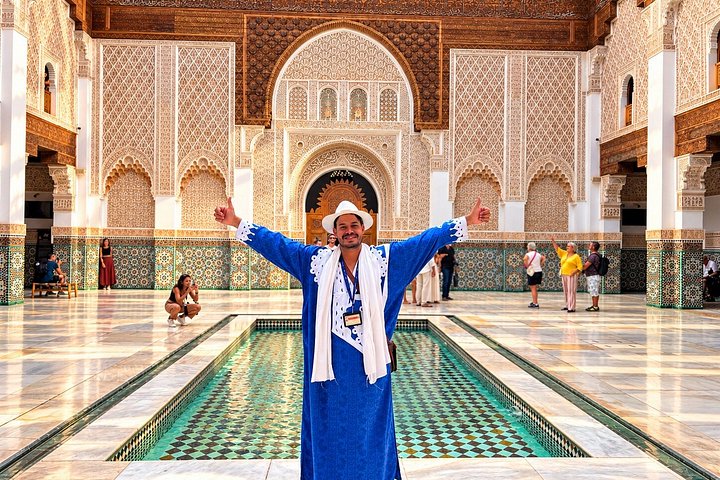
We conclude our tour at the Ben Youssef Madrasa, one of the most beautiful and well-preserved examples of Moroccan Islamic architecture in Marrakech. Founded in the 14th century, this former religious school is a prime example of Moroccan architectural grandeur, with its richly decorated stucco work, mosaic tiles (zellige), and intricately carved wooden ceilings. The madrasa’s central courtyard, with its tranquil pool and geometric garden, showcases the importance of water and greenery in Moroccan design. The Islamic calligraphy, arabesques, and floral patterns that decorate the walls are all part of a style known as “Arabo-Andalusian”, blending influences from Morocco, Andalusia, and the wider Islamic world.
We conclude our tour at the Ben Youssef Madrasa, one of the most beautiful and well-preserved examples of Moroccan Islamic architecture in Marrakech. Founded in the 14th century, this former religious school is a prime example of Moroccan architectural grandeur, with its richly decorated stucco work, mosaic tiles (zellige), and intricately carved wooden ceilings. The madrasa’s central courtyard, with its tranquil pool and geometric garden, showcases the importance of water and greenery in Moroccan design. The Islamic calligraphy, arabesques, and floral patterns that decorate the walls are all part of a style known as “Moorish-Andalusian”, blending influences from Morocco, Andalusia, and the wider Islamic world.
Cancellation
Free cancellation up to 24 hours before the experience starts, for a full refund.
Know before you go
- Pickup
- Pickup is included for everyone.
- Ticket type
- Mobile or paper ticket accepted
- Operated by
- OSAID TOURS
- Wheelchair accessible
- Infants and small children can ride in a pram or stroller
- Service animals allowed
- Public transportation options are available nearby
- Specialized infant seats are available
- Suitable for all physical fitness levels
- This walking tour of Marrakech lasts 3 to 4 hours, featuring leisurely stops at key historical and cultural sites. It’s designed for those who enjoy exploring vibrant neighborhoods, iconic landmarks, and the bustling souks on foot. Participants should be comfortable walking for extended periods and navigating uneven surfaces, as some areas may have cobblestones or stairs.
How it compares in Marrakech
- Its from-price is 59% below the median of the 7526 experiences we list in Marrakech.
- It is shorter than most of them.
- The operator lists free cancellation on it.
About Marrakech
At the foot of the Atlas Mountains, red-walled Marrakech is famed for its maze-like medina, lively main square and tranquil riads and gardens.
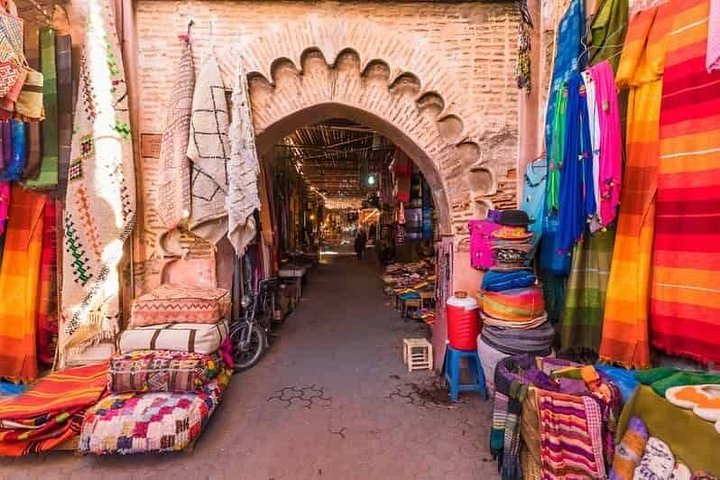
Jemaa el-Fnaa, the great square at the centre of the medina, changes character through the day, from juice sellers and snake charmers in the morning to smoke-wreathed food stalls and musicians after dark. The minaret of the Koutoubia Mosque rises nearby as the city's landmark, and the souks spread north in a warren of lanes selling leather, lanterns, carpets and spices.
Top-ranked sights in Marrakech: Atlas Mountains, Tizi-n'Tichka Pass, Jemaa el-Fna (Djemaa el-Fna).
Special offers in Marrakech
Was/now prices come from the operator, never from us.