Likely to sell outFree cancellation
Categories in Bayeux
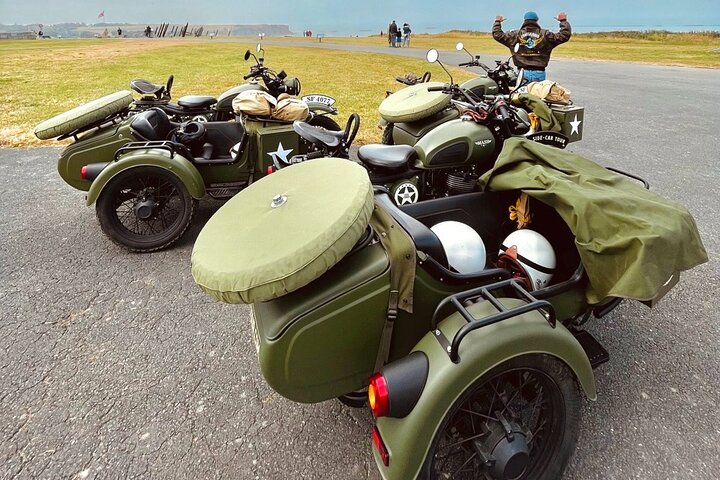
Treat yourselves to a thorough 2-day tour of the American Landing Beaches. This tour is done over 2 consecutive days and will bring to life the achievements of the American troops in Normandy on June 6th, 1944. It is possible to customize this tour if you desire, just let us know upon booking.
Start your tour in Sainte Mere Eglise. The town played a significant part in the World War II Normandy landings because of its position in the middle of route N13, which the Germans would have used to counterattack Allied landings on Utah and Omaha Beaches. In the early morning of 6 June 1944, mixed units of the U.S. 82nd Airborne and U.S. 101st Airborne Divisions occupied the town in Mission Boston, making it one of the first towns liberated in the invasion.
Fought largely by paratroopers and glidermen from the 82nd Airborne Division, the battle to secure the bridge at La Fière is described as “probably the bloodiest small unit struggle in the experience of American arms.” Victory at La Fière cost more than 250 American lives, and yet the fateful engagement’s story is largely untold.
Sainte-Mère-Eglise’s Airborne Museum is one of the oldest World War II museums of Lower-Normandy. It tackles June 6 1944’s D-Day, and focuses on the American paratroopers’ role in the Battle of Normandy, and in the overall conflict.
Utah Beach, the westernmost beach of the five landing areas of the Normandy Invasion of World War II. It was assaulted on June 6, 1944 (D-Day of the invasion), by elements of the U.S. 4th Infantry Division and was taken with relatively few casualties.
t is home to a church that was used by 2 US Army Medics as an aide station during the Battle of Normandy in World War II. Robert Wright and Ken Moore of the 101st Airborne treated a mix of 80 injured American and German wounded soldiers and a child. Blood stains are still visible on the pews. Two stained glass windows commemorate the 101st Airborne Division, the first one is dedicated to the two medics of the 2nd Battalion of the 501st Parachute Infantry Regiment (101st Airborne Division). The second one honoured the American parachutists.
La Cambe is a Second World War German military war grave cemetery, located close to the American landing beach of Omaha, and 25.5 km (15.8 mi) north west of Bayeux in Normandy, France. It is the largest German war cemetery in Normandy and contains the remains of over 21,200 German military personnel.
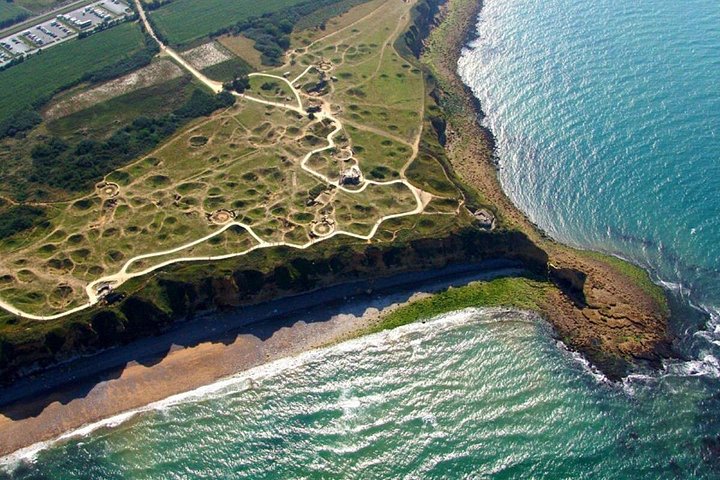
Pointe du Hoc, a prominent position along the coast of Normandy, was a focal point of the amphibious assault by U.S. forces during the early morning hours of D-Day, 6 June 1944. The cliff top (sometimes referred to as Pointe du Hoe) is located between Utah and Omaha Beaches and sits atop overhanging cliffs up to 100 feet in height. The careful and thorough planning of the Normandy invasion determined that several key missions would require painstakingly accurate execution in order for the invasion to go as planned, and one of those missions was the capture of Pointe du Hoc. As such, Allied planners named Pointe du Hoc one of the most dangerous German defensive positions on the Norman coast.
On June 6, 1944, the Allies invaded German-occupied France with the Normandy landings.[1] "Omaha" refers to an 8-kilometer (5 mi) section of the coast of Normandy, France, facing the English Channel, from east of Sainte-Honorine-des-Pertes to west of Vierville-sur-Mer on the right bank of the Douve river estuary. Landings here were necessary to link the British landings to the east at Gold with the American landing to the west at Utah, thus providing a continuous lodgement on the Normandy coast of the Baie de Seine (Bay of the Seine river).
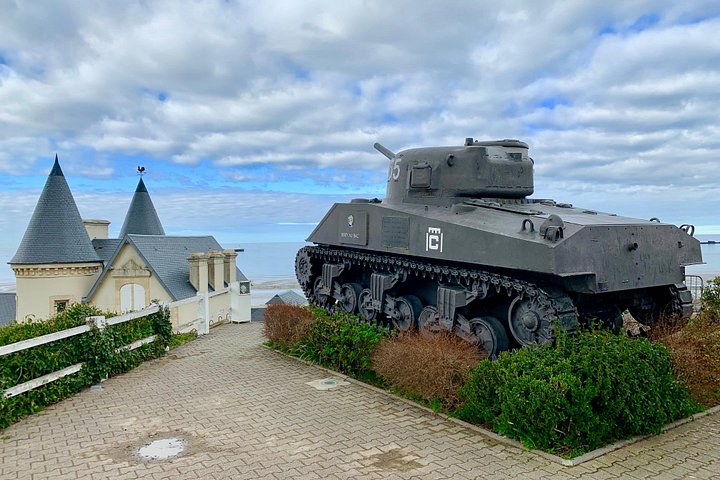
Located 500 meters from the American Cemetery of Colleville-sur-Mer and the famous beach of Omaha Beach, OVERLORD MUSEUM makes you discover a unique collection of more than 10,000 pieces, which traces the history of the Battle of Normandy until the liberation of Paris. The 6 armies present are staged there thanks to life-size reconstructions, associating personal effects of soldiers and more than 40 vehicles, tanks and guns.
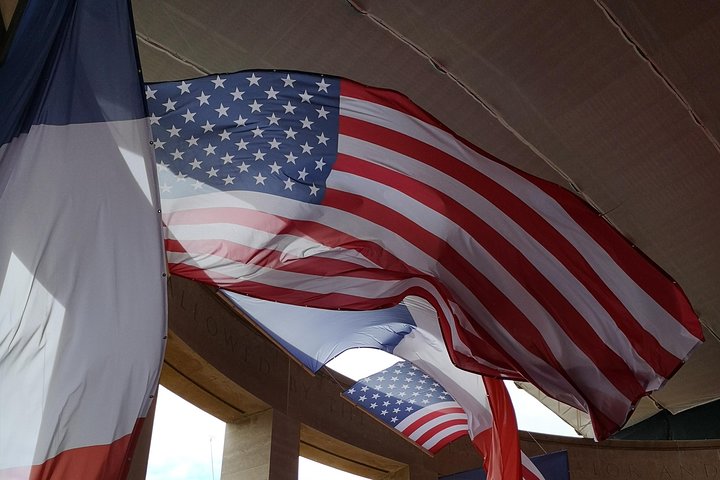
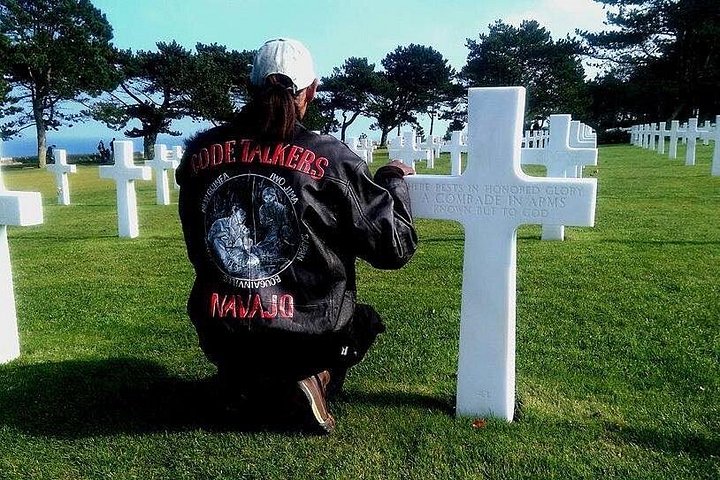
Located in the heart of the D-Day Landing beaches, the Normandy American Cemetery and Memorial in Colleville-sur-Mer overlooks Omaha Beach. Not to be missed during your tour of the Normandy Landing beaches, the cemetery is home to the graves of 9,389 soldiers, fallen in combat, a chapel, a memorial and the Garden of the Missing. The visitor centre pays tribute to these soldiers and to their bravery during the successful completion of Operation Overlord which led to the liberation of Europe.
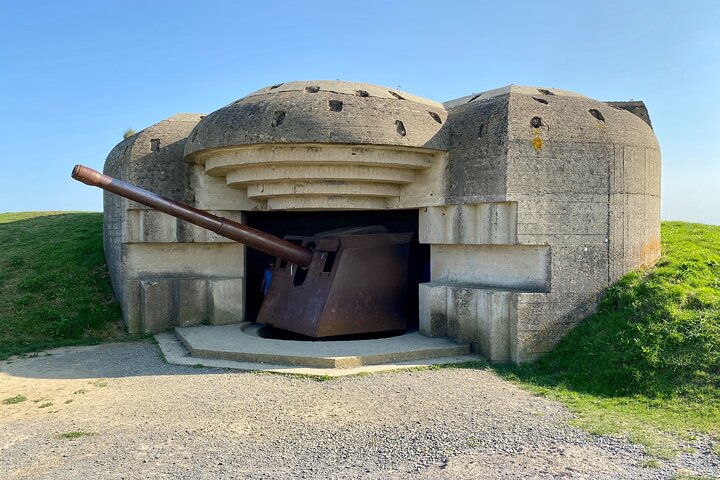
The Wn 62 is the centerpiece of the German defensive system in the Colleville-sur-Mer sector, and in itself symbolizes the fierce German resistance that almost jeopardized the American landings on Omaha. Along with Pointe du Hoc, Omaha was the other D-Day sector to see the Germans outflank the Allied attackers at dawn on June 6. Opposite the Easy Red sector, framing a 750m-long slope, Wn 62 controlled access to the 43m-high plateau set back 200m from the beach.
All sales are final. No refund is available for cancellations.
5.0
Ratings come from 2 reviews collected by our booking partner. They are travellers' own words, in the order they were written — never reordered to flatter the experience.
Bayeux is a small Norman town of medieval lanes and a Gothic cathedral, home to a famous embroidery of the Norman conquest and close to the D-Day beaches.
A strip of embroidered linen almost seventy metres long, made in the eleventh century, tells the story of the Norman conquest of England in 1066 and hangs in its own museum in town. The cathedral, whose crossing spire towers over the rooftops, was consecrated in 1077 with William the Conqueror present. Bayeux escaped bombing in 1944, so its old centre of half-timbered and stone houses along the River Aure is largely intact.
Top-ranked sights in Bayeux: Omaha Beach, Pointe du Hoc, Normandy American Cemetery and Memorial.
Add Ticket Hall to your home screen
Tickets and city guides, one tap away, even offline.
Ticket Hall