Chesters Roman Fort & Museum - Hadrian's Wall Admission Ticket
- 1–3 hours
- Free cancellation up to 24h before
- Guided in English
- Instant confirmation
Highlights
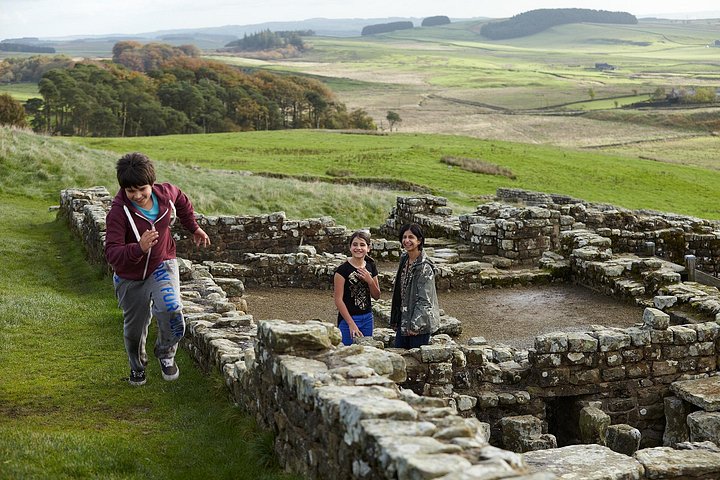
Set in the valley of the river Tyne, Chesters is the best-preserved Roman cavalry fort in Britain. Around 500 cavalry troops – the elite of the Roman auxiliary forces – were based here. Today, imaginative interpretation, including a fun family trail, helps you explore the fort’s many clearly marked features. Children can hunt for the ‘rubbing stones’ concealed among the buildings, collecting tips to help them on the trail. Between the fort and the river, you’ll find the finest example of a military bath house anywhere in Britain. All this was rediscovered by John Clayton, a wealthy Victorian landowner whose mansion stands near the fort. His single-minded vision is celebrated in the fort’s Clayton Museum, which is an absolute must-see for all visitors to Chesters.
Inclusions
What's included
- Admission ticket
What's not
- Meals
Itinerary
Come and see what life was like at one of the Roman Empire's most northern outposts. Chesters Roman Fort is the most complete Roman cavalry fort in Britain. Wander around the unusually well-preserved baths and steam room, and the officers' quarters. Discover an amazing collection of Roman objects and inscriptions in the museum, which were found at the fort and along Hadrian's Wall. Chesters is home to a spectacular Roman bathhouse, a place to relax on Hadrian's Wall for both Roman and modern visitors. The tranquil riverside spa on the banks of the North Tyne consists of a complex of rooms where weary soldiers could take hot, cold, and steam baths. Browse the recently updated Clayton Museum to discover a myriad of Roman artefacts, and find out about the "Saviour of the Wall," the Victorian lawyer John Clayton. The museum first opened in 1896 on behalf of the Trustees of the Clayton Collection, and still has many of its original Edwardian display cabinets. Pick up a Chesters Fort takeover trail sheet from the admissions team and set off on a Roman adventure. Take a stroll through history around the fort, the headquarters building and courtyard, hall and regimental shrine. Plus, don't miss the ruins of an elaborate and luxurious commandant's house. Fuel up after your adventure in the Chesters tearooms. Here you will find light lunches made from locally sourced ingredients, sweet treats, and hot and cold drinks. Try a traditional stottie cake for a truly Northumbrian culinary experience.
Cancellation
Free cancellation up to 24 hours before the experience starts, for a full refund.
Reviews
4.6
- 512
- 45
- 31
- 20
- 10
Ratings come from 18 reviews collected by our booking partner. They are travellers' own words, in the order they were written — never reordered to flatter the experience.
Know before you go
- Pickup
- Everyone meets at the starting point; there is no pickup.
- Ticket type
- Mobile or paper ticket accepted
- Group size
- Up to 10 travellers
- Operated by
- English Heritage
- Wheelchair accessible
- Infants and small children can ride in a pram or stroller
- Service animals allowed
- Public transportation options are available nearby
- Suitable for all physical fitness levels
How it compares in Newcastle-upon-Tyne
- Its from-price is 78% below the median of the 80 experiences we list in Newcastle-upon-Tyne.
- Its length is typical for the group.
- By number of reviews it ranks 21 of 80.
- The operator lists free cancellation on it.
About Newcastle-upon-Tyne
Newcastle upon Tyne is a river city in north-east England, with a Norman castle keep, a row of bridges over the Tyne and a revived quayside.
Newcastle grew around a Roman bridge crossing and takes its name from the castle begun here in 1080 by Robert Curthose, son of William the Conqueror. The stone keep still stands above the railway, beside the Black Gate. The Tyne is crossed by the Swing Bridge, the High Level Bridge and the steel arch of the Tyne Bridge, and Grainger Town has classical streets of the 1830s with Grey's Monument at their heart.
Top-ranked sights in Newcastle-upon-Tyne: Newcastle Castle.