Bosphorus Dinner Cruise & Live Show – Private Table
- 3h 30m
- Free cancellation up to 24h before
- Guided in English
- Instant confirmation
Highlights
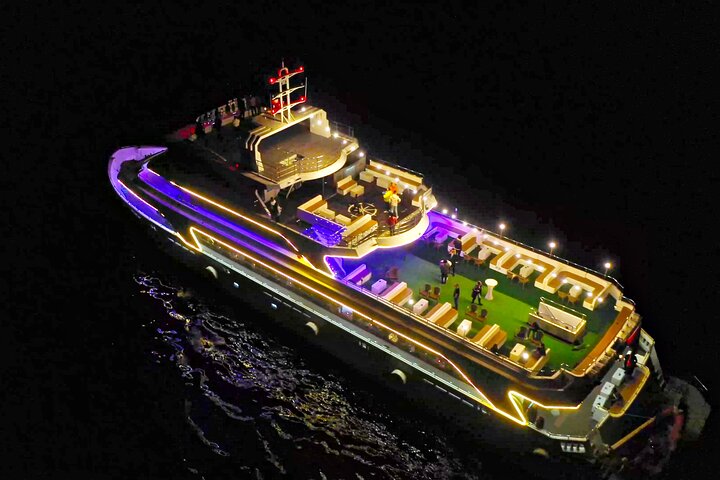
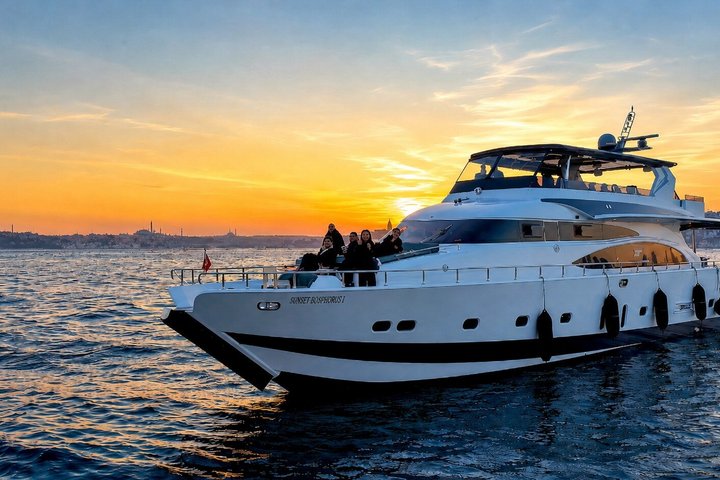
A Bosphorus Dinner Night Cruise is not just a meal—it’s a theatrical, cultural immersion set against the breathtaking convergence of East and West. That’s what gives it its one-of-a-kind charm and lasting impact.
Inclusions
What's included
- Non-alcoholic drinks are unlimited. Alcoholic drinks are limited to 2 glasses per person.
- Hotel pick-up & drop-off by air-conditioned non-smoking tour coaches from Sultanahmet, Taksim areas
- All Fees and Taxes
- Dinner
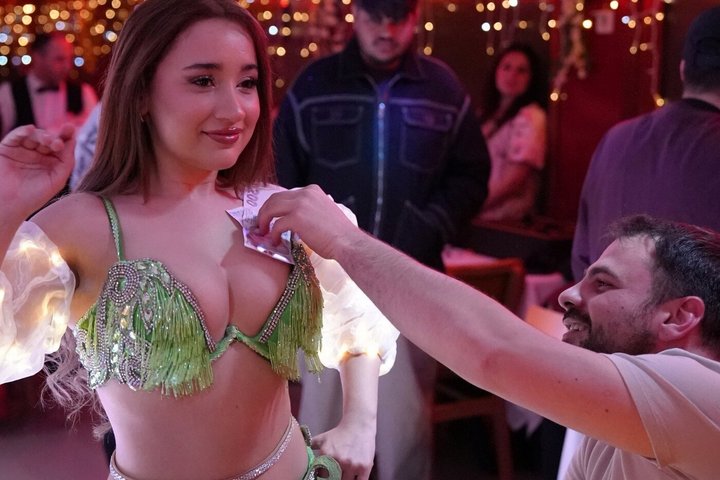
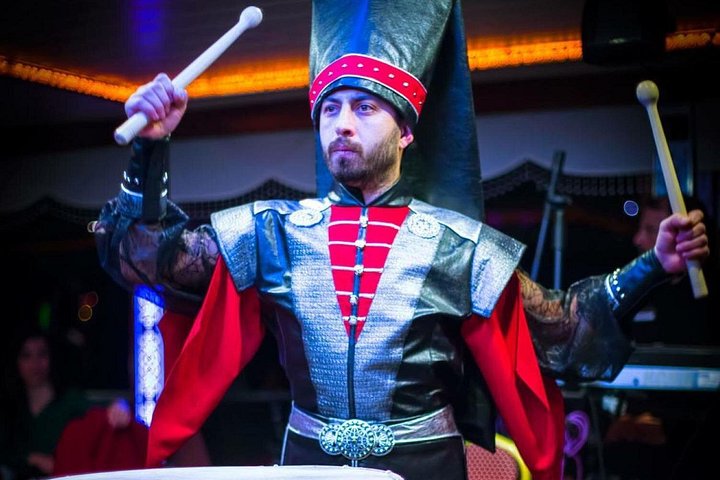
- Whirling Dervish, Belly dancing, folk dancing shows, and more...
What's not
- Exported drinks
- Anything else that is not specifically mentioned in the included section
- Photo shoots
Itinerary
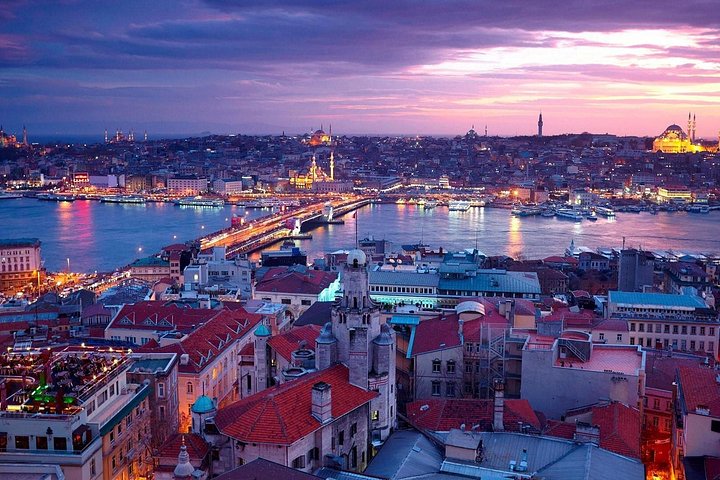
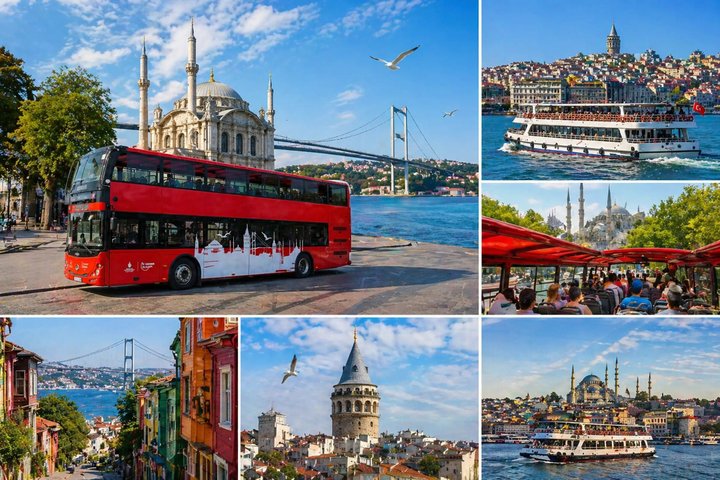
See Istanbul’s ancient streets and palaces all lit up at night, and get as close as you can to the city where the continents meet...
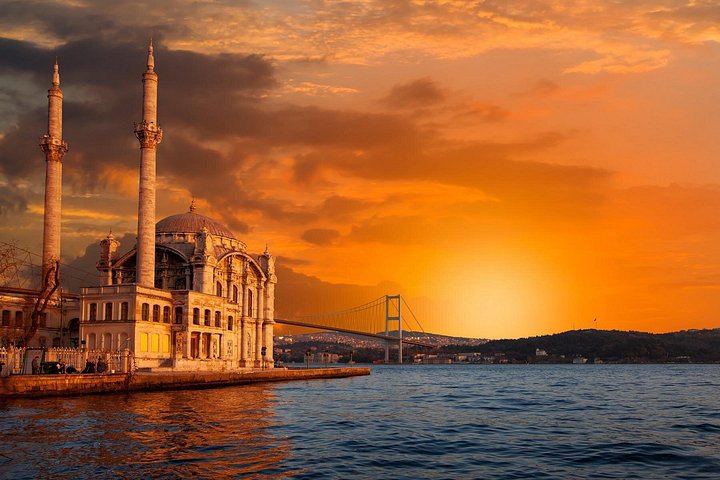
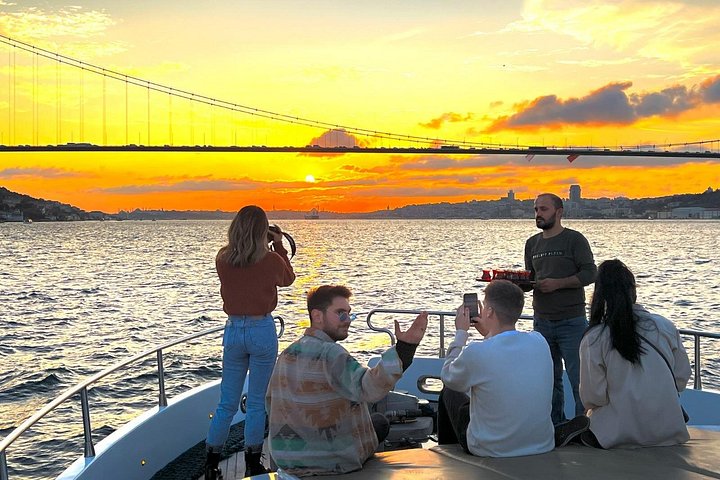
The Bosphorus Bridge is one of 2 suspension bridges connecting Europe to Asia. Let's meet where the continents meet!
One of the most fascinating buildings in Istanbul. Dolmabahce Palace was built by famous architect Armenian Garbert Amira Balya, at sultan Abdulmecid's request in between (1848-1856). The world leader ATAATURK died in the palace on 10th of November 1938, later on, it was converted into a museum in 1952.
Besiktas is one of the oldest districts and neighborhoods of Istanbul, located on the European side of the city. It's also considered as one of the city centers, both residential and commercial especially for small businesses. At the same time, besides having a major public bus and dolmus terminal, Besiktas is also one of the sea hubs on the Bosphorus from which boats depart for various neighborhoods on the shores of the Asian side.
Ortakoy is one of the nicest neighborhoods of Besiktas districts in the European side of Istanbul on the Bosphorus Strait, right under the first Bosphorus bridge. In Turkish, it means "middle village" because it was in the middle of the strait, and during the Ottoman period it was just a small fishing village and a resort for the Ottoman dignitaries because of its attractive location. After many years, the district is still a popular spot for local people and foreign visitors. Ortakoy has many cafeterias and tea houses around a square near the water or in the alleys, moderate or expensive restaurants, bars, small shops and a market that gets very lively during the weekends. In the summertime, there are even small size concerts or street shows etc. Many world-class night clubs are also in this area, on the Bosphorus.
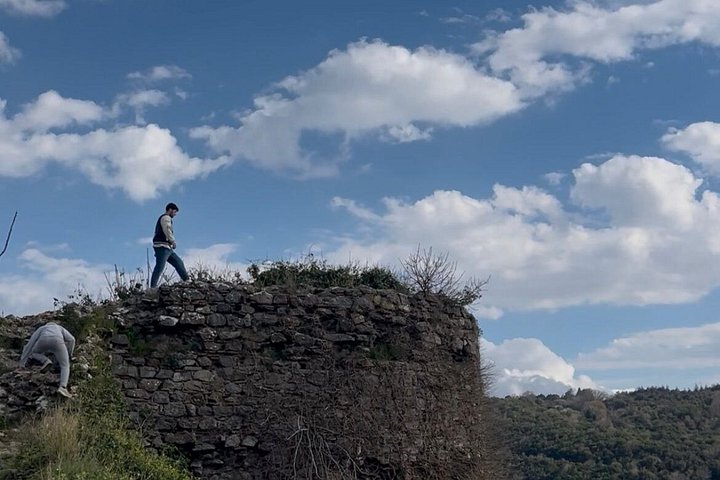
Rumeli Castle (Rumeli Hisarı) is an Ottoman fortress dating to 1452. It was built by Ottoman sultan Mehmed II (Mehmed the Conqueror) in preparation of the conquest of Constantinople. The castle is situated on the shore of the Bosphorus Strait at its narrowest point with approximately 660 meters. It is just opposite of Anadolu Castle (Anadolu Hisarı) that is another Ottoman castle built in 1394 by Bayezid I. Both Anadolu Castle and Rumeli Castle were built by Ottoman sultans in order to prevent military and economic aid to the Byzantine Empire coming from the north, Black Sea. Thus, the Bosphorus strait connects the Black Sea with the Marmara Sea. Rumeli Castle consists of three large towers, one small tower, and thirteen smaller towers, which all are in very good condition. The architect of the castle was architect Müslihiddin and by the time it was built, its name was Boğazkesen (Strait Cutter). Rumeli Castle after the conquest of Constantinople After the conquest of Constantinople in 1453, the castle lost its military importance and served as a customs checkpoint until the seventeenth century and then as a prison until the nineteenth century. In the nineteenth century, a neighborhood was formed inside the castle with its houses, mosques, shops, and so on. However, this neighborhood was destroyed in the 1950s. Since 1960 the Rumeli Castle functions as a museum and this magnificent castle is open to the public as an open-air museum.
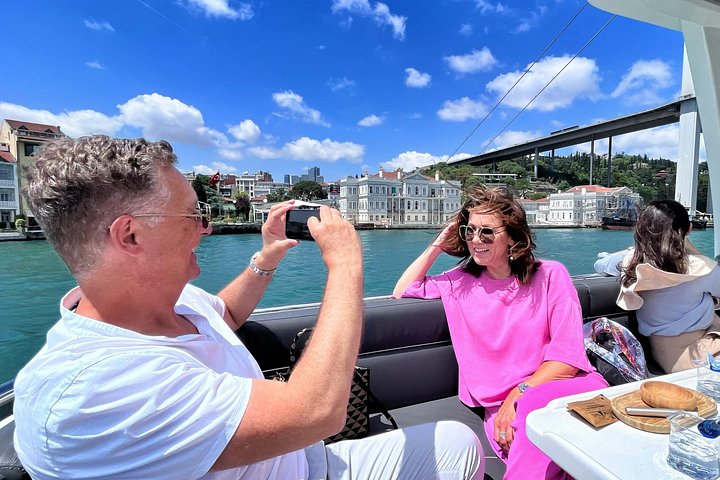
Beylerbeyi Palace, the summer residence of the sultans, is located at Beylerbeyi neighborhood on the Asian shore of the Bosphorus. It was ordered by the sultan Abdulaziz and built between 1861-1865 by head architects Sarkis Balyan and Agop Balyan, imperial architects of Armenian origins, in French neo-baroque style with a traditional Ottoman house plan. Important foreign guests visiting the Ottoman Empire were accommodated in this palace during the summer months; Prince of Serbia, King Nicholas of Montenegro, Emperor Joseph of Austro-Hungary, Shah Nasireddin of Iran, Prince Oscar of Sweden, and Empress Eugenie of France were some of them. Sultan Abdulhamid II spent the last 6 years of his life and died here in 1918, meanwhile, other sultans ruled in the Dolmabahce Palace during winter months and came here only for the summer for a nice climate. The palace has a rectangular plan with the long side facing the Bosphorus. There are 6 large halls and 24 rooms on two floors raised on a service basement which was originally used as a kitchen and storage. The palace is divided into the men's' section (Selamlik) and the women' section (Harem) having separate entrances for both. The Selamlik was used for State functions, therefore, it was very ornate, meanwhile, the Harem was reserved only to the ladies and with a simple decoration.
Kız Kulesi (Maiden's Tower or Leander's Tower) One of the most iconic images of Istanbul surely has to be the Kız Kulesi Üsküdar, known in English as Maiden’s Tower, Tower of Leandros, Leander’s Tower or Bosphorus Tower. It is found on a small natural islet in the Bosphorus, just off the shore of Asian Istanbul. What is the history of Maiden’s Tower Istanbul? The first tower here was built by an Athenian commander during the 5th century as a way of controlling ships passing the Bosphorus, and collecting taxes, a function that continued into Byzantine times when a chain was stretched from it to the historic peninsula. In Ottoman times, it started to be used as a lighthouse.
Cancellation
Free cancellation up to 24 hours before the experience starts, for a full refund.
Reviews
5.0
- 520
- 41
- 30
- 20
- 10
Ratings come from 21 reviews collected by our booking partner. They are travellers' own words, in the order they were written — never reordered to flatter the experience.
Know before you go
- Pickup
- Pickup is included for everyone.
- Ticket type
- Mobile or paper ticket accepted
- Group size
- Up to 120 travellers
- Operated by
- Travel Inn Turkey
- Infants and small children can ride in a pram or stroller
- Public transportation options are available nearby
- Infants are required to sit on an adult’s lap
- Suitable for all physical fitness levels
How it compares in Istanbul
- Its from-price is 216% above the median of the 67 shows & theatre we list in Istanbul.
- Its length is typical for the group.
- By number of reviews it ranks 25 of 67.
- The operator lists free cancellation on it.
About Istanbul
Istanbul straddles Europe and Asia across the Bosphorus, with Byzantine and Ottoman monuments, busy bazaars and ferries crossing between continents.
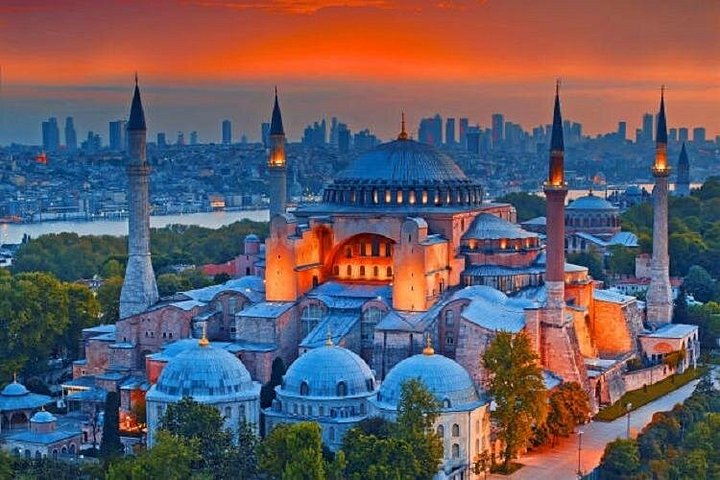
The historic peninsula holds the greatest landmarks. Hagia Sophia, the Blue Mosque and the Hippodrome face each other in Sultanahmet, the Basilica Cistern lies beneath the streets, and Topkapı Palace spreads across the hill above the Golden Horn. A short walk away, the Grand Bazaar and the Spice Bazaar have traded for centuries, and Süleymaniye Mosque, built by the great Ottoman architect Sinan, crowns one of the city's seven hills.
Top-ranked sights in Istanbul: Dolmabahce Palace (Dolmabahce Sarayi), Bosphorus, Bosphorus Bridge (Bogazici Koprusu).
Special offers in Istanbul
Was/now prices come from the operator, never from us.