
Itinerary
2 Days in Paris: An Itinerary Built Around a Hop-On Hop-Off Bus
- Routes1
- Stops10
- Full loop2H 15M
- Sights6
Plan at a glance: spend day one on the central riverside sights, the Louvre, Notre-Dame, the Musée d'Orsay and Place de la Concorde, and day two on the Eiffel Tower and the Champs-Élysées side of the city. A hop-on hop-off bus links the two areas and saves your legs between the big stops.
Two days in Paris is enough to see the headline sights without sprinting, as long as you accept that you will pick one or two museums rather than all of them. The city rewards a loose plan: a bus loop for orientation, a few focused stops on foot, and room for a long lunch. The days below are built around areas that sit close together, so most of your time goes to looking rather than commuting.
Sights in this guide


Day one morning: the Louvre and the heart of the river
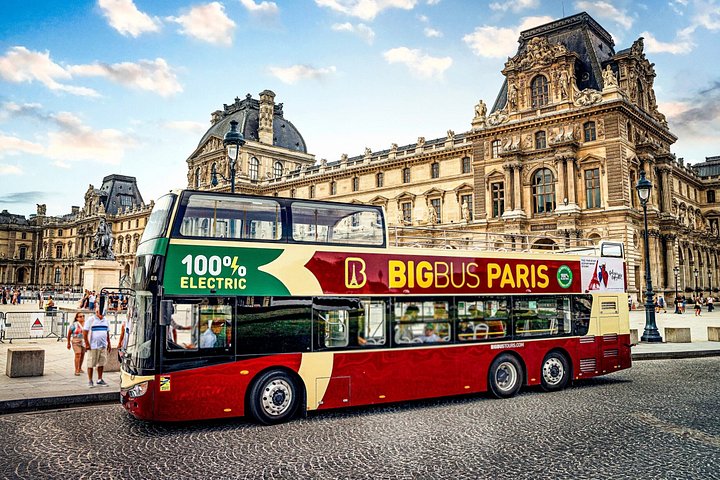
Start at the Louvre Museum, and start early in the morning, because queues and crowds build as the day goes on. The nearest bus stop is Louvre-Pyramide, about 150 metres from the museum, which makes it an easy place to join the loop if your hotel is not within a few minutes' walk.
Be selective inside. The Louvre is vast, and trying to see everything is the classic first-timer mistake. Choose two or three collections you care about, give them unhurried attention, and leave while you still have energy. A morning is plenty for that, and the pyramid courtyard outside is worth a few minutes on its own.
This half-day belongs with the central group of sights: the Louvre, Notre-Dame Cathedral, the Musée d'Orsay and Place de la Concorde sit close enough to link on foot or with a short hop on the bus. That is why the first day stays on this stretch of the Seine instead of crossing the city.
Day one afternoon: Notre-Dame, the Seine and the Musée d'Orsay
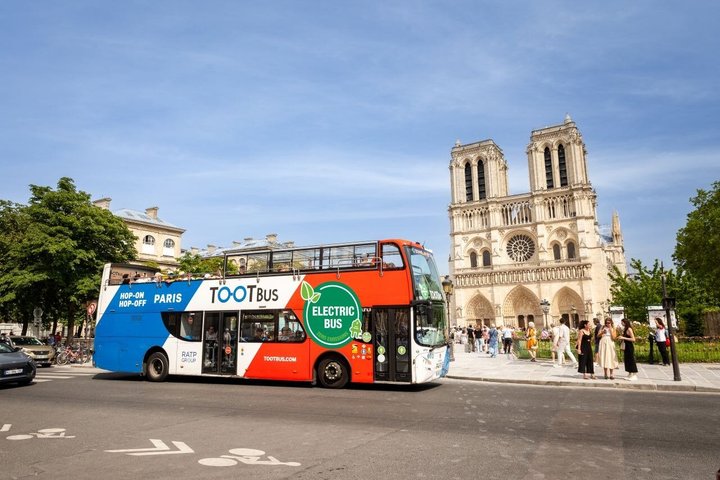
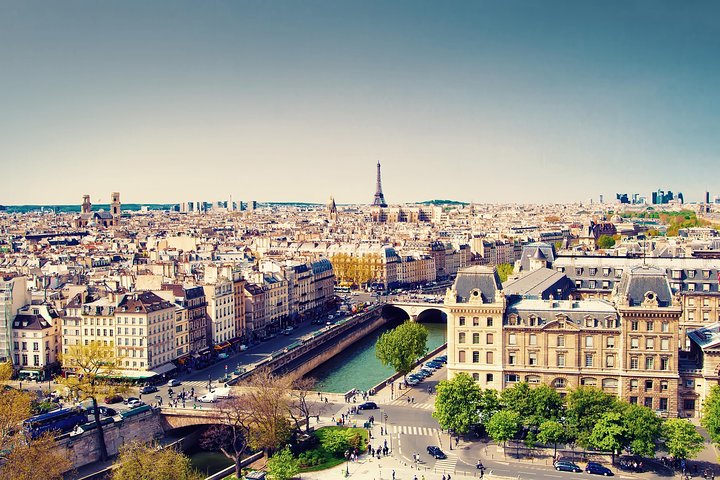
After lunch, head for Notre-Dame Cathedral on the Île de la Cité. The bus has a Notre-Dame stop right at the cathedral, so this is a good moment to ride rather than walk if your feet are already tired. Even with the exterior as your main focus, the island is atmospheric, and the Sainte-Chapelle is nearby for anyone who wants a second historic interior.
Next comes the Musée d'Orsay, housed in a former railway station and known for its Impressionist collection. The bus stops directly at its door. It is more manageable than the Louvre, so a focused visit is realistic even late in the afternoon.
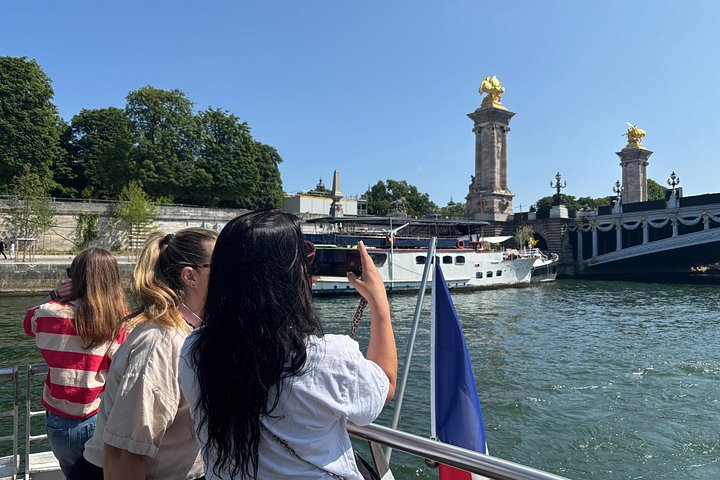
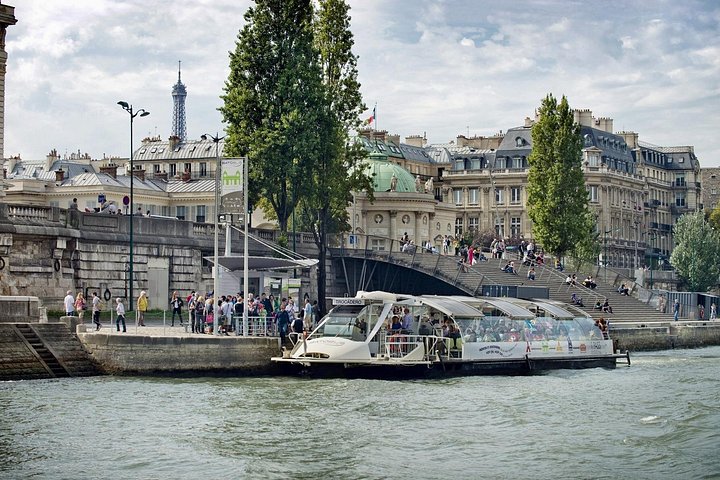
If there is daylight left, finish at Place de la Concorde, the large square at the foot of the Champs-Élysées. No bus stop sits within a few minutes' walk of it, so treat it as a short stroll from the river rather than a place to hop off. Walking along the River Seine between these sights is one of the pleasures of the day, so leave some of it for the banks rather than riding everything.
Day one evening: an easy river-side stroll
Keep the evening light. Dinner in the Latin Quarter or around Saint-Germain suits the bookish, café-lined feel of those streets, and both are a natural continuation of a day spent along the Seine. After dinner, a slow walk by the river as the light fades is a better finish than another attraction.
If you prefer to see the city lit up from a vehicle, an evening panoramic night tour is sold separately from the daytime loop. Look at the ticket page to see what is currently offered.
Day two morning: the Eiffel Tower
Give the second morning to the Eiffel Tower. The Tour Eiffel stop is about 50 metres from the base, so the bus drops you almost underneath it. Arriving early in the morning gives you the best chance of shorter lines and softer light for photos.
The Champ de Mars, the long green lawn running from the tower, is the best place to sit down afterwards and look back at the ironwork. Families with children will find it a useful break point, and it is also a pleasant place for a bakery picnic. Do not plan much else for this part of the morning: the tower and the lawn can fill it comfortably.
Day two afternoon: Champs-Élysées and the Arc de Triomphe
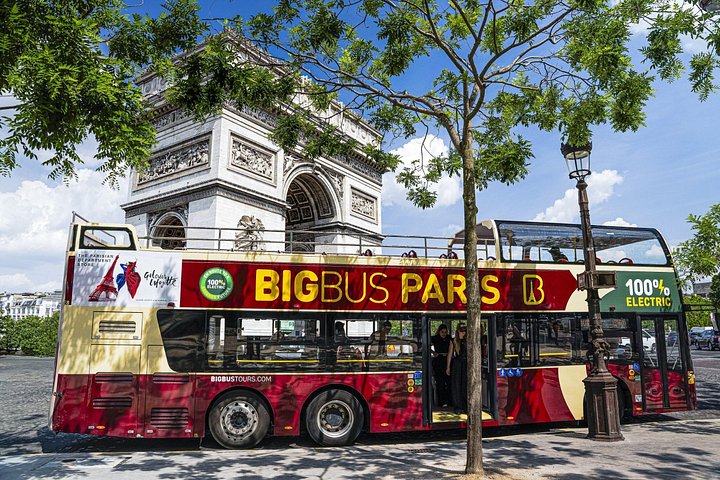
The 8th is the elegant district of wide avenues and grand shopfronts. The Arc de Triomphe crowns the Champs-Élysées, and no stop sits within a few minutes' walk of it, so plan to reach it on foot along the avenue.
The walk up the Champs-Élysées is long but flat and easy to break with a café stop. Treat it as a stroll to soak up the atmosphere rather than a shopping mission. If you only have energy for one thing, make it the Arc itself and the view down the avenue.
Day two evening: Opéra Garnier or a terrace dinner
The Opéra Garnier has its own stop, and its ornate façade is worth seeing from outside even if you do not go in. The surrounding 9th Arrondissement has plenty of places to eat, so it works well as a final evening, with a relaxed dinner and no rushing to catch anything.
Rainy-day swaps
Paris handles bad weather well. On a wet day, lean into the museums: spend the whole of day one morning at the Louvre and the afternoon at the Musée d'Orsay, and skip the outdoor walking between them. Both are indoors for hours.
The Eiffel Tower is the sight most affected by poor visibility, so if the forecast is clear on one of your two days and grey on the other, put the tower on the clear day and swap the museum plan onto the wet one. Glass-roofed covered passages are a good fallback for an hour of dry wandering. If rain is heavy, leave the Arc de Triomphe for another trip rather than standing on an exposed viewpoint.
Getting the most from the bus
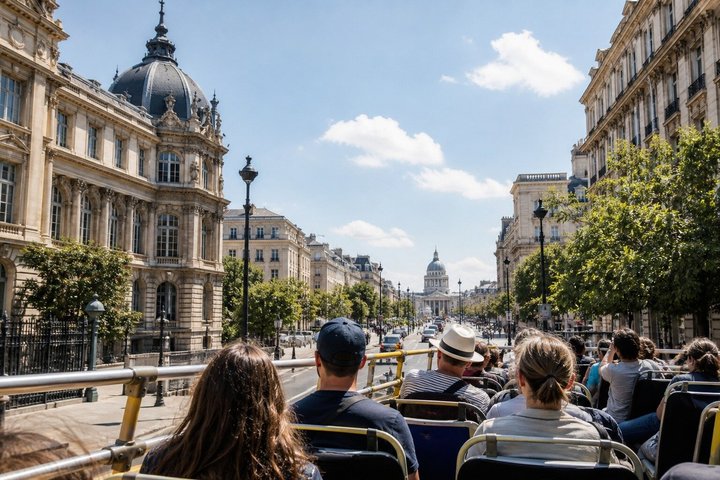
Use the bus as a connector, not a tour you must finish. Hop off where you want to spend real time, and hop back on when your feet need a rest. The loop takes about two hours fifteen minutes with buses every 10 to 20 minutes, so waiting is rarely long, and commentary is offered in 11 languages.
Board at the stop nearest your hotel or your first sight rather than walking to a particular starting point. Compare tickets before you go, since they differ in what they offer.
Route and stops
- Classic Route (Red)
Classic Route (Red)
Show all 10 stops
Hop-on hop-off in Paris




Questions about Paris sightseeing
Is 2 days in Paris enough for a first visit?
Yes, for the main landmarks. You can cover the Louvre, Notre-Dame, the Musée d'Orsay, the Eiffel Tower and the Champs-Élysées without rushing if you choose one or two museums rather than all of them. Neighbourhoods such as Montmartre or a trip to Versailles would need extra time.
Should I fit Versailles into a 2 day trip?
Probably not. The Palace of Versailles is a separate outing from the city centre and would take most of a day, which means dropping one of the central days. It suits a third day better, and no bus stop is within a few minutes' walk of it.
Which sights are best reached on foot rather than by bus?
Place de la Concorde and the Arc de Triomphe have no bus stop within a few minutes' walk, so you walk to them. The Louvre, Notre-Dame, the Musée d'Orsay and the Eiffel Tower all have stops close by.
Is the bus worth it compared with a walking tour?
It depends on your pace. A walking tour gives you stories and detail in one neighbourhood, while the bus is better for covering distance and resting between stops. On two days, many visitors use the bus for the long gaps and walk the compact central areas.
Is there anything for the evening?
Yes. A night tour is sold separately as a non-stop panoramic ride, which suits couples after a day of walking. Otherwise a terrace dinner and a stroll beside the Seine is a classic way to end the day. Compare the ticket options to see what is available.
Compare hop-on hop-off tours in Paris