Pilgrims and Pioneers: A Self-Guided Tour Audio of Tomar
- 1.5–2 hours
- Free cancellation up to 24h before
- Guided in English
- Instant confirmation
Highlights
Step into the world of the Knights Templar on this immersive self-guided walking tour of Tomar. The legendary order didn’t just defend pilgrims—they founded this remarkable city. You’ll explore Praça da República, where Gualdim Pais established Tomar in 1160, visit the Church of Santa Maria do Olival, the final resting place of Templar grand masters, and stroll through the Seven Hills National Forest, once the knights’ agricultural heart. Discover the gripping story of their rise and fall before ending at the imposing Castelo de Tomar, where a brilliant defense helped them defeat Moorish invaders. Along the way, see Portugal’s oldest synagogue, an ancient Arabic waterwheel, and more. Whether you’re a history buff or a curious traveler, this tour brings Tomar’s past to life!
Inclusions
What's included
- Lifetime access to this tour in English before your booking date and after it
- Offline access to audio, maps, and geodata
- App for Android and iOS
- Flexibility to explore at your own pace with a self-guided GPS tour
- Directions to the starting point so that when you’re in the right place, the tour will start
What's not
- Smartphone and headphones
- Transportation
- Food and drink
- Personal expenses for attractions not included during the tour
Itinerary
You’ll stand in the heart of Tomar, where the grand statue of Gualdim Pais watches over a square lined with historic buildings, including the 17th-century Town Hall. This plaza has been the city's focal point for centuries, where markets, celebrations, and military parades have shaped Tomar’s identity.
Marvel at this Gothic church, with its simple yet striking façade, was the burial site of the Templar grand masters in Portugal. Built in the 12th century, it also served as a spiritual and administrative center for the Order, reinforcing Tomar’s deep connection to the Templars.
See Portugal’s oldest surviving synagogue, a modest yet elegant space with Gothic vaulting and unusual acoustics. Built in the 15th century, it stands as a testament to Tomar’s once-thriving Jewish community before their expulsion in the late 15th century.
Follow this riverside path, which offers stunning views of Tomar’s old industrial complex, where medieval water mills once powered the city. The levada system played a crucial role in local commerce, channeling the Nabão River’s energy to drive grain mills and metalworks.
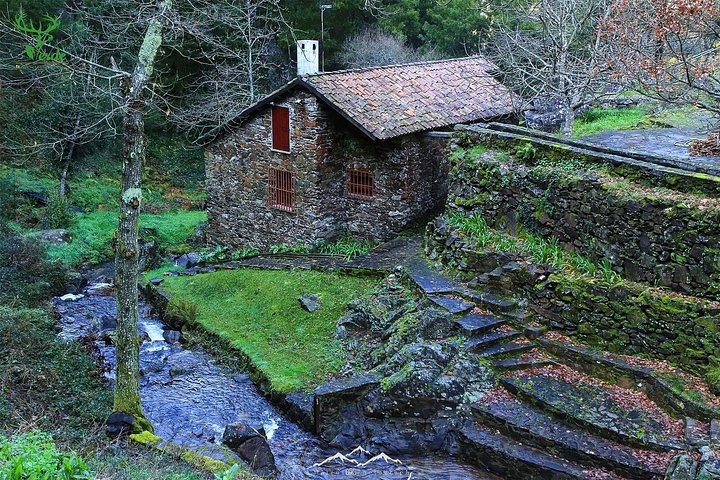
You’ll see a fully functional wooden waterwheel, a rare relic of Arabic engineering that still turns with the river’s current. This centuries-old mechanism once helped irrigate nearby fields, showcasing Tomar’s ingenuity in harnessing natural resources.
This whitewashed, cube-like structure stands as a striking contrast to Tomar’s medieval buildings, now repurposed as a center for contemporary art and photography. Originally a Templar granary, it once stored agricultural goods vital to sustaining the Order’s stronghold.
You’ll step into a lush forest once cultivated by the Templars, where towering pines and cypress trees whisper secrets of the past. This serene landscape was not just a retreat but an agricultural experiment that sustained the knights and later influenced Portuguese forestry.
Gaze at the imposing walls and towers of Tomar’s castle, a fortress designed with advanced military strategy in mind. Built in 1160, it was the stronghold of the Knights Templar and played a key role in Portugal’s Reconquista against Moorish forces.
This sprawling complex, blending Romanesque, Gothic, Manueline, and Renaissance styles, stands as one of Portugal’s most extraordinary architectural treasures. Originally the Templar headquarters, it later became a stronghold of the Order of Christ, which carried on the Templars’ legacy under a new name.
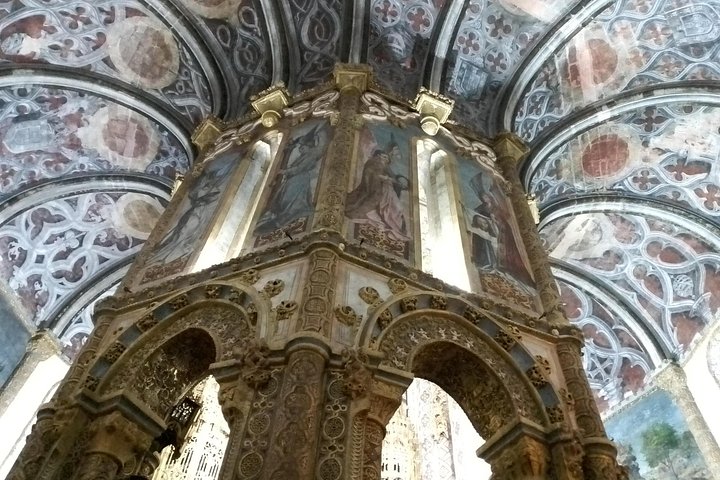
Inside the convent, you’ll find the Charola, a magnificent 12-sided Templar oratory adorned with gold leaf and sacred frescoes. Inspired by the Church of the Holy Sepulchre in Jerusalem, this circular sanctuary was built to allow knights to attend mass without dismounting from their horses.
Crossing the Nabão River on this medieval stone bridge, you’ll walk the same path as traders and pilgrims for centuries. Built in the 12th century, this bridge was vital for connecting Tomar’s fortress with the surrounding settlements.
Hidden in the landscape, this mysterious stone fountain trickles with water once believed to have mystical properties. Legends claim that its name—“Fountain of Blood”—derives from a battle fought nearby, where the river once ran red with the fallen.
Cancellation
Free cancellation up to 24 hours before the experience starts, for a full refund.
Reviews
4.6
- 54
- 40
- 31
- 20
- 10
Ratings come from 5 reviews collected by our booking partner. They are travellers' own words, in the order they were written — never reordered to flatter the experience.
Know before you go
- Meeting point
- The tour begins in the city centre square, by the statue of Gualdim Pais. Before arrival, please install the mobile app and use the code provided on your confirmation ticket. Detailed starting point instructions are available after downloading.
- Pickup
- Everyone meets at the starting point; there is no pickup.
- Ticket type
- Mobile or paper ticket accepted
- Operated by
- VoiceMap Audio Tours
- Infants and small children can ride in a pram or stroller
- Service animals allowed
- Public transportation options are available nearby
- Suitable for all physical fitness levels
- Most of the tour is stroller-friendly, but some cobbled streets and uphill paths may be difficult to navigate
- This tour is suitable for older guests who can walk independently or with minimal assistance, but it is not fully wheelchair accessible due to certain uneven terrain and historical sites with stairs.
How it compares in Coimbra
- Its from-price is 92% below the median of the 209 experiences we list in Coimbra.
- It is shorter than most of them.
- By number of reviews it ranks 69 of 209.
- The operator lists free cancellation on it.
About Coimbra
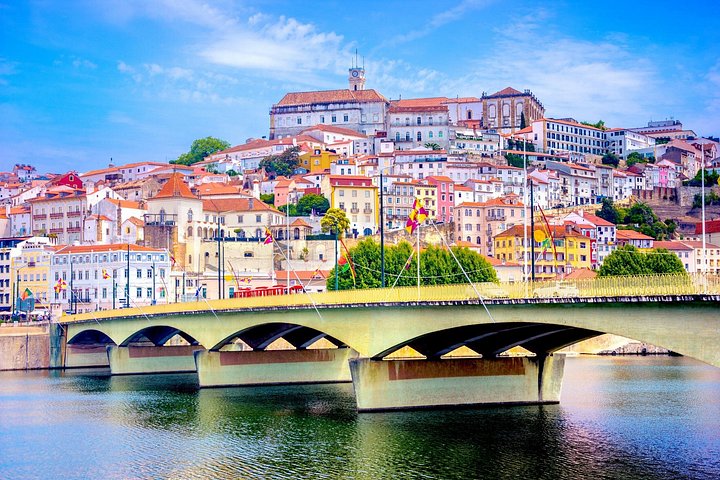
Coimbra is a hill city on the Mondego River in central Portugal, home to a centuries-old university, a baroque library and its own style of fado.
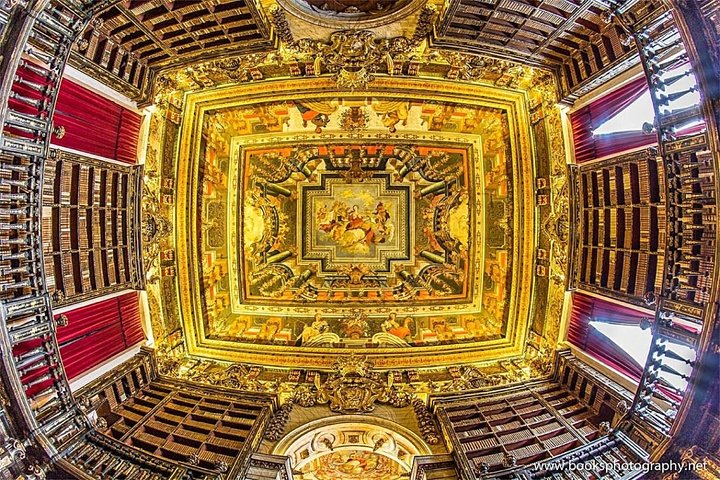
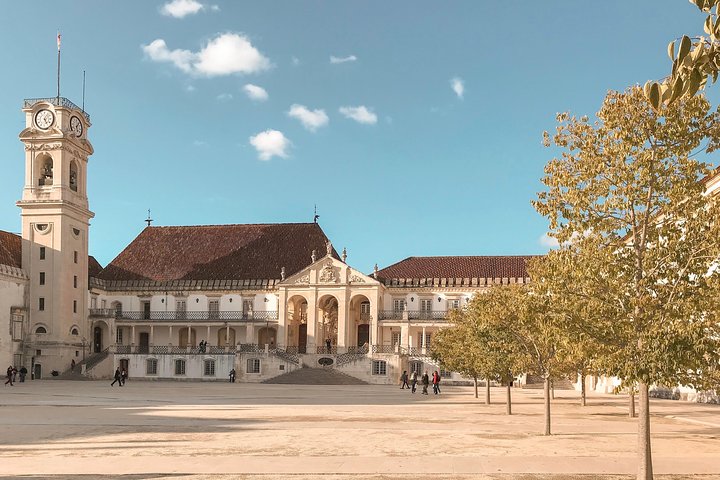
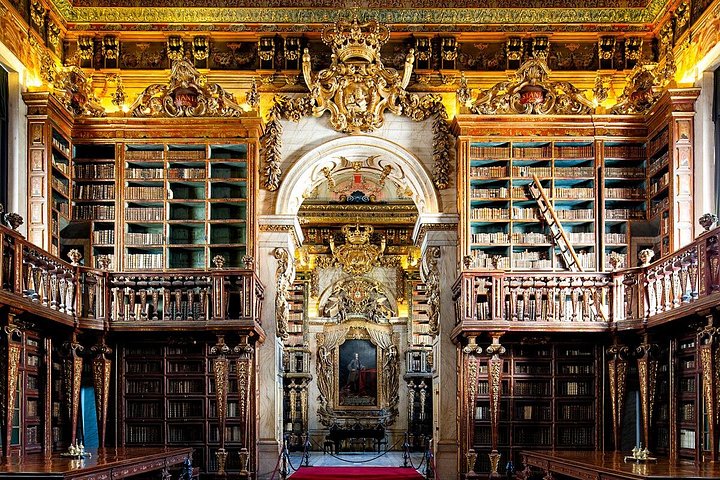
Coimbra rises above the Mondego River in central Portugal and was the country's capital in the twelfth and thirteenth centuries. Its university, founded in 1290 and settled in Coimbra from 1537, is the oldest in Portugal, and the old campus on the hill is a UNESCO site with the gilded Joanina Library and a tall clock tower. Students still wear black academic capes.
Top-ranked sights in Coimbra: University of Coimbra (Universidade de Coimbra).
Special offers in Coimbra
Was/now prices come from the operator, never from us.

Similar experiences
 Free cancellation