History of Savannah Walking Tour
- 1h 30m
- Free cancellation up to 24h before
- Guided in English
- Instant confirmation
Highlights
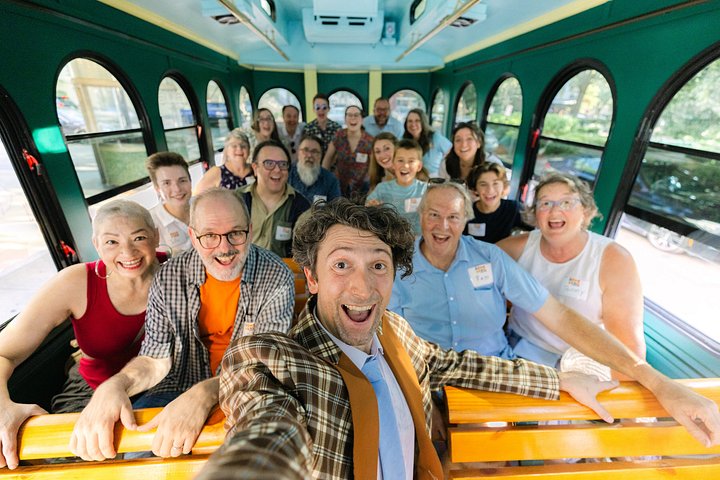
The History of Savannah Walking Tour is led by local guide Sarah Johnson and is intentionally designed as a small-group experience, giving guests a more personal and engaging way to explore Savannah’s Historic District. Rather than rushing from stop to stop, Sarah takes time to explain how Savannah’s unique city plan, historic squares, architecture, and landmarks shaped the city from its founding in 1733 onward. With smaller groups, guests can comfortably hear, ask questions, and interact throughout the tour. The relaxed 90-minute experience covers approximately 1.5 miles, with frequent shaded stops along the way. It’s ideal for visitors who want meaningful history and storytelling without feeling hurried. It’s not just about seeing Savannah — it’s about understanding it.
Inclusions
What's included
- This is a walking tour that will include seeing many of the top sites of the city.
What's not
- We will not be entering any paid businesses/museums during the walking tour.
Itinerary
Begin the tour in Chippewa Square, where Sarah introduces the founding of Savannah in 1733 and the vision of James Oglethorpe. Learn how Savannah's original ward-and-square plan shaped the city's streets, neighborhoods, and public spaces.
Stop near the birthplace of Juliette Gordon Low, founder of the Girl Scouts. Learn about Low's connection to Savannah and how she went on to establish the Girl Scouts in 1912, creating an organization that became an important part of American women's and girls' history.
At Wright Square, learn about Tomochichi and the Native American communities whose relationships with the early Georgia colonists were important to the colony's development. The square provides an opportunity to look beyond Savannah's European founding story and understand the Native American history connected to the city's beginnings.
At the Owens-Thomas House & Slave Quarters, explore Savannah's antebellum history and the role slavery played in the city's development. The discussion connects the wealth and architecture of the period with the lives and labor of the enslaved people who made that world possible.
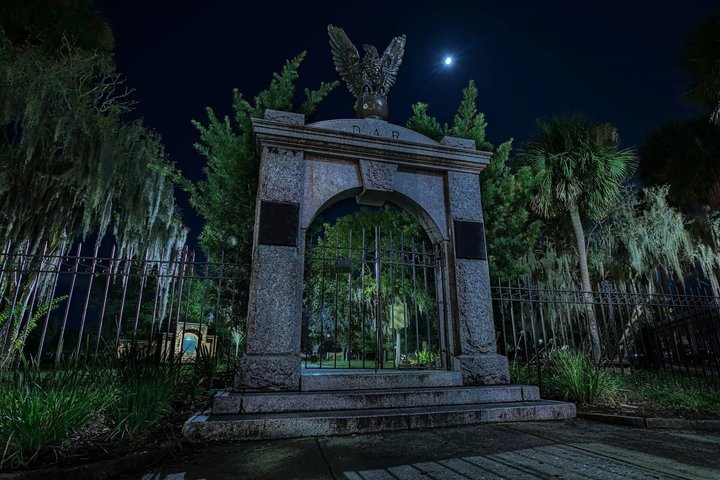
At Colonial Park Cemetery, explore what life—and death—were like in historic Savannah. The cemetery dates to the colonial period and provides a window into disease, mortality, burial practices, and everyday life in earlier generations of the city.
The Cathedral of St. John the Baptist provides an opportunity to explore Savannah's religious and immigrant history. Learn about the important influence of Savannah's Irish Catholic community and the architectural traditions represented by this landmark.
At the Green-Meldrim House, learn about Savannah's role during the American Civil War and the building's connection to General William T. Sherman. This stop helps place Savannah within the larger history of Sherman's March through Georgia and the Union capture of the city.
Walk along Jones Street and see some of Savannah's best-known historic residential architecture. The street provides a close-up look at the city's 19th-century homes, historic streetscape, and the relationship between Savannah's residential neighborhoods and its distinctive urban plan.
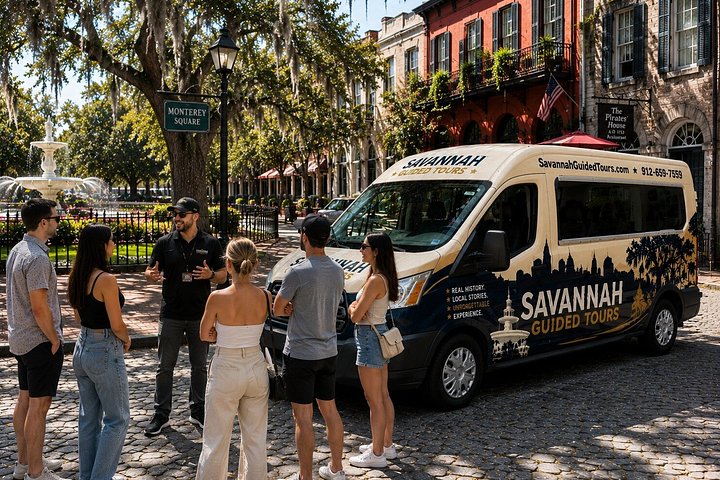
At Monterey Square, learn about the Mercer-Williams House and General Casimir Pulaski's role in the Revolutionary War. The square brings together Savannah's architecture, notable residents, and Revolutionary-era history in one of the city's most recognizable historic settings.
The tour concludes at Forsyth Park, where you'll see the park's famous fountain and learn how this expansive green space fits into Savannah's later development. Located at the southern end of the Historic District, Forsyth Park provides a natural conclusion to the journey from Savannah's colonial origins through its subsequent growth.
Cancellation
Free cancellation up to 24 hours before the experience starts, for a full refund.
Reviews
5.0
- 5100
- 40
- 30
- 20
- 10
Ratings come from 100 reviews collected by our booking partner. They are travellers' own words, in the order they were written — never reordered to flatter the experience.
Know before you go
- Meeting point
- You'll find me at the center of Chippewa Square next to the big monument.
- Pickup
- Everyone meets at the starting point; there is no pickup.
- Ticket type
- Mobile or paper ticket accepted
- Group size
- Up to 15 travellers
- Operated by
- Sarah Johnson
- Wheelchair accessible
- Infants and small children can ride in a pram or stroller
- Service animals allowed
- Public transportation options are available nearby
- Transportation options are wheelchair accessible
- Not recommended for travelers with poor cardiovascular health
- Suitable for all physical fitness levels
How it compares in Savannah
- Its from-price is close to the median of the 273 experiences we list in Savannah.
- Its length is typical for the group.
- By number of reviews it ranks 88 of 273.
- The operator lists free cancellation on it.
About Savannah
Savannah is a Georgia coastal city of oak-shaded squares, Spanish moss, cobbled riverfront streets and beautifully kept Southern architecture.
Savannah was founded in 1733 by James Oglethorpe as the first city of the colony of Georgia, and he laid it out on a grid built around small public squares. Twenty-two of the squares survive, shaded by live oaks draped in Spanish moss and filled with fountains and monuments. Forsyth Park, with its white fountain, is the largest green space in the historic district, and the Cathedral of St John the Baptist rises with twin spires.
Top-ranked sights in Savannah: Savannah River Street, Cathedral of St. John the Baptist, Forsyth Park.
Special offers in Savannah
Was/now prices come from the operator, never from us.