Explore Giza Pyramids: Half-Day Tour with Professional Guide
- 3–4 hours
- Skip the line
- Free cancellation up to 24h before
- 3 languages
Highlights
Embark on a journey through time and uncover the secrets of one of the world's most iconic ancient wonders – the Giza Pyramids. Booking your entry ticket to this UNESCO World Heritage site promises an experience unlike any other, filled with awe-inspiring sights, rich history, and unforgettable memories. Note : At the time of booking, two pricing options are available: Private Tour and Group Tour Group Tour Meeting Points: Ramses Hilton (Cairo) Emo Tours Egypt Office (Giza) Please arrive on time and wait at your scheduled pickup point. A possible delay of 30–45 minutes may occur due to traffic; however, if the group is complete earlier, the vehicle will depart immediately.
Inclusions
What's included
- Entry fees includes basic area only
- Guide on site
- Air-conditioned vehicle
- All Taxes Services
- All transfers by a private air-conditioned vehicle
- Bottle of water
What's not
- Gratuities
Itinerary
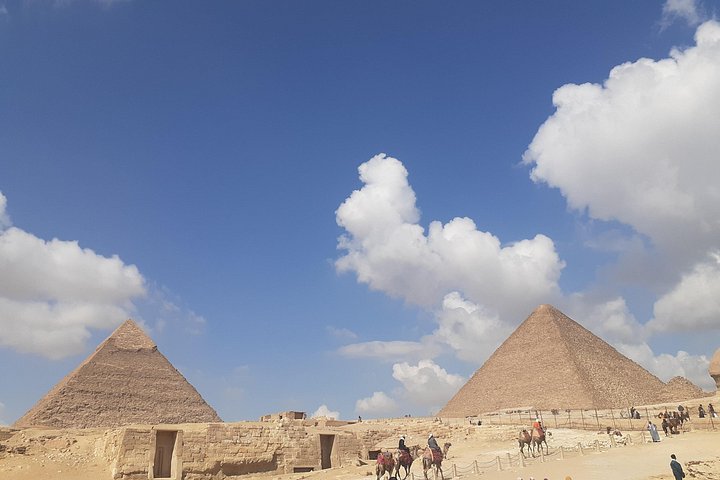
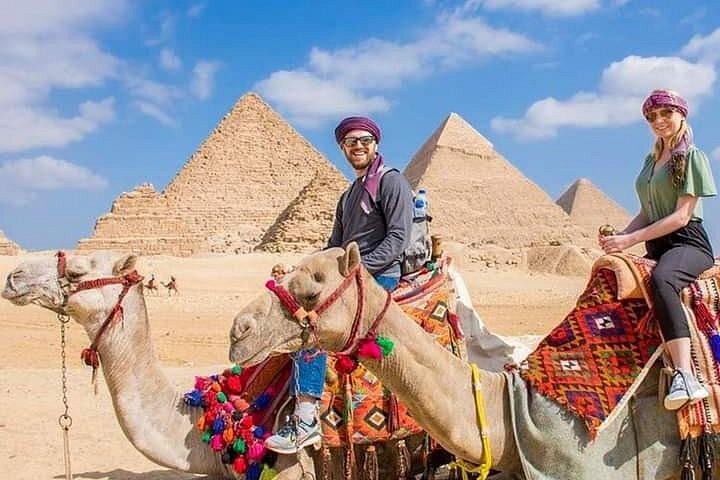
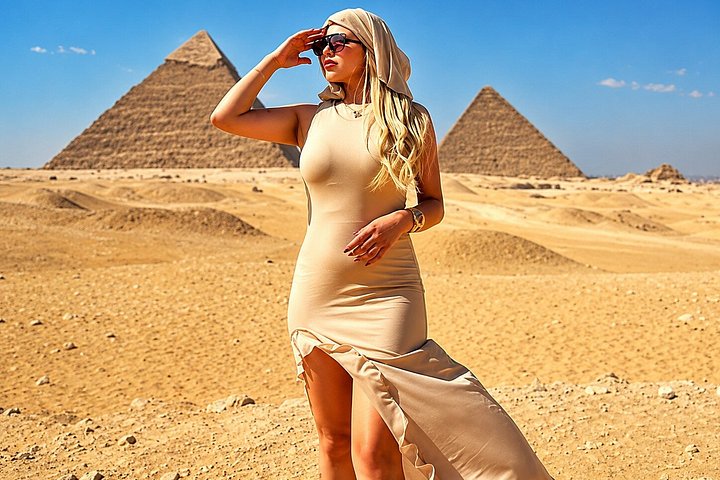
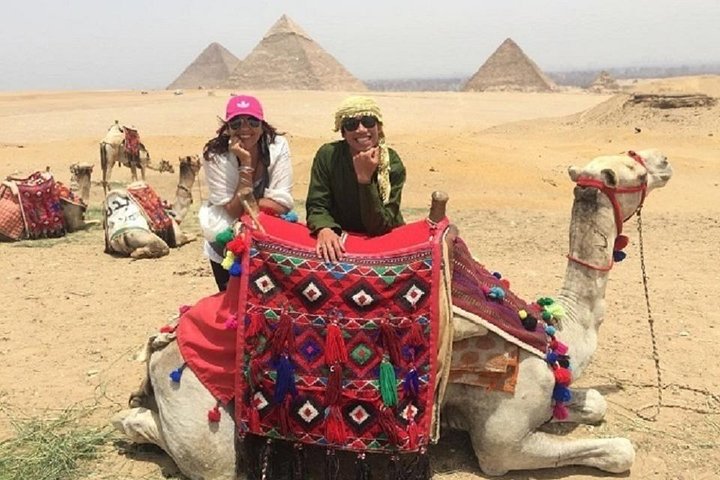
The Pyramids of Giza, located on the Giza Plateau near Cairo, Egypt, are among the most iconic and enduring symbols of ancient civilization. Constructed during the Fourth Dynasty of the Old Kingdom of Egypt (circa 2580–2560 BCE), these monumental structures were built as royal tombs for pharaohs. The complex comprises three main pyramids: the Great Pyramid of Khufu (Cheops), the Pyramid of Khafre, and the Pyramid of Menkaure. The Great Pyramid, the largest of the three, was originally 146.6 meters tall and is one of the Seven Wonders of the Ancient World. The pyramids were constructed with remarkable precision and have captivated historians, archaeologists, and tourists for centuries due to their architectural sophistication, historical significance, and the mysteries surrounding their construction methods.
The Giza Plateau, located on the outskirts of Cairo, Egypt, is a significant archaeological site that hosts the world-famous Pyramids of Giza. This plateau is home to the three major pyramids: the Great Pyramid of Khufu, the Pyramid of Khafre, & the Pyramid of Menkaure, along with several smaller pyramids, temples, and the iconic Great Sphinx. Constructed during the Fourth Dynasty of the Old Kingdom (circa 2580–2510 BCE), the pyramids served as monumental tombs for pharaohs. The Great Pyramid of Khufu, the largest, was originally 146.6 meters tall. The Pyramid of Khafre, slightly smaller but built on higher ground, retains some of its original casing stones at the peak. The Pyramid of Menkaure, the smallest, stands at 65 meters.The Giza Plateau also features the Great Sphinx, a colossal limestone statue with a lion's body and a human head, believed to represent Pharaoh Khafre. Additionally, the site includes various mortuary temples, causeways, & smaller satellite pyramids for queens
The Great Pyramid at Giza, also known as the Pyramid of Khufu or the Pyramid of Cheops, is the largest and oldest of the three pyramids on the Giza Plateau in Egypt. Built around 2580–2560 BCE during the Fourth Dynasty of the Old Kingdom, it originally stood at 146.6 meters (481 feet) and was the tallest man-made structure in the world for over 3,800 years. The pyramid was constructed as a tomb for Pharaoh Khufu and is composed of approximately 2.3 million stone blocks, each weighing an average of 2.5 tons. The precision in its construction, including its alignment with the cardinal points and the near-perfect square base, has made it a subject of extensive study and admiration. The Great Pyramid remains a testament to the engineering prowess and organizational skills of ancient Egyptian civilization.
The Pyramid of Khafre, also known as the Pyramid of Chephren, is the second-largest of the three pyramids on the Giza Plateau and was built for Pharaoh Khafre, who ruled during the Fourth Dynasty of the Old Kingdom (circa 2570 BCE). Although slightly smaller than the Great Pyramid of Khufu, it appears taller due to its construction on higher ground and the intact limestone casing at its peak, which gives it a distinctive appearance. Originally standing at 143.5 meters (471 feet), the Pyramid of Khafre is part of a larger complex that includes the Great Sphinx, which is believed to bear Khafre's likeness. The pyramid's internal structure features a simple design with a single burial chamber, two entrances, and a series of descending and ascending passageways. The Pyramid of Khafre exemplifies the advanced architectural techniques and religious significance of pyramid construction in ancient Egypt.
The Pyramid of Menkaure is the smallest of the three main pyramids on the Giza Plateau, built for Pharaoh Menkaure, who ruled during the Fourth Dynasty of the Old Kingdom (circa 2510 BCE). Standing at an original height of 65 meters (213 feet), the pyramid is notable for its relatively modest size compared to the pyramids of Khufu and Khafre. Despite its smaller dimensions, the Pyramid of Menkaure is distinguished by its intricate construction, which includes an initial layer of red granite at the base and limestone casing higher up. The pyramid complex includes three smaller subsidiary pyramids, thought to be intended for Menkaure's queens, as well as a mortuary temple and a valley temple connected by a causeway. The interior of the Pyramid of Menkaure features a descending passage leading to an antechamber and a burial chamber. The pyramid's construction and the associated complex reflect the continued evolution of pyramid-building techniques
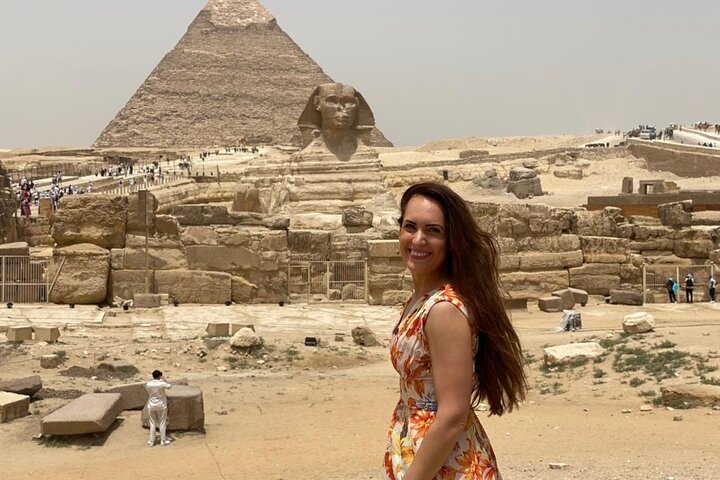
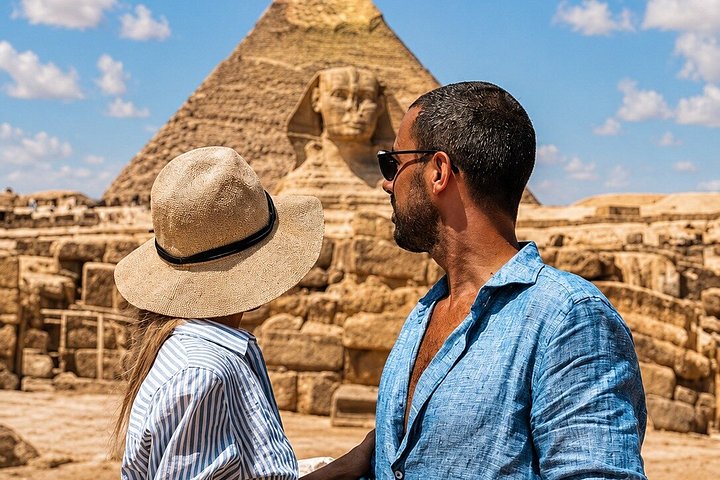
The Great Sphinx at Giza is a monumental limestone statue located on the Giza Plateau near Cairo, Egypt. It features the body of a lion and the head of a human, commonly believed to represent the Pharaoh Khafre. Here are some key points about the Great Sphinx: The Great Sphinx remains one of the most iconic and enigmatic monuments of ancient Egypt, drawing interest and fascination from around the world.
Cancellation
Free cancellation up to 24 hours before the experience starts, for a full refund.
Reviews
5.0
- 55
- 40
- 30
- 20
- 10
Ratings come from 5 reviews collected by our booking partner. They are travellers' own words, in the order they were written — never reordered to flatter the experience.
Know before you go
- Pickup
- Pickup is offered, or you can meet at the starting point.
- Tickets
- Tickets are redeemed at a different location from the meeting point.
- Ticket type
- Mobile or paper ticket accepted
- Operated by
- EMO TOURS EGYPT
- Public transportation options are available nearby
- Specialized infant seats are available
- Suitable for all physical fitness levels
- Entry tickets includes basic area only
- Entrance fees -Depending on the Tour Options Chosen
- Group Tour Meeting Points: Ramses Hilton (Cairo), Emo Tours Egypt Office (Giza) Please arrive on time and wait at your scheduled pickup point. A possible delay of 30–45 minutes may occur due to traffic; however, if the group is complete earlier, the vehicle will depart immediately.
How it compares in Giza
- Its from-price is 89% below the median of the 86 attraction tickets we list in Giza.
- It is shorter than most of them.
- By number of reviews it ranks 8 of 86.
- The operator lists free cancellation on it.
About Giza
Giza, on the edge of Cairo, is home to the Great Pyramid, the Sphinx and a desert plateau that has drawn travellers for thousands of years.
The plateau holds three great pyramids, built for the pharaohs Khufu, Khafre and Menkaure, along with smaller queens' pyramids and rows of nobles' tombs. The Great Pyramid of Khufu is the last of the Seven Wonders of the Ancient World still standing, and the Great Sphinx keeps watch below, carved from the bedrock beside Khafre's valley temple.
Top-ranked sights in Giza: Sphinx (Great Sphinx of Giza), Giza Pyramids, Great Pyramid of Giza (Khufu Pyramid).
Special offers in Giza
Was/now prices come from the operator, never from us.



Similar experiences
 Free cancellation
 Free cancellationSkip the line
![Day Tour To Giza Pyramids Memphis City Dahshur And Saqqara Pyramids]() Free cancellationSkip the line