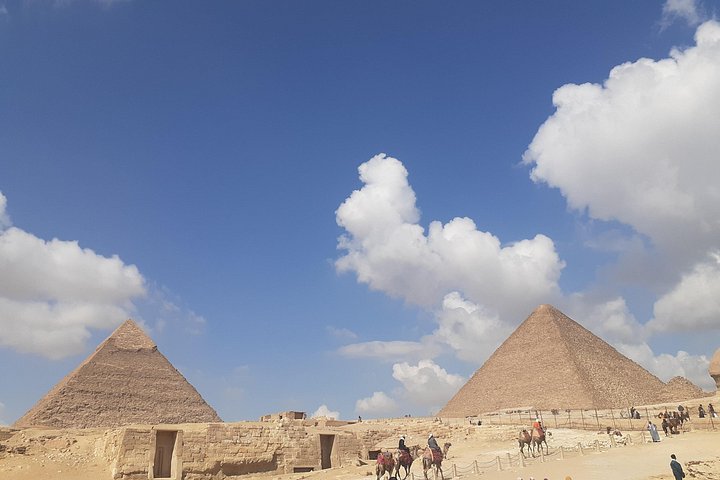
Pyramids Sphinx Grand Egyptian Museum & Bazaar Or Nile Felucca
- 8–10 hours
- Free cancellation up to 24h before
- 2 languages
- Instant confirmation
Highlights
This isn’t just another sightseeing day — it’s your private, expertly guided voyage into Egypt’s most iconic wonders. With your own Egyptologist and a dedicated vehicle, you’ll explore the Pyramids of Giza at your own pace, pause at the Valley Temple, and stand face-to-face with the timeless Great Sphinx. Next, you’ll enter the Grand Egyptian Museum (GEM), the largest archaeological museum in the world, to marvel at King Tutankhamun’s treasures and thousands of other pharaonic artifacts — all displayed in a sleek, modern setting. To wind down, enjoy a serene one-hour ride on a traditional felucca as you glide along the Nile, watching Cairo’s skyline in soft evening light. Every detail is covered: door-to-door transport, lunch, bottled water, and all entrance fees are included — so you can relax, immerse yourself, and carry memories, not logistics.
Inclusions
What's included
- Entrance to the felucca or Khan Al Khalili Bazaar(if you select All inclusive option)
- Hotel pick-up and drop-off (Cairo or Giza)
- Grand Egyptian Museum, Giza pyramids & Sphinx Complex (if you select All inclusive option)
- Unlimited bottled water all the day
- Egyptian traditional local lunch( If this option has been selected )
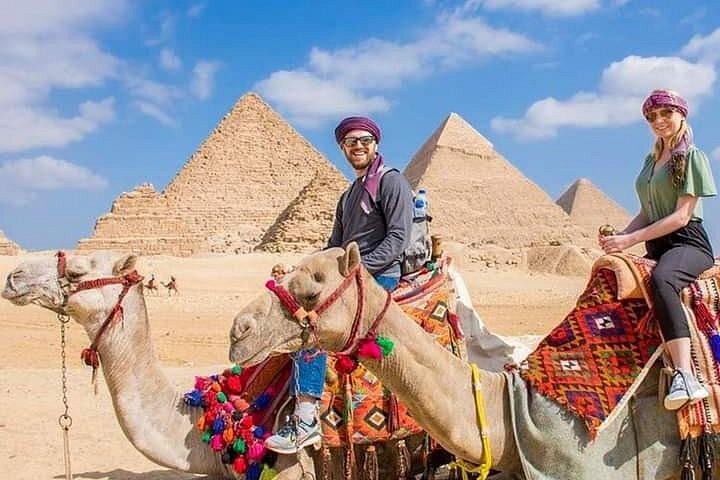
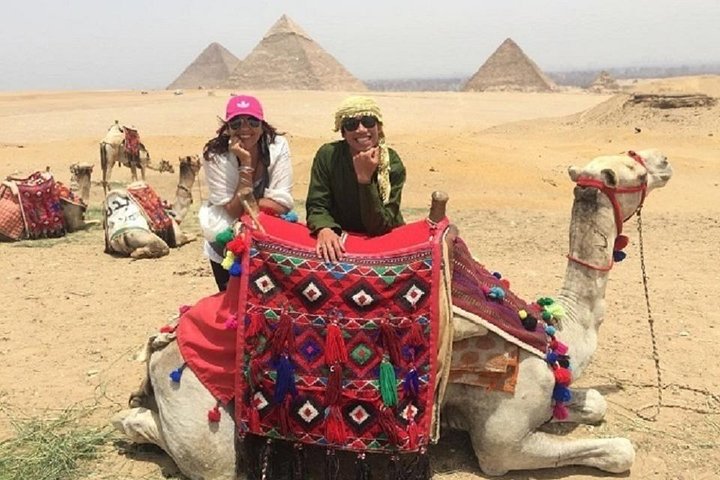
- Camel ride ( If this option has been selected )
- Qualified Egyptologist guide
What's not
- Gratuities
Itinerary
Today morning you will meet your guide at the lobby of hotel, and head toward to the Pyramids of Cheops, Chephren, and Mykerinus and discover the oldest of the Seven Wonders of the Ancient World, and the only one to remain largely intact. Egyptologists believe the Pyramid of Cheops (also known as the Great Pyramid of Giza) was built as a tomb for the Egyptian Pharaoh Khofu and constructed over a 14 to 20-year period in 2560 BC.
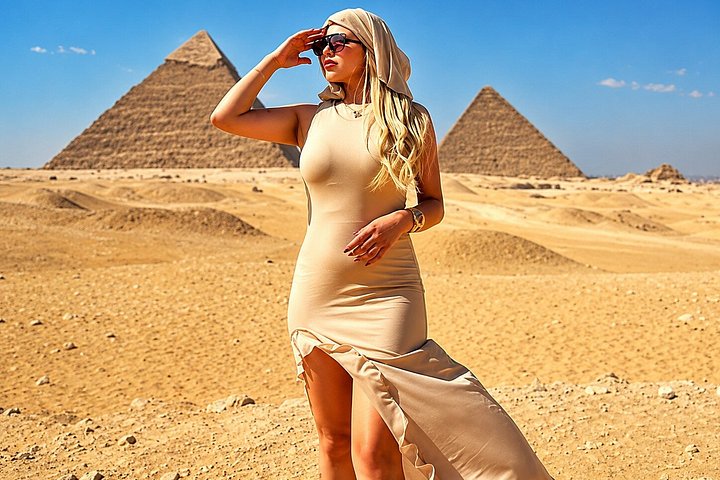
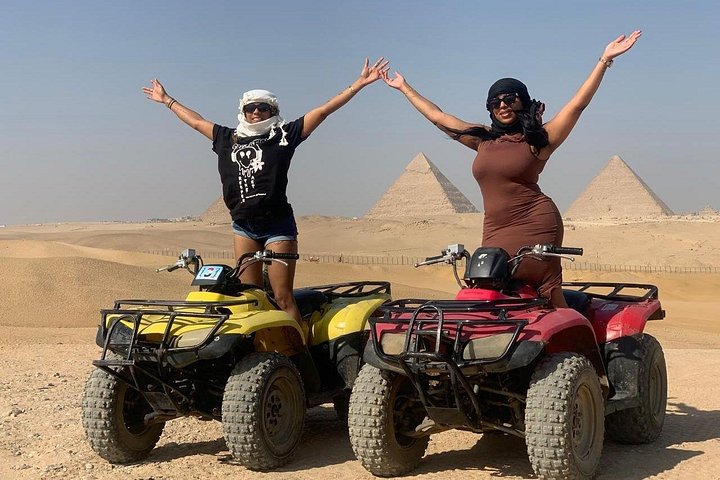
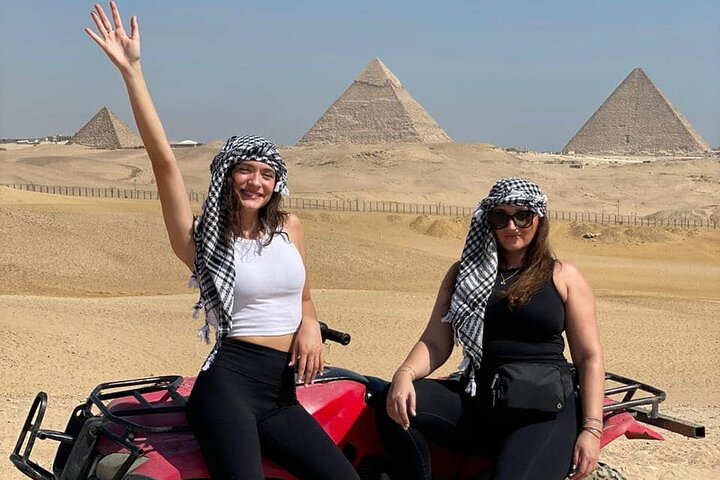
At the very beginning of your tour, you’ll stop at a breathtaking lookout point where all three Pyramids of Giza align on the horizon. It’s not just a great photo-op — the viewpoint symbolically captures the grandeur of ancient Egypt’s most powerful pharaohs, each pyramid telling a chapter of a dynastic legacy that spans generations.
The most diminutive of the trio, yet rich in character. Built for Pharaoh Menkaure, it originally rose to about 65 m. Its lower courses were made of red granite from Aswan, a material that signifies both craftsmanship and symbolism in royal architecture. Around Menkaure’s complex, you’ll also find his Queen’s pyramids and a mortuary temple, giving insight into the funerary rites and royal family structure of the time.
Slightly smaller than Khufu’s, but from certain angles it appears taller thanks to its elevated base. This pyramid also retains some of its original casing stones at the apex, offering a glimpse of what the ancient smooth finish might once have looked like. Wikipedia
Standing before the Great Pyramid — built by Pharaoh Khufu (Cheops) around the 25th century BCE — you’ll experience one of humanity’s greatest architectural achievements. This towering structure originally stood at nearly 147 m high, made from an estimated 2.3 million limestone and granite blocks, and aligned almost perfectly to the four cardinal points. Inside, the pyramid holds a network of chambers and passages — including the King’s Chamber, built entirely from granite, and the Grand Gallery, which showcases the ancient engineers’ mastery. Modern science continues to reveal its secrets — cosmic-ray muon scans have recently detected a large, previously unknown void inside.
Built with massive limestone and red-pink granite blocks (some over 100 tons), the Valley Temple is an architectural marvel. Inside, the floor was laid with alabaster, and the walls once held statues of Khafre. EgyptToday In ancient times, this temple served a deeply ritualistic role — the mummified body of Khafre would arrive here (likely via canal), be purified, and prepared for the afterlife. The precision masonry, massive monolithic blocks, and spiritual function all reflect the sophistication of Old Kingdom religion and engineering.
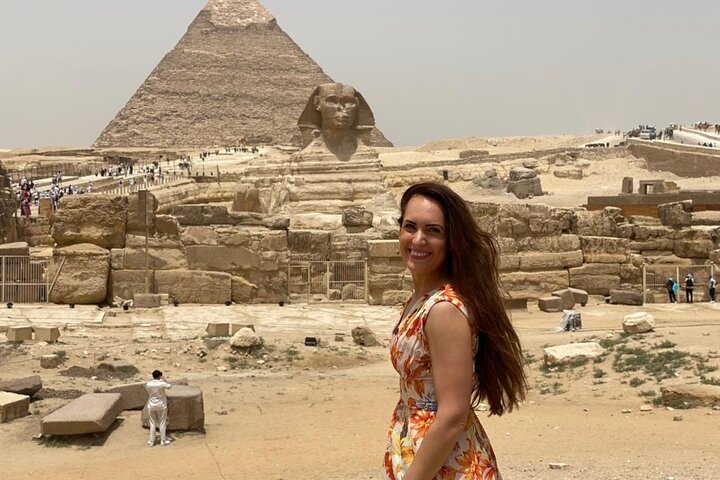
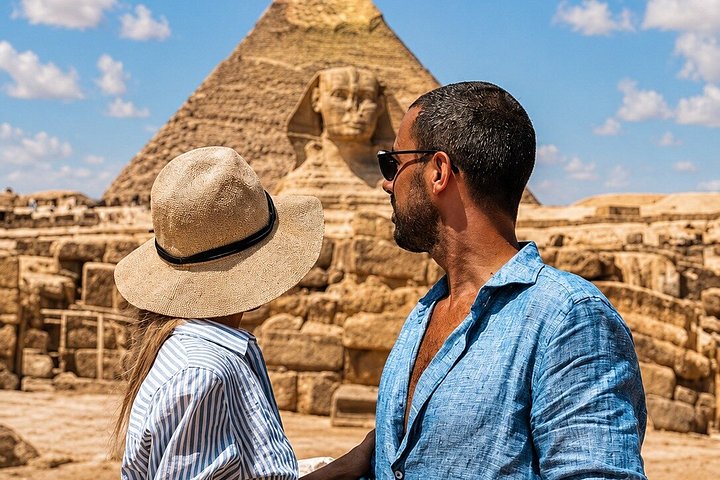
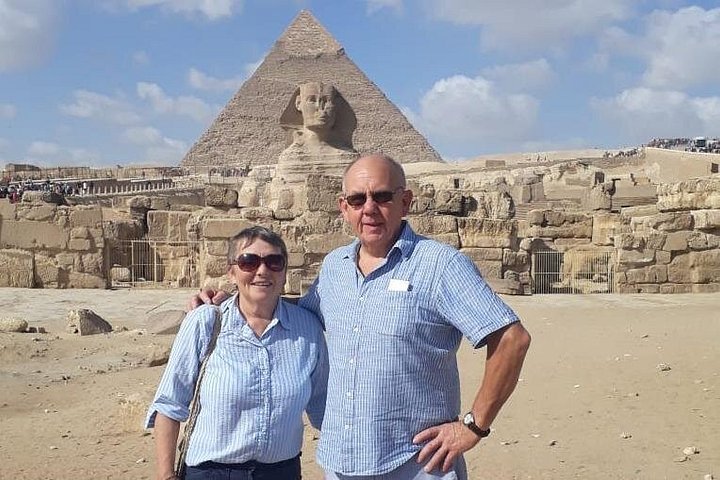
This iconic limestone statue — with a lion’s body and a kingly human face — is one of the most famous monuments in the world. Carved possibly during the reign of Khafre, the Sphinx is believed to represent him, symbolizing strength, wisdom, and his divine guardianship over the Giza Plateau. It’s around 73 meters long and 20 meters high. Over the centuries, the Sphinx has weathered erosion and damage (its famous missing nose is still a topic of debate), but it remains a powerful symbol of ancient Egypt’s spiritual and royal power.
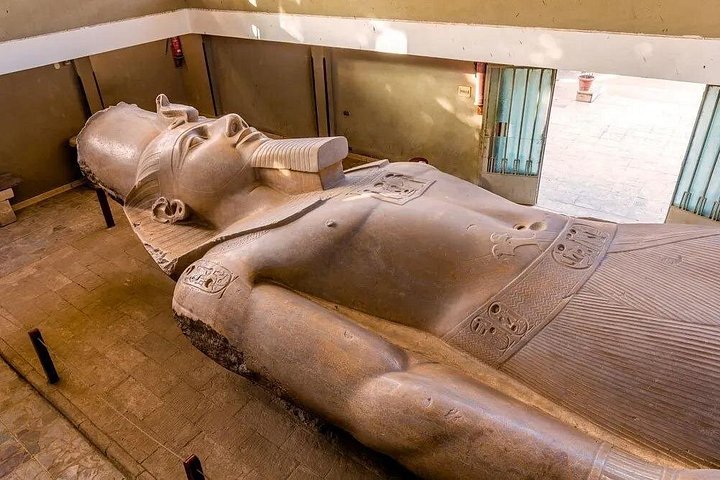
This state-of-the-art museum is now the world’s largest dedicated to a single civilization — housing tens of thousands of artifacts that span over 7,000 years of Egyptian history. One of its star attractions is the Tutankhamun Halls, where the entire treasure trove of King Tut (around 5,398 objects) is displayed. The museum building itself is designed with care — galleries are organized by era (Old Kingdom, Middle Kingdom, New Kingdom, Greco-Roman) and by theme (Royalty, Society, Beliefs). In its grand atrium stands the colossal 83-ton statue of Ramses II, a powerful centerpiece that connects visitors directly to Egypt’s pharaonic legacy.
Choose Your Finale: Nile Felucca Ride: Relax and drift along the Nile in a traditional felucca, absorbing Cairo’s skyline from the water. Khan El Khalili Bazaar: Dive into the colors, sounds, and aroma of Old Cairo’s iconic market — a lively spot for souvenirs, spices, and local treasures.
Cancellation
Free cancellation up to 24 hours before the experience starts, for a full refund.
Reviews
5.0
- 5226
- 45
- 30
- 20
- 10
Ratings come from 231 reviews collected by our booking partner. They are travellers' own words, in the order they were written — never reordered to flatter the experience.
Know before you go
- Pickup
- Pickup is included for everyone.
- Ticket type
- Mobile or paper ticket accepted
- Operated by
- Blue Nile Tours
- Public transportation options are available nearby
- Suitable for all physical fitness levels
How it compares in Giza
- Its from-price is 88% below the median of the 1500 day trips we list in Giza.
- Its length is typical for the group.
- By number of reviews it ranks 31 of 1500.
- The operator lists free cancellation on it.
About Giza
Giza, on the edge of Cairo, is home to the Great Pyramid, the Sphinx and a desert plateau that has drawn travellers for thousands of years.
The plateau holds three great pyramids, built for the pharaohs Khufu, Khafre and Menkaure, along with smaller queens' pyramids and rows of nobles' tombs. The Great Pyramid of Khufu is the last of the Seven Wonders of the Ancient World still standing, and the Great Sphinx keeps watch below, carved from the bedrock beside Khafre's valley temple.
Top-ranked sights in Giza: Sphinx (Great Sphinx of Giza), Giza Pyramids, Great Pyramid of Giza (Khufu Pyramid).
Special offers in Giza
Was/now prices come from the operator, never from us.