Cork & Prickly Pear Tour - Private Tour to the Heritage of Pepe Aromas
Descriptions come from the operator and are translated automatically.
- 1h 30m
- Free cancellation up to 24h before
- 2 languages
- Private tour
Highlights
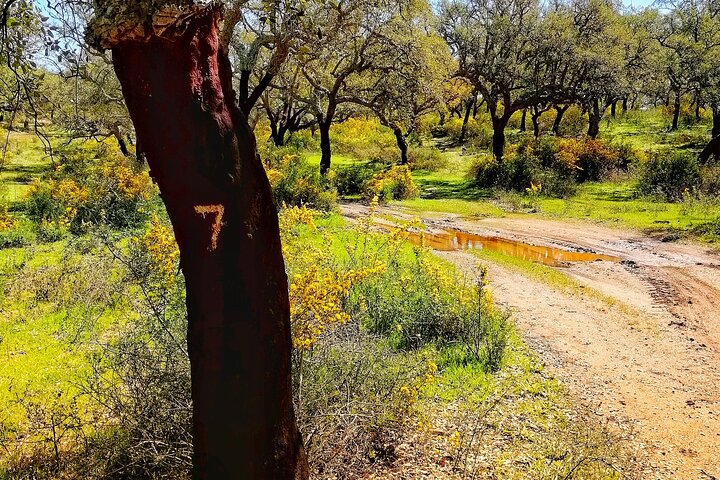
Want to have an unforgettable experience? Walk or bike with us to make several stops and experience unique moments like strolling through the fig tree, photographing the catos, hugging a surer or eating a bolota! This guided tour that uncovers all the secrets about the wonderful world of catos and cork allows you to enjoy the calm of the mount and the beauty of the fruit groves. Finish with a visit to our shop from the season, where you can taste the figs-of-the-India during the pickup season.
Inclusions
What's included
- Bottled water
Cancellation
Free cancellation up to 24 hours before the experience starts, for a full refund.
Reviews
5.0
- 55
- 40
- 30
- 20
- 10
Ratings come from 5 reviews collected by our booking partner. They are travellers' own words, in the order they were written — never reordered to flatter the experience.
Know before you go
- Meeting point
- We are in the former train station of Vale do Pereiro, Arraiolos, Évora
- Pickup
- Everyone meets at the starting point; there is no pickup.
- Ticket type
- Mobile or paper ticket accepted
- Operated by
- Pepe Aromas
- Service animals allowed
- Travelers should have at least a moderate level of physical fitness
How it compares in Évora District
- Its from-price is 67% below the median of the 18 experiences we list in Évora District.
- It is shorter than most of them.
- By number of reviews it ranks 11 of 18.
- The operator lists free cancellation on it.
About Évora District
Évora District covers the heart of Portugal's Alentejo, a land of cork oaks, white villages and wine, centred on the walled city of Évora.
Évora District lies in the Alentejo region of southern Portugal. Its capital, Évora, is a walled city whose historic centre is a UNESCO World Heritage Site. A Roman temple with granite columns stands near the cathedral, the Chapel of Bones is lined with human skulls and bones, and the university was founded by the Jesuits in 1559. A 16th-century aqueduct strides into the city on tall arches.