Aymara's route 1 day tour in Puno: Inca Uyo, Aramu Muru, Molloco
- 8h 30m
- Free cancellation up to 24h before
- 2 languages
- Instant confirmation
Highlights
This tour follows the Aymara Route through Puno's southern highlands, connecting ancient sites with colonial landmarks along Lake Titicaca's shore. Your first stop is Inca Uyo in Chucuito, an Incan fertility temple marked by dozens of stone phallus sculptures arranged in a ceremonial courtyard. From there, you'll head to the Chullpas de Molloco—circular stone towers that once served as above-ground tombs for the pre-Incan elite. You'll also visit the Waru Warus, raised agricultural platforms that reveal how ancient communities managed farming in harsh, frost-prone conditions. At Aramu Muru, you'll find a carved doorway in solid rock—locals call it the "Gate of the Gods" and believe it holds energetic significance. The tour continues to Juli, once known as "Little Rome of the Americas" for its concentration of colonial churches. You'll visit its Main Church, an impressive example of Andean Baroque architecture. Afterward, there's time to walk along Juli's small sandy beach. Join now!
Inclusions
What's included
- Entrance to the attractions Chucuito, Molloco, Aramu Muru
- Chicken/Trout options available
- Transportation
What's not
- Breakfast
- Personal expenses
- Drinks
Itinerary
In Chucuito, you'll explore the Temple of Fertility (Inca Uyo), an Incan ceremonial site featuring dozens of carved stone phalluses arranged in a walled courtyard—their original purpose is still debated, though fertility rituals are the most common theory. At the main square, you'll see a 1610 alabaster sundial, still standing from the colonial period. The town centers around two plazas, both lined with 17th-century churches that show the layers of Chucuito's colonial past. The stop combines Incan and Spanish colonial architecture against the backdrop of Lake Titicaca and the surrounding highlands.
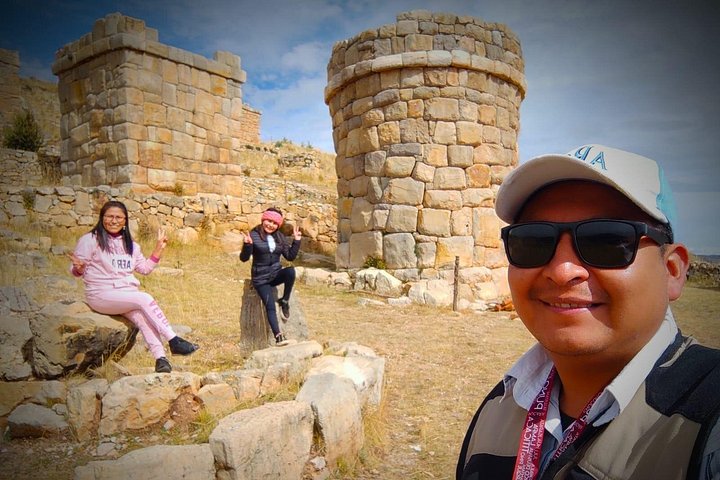
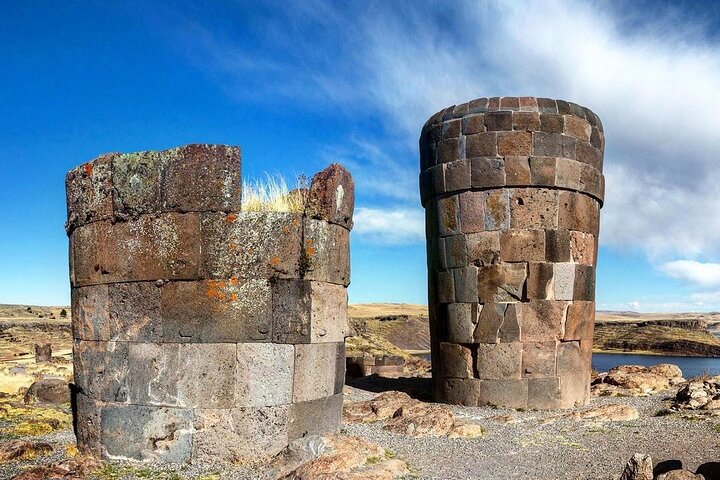
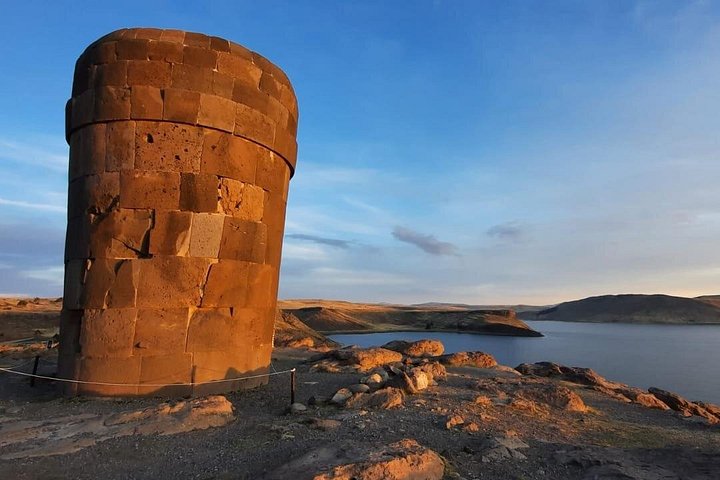
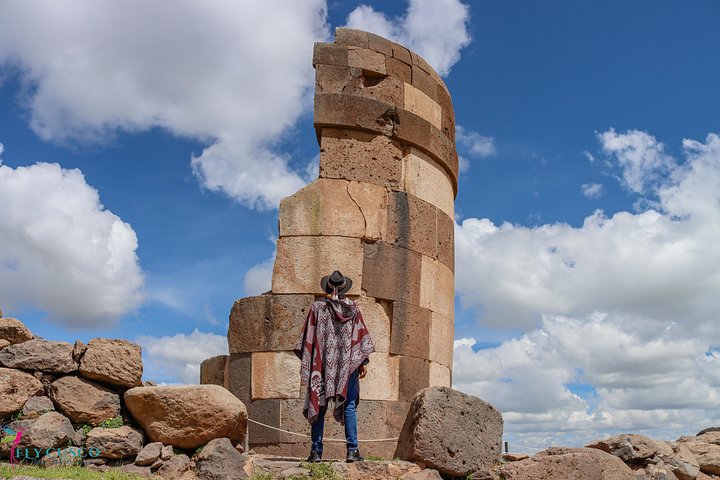
At Molloco, you'll visit a group of chullpas—pre-Incan burial towers that rise up to 7 meters above the altiplano. These cylindrical stone structures were built to house the remains of nobility and community leaders, their bodies placed in a fetal position facing east. The towers show the stonework techniques used before the Inca empire, with some still bearing traces of the original mortar. Walking through the site, you'll see how these communities approached death and ancestor veneration—the towers were designed to keep the deceased visible and present in daily life, rather than hidden underground. The site offers a perspective on burial practices that predate the more widely known Incan traditions.
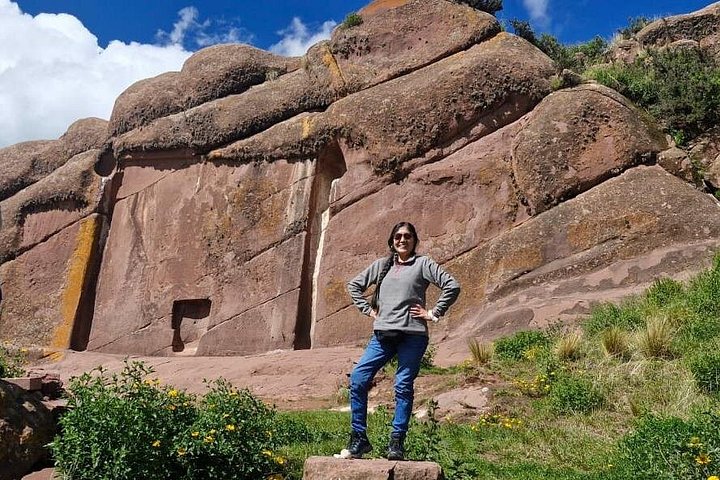
Aramu Muru is a doorway carved into a rock face in the high desert near Lake Titicaca. Locals call it the "Gate of the Gods" and have stories about its origins—the most popular tells of an Incan priest named Aramu Muru who supposedly fled here during the Spanish conquest with a golden disk, placed it in the carving, and disappeared through the stone. The site draws visitors interested in its energetic qualities. Many come to meditate at the doorway or place their hands on the carved stone. The surrounding area has naturally eroded rock formations that, depending on the angle, can look like faces or animals. Whether you're drawn to the legend or just curious about the geology and local beliefs, the site offers a different kind of stop—one that blends pre-Columbian stories with the stark landscape of the altiplano.
At the Waru Waru Camellones, you'll see a pre-Columbian agricultural system still visible across the altiplano. The raised earthen platforms are separated by water channels that served three purposes: the water absorbed heat during the day and released it at night to prevent frost damage, the channels provided irrigation during dry periods, and the nutrient-rich sediment from the water improved soil quality. This farming technique allowed communities to cultivate potatoes, quinoa, and other crops at nearly 4,000 meters above sea level, where temperatures can drop below freezing even during growing season. Some of these field systems are hundreds of years old. Agricultural researchers have studied the Waru Waru to understand how raised-bed farming can work in frost-prone regions, and a few communities have revived the technique in recent decades.
In Juli, you'll visit the Plaza de Armas and the Main Church, which dominates one side of the square. The town earned the nickname "Little Rome of the Andes" in colonial times for its concentration of Catholic churches—Jesuits established Juli as a regional religious center in the 16th century. The Main Church's stone facade shows the Andean Baroque style that developed here: European architectural forms mixed with indigenous stoneworking traditions. The bell towers and carved entrance are among the best-preserved examples from this period in the Lake Titicaca region. After the plaza, you'll stop at Juli's beach, one of the few sandy stretches along the lake's shore. Most of the shoreline is rocky or reed-covered, so this spot is unusual. You'll have time to walk along the sand and look out over the water before returning back
Cancellation
Free cancellation up to 24 hours before the experience starts, for a full refund.
Reviews
5.0
- 54
- 40
- 30
- 20
- 10
Ratings come from 4 reviews collected by our booking partner. They are travellers' own words, in the order they were written — never reordered to flatter the experience.
Know before you go
- Meeting point
- Meeting point is at the steps of the Cathedral in the frontdoor
- Pickup
- Pickup is offered, or you can meet at the starting point.
- Ticket type
- Mobile or paper ticket accepted
- Group size
- Up to 19 travellers
- Operated by
- Inca Lake
- Public transportation options are available nearby
- Not recommended for travelers with poor cardiovascular health
- Suitable for all physical fitness levels
How it compares in Puno
- Its from-price is close to the median of the 45 day trips we list in Puno.
- Its length is typical for the group.
- By number of reviews it ranks 25 of 45.
- The operator lists free cancellation on it.
About Puno
Puno is a high-altitude Peruvian city on the shore of Lake Titicaca, the base for the floating reed islands of the Uros, Taquile Island and Sillustani.
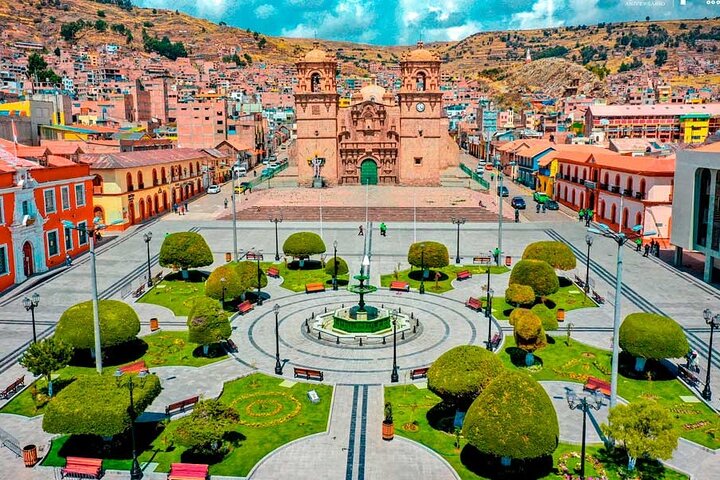
Puno stands at about 3,800 metres on the shore of Lake Titicaca, in the Altiplano of southern Peru, with its bay filled with reed beds. The Plaza de Armas is framed by a baroque 18th-century cathedral with a carved stone façade, and viewpoints on the surrounding hills give views over the lake. Puno is called the folklore capital of Peru, for its dances, costumes and music.
Top-ranked sights in Puno: Uros Floating Islands (Islas Uros), Taquile Island (Isla Taquile), Lake Titicaca.
Special offers in Puno
Was/now prices come from the operator, never from us.