Ultimate Luxor Day Tour: Explore Both East & West Banks
- 8 hours
- Skip the line
- Free cancellation up to 24h before
- 5 languages
Highlights
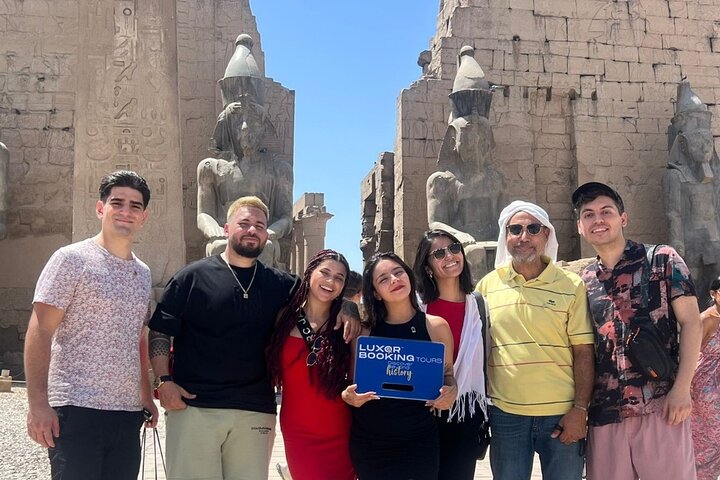
Experience the best of Luxor in one ultimate day tour with our Ultimate Luxor Day Tour: Explore Both East & West Banks. Discover the ancient wonders of Luxor as you visit the East Bank to explore iconic temples like Karnak and Luxor Temple, then journey to the West Bank to uncover the secrets of the Valley of the Kings, Valley of the Queens, and the Temple of Queen Hatshepsut. Led by expert guides, this tour offers a comprehensive insight into the rich history and culture of Luxor. Book now and embark on an unforgettable journey through the heart of ancient Egypt.
Inclusions
What's included
- Private transportation
- Bottled water
- Entry Fees
- Air-conditioned vehicle
- Tour Guide
What's not
- Tipping
- Lunch
Itinerary
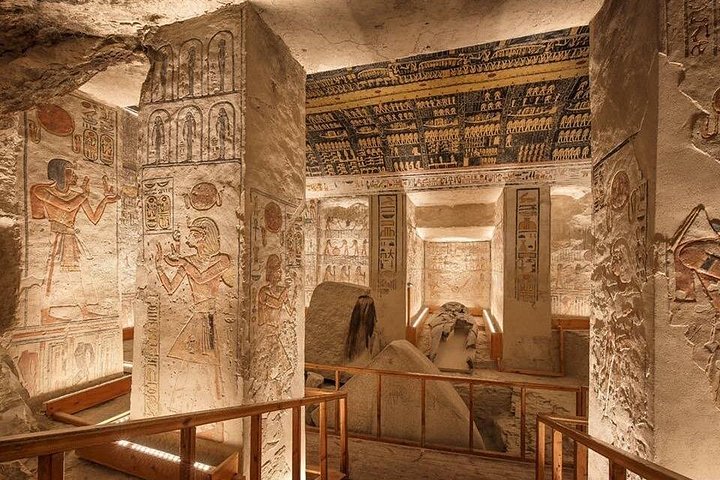
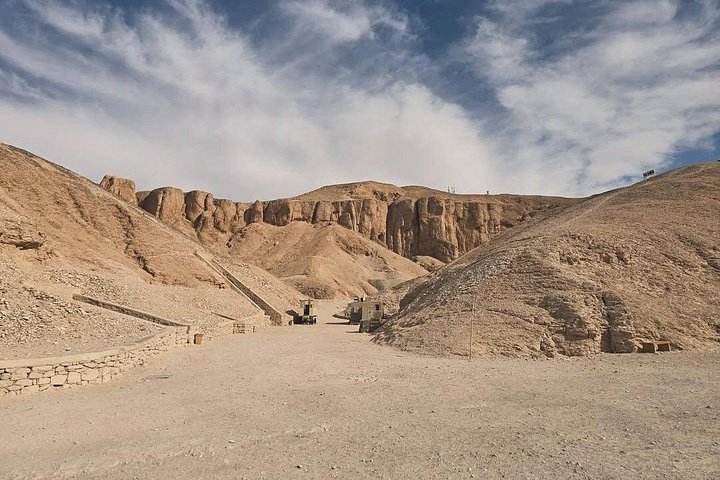
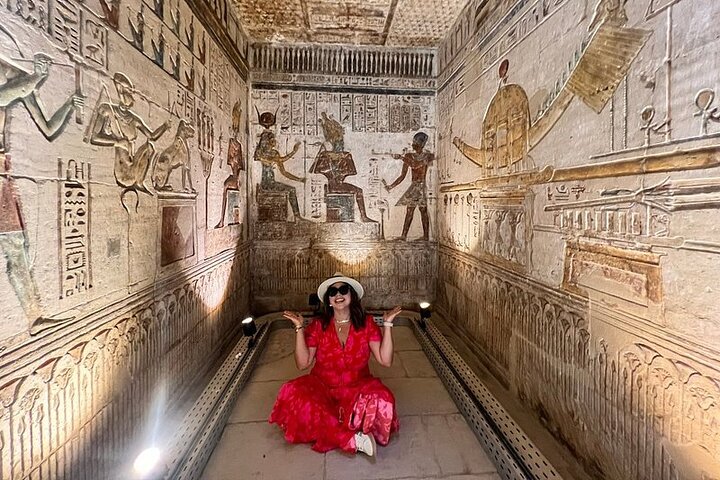
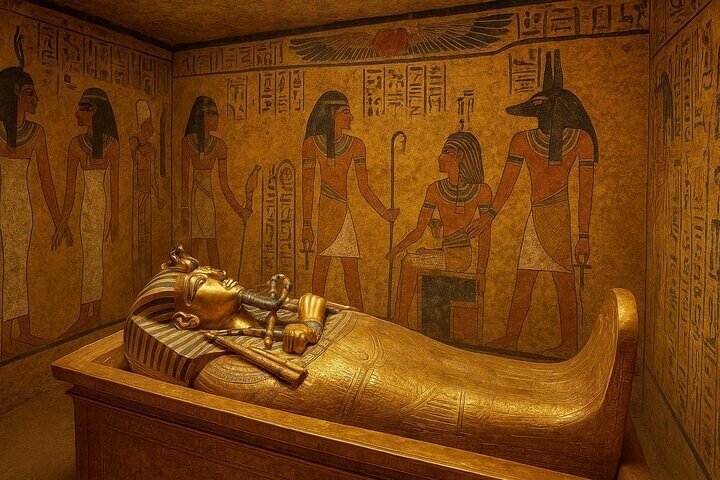
The Valley of the Kings,[a] also known as the Valley of the Gates of the Kings,[b][2] is an area in Egypt where, for a period of nearly 500 years from the Eighteenth Dynasty to the Twentieth Dynasty, rock-cut tombs were excavated for pharaohs and powerful nobles under the New Kingdom of ancient Egypt.[3][4]
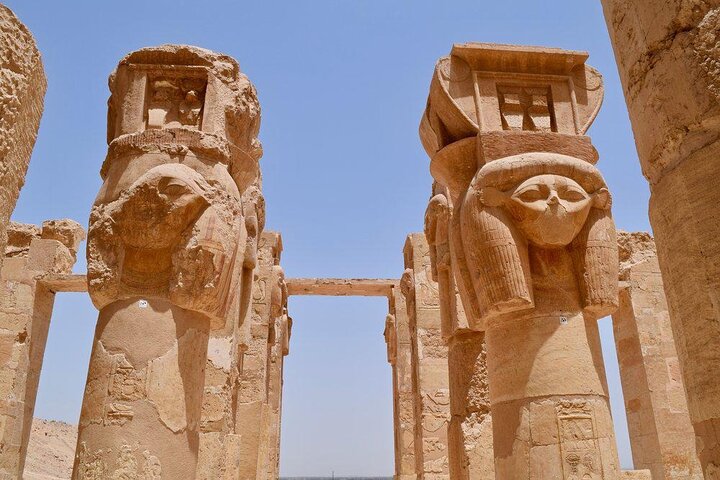
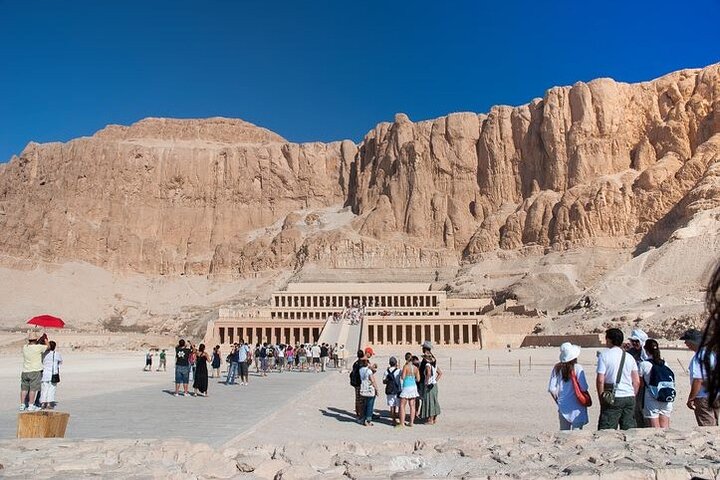
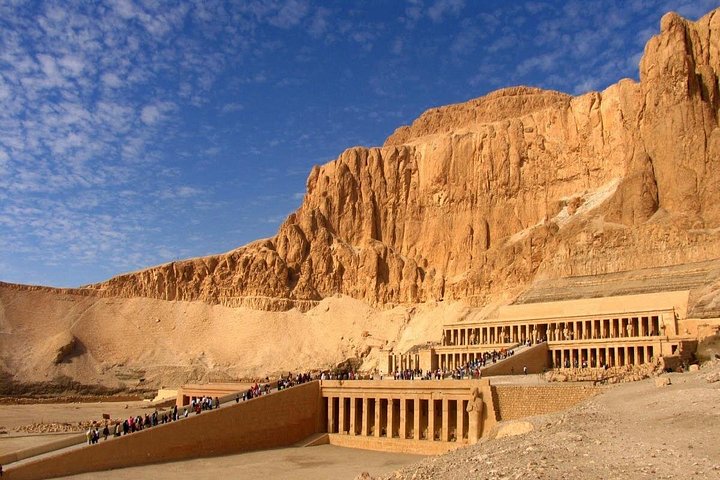
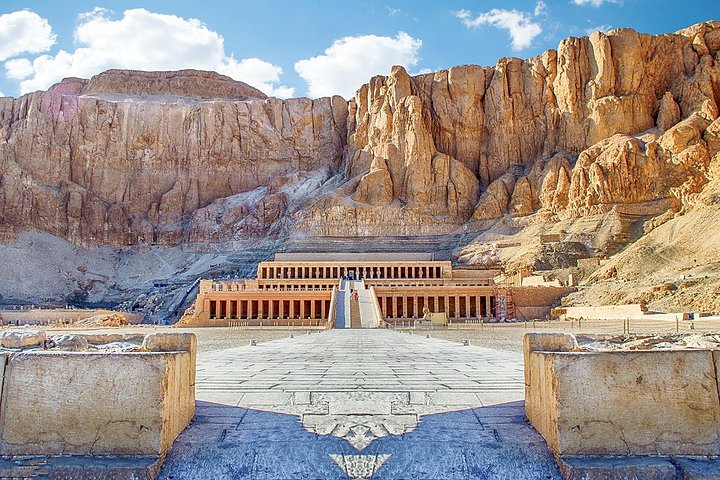
The mortuary temple of Hatshepsut (Egyptian: Ḏsr-ḏsrw meaning "Holy of Holies") is a mortuary temple built during the reign of Pharaoh Hatshepsut of the Eighteenth Dynasty of Egypt.[b] Located opposite the city of Luxor, it is considered to be a masterpiece of ancient architecture.[c] Its three massive terraces rise above the desert floor and into the cliffs of Deir el-Bahari. Hatshepsut's tomb, KV20, lies inside the same massif capped by El Qurn, a pyramid for her mortuary complex. At the edge of the desert, 1 km (0.62 mi) east, connected to the complex by a causeway, lies the accompanying valley temple.
The Colossi of Memnon (Arabic: el-Colossat or es-Salamat) are two massive stone statues of the Pharaoh Amenhotep III, which stand at the front of the ruined Mortuary Temple of Amenhotep III, the largest temple in the Theban Necropolis. They have stood since 1350 BC, and were well known to ancient Greeks and Romans, as well as early modern travelers and Egyptologists.[1][2] The statues contain 107 Roman-era inscriptions in Greek and Latin, dated to between AD 20 and 250; many of these inscriptions on the northernmost statue make reference to the Greek mythological king Memnon, whom the statue was then – erroneously – thought to represent.[3]
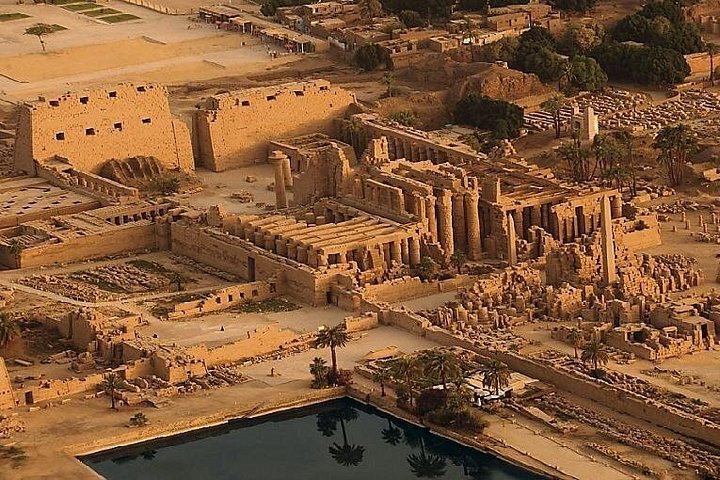
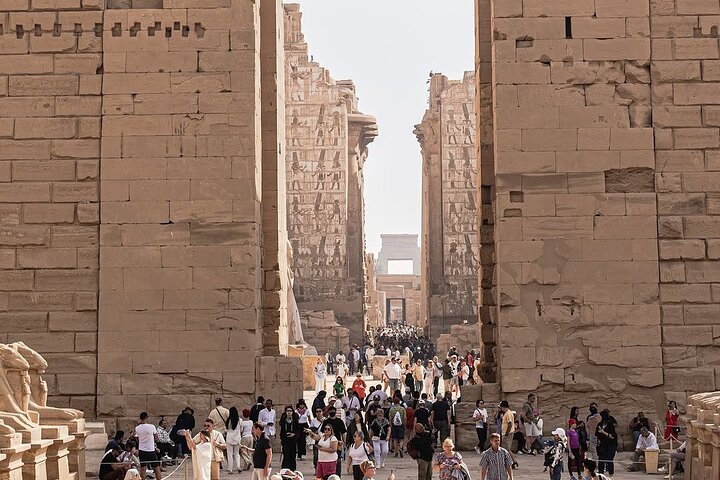
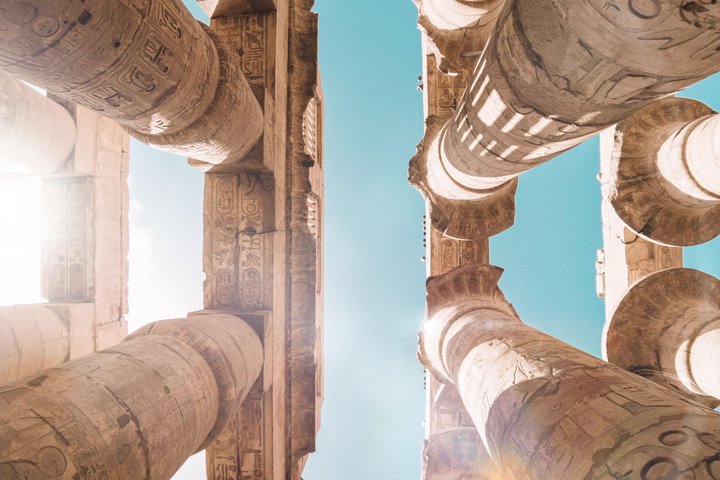
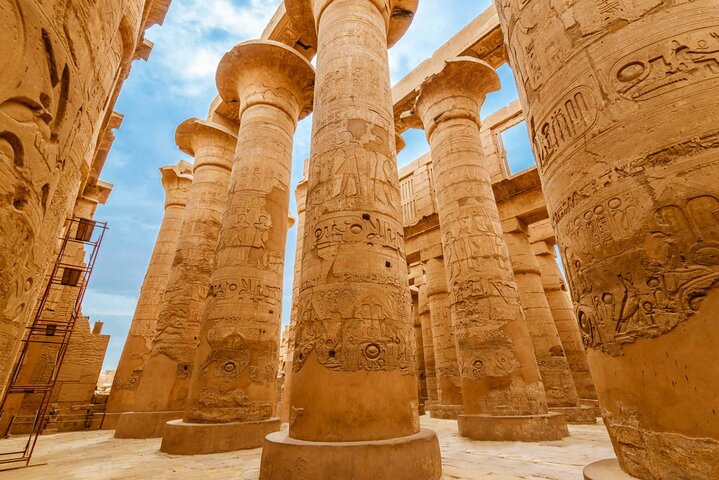
The Karnak Temple Complex, commonly known as Karnak (/ˈkɑːr.næk/),[1] comprises a vast mix of temples, pylons, chapels, and other buildings near Luxor, Egypt. Construction at the complex began during the reign of Senusret I (reigned 1971–1926 BC) in the Middle Kingdom (c. 2000–1700 BC) and continued into the Ptolemaic Kingdom (305–30 BC), although most of the extant buildings date from the New Kingdom. The area around Karnak was the ancient Egyptian Ipet-isut ("The Most Selected of Places") and the main place of worship of the 18th Dynastic Theban Triad, with the god Amun as its head. It is part of the monumental city of Thebes, and in 1979 it was added to the UNESCO World Heritage List along with the rest of the city.[2] Karnak gets its name from the nearby, and partly surrounded, modern village of El-Karnak, 2.5 kilometres (1.6 miles) north of Luxor.
Cancellation
Free cancellation up to 24 hours before the experience starts, for a full refund.
Know before you go
- Pickup
- Pickup is offered, or you can meet at the starting point.
- Ticket type
- Mobile or paper ticket accepted
- Operated by
- Egipto Excursiones
- Public transportation options are available nearby
- Specialized infant seats are available
- Not recommended for travelers with spinal injuries
- Not recommended for pregnant travelers
- Not recommended for travelers with poor cardiovascular health
- Suitable for all physical fitness levels
How it compares in Luxor
- Its from-price is 32% above the median of the 109 attraction tickets we list in Luxor.
- It is longer than most of them.
- The operator lists free cancellation on it.
About Luxor
Luxor stands on the site of ancient Thebes, with vast temples on the Nile's east bank and the royal tombs of the Valley of the Kings across the river.
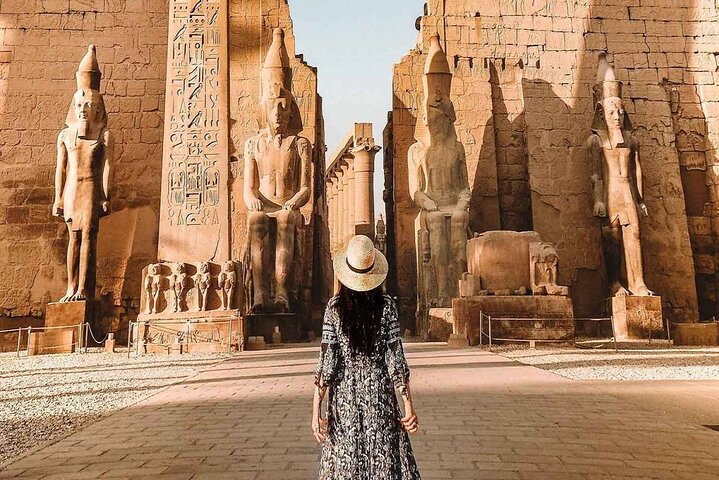
On the east bank, the Karnak temple complex spreads across acres of pylons, obelisks and the forest of columns in its Great Hypostyle Hall. An avenue of sphinxes links it to Luxor Temple in the town centre, which is especially atmospheric when lit up in the evening. The Luxor Museum and the Mummification Museum sit along the riverside corniche.
Top-ranked sights in Luxor: Valley of the Kings, Temple of Hatshepsut (at Deir el-Bahari), Colossi of Memnon.
Special offers in Luxor
Was/now prices come from the operator, never from us.
Similar experiences
 Free cancellationSkip the line
 Free cancellationSkip the line
![Guided tour to Karnak and luxor Temples From Luxor With Pickup]() Free cancellationSkip the line