Rickshaw Sightseeing City Tours Berlin - Rikscha Tours
Descriptions come from the operator and are translated automatically.
- 1–4 hours
- Free cancellation up to 24h before
- 7 languages
- Instant confirmation
Highlights
Unfortunately, due to health reasons, I cannot lead tours or answer questions from the beginning of August until October 15. However, I will be actively available to you again from October 15th### ❤To reach sights of the capital easily and quickly and to get to know Berlin in a relaxed atmosphere. ❤Where should it go? To the opera, the Olympic Stadium or Hangover Blue? Do you want the club night “from dusk till dawn”, a Spree ride through the green, from the Tiergarten to the Maybachufer, or rather on the fastest way from the concert to the cozy bed? Leo-Rikscha offers stress-free rides with lots of fun, comfort and guarantees the best carbon footprint. When booking for multiple people with multiple rickshaws Search with this title ''Rikscha Tours Berlin - Groups up to 16 people with multiple rickshaws''
Inclusions
What's included
- WiFi on board
- Warm blanket
- photographer
- Music on request
What's not
- Gratuities
- Alcoholic Beverages
- Coffee and/or Tea
Itinerary
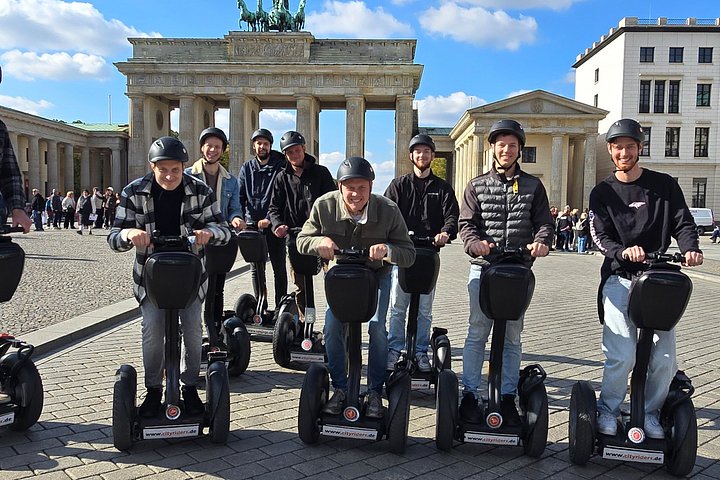
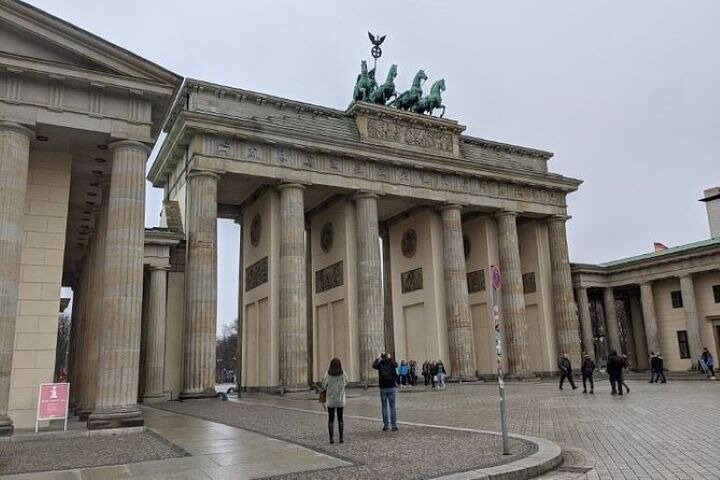
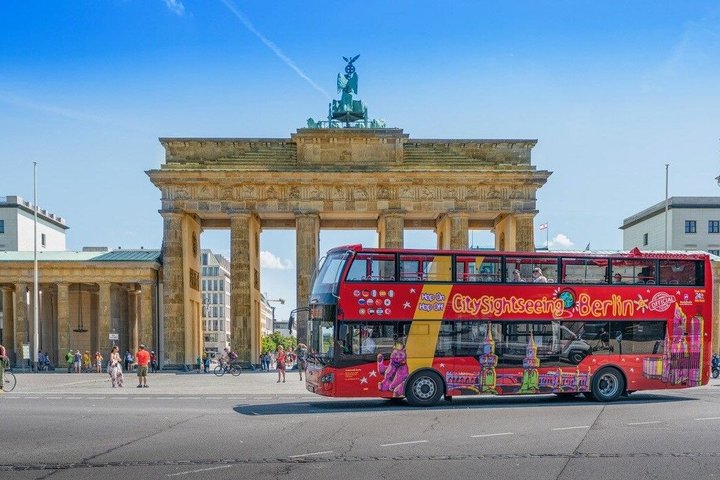
The Brandenburg Gate made of sandstone is one of the largest and most beautiful creations of German classicism. It was built in the years 1788 to 1791 based on designs by Carl Gotthard Langhans the Elder, who was strongly oriented towards the propylaea of the Athens Acropolis. King Friedrich Wilhelm II had previously ordered the construction of the Brandenburg Gate because he was looking for a worthy architectural conclusion for the boulevard Unter den Linden.
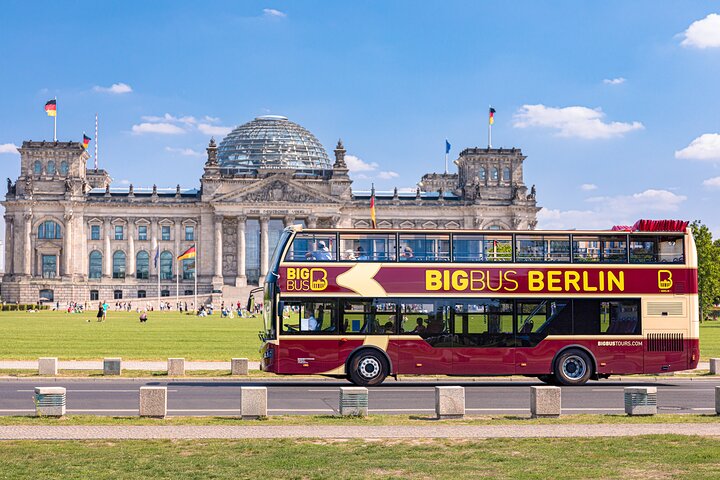
Significant turning points and events in German history are associated with the Reichstag building. On November 9, 1918, SPD politician Philipp Scheidemann called the Republic from the balcony on the west portal. The "Reichstag fire" occurred on the evening of February 27, 1933. The plenary hall and the dome were completely destroyed. A red flag of the Soviet Union, raised on April 30, 1945 by two Red Army soldiers, symbolized the victory over the "Third Reich".
The 36-meter high "administration building" rises between and above the two five-story administrative wings, which houses the offices of the Chancellor and his Ministers of State, the cabinet room and conference rooms. A large arch is cut into the bare wall to the north and south, to the east (to the main entrance) and to the west the outer walls are broken up into large glass surfaces that span between high concrete pillars. This gives the large building an astonishing transparency and lightness. The two side wings, whose floor plans resemble a comb, appear completely different. The offices are grouped around atriums that are completely glazed. The long side walls with their alternation of windowless concrete walls and large glass surfaces appear compact and defiant.
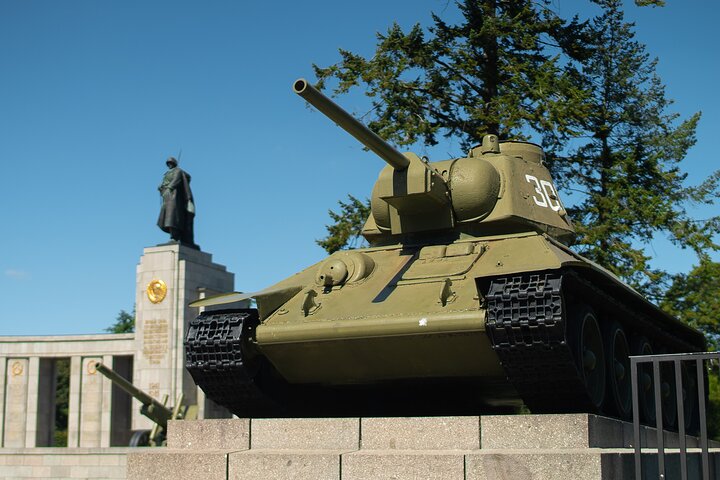
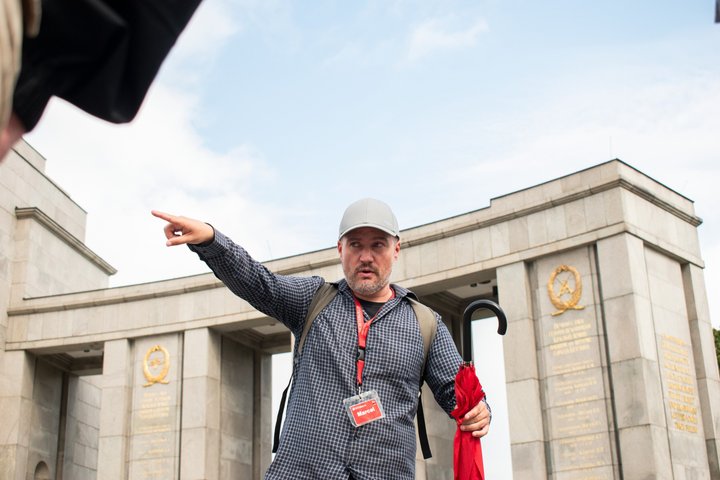
Flanked by two "T 34" tanks, there is a bronze statue of a Red Army soldier carrying his rifle on his shoulder in the middle of the square. Texts with the names of fallen Soviet soldiers are attached to the pillars behind them. In the rear part of the memorial are the graves of around 2500 soldiers.
History of the zoo At the end of the 17th century, Elector Friedrich III. create a "pleasure park for the population" from the former hunting ground. Over time, the park was redesigned according to several models, including Between 1833 and 1838 the famous landscape designer Peter Joseph Lenné transformed the zoo into an English public park. Sights in the Tiergarten But it is not just trees, shrubs and green spaces that determine the face of the approximately 200-hectare zoo. Many sights such as monuments and memorials, bridges, the Victory Column, the Federal President's Office, the House of World Cultures or the English Garden invite you to take a day stroll through the park. The English garden created around a pond gives an insight into the English landscape architecture and is today one of the most beautiful corners of the zoo.
Potsdamer Platz was planned as an entire district by architects. With success - the cafes, cinemas and shops between the futuristic high-rise buildings are used by Berliners and tourists alike. The city planners' calculation worked: The Berliners have accepted the cafes, cinemas and the large shopping arcade of the new Daimler City very well. A whole new district was created on 6.8 hectares between Potsdamer Platz and Reichpietschufer.
The area, which became known as the "Topography of Terror" in 1987, was the central location for the planning and control of most Nazi crimes. Between 1933 and 1945, the most important institutions of the National Socialist terror apparatus of the SS and police were housed here with the Secret State Police Office, the Reichsführung SS and the Reich Security Main Office.
The Martin-Gropius-Bau is dedicated to cultural history, contemporary art and photography.
Wall
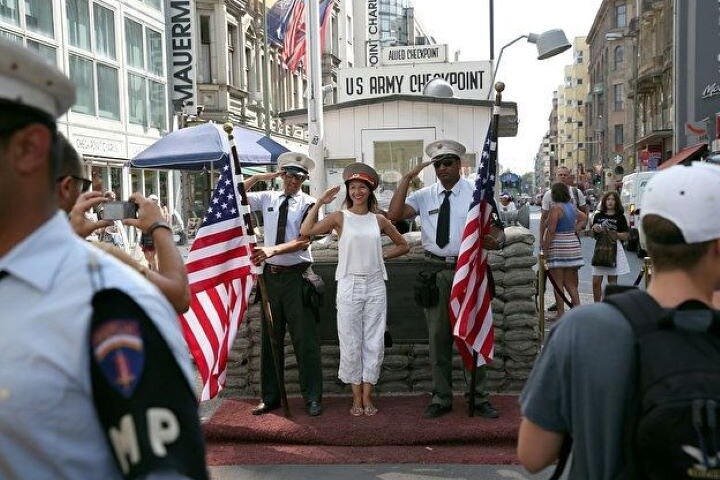
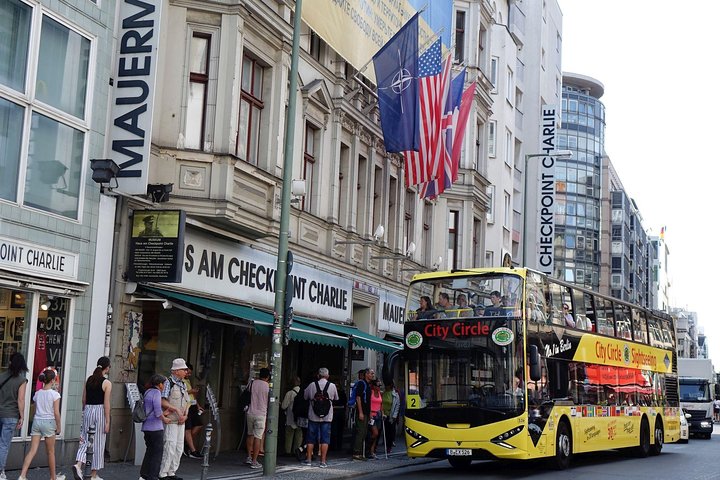
The former military checkpoint Checkpoint Charlie was the most famous border crossing of the three border points controlled by the Americans next to the Glienicke Bridge during the division of Berlin. The others were the border control points Helmstedt-Marienborn (Checkpoint Alpha) and Dreilinden-Drewitz (Checkpoint Bravo). The transition could only be used by foreigners and employees of the Permanent Representation of the FRG in the GDR and by GDR officials.
Friedrichstrasse runs through Berlin as a north-south axis. A popular shopping mile developed between Checkpoint Charlie and Friedrichstrasse station after the fall of the wall.
The square was created at the end of the 17th century according to plans by Johann Arnold Nering. At that time, French immigrants, mainly French Protestants (Huguenots), settled in this area. The market place was first called Esplanade, then in chronological order Lindenmarkt, Friedrichstädtischer Markt and Neuer Markt. Finally it was renamed Gendarmenmarkt in 1799, since from 1736 to 1782 the guard and the stables of the "Gens d'armes" ward regiment were located there.
Cancellation
Free cancellation up to 24 hours before the experience starts, for a full refund.
Reviews
4.1
- 543
- 41
- 30
- 21
- 111
Ratings come from 56 reviews collected by our booking partner. They are travellers' own words, in the order they were written — never reordered to flatter the experience.
Know before you go
- Meeting point
- Starbucks
- Pickup
- Pickup is offered, or you can meet at the starting point.
- Ticket type
- Mobile or paper ticket accepted
- Operated by
- Rikscha & Bier Bike & Party Beer Bike - Leo Rickshaw Tours
- Wheelchair accessible
- Infants and small children can ride in a pram or stroller
- Service animals allowed
- Public transportation options are available nearby
- Infants are required to sit on an adult’s lap
- Specialized infant seats are available
- Transportation options are wheelchair accessible
- All areas and surfaces are wheelchair accessible
How it compares in Berlin
- Its from-price is 19% below the median of the 961 experiences we list in Berlin.
- Its length is typical for the group.
- By number of reviews it ranks 147 of 961.
- The operator lists free cancellation on it.
About Berlin
Berlin is Germany's creative, open-minded capital, where landmarks of a turbulent history stand among art, green parks and legendary nightlife.
The Brandenburg Gate is the city's symbol, close to the glass-domed Reichstag and the Memorial to the Murdered Jews of Europe. Fragments of the Berlin Wall survive, most strikingly at the East Side Gallery, a long stretch covered in murals, and at the Bernauer Strasse memorial, while Checkpoint Charlie marks the most famous former crossing point.
Top-ranked sights in Berlin: Brandenburg Gate (Brandenburger Tor), Memorial to the Murdered Jews of Europe (Holocaust Memorial), Checkpoint Charlie.
Special offers in Berlin
Was/now prices come from the operator, never from us.