Explore the History and Treasures of Luxor on a Full-day Tour
- 9–10 hours
- Free cancellation up to 24h before
- 7 languages
- Instant confirmation
Highlights
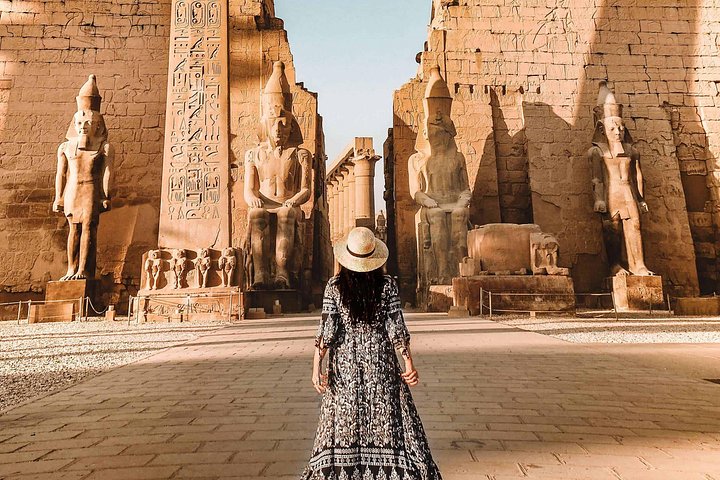
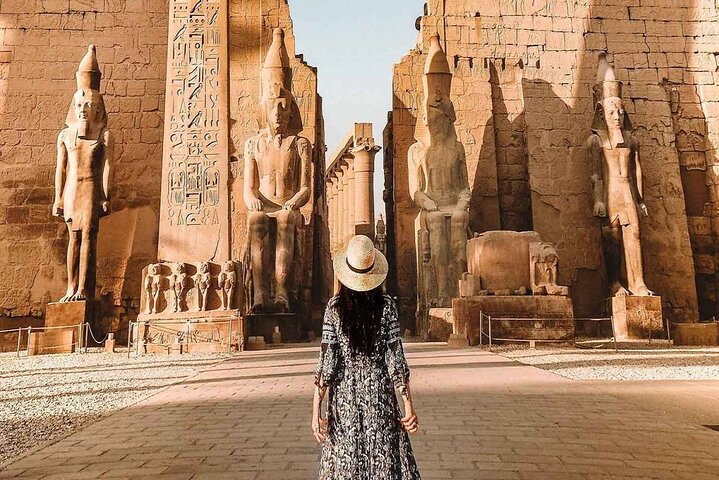
Make the most of your time in Luxor on a full-day , private tour that explores the highlights of the East Bank and West Bank. You'll see the Temple of Karnak, Luxor Temple , the Valley of the Kings , a favorite for brilliant art and well-preserved architecture. Traveling in the comfort of a private vehicle , you will have the flexibility to enjoy Luxor sites at your own pace, with door-to-door transport . Pickup and drop-off at Luxor hotels .
Inclusions
What's included
- Hotel pickup and drop-off in Luxor .
- All Transfers by Private A/C latest Model Vehicle
- Bottled water
- Qualified and professional Egyptologist guide.
What's not
- entry fees ( tickets ) ( Optional )
- Lunch ( Optional )
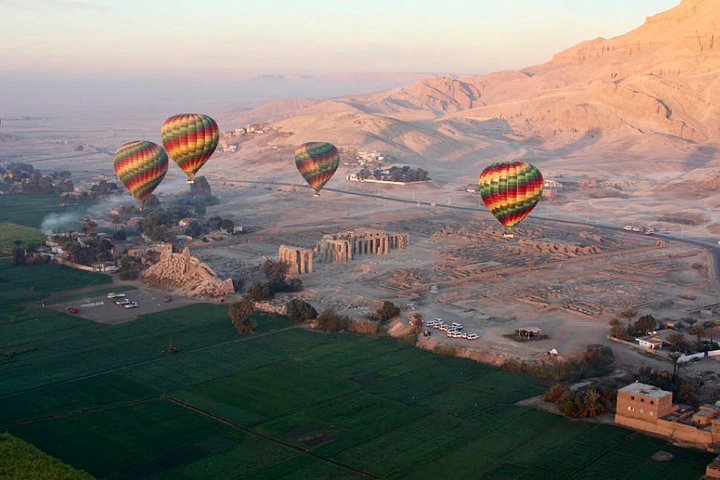
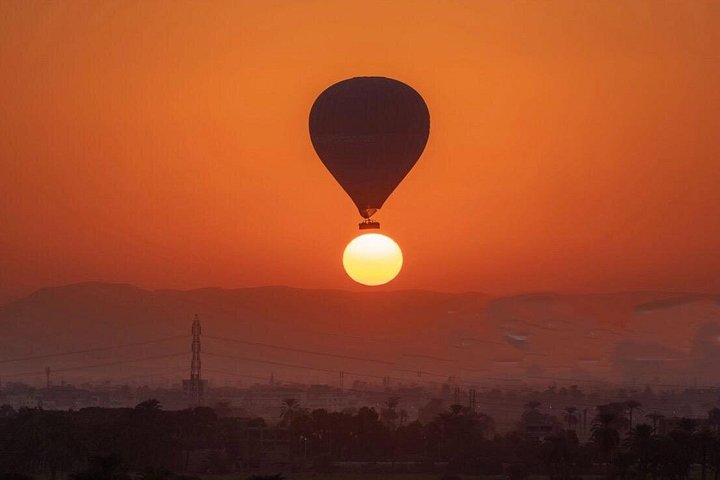
- Hot Air Balloon ( Optional )
- Any Optional Tours
Itinerary
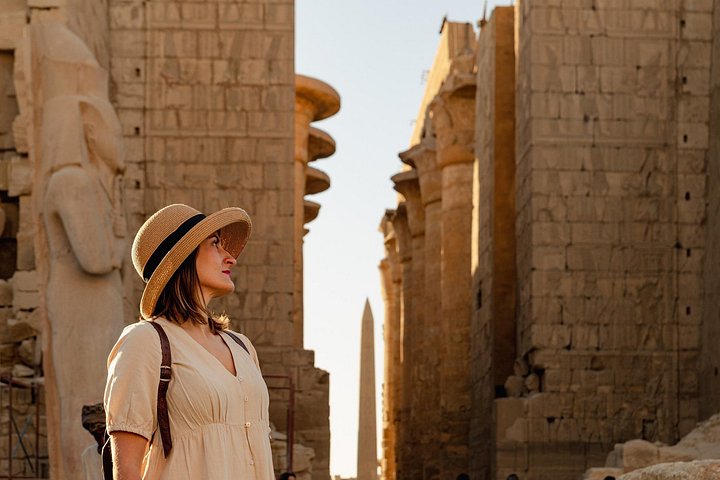
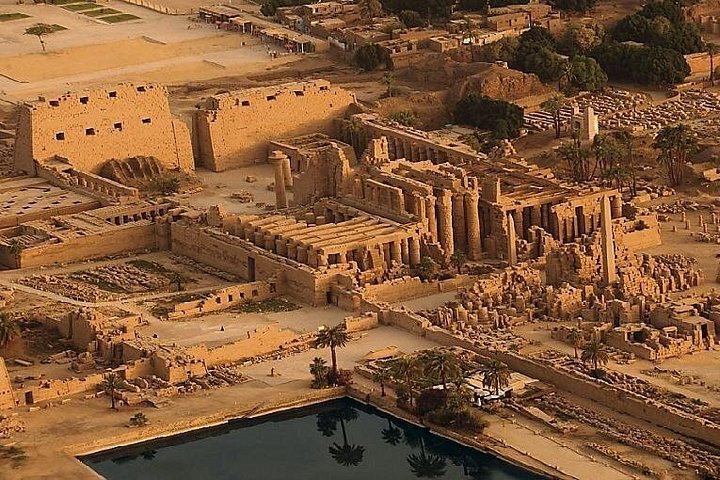
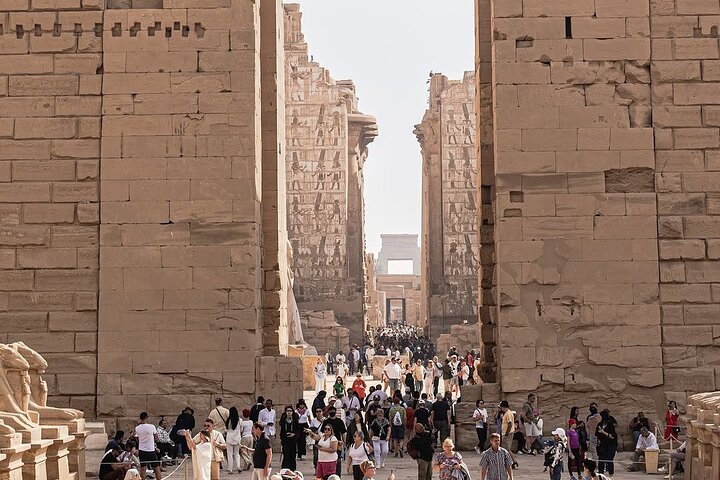
The Karnak Temple Complex consists of a number of temples, chapels, and other buildings in the form of a village, and is for that reason that the name Karnak was given to this complex as in Arabic Karnak means ‘fortified village’. The Karnak temple is located in Karnak, in Luxor Governorate, in the south of Egypt on the east side of the Nile River bank. The Karnak Temple dates back from around 2055 BC to around 100 AD. It was built as a cult temple and was dedicated to the gods Amun, Mut, and khonsu. Being the largest building for religious purposes ever to be constructed, the Karnak Temple was known as “most select of places” by ancient Egyptians.
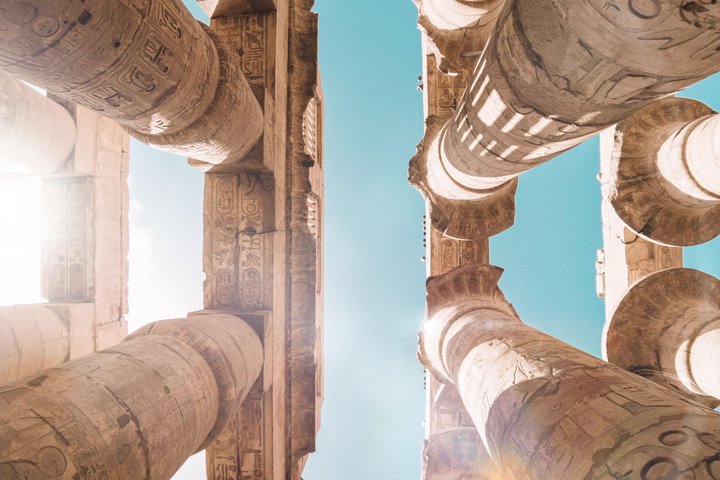
Karnak is a complex of temples built in different reigns, starting with the Avenue of Sphinxes, the Hypostyle Hall with its 134 gigantic columns, the Obelisks of Queen Hatshepsut and Tutomosis I, the Temple of Amon adorned with lotus and papyrus designs, the Granite Scarbeus of Amenophis III and the Sacred Lake. Karnak beats every other pharaonic monument: it is simply one of the most beautiful ancient monuments in Egypt .
The Obelisks of Queen Hatshepsut and Tutomosis I, the Temple of Amon .
The Colossi of Memnon, the two largest ancient statues in Egypt, which date back to the era of King Amenhotep III .
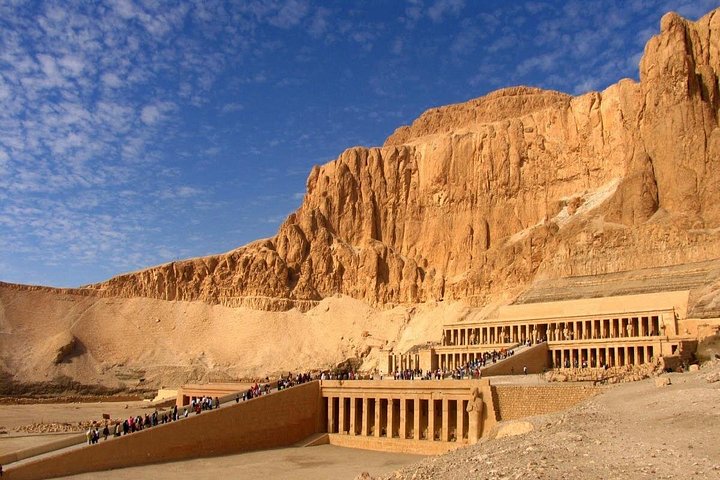
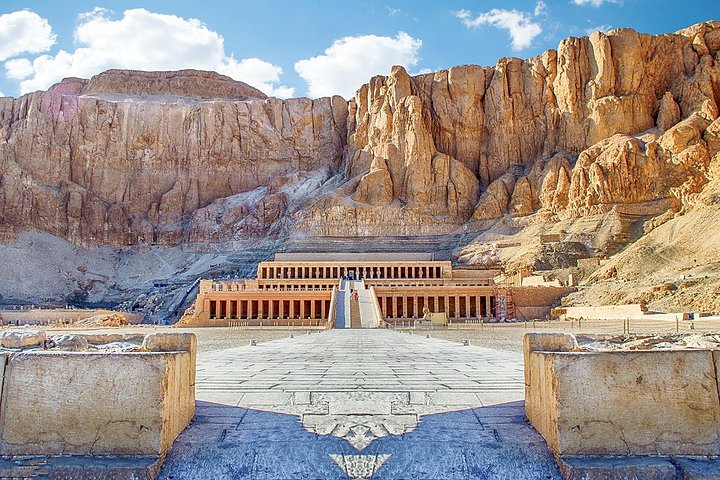
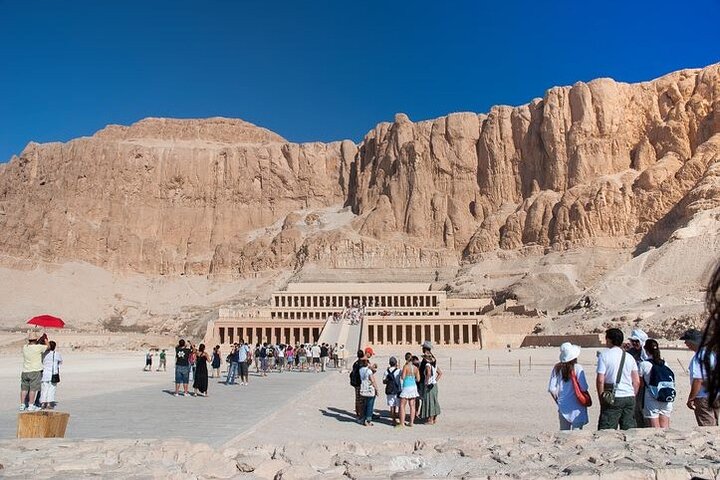
A mortuary temple dedicated to the longest ruling female of Ancient Egypt, Queen Hatshepsut. The temple is decorated with statues, sphinxes, and reliefs, which have been meticulously restored over time.
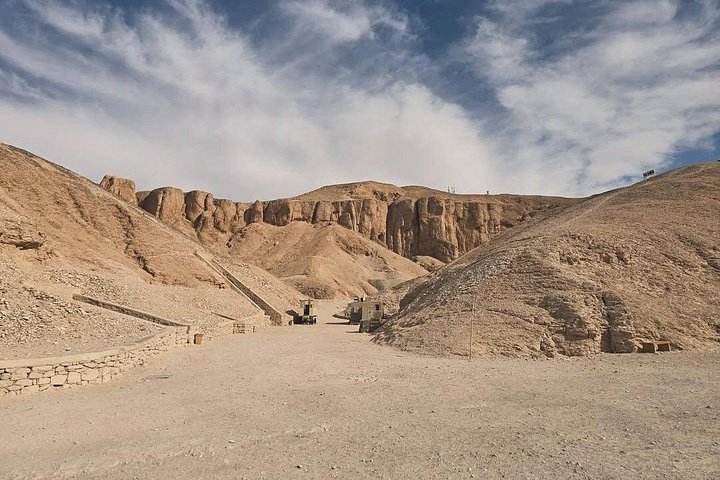
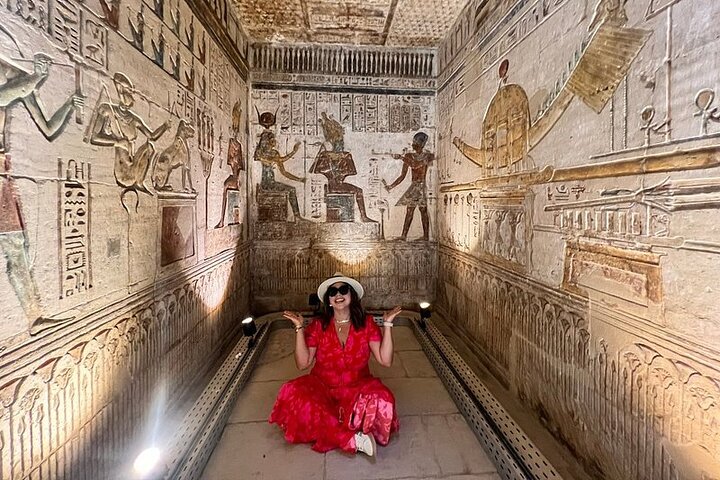
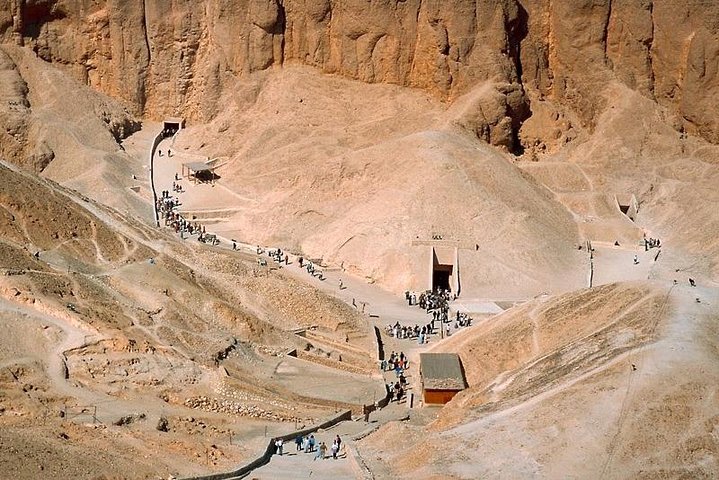
The rulers of the Eighteenth, Nineteenth, and Twentieth Dynasties of Egypt’s prosperous New Kingdom (c.1550–1069 BC) were buried in a desolate dry river valley across the river from the ancient city of Thebes (modern Luxor), hence its modern name of the Valley of the Kings. This moniker is not entirely accurate, however, since some members of the royal family aside from the king were buried here as well, as were a few non-royal, albeit very high-ranking, individuals. The Valley of the Kings is divided into the East and West Valleys. The eastern is by far the more iconic of the two, as the western valley contains only a handful of tombs. In all, the Valley of the Kings includes over sixty tombs and an additional twenty unfinished ones that are little more than pits. The site for this royal burial ground was selected carefully. Its location on specifically the west side of the Nile is significant as well. Because the sun god set (died) in the western horizon .
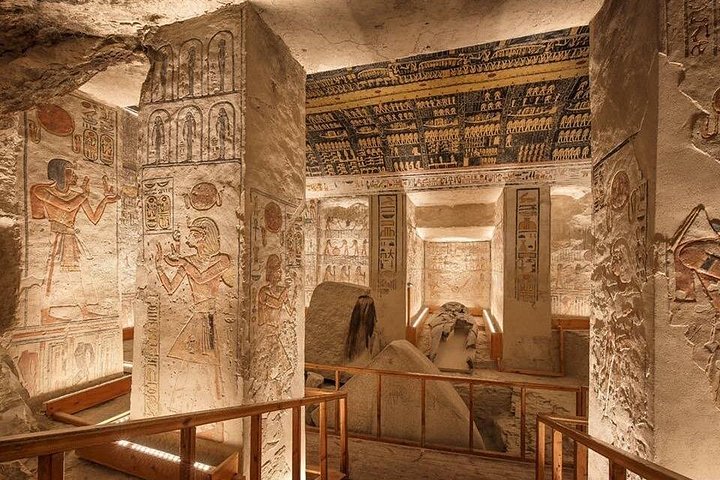
The tomb of Ramesses III, designated as KV 11, is a complex system in the Valley of the Kings. It has been known since antiquity,the wonderful decorations include colourful painted sunken reliefs featuring the traditional ritual texts (Litany of Ra, Book of Gates etc) and Ramses before the gods. Unusual here are the secular scenes, in the small side rooms of the entrance corridor, showing foreign tributes, such as highly detailed pottery imported from the Aegean, the royal armoury, boats and, in the last of these side chambers, the blind harpists that gave the tomb one of its alternative names: ‘Tomb of the Harpers’
KV6 is among the first tombs in the Valley of the Kings. It's been open since antiquity. Many inscriptions have been left by ancient visitors in the tomb. The tomb is the burial place of the Pharaoh Ramesses IX, who ruled in the 20th Dynasty. The archeological findings, however, show that it was completed in a hurry, since many corners were cut after Ramesses IX's death. Located in the central wadi, KV6 has a total area of 105 meters and has a gate with a shallow descending ramp. Following this ramp therer are three stretches of corridors with four side chambers, two on both sides. However, none of these four chambers is finished or decorated. The tomb is said to have one of the largest entrances in the entire valley. Also, the intention of cutting pilasters at the end of the entryway and presence of four side chambers is rare. The presence of a large two-tiered pit in the burial chamber is another remarkable feature. KV6 is included among the last tombs of the Valley .
Merneptah (Valley Of The Kings - KV8) The burial chamber in KV 8 is unique compared to other tombs. The front and rear walls of this chamber contain multiple niches and it depicts that Merenptah rested here in a set of four stone sarcophagi. When the sarcophagi were brought inside the tomb, the door jambs were removed which were later on replaced by blocks made of sandstone. Pillars were also removed to allow the sarcophagus to move in out, of which two were later replaced. There are five corridors in KV 8 - the walls of these corridors show scenes from the ‘Litany of Re’, the Amduat, the ‘Book of Gates’ and the ‘Book of the Dead’ and the ceilings represent astronomical scenes. In the fourth corridor, the king is shown in the ‘Opening of the Mouth Ceremony’ and the fifth corridor is one that leads to the sarcophagus hall, the king’s actual burial chamber, with the splendidly restored lid of his anthropoid sarcophagus.
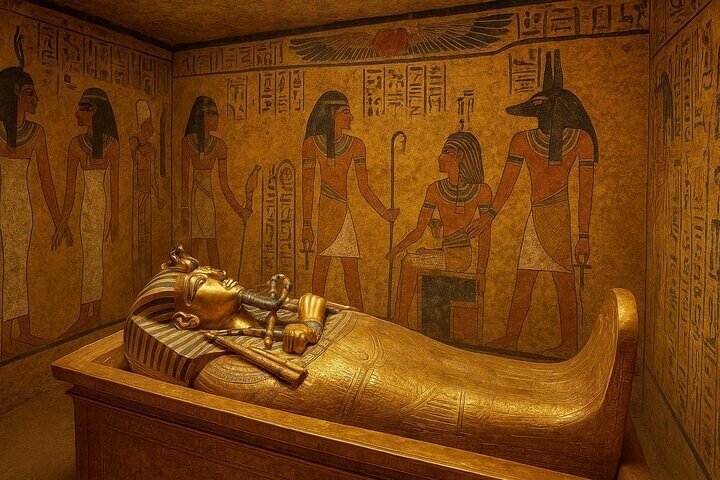
Tomb of King Tutankhamun (Tut), Luxor, Egypt
Cancellation
Free cancellation up to 24 hours before the experience starts, for a full refund.
Reviews
5.0
- 520
- 41
- 30
- 20
- 10
Ratings come from 21 reviews collected by our booking partner. They are travellers' own words, in the order they were written — never reordered to flatter the experience.
Know before you go
- Meeting point
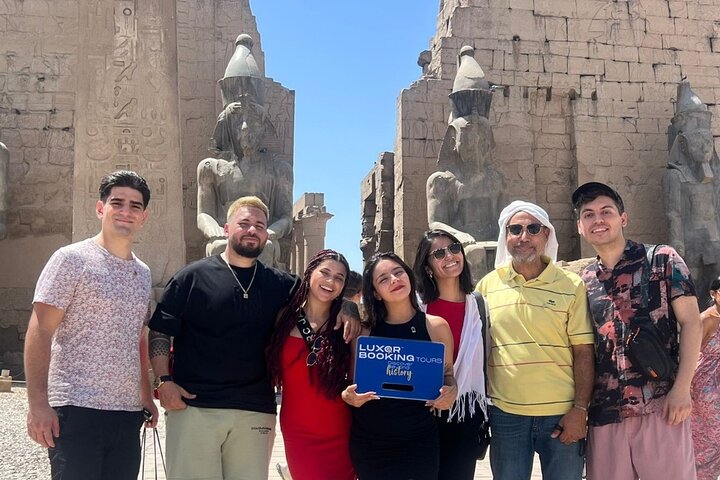
- travelers choose the meeting point by sending a text message or by WhatsApp or any of the social media. The tour guide will inform you about the color of his clothes and will carry the logo of your tour.
- Pickup
- Pickup is offered, or you can meet at the starting point.
- Ticket type
- Mobile or paper ticket accepted
- Operated by
- Horus Tours In Egypt
- Wheelchair accessible
- Infants and small children can ride in a pram or stroller
- Service animals allowed
- Public transportation options are available nearby
- Specialized infant seats are available
- Transportation options are wheelchair accessible
- All areas and surfaces are wheelchair accessible
- Suitable for all physical fitness levels
How it compares in Luxor
- Its from-price is 83% below the median of the 4411 experiences we list in Luxor.
- It is longer than most of them.
- By number of reviews it ranks 365 of 4411.
- The operator lists free cancellation on it.
About Luxor
Luxor stands on the site of ancient Thebes, with vast temples on the Nile's east bank and the royal tombs of the Valley of the Kings across the river.
On the east bank, the Karnak temple complex spreads across acres of pylons, obelisks and the forest of columns in its Great Hypostyle Hall. An avenue of sphinxes links it to Luxor Temple in the town centre, which is especially atmospheric when lit up in the evening. The Luxor Museum and the Mummification Museum sit along the riverside corniche.
Top-ranked sights in Luxor: Valley of the Kings, Temple of Hatshepsut (at Deir el-Bahari), Colossi of Memnon.
Special offers in Luxor
Was/now prices come from the operator, never from us.