Berlin Private tour East and West by Car
- 4h 30m
- Free cancellation up to 24h before
- Guided in English
- Instant confirmation
Highlights
Our Private tours make our day very focused and special to enjoy a wonderful day together, limited to four people, we move by car and stop wherever we want according to the Plan, to discover and photgraph the most beautiful historical places in Berlin, guarantee an intimate exploration of Berlin's famous attractions between East and West like Brandenburg Gate, Berlin Gallery Wall, Richtag, Checkpoint Charlie . But what truly distinguishes us is our focus on the Third Reich, World War II, and Adolf Hitler's history. Our expertly crafted narrative delves into stories of resistance and compliance during this era, taking you to significant sites like Himmler's SS and Gestapo HQ ruins, the Resistance Museum, and the historic Reichstag. With over 20 years of experience, we provide a high-quality, trustworthy, and memorable tour. Join us for an immersive journey through Berlin's past.
Inclusions
What's included
- Flexibility in time and friendly tour guide
- All Fees and Taxes
- Licensed Driver to carry people
- Pick-up and drop-off from Hotel
- Visiting the most attractive and important places
- Private Car
Itinerary
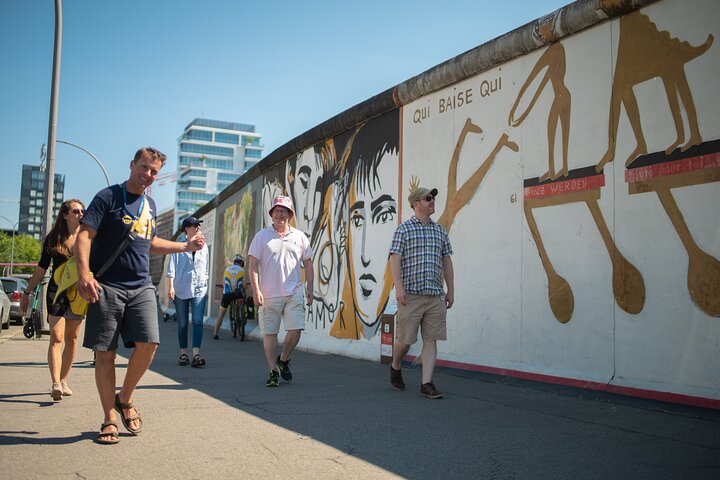
A good place to start your visit of the East Side Gallery is The Wall Museum, located in a former warehouse building right next to the Oberbaumbrücke. At 1316 metres long, the open-air art gallery on the banks of the Spree in Friedrichshain is the longest continuous section of the Berlin Wall still in existence. Immediately after the wall came down, 118 artists from 21 countries began painting the East Side Gallery, and it officially opened as an open air gallery on 28 September 1990. Just over a year later, it was given protected memorial status. In more than a hundred paintings on what was the east side of the wall, the artists commented on the political changes in 1989/90. Some of the works at the East Side Gallery are particularly popular, such as Dmitri Vrubel’s Fraternal Kiss and Birgit Kinders’s Trabant breaking through the wall. They are not just a popular subject for postcards – you’re sure to want to photograph them yourself.
Speaking of beautiful red buildings: The Oberbaum Bridge is also a popular photo object and connects the south with the north bank of the Spree not far from the East Side Gallery. At the end of the 19th century, under the then Berlin building council Otto Stahn, the building, executed by the Siemens company, was erected in the neo-Gothic style, bringing a little medieval flair to this modern part of the city. In 1902, the first Berlin subway (today’s U1) was already running here on the bridge. You can explore the Oberbaumbrücke quite comfortably by strolling through the arcade, which looks like a medieval cloister.
This is literally where it all began: the Nikolai Quarter (Nikolaiviertel) in the Mitte district was the historic first part of Berlin to be settled. The quarter was almost completely bombed out during the Second World War. For a long time, it was difficult to develop a stringent development plan for this part of the city, but just in time for the 750th city anniversary in 1987, the time had come. The historic buildings Ephraim-Palais and Knoblauchhaus were joined by several prefabricated buildings that recall the historic heritage of this place and create a mix of styles that is as peculiar as it is worth seeing. In the center of the quarter stands the Nikolaikirche, which you can’t tell that it only dates back to the 1980s in this form and which builds a structural bridge between the church from the 13th century that once stood here and its rebuildings in the 19th century.
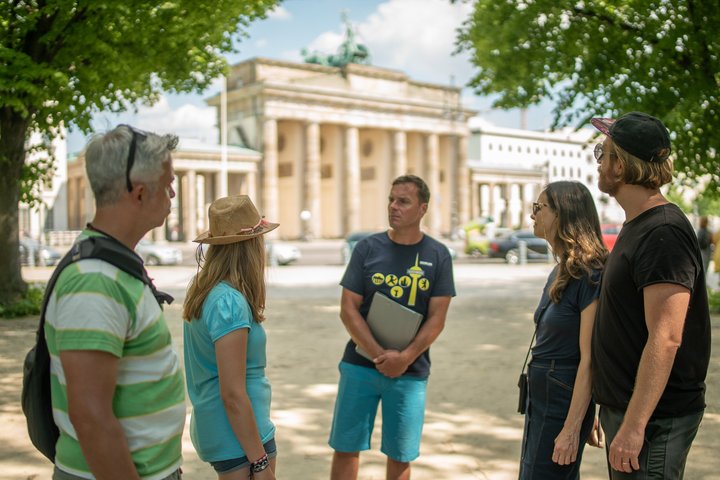
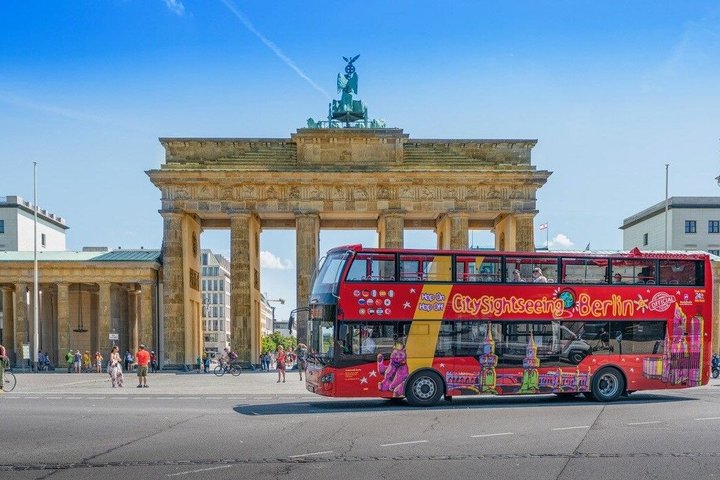
Like hardly any other building, the Brandenburg Gate is so closely associated with German division and reunification. It stands at the end of East Berlin’s boulevard Unter den Linden and was built at the end of the 18th century in the style of classicism. The Quadriga, a bronze figure depicting Victoria, the goddess of victory, and her team of four horses, crowns the gate and is one of the city’s most popular photo motifs. This area of Berlin was also heavily destroyed during the war. The rulers had only the Brandenburg Gate rebuilt. From 1961, the Berlin Wall ran directly behind the gate, making the Brandenburg Gate a symbol of the divided city. This tourist hotspot of Berlin should not be missing on our list of the most important sights to see in Berlin’s East.
The Memorial to the Murdered Jews of Europe has been commemorating the Jews killed by the Germans in the Holocaust since 2005. Until 1989, the area had served as part of the Berlin Wall. But since a central memorial was to commemorate the Shoah, the area not far from the Brandenburg Gate was chosen for it. There are now a total of 2711 concrete steles here of varying heights. Walking through them, one gets the feeling of walking into a labyrinth and almost being crushed by the cold concrete steles. The monument is one of the most impressive memorials and its composition is truly unique. Visiting this place is free of charge and there is also an exhibition under the memorial.
This somewhat controversial 69 metre tall monument was designed in the mid-1800s to celebrate Prussian war victories. The 35 ton bronze sculpture of the goddess of victory was added later. The column features mosaics of battle scenes and was originally located in the square in front of the Reichstag before being moved by the Nazis to its current location. Visitors can enjoy excellent views from the observatory at the top.
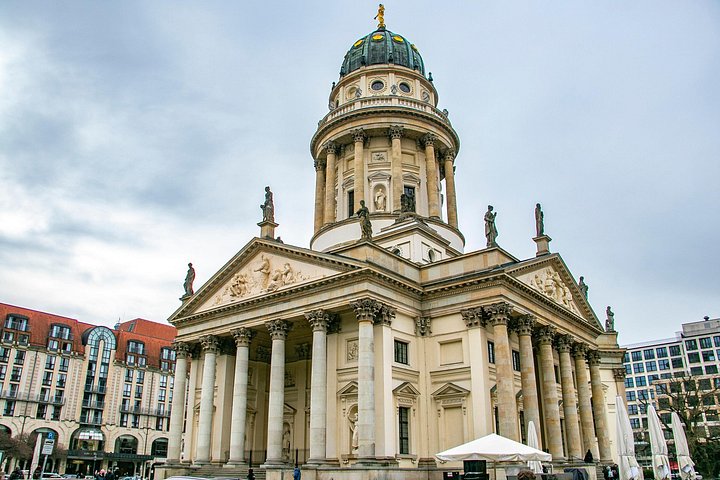
Preserved as a reminder of German liability during World War II, the bombed church was originally built in honour of the German emperor in 1895. A modern tower and chapel were constructed next door in 1961, featuring 22,750 beautiful blue stained glass windows. The facade of the original church will be concealed for restoration until mid-2012 but it is still possible to wander inside for a look at its gilded mosaics and visit the new
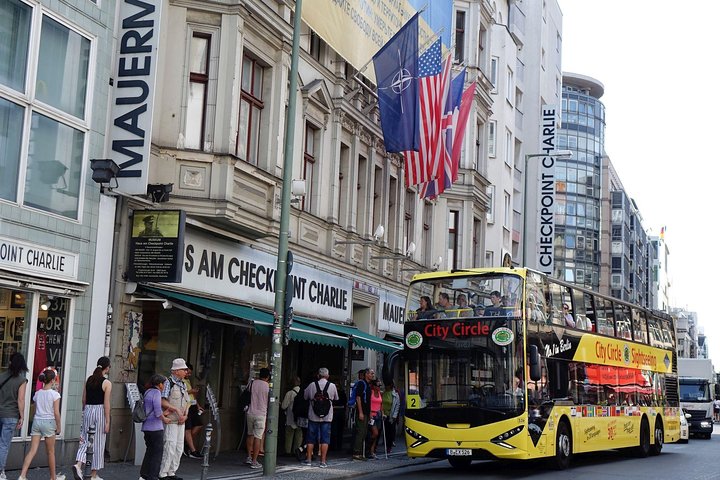
Checkpoint Charlie was the setting for many thrillers and spy novels, from James Bond in Octopussy to The Spy Who Came In From The Cold. Located on the corner of Friedrichstraße and Zimmerstraße, it is a reminder of the former border crossing, the Cold War and the partition of Berlin. The barrier and checkpoint booth, the flag and the sandbags are all based on the original site – and are a popular subject for photos. It’s no wonder that Checkpoint Charlie is one of the sights of Berlin that you really should see. The name Checkpoint Charlie comes from the NATO phonetic alphabet (Alpha, Bravo, Charlie). After the border crossings at Helmstedt-Marienborn (Alpha) and Dreilinden-Drewitz (Bravo), Checkpoint Charlie was the third checkpoint opened by the Allies in and around Berlin. 1945 the allies divided Berlin into four sectors - France controlled the north-western, England the western and the USA the south-western parts of the city. The Soviet Union as allocated in the eastern part .
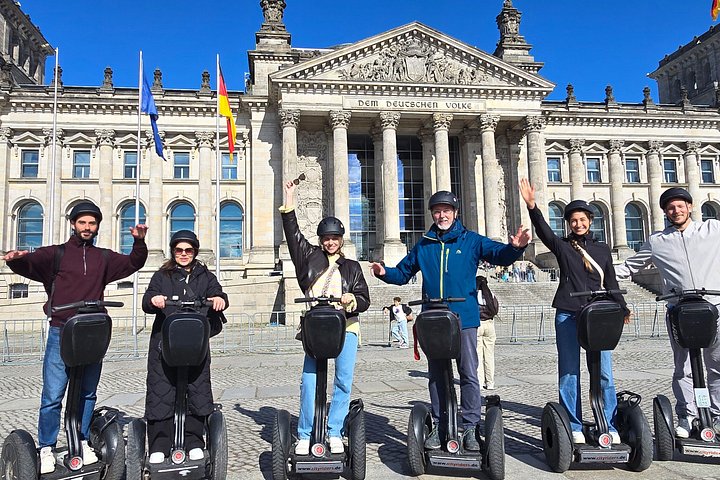
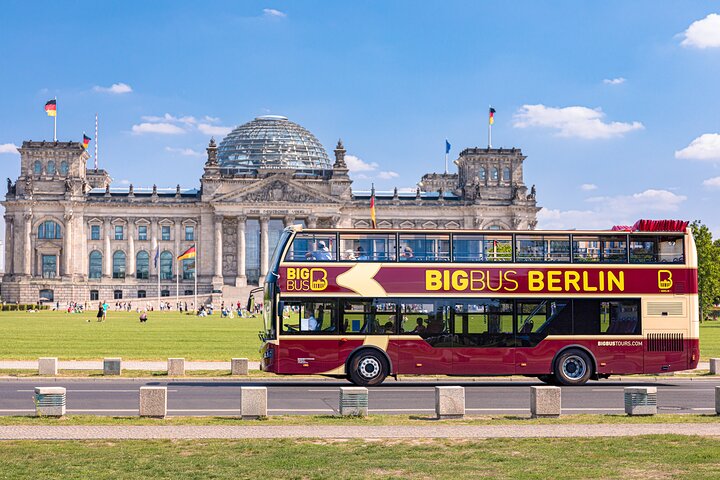
With the dissolution of the German Confederation in 1866 and the founding of the German Empire (German Reich) in 1871, the Reichstag was established as the German parliament in Berlin, which was the capital of the then Kingdom of Prussia (the largest and most influential state in both the Confederation and the empire). Two decades later, the current parliament building was erected. The Reichstag delegates were elected by direct and equal male suffrage (and not the three-class electoral system prevailing in Prussia until 1918). he Reichstag did not participate in the appointment of the chancellor until the parliamentary reforms of October 1918. After the Revolution of November 1918 and the establishment of the Weimar Constitution, women were given the right to vote for (and serve in) the Reichstag, and the parliament could use the no-confidence vote to force the chancellor or any cabinet member to resign. .
Cancellation
Free cancellation up to 24 hours before the experience starts, for a full refund.
Reviews
5.0
- 51
- 40
- 30
- 20
- 10
Ratings come from 1 reviews collected by our booking partner. They are travellers' own words, in the order they were written — never reordered to flatter the experience.
Know before you go
- Pickup
- Pickup is included for everyone.
- Ticket type
- Mobile or paper ticket accepted
- Operated by
- EU ON TOUR
- Public transportation options are available nearby
- Suitable for all physical fitness levels
How it compares in Berlin
- Its from-price is 159% above the median of the 287 city tours we list in Berlin.
- It is longer than most of them.
- By number of reviews it ranks 188 of 287.
- The operator lists free cancellation on it.
About Berlin
Berlin is Germany's creative, open-minded capital, where landmarks of a turbulent history stand among art, green parks and legendary nightlife.
The Brandenburg Gate is the city's symbol, close to the glass-domed Reichstag and the Memorial to the Murdered Jews of Europe. Fragments of the Berlin Wall survive, most strikingly at the East Side Gallery, a long stretch covered in murals, and at the Bernauer Strasse memorial, while Checkpoint Charlie marks the most famous former crossing point.
Top-ranked sights in Berlin: Brandenburg Gate (Brandenburger Tor), Memorial to the Murdered Jews of Europe (Holocaust Memorial), Checkpoint Charlie.
Special offers in Berlin
Was/now prices come from the operator, never from us.