Berlin Night Lights Private Tour: 25+ Illuminated Must See Sights
- 3 hours
- Free cancellation up to 24h before
- Guided in English
- Instant confirmation
Highlights
Experience 25+ of Berlin’s most beautiful landmarks after dark on this private 3-hour walking tour through the illuminated center. See the Brandenburg Gate, Gendarmenmarkt, Bebelplatz, Berlin Cathedral, Museum Island, Nikolaiviertel, TV Tower and more. Discover Berlin’s history, architecture and hidden details as grand boulevards, domes and historic squares glow after sunset. Think of your guide as your local friend, storyteller and photographer, showing you the best viewpoints and helping capture memorable photos on your phone. The route adapts to Berlin’s light calendar. During the October Festival of Lights, your guide prioritizes seasonal illuminations when available; in winter, festive lights add extra atmosphere; the rest of the year showcases Berlin’s classic nighttime beauty. See more, find the best viewpoints and experience a different side of Berlin after dark. Perfect for couples, families, first-time visitors and photo lovers who want Berlin at its most atmospheric.
Inclusions
What's included
- Flexible itinerary and customization based on your interests
- Fascinating stories, architecture, history and Berlin evening atmosphere
- Explore 25+ illuminated landmarks, historic squares and night viewpoints
- Must-see landmarks, hidden details and local stories most visitors miss
- Optional finish at your Berlin hotel; travel time may require itinerary adjustments
- Personalized recommendations for bars, restaurants and sights after the tour
- Personal photo assistance—your guide will help capture memorable photos on your phone
- Friendly local guide—your storyteller and insider to German life and traditions
- Great photo opportunities at Berlin’s most beautiful nighttime locations
- Private walking tour exclusively for your group
- Seasonal festive routes adapts to special light displays and evening events
- Experience Berlin Cathedral, Museum Island, Nikolaiviertel and TV Tower
- See Brandenburg Gate, Bebelplatz, Gendarmenmarkt and Unter den Linden
Itinerary
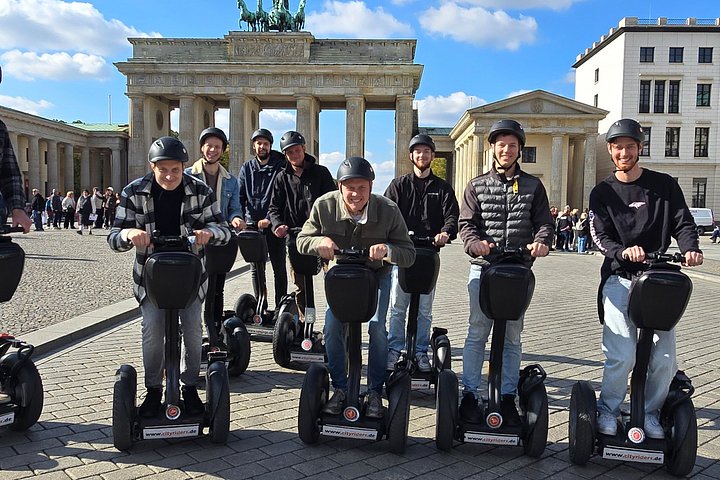
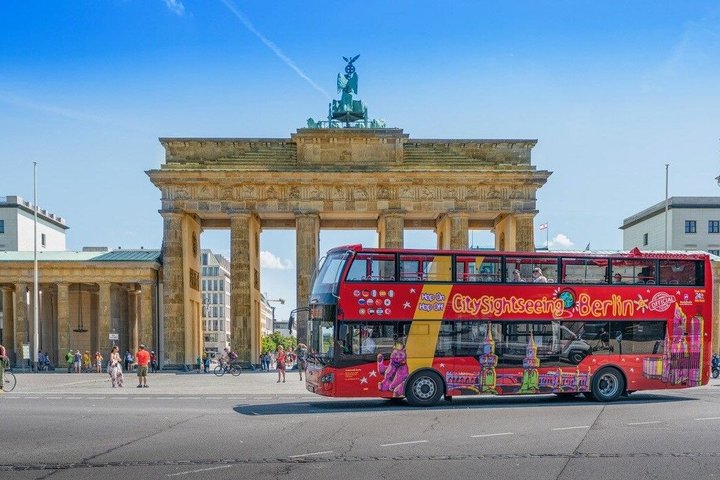
Begin beneath Berlin’s most famous landmark when its sandstone columns glow dramatically against the night sky. Built between 1788 and 1791, the Brandenburg Gate stands 26 metres high and is supported by 12 Doric columns, inspired by the gateway to the Acropolis in Athens. Look up at the Quadriga: Napoleon carried it off to Paris as war booty in 1806, only for Berlin to reclaim it after his defeat in 1814. Decades later, the Berlin Wall ran directly beside the Gate, transforming a royal entrance into one of the defining symbols of the Cold War. Did You Know? One surviving horse’s head from the original Quadriga still exists in Berlin. October 9–18, 2026: the Brandenburg Gate is scheduled for a spectacular 3D video-mapping show during Berlin’s Festival of Lights. Photo Opportunity: one of Berlin’s ultimate nighttime photographs.
Step into Pariser Platz, where imperial Berlin, Cold War history and modern luxury meet within a few metres. See the legendary Hotel Adlon, opened on 23 October 1907 after hotelier Lorenz Adlon invested an extraordinary 20 million gold marks. At a time when many grand homes still lacked modern comforts, the hotel offered hot and cold running water, its own electricity plant and even a cooling system. Its guest list has included Albert Einstein, Charlie Chaplin, Marlene Dietrich, Josephine Baker and Queen Elizabeth II. One of the best Adlon stories comes from Chaplin’s 1931 Berlin visit: excited fans reportedly tore buttons from his clothes as he escaped into the hotel. The original building was largely destroyed after WWII; today’s Adlon reopened in 1997. Luxury Spotlight: Berlin’s most famous hotel illuminated opposite its most famous monument.
Walk Berlin’s grandest historic boulevard beneath glowing streetlights and rows of monumental buildings. The 1.5-kilometre avenue began not as a royal boulevard but as a simple bridle path in 1573 leading from the palace toward hunting grounds. The first linden trees were planted in 1647, giving the street its name: Unter den Linden literally means “Under the Linden Trees.” Frederick the Great later transformed it into Berlin’s ceremonial showcase, filling it with palaces, cultural institutions and monumental architecture. You’d Never Notice This: what feels like one harmonious boulevard actually contains layers of Prussian monarchy, Nazi-era destruction, East German reconstruction and post-reunification Berlin.
Cross Friedrichstraße, one of central Berlin’s best-known boulevards, at its elegant intersection with Unter den Linden. Movie lovers may recognize the Westin Grand Berlin: Matt Damon and Franka Potente filmed key scenes here for The Bourne Supremacy, including sequences around the hotel’s sweeping staircase and approximately 30-metre-high atrium. The nearby streets also appeared in Victoria, the acclaimed 2015 Berlin thriller famously filmed in one continuous take. October 2026: the Westin Grand façade is an official Festival of Lights architectural-staging location. Hollywood Connection: a surprisingly cinematic corner of nighttime Berlin.
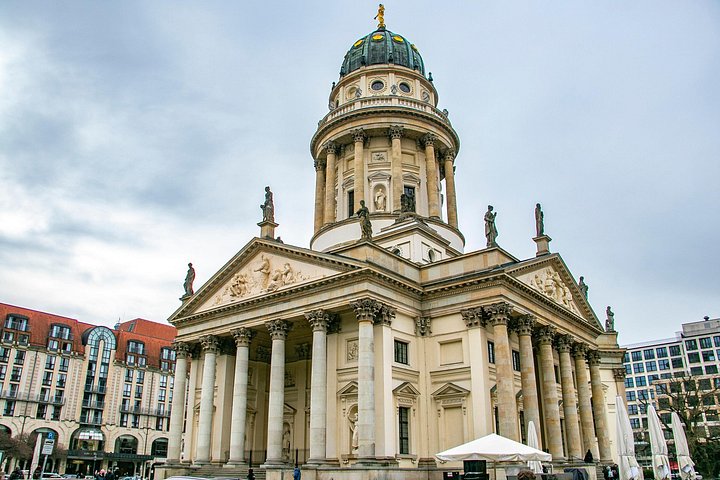
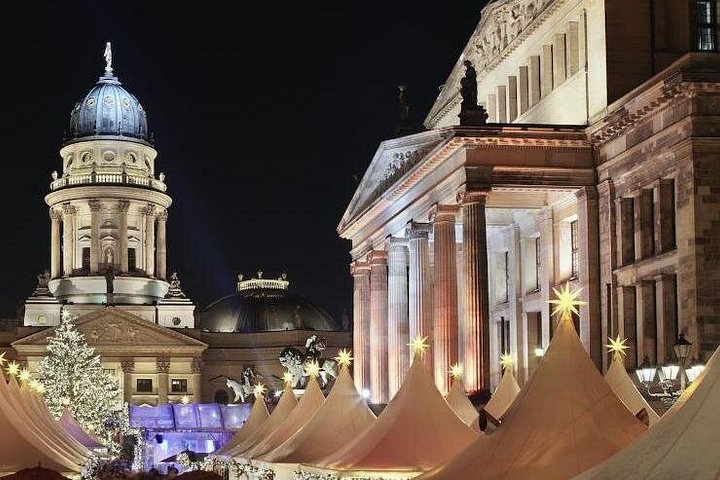
Enter a square often described as one of Berlin’s most beautiful architectural ensembles. Gendarmenmarkt grew out of the late-17th-century Friedrichstadt district and takes its name from the Gens d’armes, a Prussian cavalry regiment once based here. The remarkable symmetry came later: two domed towers frame the Konzerthaus, creating one of Berlin’s most photogenic panoramas. But the “twin cathedrals” hide a wonderful trick: neither domed tower was originally a cathedral at all. Their monumental cupolas were largely decorative statements of royal prestige. The square was devastated during WWII, rebuilt during the East German era and regained its historic name after reunification in 1991. Photo Opportunity: one of the strongest wide-angle nighttime compositions on the entire tour.
Discover the fascinating immigrant story behind the Französischer Dom. After persecution in France, around 20,000 Huguenot refugees were welcomed into Brandenburg-Prussia following the Edict of Potsdam in 1685. Their French Protestant church was built here between 1701 and 1705. The towering dome you see today was added decades later under Frederick the Great. Fun Fact: despite its English name, the “French Cathedral” is not actually a cathedral. Dom here derives from the French dôme—dome. The true church sits beneath the ornamental tower.
Admire one of Karl Friedrich Schinkel’s masterpieces glowing at the centre of Gendarmenmarkt. The building you see today was completed in 1821 after its predecessor burned down. Before that, this site had already been associated with theatre since the 18th century. There is even a Mozart connection: Mozart himself attended a performance here in 1789 during his visit to Berlin. After severe wartime destruction, the building eventually rose again as one of Berlin’s great concert halls. October 2026: the Konzerthaus is included in the official Festival of Lights programme with a façade staging.
Complete the famous Gendarmenmarkt trio at the Deutscher Dom. Like its French counterpart, its grand domed tower was added largely for architectural drama rather than religious necessity. The building also witnessed one of Berlin’s pivotal revolutionary moments: after the March Revolution of 1848, fallen revolutionaries were laid out on its steps as Berliners gathered to mourn them. The structure was destroyed by fire in 1943 and reconstructed in stages between 1982 and 1996. Did You Know? today the building houses an exhibition on the development of German parliamentary democracy rather than functioning as a cathedral.
Enter one of the most beautiful—and haunting—squares in Berlin. Surrounded by Frederick the Great’s monumental Forum Fridericianum, the square once represented Prussian ambitions in culture, religion and learning. Yet on 10 May 1933, it became the site of one of the most infamous book burnings of Nazi Germany. Around 20,000 books by writers including Thomas Mann, Stefan Zweig, Karl Marx and Erich Kästner were burned here. Remarkable Detail: Kästner himself secretly stood in the crowd and watched his own books go into the flames. During October 2026, several buildings around Bebelplatz are scheduled for artistic illumination, making this one of the richest Festival of Lights clusters on our route.
See Berlin’s striking circular Catholic cathedral rising above Bebelplatz. Built between 1747 and 1773, St. Hedwig’s was the first Catholic church constructed in Protestant Berlin after the Reformation. Frederick the Great approved the project after Prussia gained predominantly Catholic Silesia and even donated the land. Its circular form was inspired by Rome’s Pantheon. The cathedral was badly damaged during WWII, rebuilt after the war and reopened after a major modern redesign in November 2024. October 2026: its façade is officially scheduled for artistic light staging.
Admire one of Europe’s historic opera houses, glowing elegantly on Unter den Linden. Built from 1741 to 1743 for Frederick the Great, it became Germany’s first freestanding opera house and, at the time, the largest opera house in Europe. Its history is remarkably resilient: it was almost completely destroyed by fire in 1843, devastated again during WWII, reconstructed in the 1950s and extensively restored between 2010 and 2017. Musical giants associated with the house include Felix Mendelssohn, Richard Strauss, Wilhelm Furtwängler and Herbert von Karajan. October 2026: the façade joins the official Festival of Lights programme.
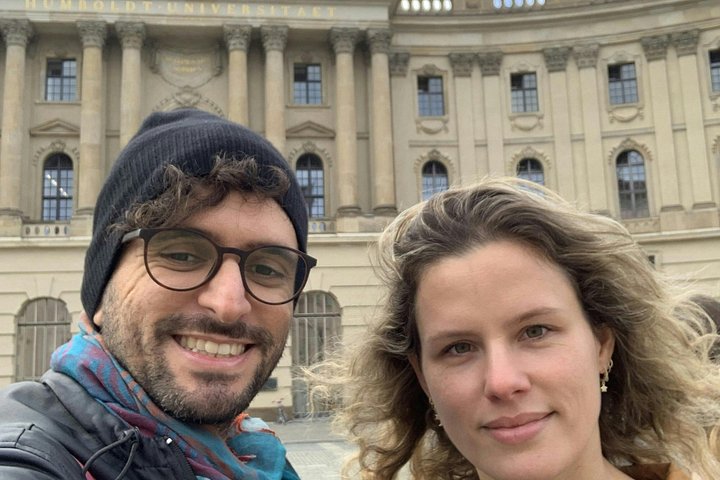
Stand before one of Europe’s most influential universities. Teaching began here in 1810, built around Wilhelm von Humboldt’s revolutionary idea that university education should unite research and teaching rather than simply transmit existing knowledge. Across its history, 29 Nobel Prize winners have been associated with Humboldt University. Philosophers, physicists, economists and political thinkers who studied or taught here helped shape modern intellectual life far beyond Germany. The main building itself began life as a palace for Frederick the Great’s brother before becoming part of the university. October 2026: its Unter den Linden façade is scheduled for Festival of Lights staging.
Cancellation
Free cancellation up to 24 hours before the experience starts, for a full refund.
Know before you go
- Meeting point
- Meet your guide in front of Bäckerei & Eiscafe Bich Ha, Wilhelmstraße 85, 10117 Berlin. Your guide will hold a sign with the lead traveler’s name.
- Pickup
- Everyone meets at the starting point; there is no pickup.
- Ticket type
- Mobile or paper ticket accepted
- Operated by
- Friendly Local Guides
- Wheelchair accessible
- Infants and small children can ride in a pram or stroller
- Service animals allowed
- Public transportation options are available nearby
- Infants are required to sit on an adult’s lap
- Suitable for all physical fitness levels
- This is a private 3-hour walking tour exclusively for your group, exploring 25+ landmarks, illuminated architecture, historic squares and atmospheric evening locations through central Berlin.
- The tour is designed to work year-round. Berlin’s monuments, historic streets and architectural landmarks create a beautiful nighttime experience in every season.
How it compares in Berlin
- Its from-price is 11% below the median of the 287 city tours we list in Berlin.
- Its length is typical for the group.
- The operator lists free cancellation on it.
About Berlin
Berlin is Germany's creative, open-minded capital, where landmarks of a turbulent history stand among art, green parks and legendary nightlife.
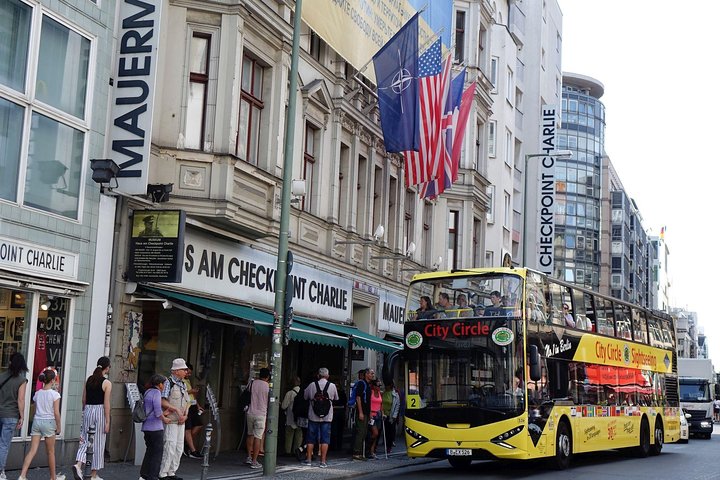
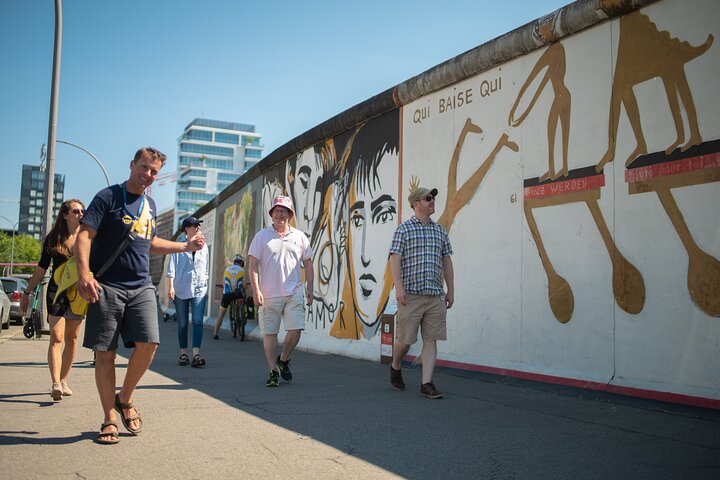
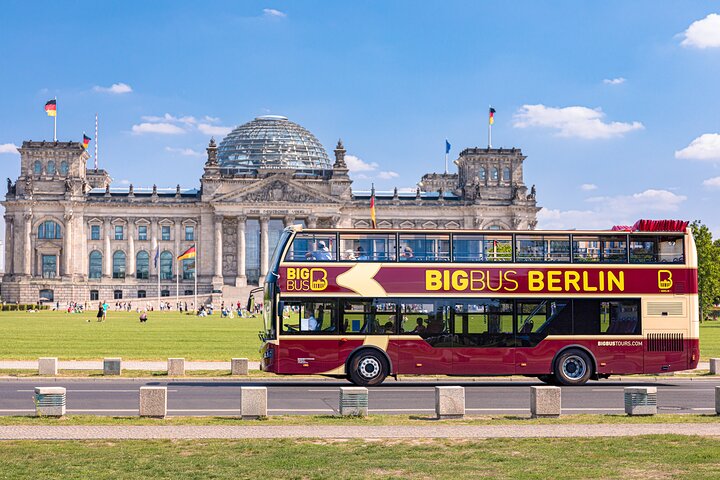
The Brandenburg Gate is the city's symbol, close to the glass-domed Reichstag and the Memorial to the Murdered Jews of Europe. Fragments of the Berlin Wall survive, most strikingly at the East Side Gallery, a long stretch covered in murals, and at the Bernauer Strasse memorial, while Checkpoint Charlie marks the most famous former crossing point.
Top-ranked sights in Berlin: Brandenburg Gate (Brandenburger Tor), Memorial to the Murdered Jews of Europe (Holocaust Memorial), Checkpoint Charlie.
Special offers in Berlin
Was/now prices come from the operator, never from us.