
Itinerary
Rome with Kids: A Family Itinerary Built Around the Hop-On Hop-Off Bus
- Routes1
- Stops8
- Full loop1H 43M
- Sights7
Plan at a glance: give each day to one cluster of sights, use the hop-on hop-off bus to cover the long gaps between clusters, and keep every day to four stops at most. Rome with kids works best when the bus handles distance and your feet handle only the short stretches.
The city is walkable, but children of mixed ages tire faster than the map suggests. The ancient centre, the Vatican area and the Pantheon and Piazza Navona pair each sit in their own pocket, so a family can build three relaxed days or choose one or two of them for a shorter stay.
Sights in this guide


How the bus fits a family day
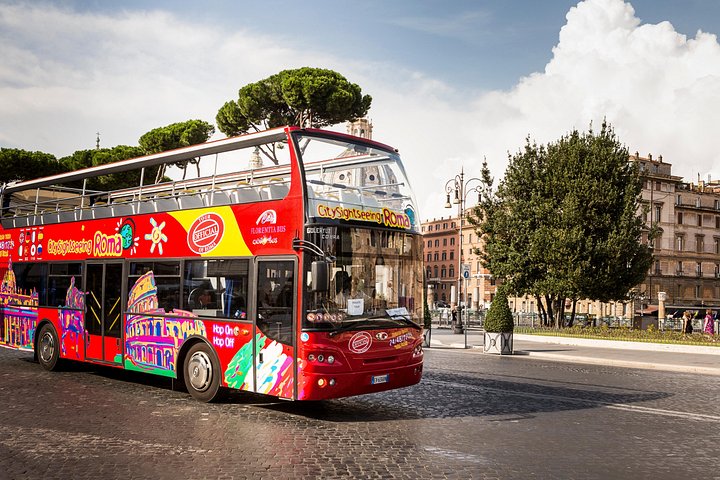
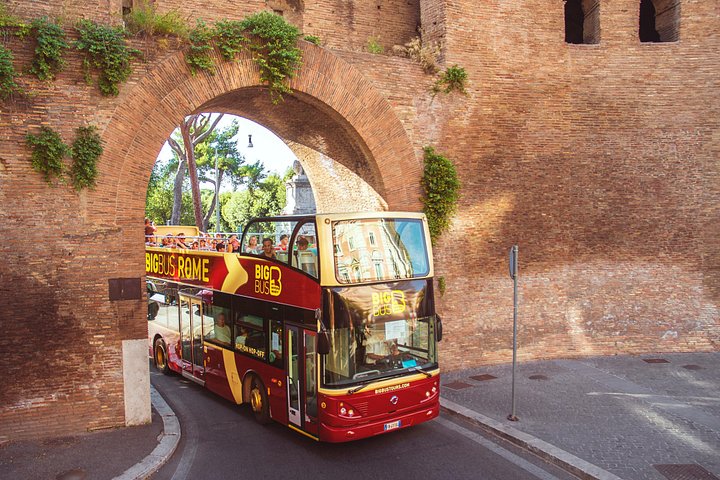
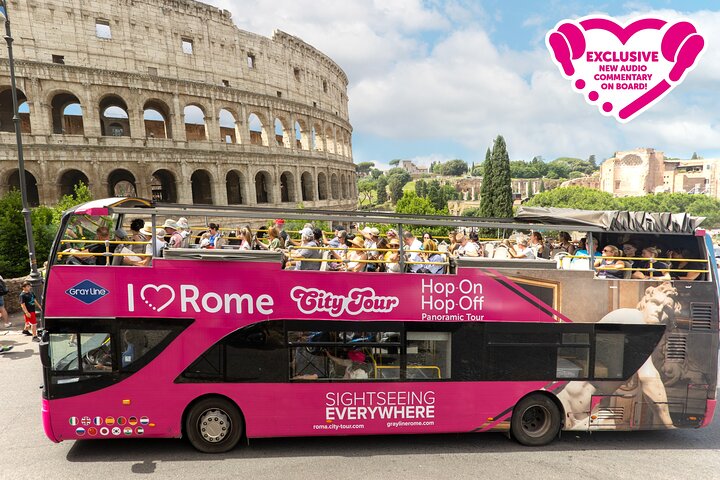
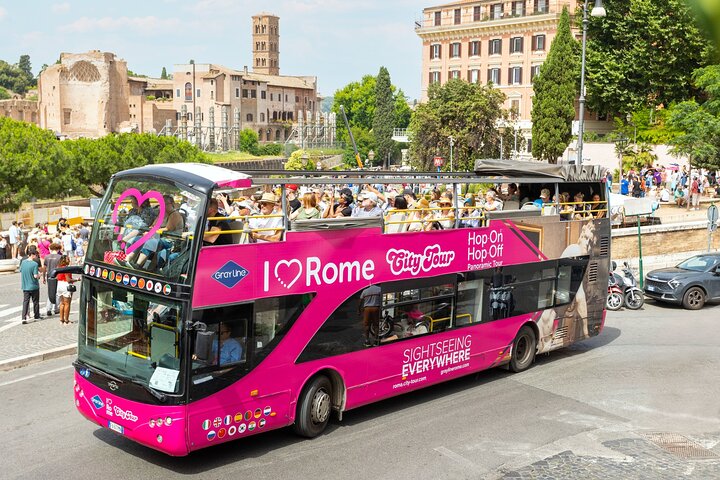
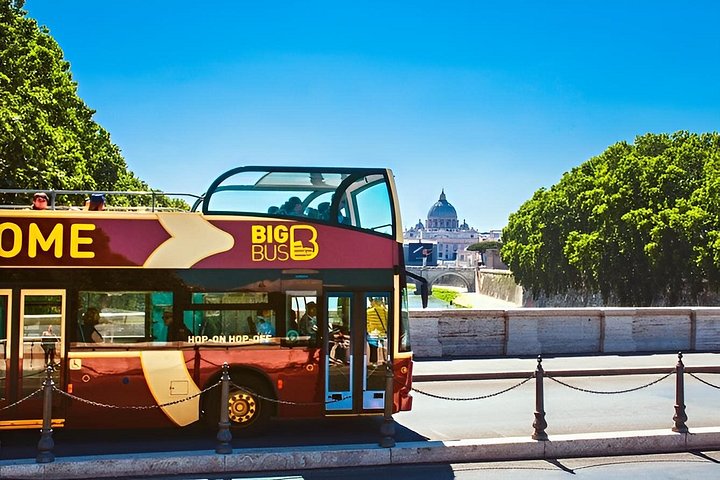
The city has one hop-on hop-off route, the Red Route. It links Termini station with the Colosseum, Circus Maximus, Piazza Venezia, the Vatican area, the Spanish Steps and the Barberini area. A full loop takes about 1 hour 43 minutes, and the loop passes Santa Maria Maggiore too. For a family that is useful in two ways: as a seated rest between bursts of walking, and as a way to see a stretch of the city without anyone having to walk it.
Treat the bus as transport with a view rather than as a tour to sit through. Young children rarely last a whole loop, so ride one leg, get off, do one thing properly and decide then whether to climb back on. Buses run every 9 to 11 minutes, so a missed one costs little, which takes pressure off a tired toddler or a slow teenager.
Day one: the ancient centre
This is the cluster that gets children most excited, and it is the best day for gladiator stories. The ancient centre holds the Colosseum, the Roman Forum, the Palatine Hill and Circus Maximus, with the Trevi Fountain a longer walk away. You will not do all of them with young children, so choose.
The Colosseum is the anchor, and the bus has a stop named for it. The Palatine Hill is about 400 metres from that stop, and the Roman Forum is about 450 metres from the Piazza Venezia stop. Circus Maximus has its own stop, right beside it. Its wide, open ground is a good place for children to run off energy and for adults to explain chariot races.
The Trevi Fountain is a longer walk away and has no stop close by, so treat it as a walk on foot rather than something the bus delivers you to. It suits a late-afternoon coin-toss moment when the heat has eased.
Day two: the Vatican area
The second cluster holds the Vatican Museums, the Sistine Chapel, St. Peter's Basilica, St. Peter's Dome and Vatican City. The Red Route has a Vatican stop, and the Vatican Museums and Vatican City are both right at it. The Sistine Chapel, the basilica and the dome have no stop within a few minutes' walk, so expect to walk between them once you are in the area.
This is the heavier day for little ones. The museums are long and quiet, and the Sistine Chapel is a place where young children are asked to hush. Teenagers tend to get more from it, especially if they have studied Michelangelo or enjoy art. The dome is the one for older children and teens who like a view and have energy for a climb, so go with a plan to separate if the youngest cannot manage it. Keep this day to the museums and one other stop, rather than stacking everything.
Which sights suit which ages
For younger children, the open spaces work best: Circus Maximus for running, the Colosseum for its sheer size and the Trevi Fountain for the coin ritual. Piazza Navona suits them too, with its fountains and street performers, and there is room to move without a queue.
For teenagers, the Roman Forum and Palatine Hill reward curiosity about how ancient Rome actually worked, the Pantheon is striking for its open oculus, and the Vatican Museums with the Sistine Chapel give a proper art-history hit. Mixed-age families do well to alternate: one stop chosen for the youngest, one for the oldest, with gelato as the connecting thread.
Open-top deck: help or hindrance
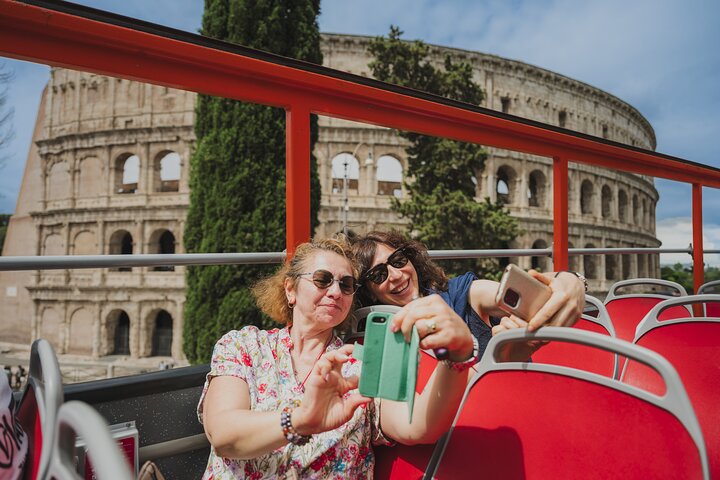
An open deck gives children a clear view of ruins that are hard to see from street level and lets you point things out as they pass. In the cooler seasons it is a real pleasure. In midsummer, direct sun is the problem: there is little relief, so bring hats and water, and expect small children to want to move indoors. Check the ticket page for what the vehicle offers.
If a child is prone to restlessness, a window of sightseeing from the bus, followed by a long stop, beats trying to sit through the whole loop.
Buggies, snacks and toilet breaks
Rome's old streets have cobbles, kerbs and crowds, so a lightweight, easy-to-fold buggy is usually less trouble than a bulky one. Carrying a small child in a sling can be simpler in the Forum and on the Palatine Hill, where the ground is uneven. Check the ticket page and operator for current accessibility details before relying on any particular boarding arrangement.
Pack water and a few snacks, because queues and walks stretch longer than planned. Rome has plenty of public drinking fountains that are usually safe to refill from. Plan toilet breaks around cafés and museum facilities rather than waiting until they are urgent, and make a stop before any long queue or visit where leaving is awkward.
When the weather turns
On a hot day, move the outdoor ancient sites to the morning or late afternoon and use the middle of the day for indoor stops such as the Vatican Museums or a long lunch. In rain, the museums and the basilica are the obvious refuges, and the bus is better as a quick hop between them than as a long ride. Spring and autumn are the easiest seasons for families, while in midsummer heat is the limiting factor and August can be quiet as many locals leave.
A sample day in four stops
Start at Circus Maximus, where children can run before the heat builds. Move on to the Colosseum area for the main event, then take the short walk to the Palatine Hill if energy holds. Finish with the Trevi Fountain on foot in the late afternoon, followed by gelato. Use the bus only for the gaps you do not want to walk, and drop any stop that is not working.
Route and stops
- Red Route
Red Route
Hop-on hop-off in Rome
![Hop-on-Hop-off Tour of the Castelli Romani from Rome - Tour 1]() Likely to sell outFree cancellation






Questions about Rome sightseeing
Is the hop-on hop-off bus worth it for a family with young children?
It is worth it if you use it as a way to skip long walks rather than as a full tour. Children can sit and rest between stops, and one loop passes several major sights. Compare tickets to see which option suits your plans.
Can we do Rome with kids in two days?
Yes, by choosing two of the three clusters: the ancient centre and the Vatican area are the most popular pairing. Keep each day to about four stops. Leave the Pantheon and Piazza Navona for a free evening walk if time allows.
Is the Sistine Chapel suitable for children?
It suits older children and teenagers better than toddlers, because the space is quiet and the visit involves standing and looking upward. Families with young children often pair it with a break outdoors afterwards. The Vatican Museums stop is the one on the bus route, and the Sistine Chapel itself is a walk from there.
Is the night tour good for families?
It is a separate one-hour panoramic ride that departs from Termini in the evening, and it is not hop-on hop-off. It can suit older children who like seeing the city lit up, but it is a long sit for very young ones. Check the ticket page for current dates.
Compare hop-on hop-off tours in Rome