
Itinerary
1 Day in Rome: A First-Timer's Itinerary Using a Hop-On Hop-Off Bus
- Routes1
- Stops8
- Full loop1H 43M
- Sights7
The plan at a glance: spend the morning on ancient Rome around the Colosseum, Roman Forum and Palatine Hill, then use the afternoon for either the Vatican or the Pantheon and Piazza Navona, and finish with an evening wander. The hop-on hop-off bus is the connector that saves your legs between these areas, not the main event.
One day in Rome means choosing. The city holds nearly three thousand years of history, and trying to see the ancient centre, the Vatican and the Baroque squares in a single day usually ends in rushed queues and sore feet. This itinerary groups sights that sit close together on foot, so each half-day stays in one area, and it tells you plainly what to drop if time runs short. Treat it as a framework: pick the afternoon that matches your interests, and leave room for a long lunch, because eating well is part of the point in Rome.
Sights in this guide


Morning: ancient Rome around the Colosseum
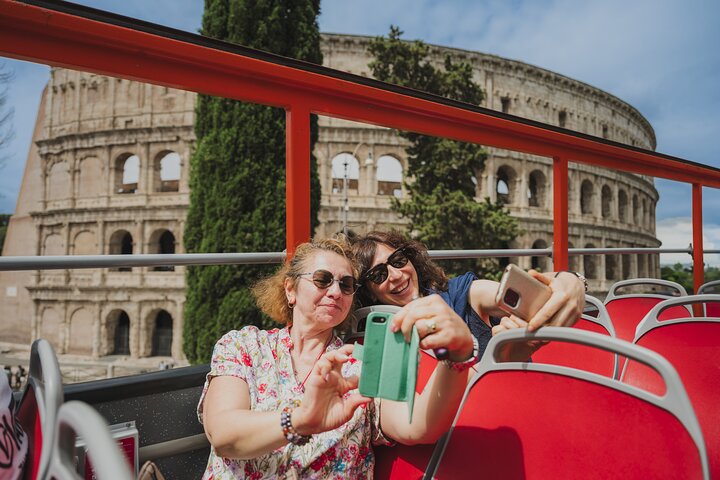
Start with the Colosseum, and start early. It is the busiest sight in the city, and the ancient area around it is exposed to the sun, so the cooler part of the day suits it best. From the Colosseum, the Roman Forum and the Palatine Hill are an easy walk, and they make more sense seen in sequence: the Forum was the civic heart of the ancient city, and the Palatine Hill above it is where emperors built their residences.
The hop-on hop-off bus has a stop named Colosseum, right at the monument, and it is also about 400 metres from the Palatine Hill. The Roman Forum is about 450 metres from the Piazza Venezia stop. That makes the bus a handy way to arrive, or to leave the area once you have had enough of ruins. Circus Maximus has its own stop, Circo Massimo, at the site itself. Today it is a long grassy open space where chariots once raced, and it takes only a few minutes to take in. It is worth a look if you like to picture the scale of ancient Rome, and an easy one to skip if you are short of time.
The Trevi Fountain is a longer walk from the Forum area, and no bus stop is close to it, so go on foot. Many visitors find it works best as a pause at the end of the morning, when you are heading toward lunch. Expect crowds at any hour.
Realistic pacing: give the Colosseum and the Forum together the better part of the morning. Adding the Palatine Hill is rewarding but stretches things. If your energy is limited, see the Colosseum and Forum properly and view the Palatine from the edge rather than rushing all three.
Afternoon option one: the Vatican
If the Vatican is your priority, give it the whole afternoon and do not try to add much else. The Vatican Museums, the Sistine Chapel, St. Peter's Basilica and St. Peter's Dome all sit in one cluster alongside Vatican City itself, and each one takes longer than visitors expect. The museums are large, and the route through them ends in the Sistine Chapel, where Michelangelo's ceiling is the reward for the walk.
The hop-on hop-off bus has a Vatican stop, and both the Vatican Museums and Vatican City are right at it. The Sistine Chapel, St. Peter's Basilica and the Dome have no stop within a few minutes' walk, so expect to cover them on foot from the Vatican area. That fits the geography: the basilica and the dome are a walk away from the museum entrance, and the Sistine Chapel is reached through the museums themselves.
A sensible order is museums and the Sistine Chapel first, then the basilica. The dome involves a climb, so decide beforehand whether you want it; it is a good choice if you have energy, and skippable if the day has already been long. Dress modestly for the basilica, with shoulders and knees covered, since entry rules at religious sites are strict in Rome.
This option suits art lovers and anyone who wants Michelangelo on their list. It is a lot after an ancient-Rome morning, so be honest about your stamina.
Evening idea
Rome is at its best as the stone turns gold toward dusk. After a break at your hotel, head back to the Trevi Fountain or Piazza Navona, both of which feel different once the day crowds thin, and then have dinner. Trastevere, across the Tiber, is known for its ivy-hung lanes filling with diners, while Testaccio and Monti are where many Romans eat. Cacio e pepe, carbonara and supplì are the dishes to look for.
For a seated look at the city lit up, a separate one-hour panoramic Night Tour departs from Termini in the evening.
Rainy-day swaps
Rain changes the order more than the list. Move the Vatican Museums and the Sistine Chapel to the morning, since they are largely indoors, and keep the Colosseum for a drier window if the forecast allows. The Pantheon is another good shelter, and its open oculus is part of the experience even in wet weather. Piazza Navona and the Roman Forum are best saved for when the rain stops, as both are open-air and the Forum paving gets slippery. On a wet day, the bus is more useful for covering distance between indoor sights than for sightseeing.
Getting the most from the bus
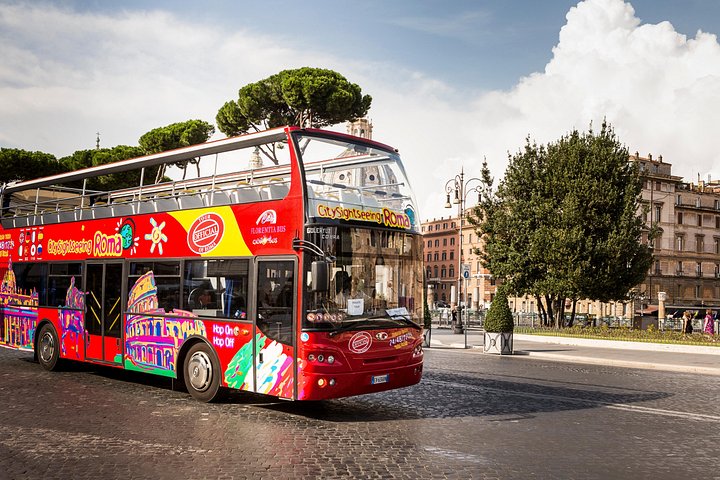
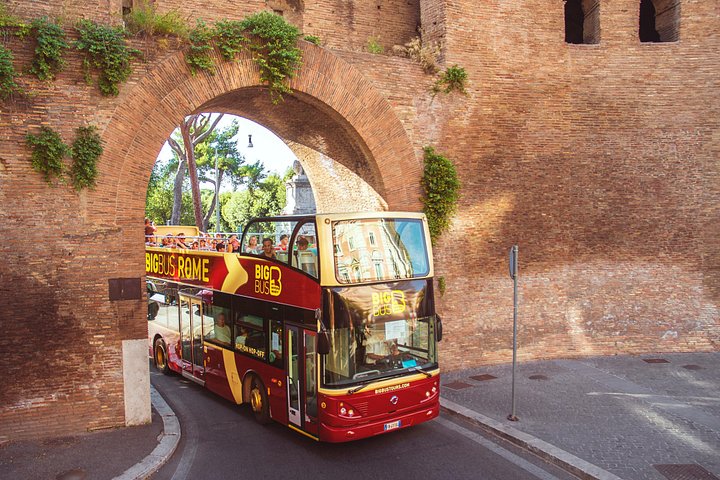
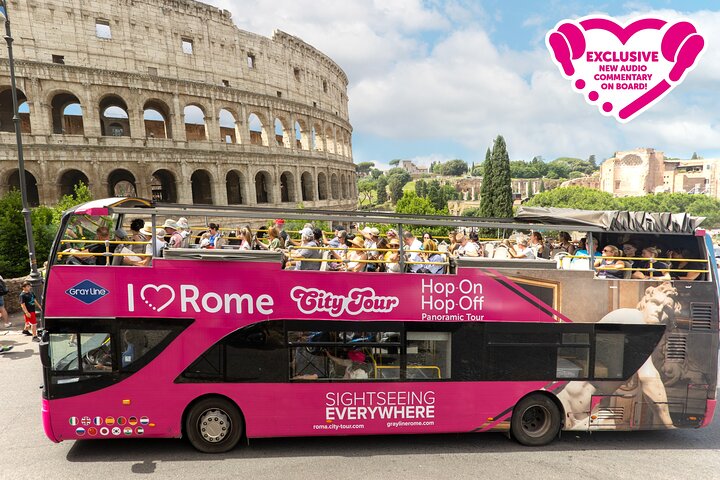
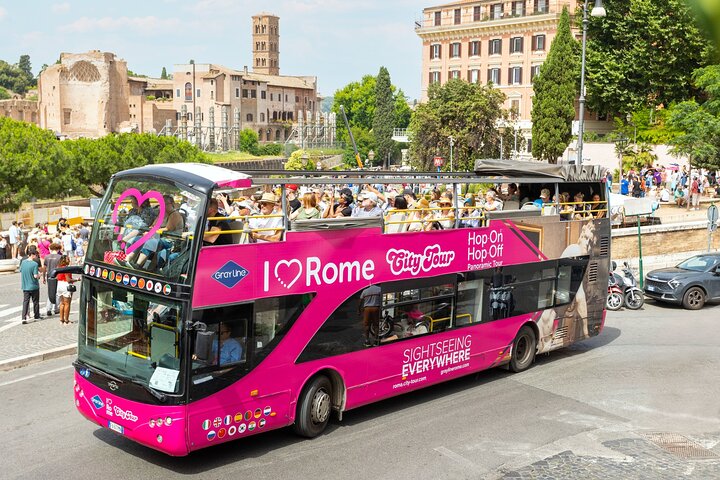
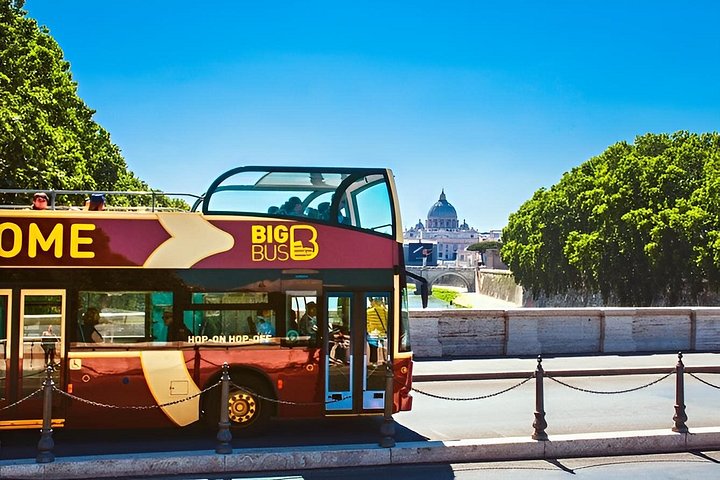
Use the bus as transport between areas, not as a tour you sit through. The loop is long, so for one day it makes more sense to hop on and off at a few stops than to ride it end to end.
The loop takes about 1 hour 43 minutes without getting off, and buses run roughly every 9 to 11 minutes, so a short wait is normal. Commentary is offered in 8 languages.
The most useful trick is to ride between the two big zones. Spend the morning on foot among the ruins, then use the bus to reach the Vatican area rather than crossing the city by foot. Families and anyone who prefers to pick a few stops over walking the historic centre will find this the easiest way to use the day. Compare ticket options on the ticket page before you choose.
Route and stops
- Red Route
Red Route
Hop-on hop-off in Rome
![Hop-on-Hop-off Tour of the Castelli Romani from Rome - Tour 1]() Likely to sell outFree cancellation





Questions about Rome sightseeing
Is 1 day in Rome enough?
It is enough for the headline sights if you accept a trade-off: ancient Rome in the morning and either the Vatican or the old centre in the afternoon, not all three. You will see the essentials, but you will not see everything. If you can stretch to two or three days, the Vatican and the old centre each get a proper day of their own.
Should I do the Vatican or the Pantheon area in the afternoon?
Choose the Vatican if Michelangelo and the Sistine Chapel are why you are coming, and be ready for a long, absorbing afternoon with queues and a lot of walking indoors. Choose the Pantheon and Piazza Navona if you want a lighter pace, with time to sit, eat and stroll. Trying to fit both in one afternoon rarely works.
Does the bus go to the Sistine Chapel and St. Peter's?
The bus has a Vatican stop, right at the Vatican Museums and Vatican City. The Sistine Chapel, St. Peter's Basilica and its dome have no stop within a few minutes' walk, so you walk to them from the Vatican area. Check the ticket page for current service details.
Can I reach the Trevi Fountain, Pantheon and Piazza Navona by bus?
Not directly. None of them has a stop within a few minutes' walk, so plan to walk. The Trevi Fountain is the easiest to link with the ancient-Rome morning, and the Pantheon and Piazza Navona sit close together for a short stroll.
What is the best season for a one-day visit?
Spring and autumn are the most comfortable for a full day on foot, with mild weather suited to the open-air ruins. Midsummer is hot, so go early and rest in the middle of the day. In August many Romans leave for the coast, which can make the centre feel a little different.
Compare hop-on hop-off tours in Rome