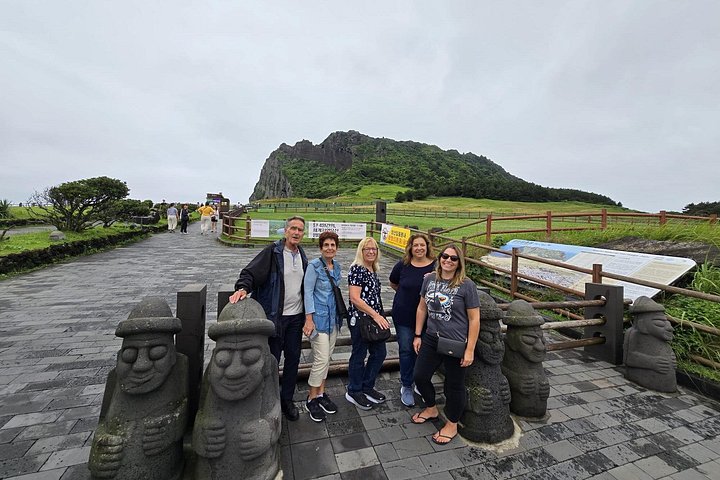
UNESCO and HANBOK Experience private tour package In Jeju island
- 6–8 hours
- Free cancellation up to 24h before
- 3 languages
- Instant confirmation
Highlights
A Jeju local driver will guide you to UNESCO-listed sites and folk villages and At the folk village, you can learn about Jeju's history while wearing Hanbok, the traditional Korean costume. If the customer wishes, the Hanbok experience is available for 1 hour~1.5hours (Folk Village only) . The cost is included in the travel price. If you walk with nature as your friend, you will arrive at a beautiful beach. Have a delicious drink and snack and walk along the beach. That would be fantastic. If you want to experience all the fun and make memories in Jeju, book now. A Jeju Namyang taxi travel that will safely take care of your trip to Jeju Island... Every Monday, Stone Culture Park is closed. At that time, the driver will recommend another location
Inclusions
What's included
- Insurance included
- Speaking Simple English/japandnese/Chienese Driver
- Entry / Admission fee
- Regular Taxi / Jumbo Taxi / Minivan / Mini-Bus , The fuel and parking fees are included in the price
- Traditional costume Hanbok experience cost
- we offer pick-up and drop-off services from Jeju island
What's not
- Personal Expenses / Food and Drinks
- Gratuities are recommended, but not compulsory
Itinerary
Jeju Stone Culture Park is a space of history and culture that compiles the stone culture, Seolmundae Halmang myth, and folk culture that have become the roots of Jeju's creation and Jeju human culture. The legend of Seolmundae Halmang, the goddess who created the island of Jeju, and the five generals, is revealed through various stone cultural relics and materials on the 300,000 pyeong wide Gotjawal land. It was created as a space where Jeju residents and tourists can directly encounter and view the lifestyle of Jeju residents through an exhibition space. By taking advantage of Jeju's identity, locality, and artistry, Tamna's formation process, Tamna's mythology, history, and folk culture are revealed. To create the most beautiful educational space by organizing it by era and pass it on to our descendants. This is a belief that the planner of Stone Culture Park has never forgotten for a moment.
성읍민속마을 (Seongeup FILK Village) The entire village, which preserves the living site of the people of old Jeju, has been designated as an Important Folklore Cultural Heritage. Though it can be considered a folk village of sorts, it differs from regular folk villages in that people still live in it to this day. The village residents act as volunteer guides to offer visitors all sorts of information. The Saw-leaf Zelkova and Japanese hackberry in the center of the village are worth taking time to see.
광치기 해변(Gwangchigi Beach) Gwangchigi Beach boasts one of the most pristine and spectacular views along Jeju's coastline. In the distance is Seongsan Sunrise Peak, a UNESCO World Natural Heritage site and jewel of Jeju Island. In the area are many trendy cafes and restaurants, as well as travel accommodations and fun things to do with the family, like the Aquaplanet Aquarium. It is also where Olle walking trails 1 and 2 connect.
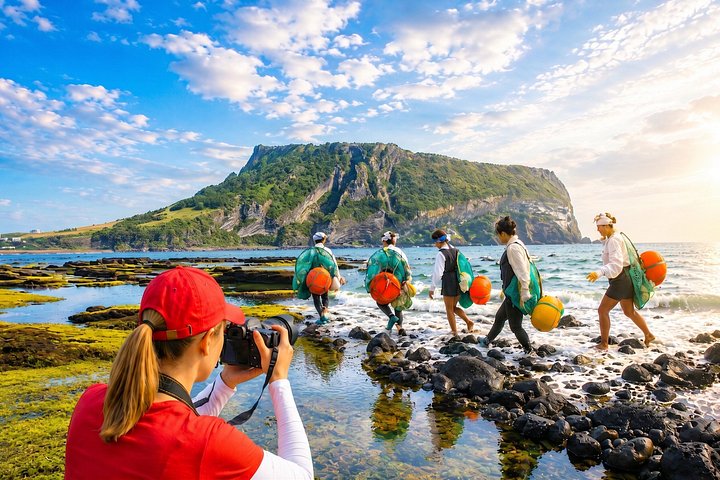
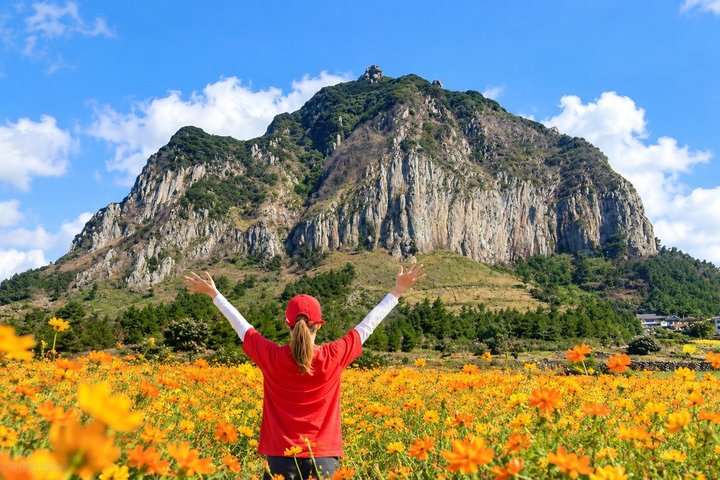
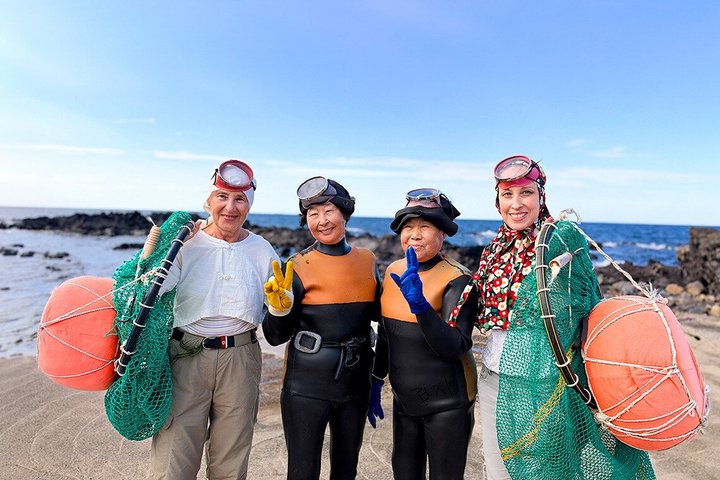
성산일출봉(seongsan illchulbong) Seongsan Ilchulbong Tuff Cone, a landmark attraction of Jeju, was formed about 5,000 years ago from an eruption of magma on the ocean floor. It is especially famous as a sunrise viewing spot, known to be one of the top ten exquisite sceneries of Jeju Island.Besides viewing the sunrise, Seongsan Ilchulbong Tuff Cone is also known to be an excellent trekking spot. The Seongsan-Ojo Trail connects two villages by crossing the peak. Another popular trail, the Jijil Trail, offers a closer look at the UNESCO-designated geopark as well as Jeju’s local culture. Walking along one of these paths is recommended to really experience the area; walking all the way to the summit offers views of both the vast volcanic crater in the center and the blue ocean surrounding the area. To complete your trip, head to Seongsanpo Port to watch haenyeo (female divers) at work.
섭지코지(Seopjikoji) A short drive from Seongsan Ilchulbong Peak will take you to Cape Seopjikoji. The name comes from the Jeju dialect for a “Cape of Small Land” due to its peculiar cliff formation that protrudes into the ocean. The picturesque harmony of the hill and ocean attract tourists all year round. You might even be able to sight Jeju ponies grazing on the field of grass.Walking northeast along the cliff, you will arrive at Bulgeunoreum Parasitic Cone, offering an exquisite view of a white lighthouse with the dark blue sea in the background. Additional noteworthy attractions of Cape Seopjikoji are the Glasshouse and Yumin Art Gallery, two masterpieces designed by world-renowned architect Ando Tadao. The two buildings blend in remarkably well with the surrounding nature.
It is a filming location for the Korean drama "Welcome to Samdali" and is a beautiful, small village dock where you can walk along a short promenade while looking at the sunrise peak.
The total length of Manjanggul Lava Tube is about 7.4km. It is a lava tube that is partially multilayered. The main tunnel’s width is 18m and its height is 23m. It is one of the largest lava tubes in the world. There are many lava tubes in the world, but Manjanggul Lava Tube has a significant meaning in that it was formed thousands of years ago, and it is very well preserved. Therefore, it is very valuable to researchers and scientists. Due to the sinking of the ceiling, there are 3 entrances. The one that tourists can use is the second entrance and they are only allowed to go as far as 1km into it. There are various cave formations in Lava Tunnel in Manjanggul Lava Tube, such as stalactites, stalagmites, flowstones, lava tubes, lava shelves, and lava rafts. In particular, the lava column that is located at the end of the tourist area is about 7.6m high and is known as the highest lava column in the world.
Cancellation
Free cancellation up to 24 hours before the experience starts, for a full refund.
Reviews
5.0
- 52
- 40
- 30
- 20
- 10
Ratings come from 2 reviews collected by our booking partner. They are travellers' own words, in the order they were written — never reordered to flatter the experience.
Know before you go
- Pickup
- Pickup is included for everyone.
- Ticket type
- Mobile or paper ticket accepted
- Operated by
- Jeju Taxi Tour Namyang Travel
- Suitable for all physical fitness levels
- Every Monday, Stone Culture Park is closed. At that time, the driver will recommend another location
- Manjanggul Cave, a World Natural Heritage site, will reopen after May 30, 2026.
How it compares in Jeju
- Its from-price is 36% above the median of the 144 day trips we list in Jeju.
- Its length is typical for the group.
- By number of reviews it ranks 69 of 144.
- The operator lists free cancellation on it.
About Jeju
Jeju is South Korea's volcanic island, with Hallasan mountain, lava tubes, waterfalls, coastal cliffs, tangerine groves and the tradition of women divers.
Jeju is a volcanic island off the south coast of South Korea, with Hallasan, the highest peak in the country at 1,947 metres, rising from its centre. The island's volcanic landscapes, including the crater of Seongsan Ilchulbong and the lava tubes of Geomunoreum, are a World Heritage site. Jeju City, on the north coast, is the main town, with Seogwipo on the southern side. Stone walls of black basalt crisscross the fields, and stone statues called dol hareubang stand as guardians.
Top-ranked sights in Jeju: Sangumburi Crater, Teddy Bear Museum, Jeju Folklore & Natural History Museum.