Half or Day Tour For Cruise customers arriving at Jeju City Port
- 5–9 hours
- Free cancellation up to 24h before
- 3 languages
- Instant confirmation
Highlights
Jeongbang Falls is a waterfall that falls into the sea and is the best waterfall in Jeju. It's a beautiful waterfall. Go to the area around the waterfall and take pictures. Let’s feel the mystery of nature. Sangumburi is a very special crater in Asia that looks like a bowl of soup as gas explodes and goes underground. Take your stress away while breathing in the clean air along the tree-lined trails of Sharyeoni Forest. At Jeju Stone Culture Park, you can experience the wisdom of people’s lives while appreciating Jeju’s traditional culture, stones, volcanoes, and traditional thatched houses. In Seopjikoji, you can spend your time strolling along the beach where the lighthouse and drama were filmed. Seongsan Ilbong is one of the world's highest natural heritage sites and is a short 182m hiking course located on the beach. The hiking course is a 1-hour round trip course, and the easy beach walking course is about 30 minutes. The Haenyeo Museum also good place (Best place)
Inclusions
What's included
- Taxi style : 4person customer regular. 7person seater jumbo. 12person seater mini bus or big bus
- All admission fees are included.
- The taxi driver has a lot of foreign tour experience or speaks simpleand basic English.
- Air-conditioned vehicle and parking fee and fuel fee is included
- Pick-up from out-of-town and anywhere on Jeju Island is free.
- if you wish , You can add or exclude attractions place.
- We always provide taxis registered in south of Korea.(All taxis include transportation insurance.)
What's not
- Gratuities/ Food and Drinks / personal Expenses
Itinerary
If you drive on Jeju's roads, you can see Jeju horses in many places, which are a little more gentle than Western horses, have shorter legs, and seem friendly to people. There are many ranches in Jeju that raise Genghis Khan's horses from Mongolia. It is said that Genghis Khan's horses exist only in Jeju and Mongolia. You can see them a lot at riding centers, and you can see many Genghis Khan's horses in ranch areas.
Jeongbang waterfall This waterfall represents Jeju Island. It is the only waterfall in Asia that falls from land into the sea. A place where you can dip your feet in the water. 'Seobulgwacha' was written in Chinese characters on the rock wall of Jeongjeong Waterfall. There is a legend that an envoy from Qin Shi Huang came to Yeongju Mountain (now Mount Halla) in Jeju Island and went around looking for the herb of immortality, inscribed on a rock. Jeongbang Waterfall has a lot of rocks, so you have to walk very carefully under your feet, and the stairs are easy to come down, but very difficult to get around. As the only natural waterfall in Asia that falls into the sea, it creates a more beautiful scenery when there are many photos and rainbows. Jeongbang Falls is one of the top 10 unexplored places in Jeju Island and is a must-see tourist attraction.
Jeju Stone Culture Park Stone Culture Park is a museum and ecological park that comprehensively and systematically shows the stone culture of Jeju, the land of stones. The exhibition hall was completed and opened on June 3, 2006, seven years after the groundbreaking. Stone Culture Park, where you can see the stone culture of Jeju, is so large that it is recommended to visit it on a leisurely schedule. The Stone Culture Park is located in front of Oreum, a natural heritage unique to Jeju, and if you follow the shape of a castle made of piled stones, you will arrive at the entrance of the Stone Culture Park, where you can see the surroundings clearly. Passing through the entrance and following the viewing path, you can see various stone statues created by weaving the tale of Seolmundae Halmang and her son, General Ohbaek. The museum is underground, not above ground.
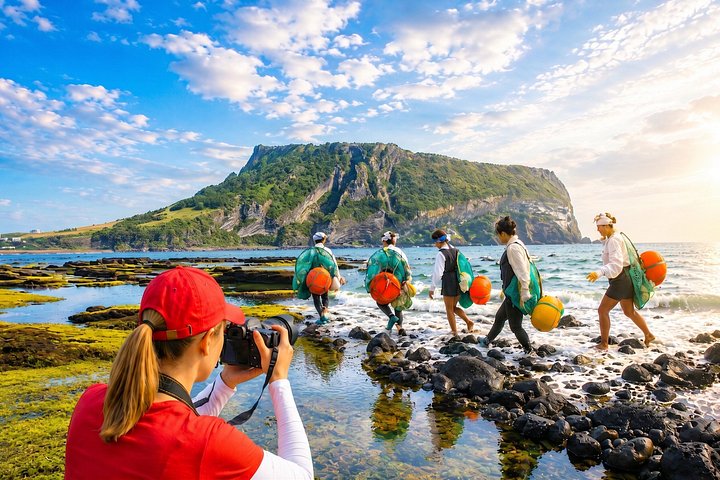
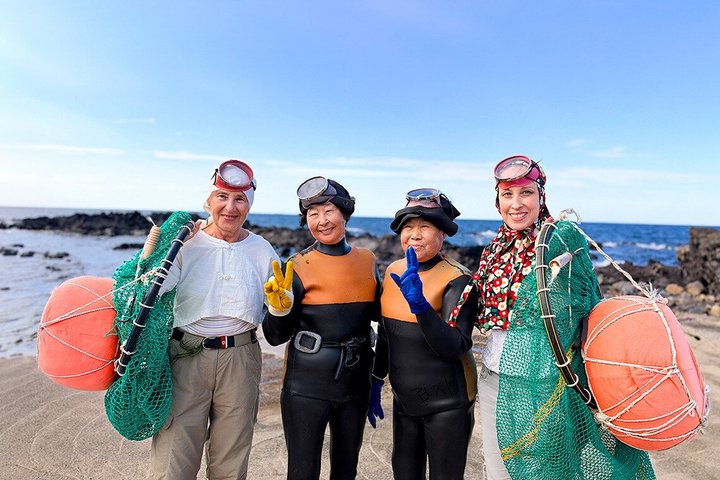
Jeju's coastal road is a place where you can see the real life of wonam divers (haenyeo) harvesting seafood. If you can see the real life of haenyeo, you will be very lucky that day. There are not many opportunities to see the actual harvesting work of haenyeo. Drive along the coastal road along Woljeong-ri Beach Road to see or take pictures of Jeju's sea. Drive along the coastal road to Seongsan Sunrise Peak and drive along Jeju's natural beach road. Any day you get to see the haenyeo harvesting is truly a lucky day.
The Jeju Haenyeo Museum is located in a fishing village overlooking the white sandy beach in Sehwa-ri, Gujwa-eup. It exhibits materials related to the ocean, fishing villages, folklore, and fishing, focusing on the haenyeo culture of Jeju, which has a history from before the beginning of time. All exhibits inside and outside the museum were donated by haenyeo. In the exhibition hall, the actual haenyeo's house was also donated and moved, and food culture and childrearing, half-urban farming, and Yeongdeunggut culture are displayed in detail. The 7-minute video is definitely worth watching. technology is a skill acquired through long-term training and experience. Usually, from the age of 8, they learn to swim and dive in the shallow waters of the village, and become baby haenyeo around the age of 15. Haenyeo's material work requires a high degree of skill. You have to hold your breath and work for more than one minute while enduring strong water pressure in 15m of water.
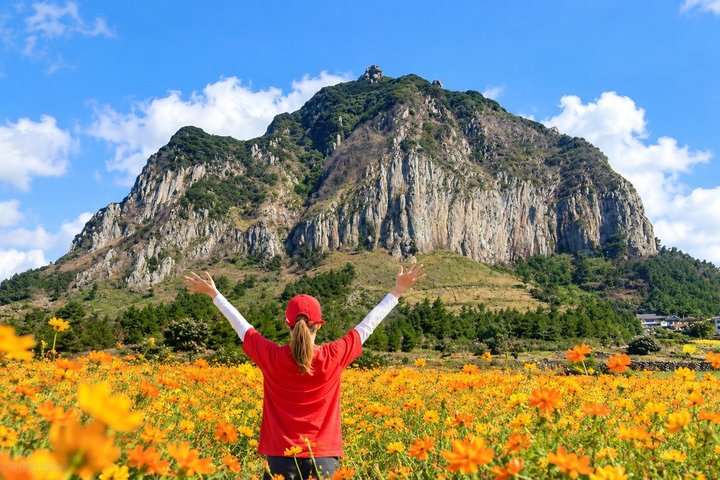
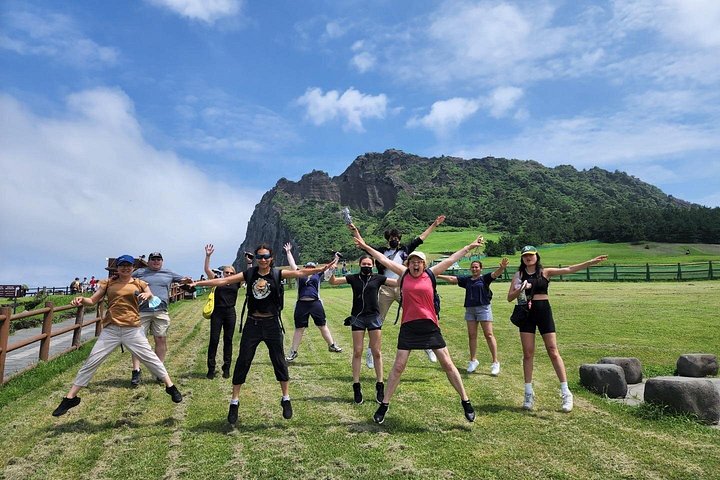
World natural heritage jeju No .1 best place Here also woman diver performance show place. The weather not good and heavy rainy day is suddenly canceled Haenyeo (woman diver)performance time is 2pm.Jeju is an island created by an eruption of a volcano in the sea, and Seongsan Ilchulbong Peak is also said to resemble a castle, so it is Seongsan, and Ilchulbong Peak is the meaning of a peak where the sun rises. The number of stone pillars on the outer shell of a circular shape is 99, and it looks like a crown from the sky. It takes about 30 minutes to reach the top of the ticket office. When you come down after climbing to the top, you naturally look at the haenyeo performance beach. Seongsan Ilchulbong Peak has long been one of the 10 scenic spots in Jeju. It is the most beautiful place in Jeju.For your information, the first Monday of every month is closed.Still, the left course to the haenyeo performance beach is open for free.
It is a village where people have lived in traditional thatched houses since ancient times. In the past, Seongeup Village was the center of Jeju. In Seongeup Village, horses and cattle were sent to the king and the central government. in Seongeup Village. You can visit the traditional thatched houses for free. You can also see the appearance of a traditional toilet. In Seongeup Folk Village, take a walk along the stone wall alley. You can see the lifestyle of Jeju. You can also experience Hanbok at Seongeup Village.
Jeju Sangumburi Crater is a parasitic volcanic crater of Hallasan Mountain. It is the only submerged volcano in Jeju Island. The outer circumference of the crater is 2,067m, the inner circumference is 756m, and the depth of the crater is 100-146m, forming a conical cliff, and the floor area is about 8,000 pyeong. The crater rarely ejected lava, only a hole was dug deep by the explosion, and the material from the explosion was scattered in all directions and only a small amount accumulated around it. Although the diameter and depth of the crater are larger than that of Baeknokdam, the water does not accumulate and flows out to the sea through the basalt gravel layer of the crater wall. Such a crater is called a maar, and Sangumburi Crater is unique in Korea, and there are only a few in Japan and Germany worldwide.
Take a tour of Jeju's traditional markets. A variety of food. You can see the life of Jeju people. Look back at the market that can only be seen in Jeju, and look at the busy life of Jeju and find a side that you have not seen in other travel destinations.
Manjanggul lava tube information Manjanggul Cave is a natural cave formed approximately 100,000 to 300,000 years ago by lava flowing from Geomun Oreum, one of the small mountains in Jeju, along the surface. It is the core of the Geomun Oreum Lava Cave System, which was designated as a UNESCO World Natural Heritage Site in 2007. The general exploration section extends about 1 km inward from the Second Entrance. The main passage, measuring 18 meters in width and 23 meters in height, evokes a sense of openness that makes one forget it is an underground space. At the end of the section stands a 7.6-meter-tall lava column, the symbol of this cave. Formed by the lava flowing from the ceiling and solidified lava on the floor coming into contact to form a single column, it is the largest lava column known to date in the world. Manjanggul Lava Cave is approximately 7.4 km long and features a multi-layered structure in some parts.
It is time to go back to the port after the sightseeing taxi tour. We will drop you off at the location where you departed in the morning or around the port.
Cancellation
Free cancellation up to 24 hours before the experience starts, for a full refund.
Reviews
4.7
- 574
- 47
- 32
- 22
- 12
Ratings come from 87 reviews collected by our booking partner. They are travellers' own words, in the order they were written — never reordered to flatter the experience.
Showing reviews written in English.
5We had a wonderful time...
We had a wonderful time visiting Jeju. Our guide made the trip fun and informative. We loved seeing the beautiful coastlines!
5Despite the rain an amazing visit
Prompt and well prepared with Google Translate Information to share the history of this beautiful and lush island . Totally enjoyed the volcano park and the market is a must !!!!
5A great way to see Jeju
Bruce was a wonderful guide, very knowledgeable and a safe driver. He was extremely kind and assisted me greatly as I am mobility impaired. The stop for an authentic Korean BBQ was first class.
5Jeju sights in comfort
This was a driver led tour and packed in the sights - waterfall, stone park, cliffs and divers!! All in 4-5 hours (so fitted in nicely with out early afternoon cruise ship departure). Driver used tablet to share detailed insights on destinations whilst driving between them - brilliant!
5We had a great day with...
We had a great day with KO, who picked us up from the Cruise Terminal and guided us through a busy day of sightseeing. Highly recommend.
5Our driver-cum-tour...
Our driver-cum-tour guide, Mr Won was very friendly, accommodating and knowledgeable. It really made our tour very enjoyable especially with his sense of humour. Another bonus was he took pictures of us which he later sent them to us via WhatsApp.
Know before you go
- Pickup
- Pickup is included for everyone.
- Ticket type
- Mobile or paper ticket accepted
- Operated by
- Jeju K Tour(Jeju K Travel Agency Co., Ltd.)
- Wheelchair accessible
- Infants and small children can ride in a pram or stroller
- Service animals allowed
- Public transportation options are available nearby
- Infants are required to sit on an adult’s lap
- Specialized infant seats are available
- Not recommended for travelers with spinal injuries
- Not recommended for pregnant travelers
How it compares in Jeju
- Its from-price is 15% below the median of the 144 day trips we list in Jeju.
- Its length is typical for the group.
- By number of reviews it ranks 9 of 144.
- The operator lists free cancellation on it.
About Jeju
Jeju is South Korea's volcanic island, with Hallasan mountain, lava tubes, waterfalls, coastal cliffs, tangerine groves and the tradition of women divers.
Jeju is a volcanic island off the south coast of South Korea, with Hallasan, the highest peak in the country at 1,947 metres, rising from its centre. The island's volcanic landscapes, including the crater of Seongsan Ilchulbong and the lava tubes of Geomunoreum, are a World Heritage site. Jeju City, on the north coast, is the main town, with Seogwipo on the southern side. Stone walls of black basalt crisscross the fields, and stone statues called dol hareubang stand as guardians.
Top-ranked sights in Jeju: Sangumburi Crater, Teddy Bear Museum, Jeju Folklore & Natural History Museum.