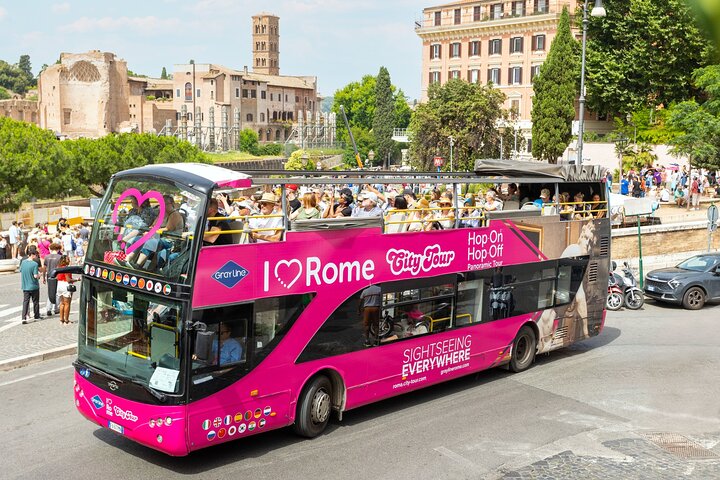
Rome Tour By Night and Pizza in high quality electric bicycle!
Descriptions come from the operator and are translated automatically.
- 3 hours
- Free cancellation up to 24h before
- 5 languages
- Mobile ticket
Highlights
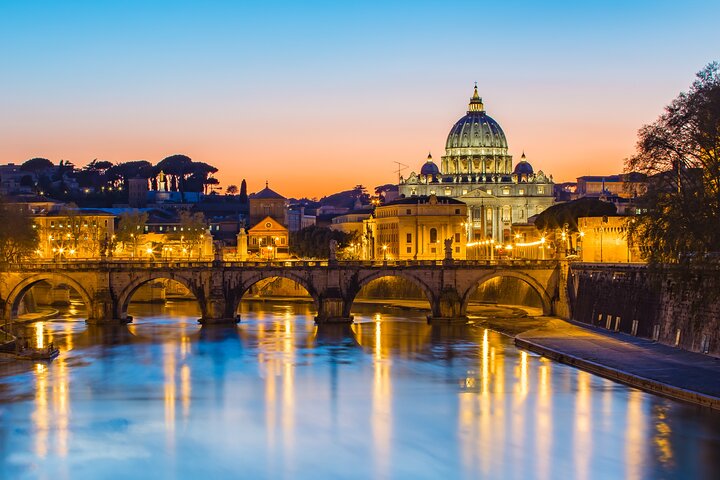
This is the perfect tour to let yourself be swept away by the magical and dreamy atmosphere of the Capitoline nights! The "Rome by night" tour will allow you to admire the Eternal City under the starlight! You will appreciate the sweet and romantic Rome of the warm summer evenings, illuminated by the moonlight, which gives the city that incomparable enchanted and fairy tale-like movie air!
Inclusions
What's included
- child seat up to 4 years
- helmet
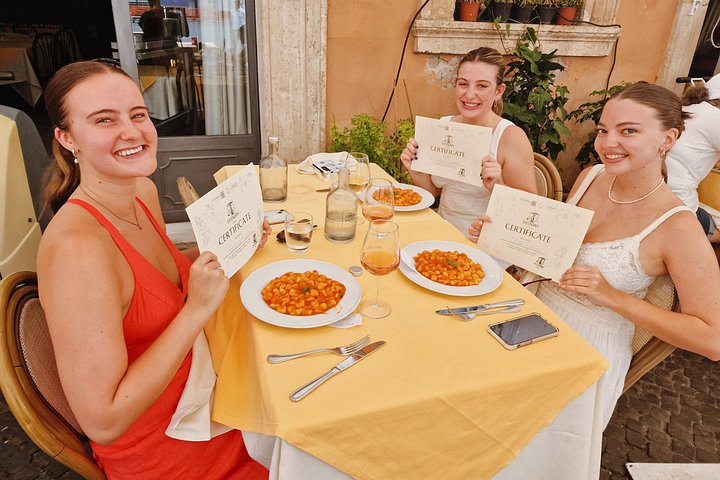
- Dinner includes Pizza and non-alcoholic drink
- padlock
- Use of bicycle
- city map
Itinerary
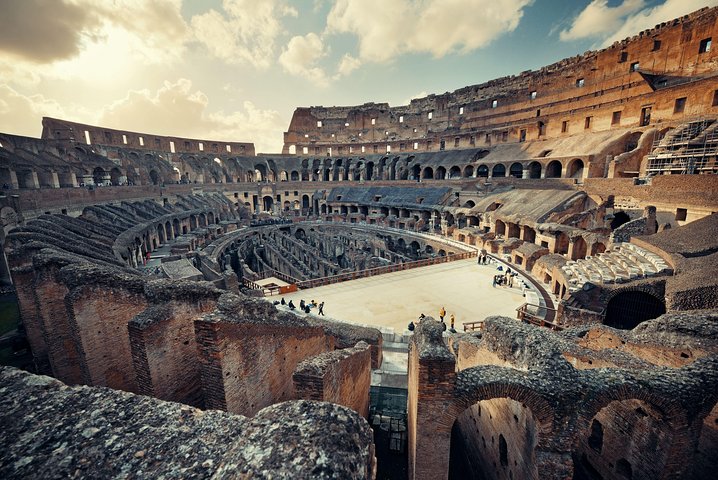
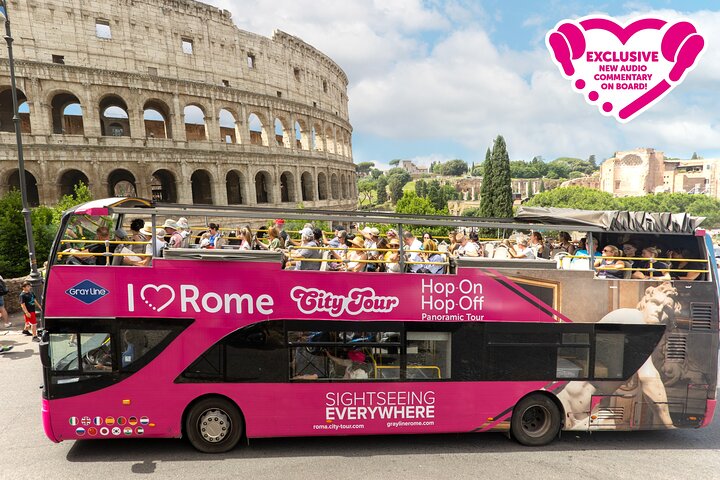
The Arch of Constantine is a triumphal arch with three arches (with a central passage flanked by two smaller lateral passages), located in Rome, a short distance from the Colosseum. Besides the remarkable historical importance as a monument, the Arch can be considered as a real museum of official Roman sculpture, extraordinary for its richness and importance [1]. The general dimensions of the elevation are 21 m high, 25.9 meters wide and 7.4 m deep.
The National Monument to Vittorio Emanuele II or (Mole del) Vittoriano, improperly called Altare della Patria, is an Italian national monumental complex located in Rome in Piazza Venezia, on the northern slope of the Campidoglio hill, designed by the architects Ettore Ferrari, Pio Piacentini and Giuseppe Sacconi. It was built starting in 1885, with the works that ended in 1935: however the official inauguration and the simultaneous opening to the public had already taken place in 1911, on the occasion of the events connected to the International Exhibition of Turin, during the celebrations of the 50th anniversary of the Unification of Italy. From an architectural point of view it was conceived as a modern forum, an agorà on three levels connected by stairways and dominated by a portico characterized by a colonnade.
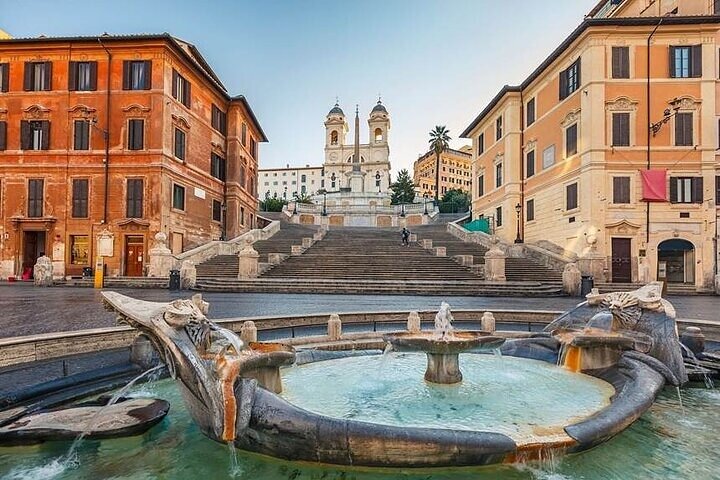
Piazza di Spagna (Piazza di Francia in the seventeenth century), with the stairway of Trinità dei Monti, is one of the most famous squares in Rome. It owes its name to the palace of Spain, seat of the embassy of the Iberian state to the Holy See.
Castel Sant'Angelo (or Mole Adrianorum or Castellum Crescentii in the 10th-12th century), also called Mausoleo di Adriano, is a monument of Rome, located on the right bank of the Tiber in front of the pons Aelius (present Ponte Sant'Angelo), not far from the Vatican, between the district of Borgo and that of Prati; it is connected to the Vatican State through the fortified "passetto" corridor. The castle was radically changed several times during the Middle Ages and the Renaissance. Owned by MiBAC, in December 2014 the Museum became part of the Lazio Museums.
Ponte Sant'Angelo, also known as pons Aelius (Elio bridge), pons Hadriani (Adriano's bridge) or Ponte di Castello [1], is a bridge that connects Piazza di Ponte S. Angelo to the Vatican, in Rome, in the districts Ponte and Borgo. It was built in Rome in 134 by the emperor Hadrian, on a project by a certain Demetrian, to connect his mausoleum to the left bank.
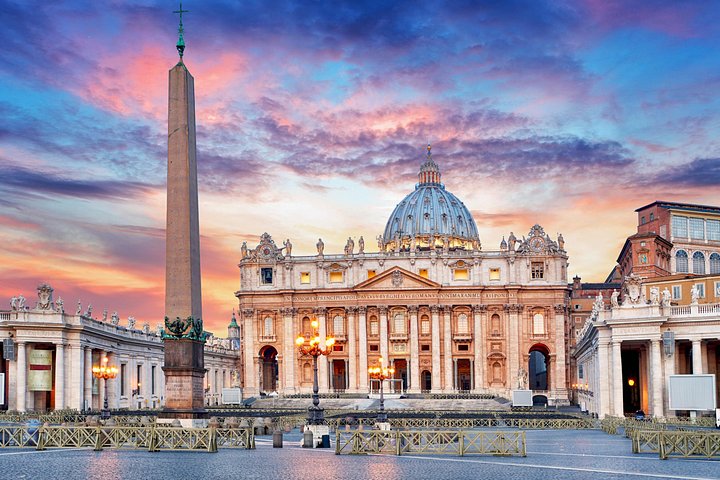
Piazza San Pietro is the square in front of the Basilica of San Pietro. Located on the edge of the historic center of Rome, at 19 m s.l.m., [1] the square is part of the Vatican City and is bounded by the border with the Italian State; through the Borgo district lying to the east, the main entrances are from via di Porta Angelica or via della Conciliazione. In the showy inclination of the "runners" Bernini renounces the sixteenth-century solution of leaving a straight order, inserting the triangular 'wedges' under the base and between capital and entablature, and instead uses an "oblique architecture". This contravenes what Vitruvio claimed about architecture as a mirror of reality
Piazza Navona is one of the most famous squares in Rome, built by the Pamphili family. Its shape is that of an ancient stadium: it was built in a monumental style at the behest of Pope Innocent X (Giovanni Battista Pamphili).
Campo de Fiori is a square in Rome, between Via dei Giubbonari and Piazza della Cancelleria, on the borders of the Parione and Regola districts. Until the fifteenth century the square did not exist as such, and in its place there was a flowery meadow with some cultivated gardens, hence the name. According to an unreliable tradition, the square should instead be named after Flora (a woman beloved by Pompey, who had built his theater nearby)
The Jewish ghetto of Rome is among the oldest ghettos in the world; in fact it arose 40 years after the one in Venice which is the first ever. The term derives from the name of the Venetian district, gheto, where there was a foundry (precisely gheto in Venetian), where the Jews of that city were forced to reside; another possible etymology traces the origin of this word to the Hebrew גט ghet (pl. גיטים ghittim or גיטין ghittin), which means separation
The Capitol, also called Monte Capitolino (Mons Capitolinus), is one of the seven hills on which Rome was founded. Its height is 48 m s.l.m. sull'Arx (current Basilica of S. Maria in Aracoeli) [without source], of 35.9 m s.l.m. in the Asylum (now Piazza del Campidoglio) and 44.7 m s.l.m. on the Capitolium proper (Palazzo Caffarelli). [1] The Campidoglio is also the representative office of the municipality of Rome.
The Via dei Fori Imperiali, formerly Via dell'Impero, is a modern street in Rome, which takes its current name from the remains of the ancient Imperial Forums, and connects the Colosseum to Piazza Venezia. The area occupied by the remains of ancient buildings was affected in the Middle Ages by the rise of dwellings, churches and monasteries, as well as green spaces used as pastures (under the name of "Campo Vaccino"), until the radical transformation desired, at the end of the 16th century century, by cardinal Michele Bonelli who built the neighborhood called "Alessandrino".
Cancellation
Free cancellation up to 24 hours before the experience starts, for a full refund.
Know before you go
- Pickup
- Everyone meets at the starting point; there is no pickup.
- Ticket type
- Mobile or paper ticket accepted
- Group size
- Up to 12 travellers
- Operated by
- Noleggio Ebike & Monopattini elettrici Roma
- Specialized infant seats are available
- Public transportation options are available nearby
- Suitable for all physical fitness levels
How it compares in Rome
- Its from-price is 59% below the median of the 8352 experiences we list in Rome.
- Its length is typical for the group.
- The operator lists free cancellation on it.
About Rome
Rome layers nearly three thousand years of history into one walkable city, from the Colosseum and Forum to Baroque piazzas and Vatican art.
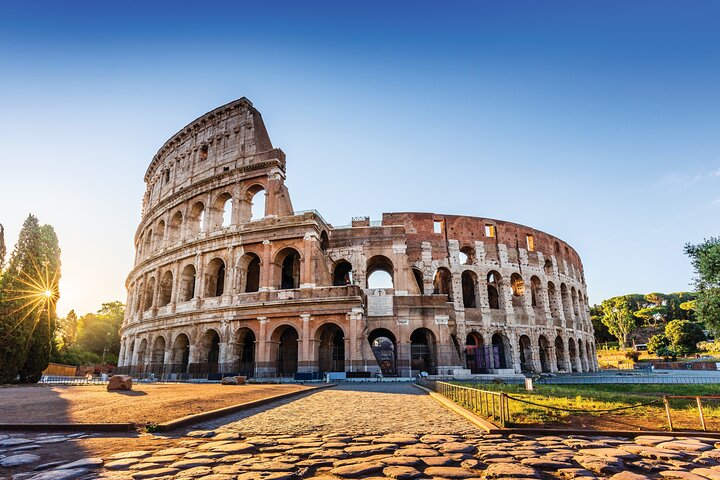
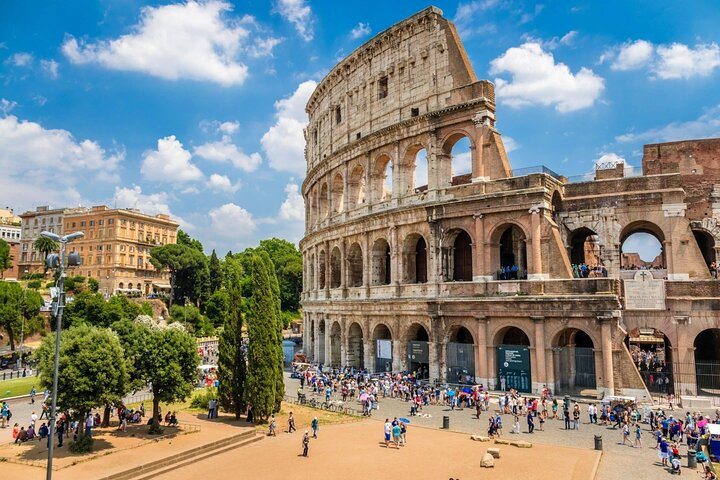
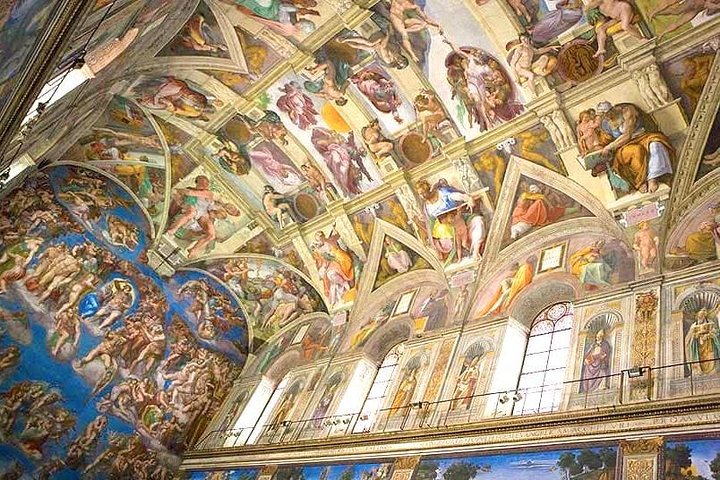
Ancient Rome is still in plain sight. The Colosseum, the Roman Forum and the Palatine Hill sit together at the city's heart, the Pantheon still stands with its open oculus, and fragments of temples and aqueducts turn up between apartment blocks. Across the Tiber, Vatican City holds St Peter's Basilica, the Vatican Museums and Michelangelo's Sistine Chapel ceiling.
Top-ranked sights in Rome: Colosseum, Vatican Museums, Sistine Chapel.
Special offers in Rome
Was/now prices come from the operator, never from us.
 Likely to sell out20% off
Similar experiences
 Free cancellationSkip the line
![Vatican Museums, Sistine Chapel and St. Peter's Basilica Tour]() Likely to sell outFree cancellation
![Skip-the-Line Vatican, Sistine Chapel & St. Peter's | Small Group]() Likely to sell outFree cancellation