Private Tour Water Wind Stone Museum Free schedule in Jeju island
- 7–8 hours
- Free cancellation up to 24h before
- Guided in English
- Private tour
Highlights
Sanyang Gotjawal Distributed widely across the eastern, western, and northern parts of Jeju Island, Gotjawal is a unique forest, the only one in the world where northern and southern limit plants coexist, boasting abundant groundwater & exceptional thermal insulation & moisturizing properties. Gotjawal During volcanic eruptions, highly viscous lava fragments into large and small boulders, creating a rugged terrain. This creates a vibrant, natural rock forest, where rocks, soil, trees, & vines intermingle to form a forest. People of all ages can enjoy a one-hour stroll through nature and experience its vibrant presence. The Su (water )Museum is a circular building resembling a camera lens, filled with water. Like a camera lens, the perforated ceiling looks out at the sky, and the ever-changing sky is reflected in the water. The Waterwindstone Museum tour is a product that requires advance reservation of a bus tour 3 months in advance. time : 1) 1:30pm ~1hour 2) 3:00pm~ 1hour
Inclusions
What's included
- 2026 scheduled internal tours will be held twice daily! 1) 1:30 PM - 2:30 PM 2) 3:00 PM - 4:00 PM
- Taxi style : 4person customer regular. 7person seater jumbo. 12person seater mini bus or big bus
- must be made at least three months in advance to take a bus tour inside Itami Jun's Shuifengseok.
- The Museum requires a deposit in advance, so the full reserved admission fee is non-refundable.
- Air conditioned vehicle./ Included parking fee and fuel/ All admission fees are included
- This product : Advance reservation is required 3 months in advance
- The taxi driver has a lot of foreign tour experience and speaks basic or a little English.
What's not
- South Korea's national holidays are closed( on May 5, June 6, Aug 15, Sep 24, 25, 26, & Oct9. Dec25
Itinerary
Sanyang Gotjawal Distributed widely across the eastern, western, and northern parts of Jeju Island, Gotjawal is a unique forest unique to the world, where northern and southern limit plants coexist thanks to its abundant groundwater content and excellent thermal insulation and moisturizing properties. Gotjawal During volcanic eruptions, highly viscous lava fragments into large and small boulders, creating a rugged terrain. This creates caves where nature thrives, or a forest where rocks, soil, trees, and vines intermingle.
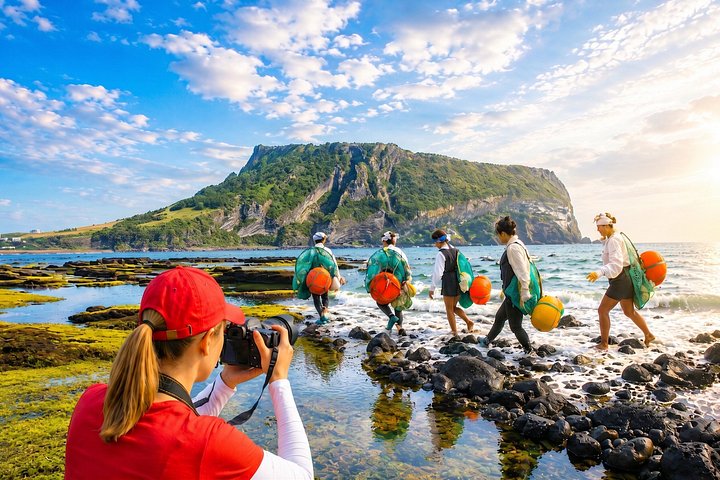
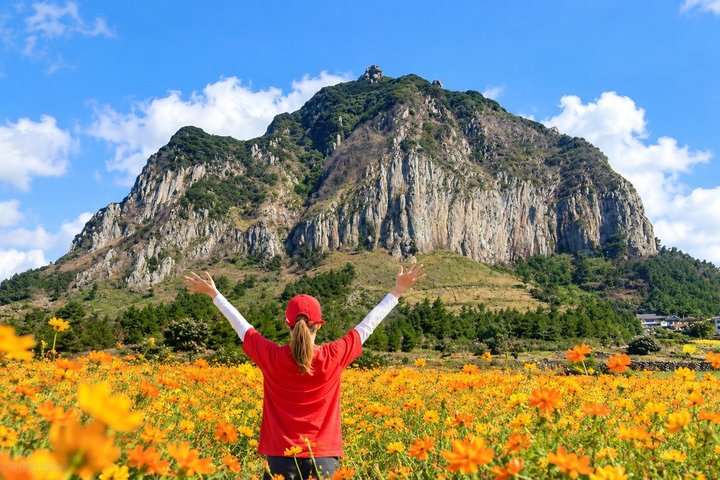
Yongmeori Coast is located at the foot of Sanbangsan Mountain and extends to the coast. It is called Yongmeori Coast because it resembles the head of a dragon going into the sea. Sandstone rocks that have been layered for tens of millions of years have been carved out by the waves to form a strange cliff. The oyster room, which is hollow like a secret room hit by waves, or the traces of waves kept by the rock wall, makes you feel the grandeur of facing a long history. The spectacular view of the 30-50m-long cliffs that curve like a meander has been filmed as a backdrop for commercials and movies.
The Su Museum is a circular building resembling a camera lens, filled with water. Like a camera lens, the perforated ceiling looks out at the sky, and the ever-changing sky is reflected in the water. The water becomes a canvas, capturing the sky in real time. As the sun moves, the reflection of the sky changes, allowing visitors to experience the changing light and the passage of time. The Pung Museum is a space where visitors can experience Jeju's wind through sound, exploring the works of Jun Itami, known as the "Architect of Wind." Within the simple wooden structure, visitors can hear the wind filtering through the gaps in the trees. Visitors can leisurely stroll along the long corridors or sit on the stones within and listen to the wind. The Stone Museum is a space themed around Jeju's basalt. Light streams in through slanted holes in the ceiling, leaving varying patterns and angles of light on the floor depending on the sun's position.
오설록 그린티 팜 O'sulloc green tea farm Opened in September 2001, O'sulloc Tea Museum is a museum with domestic and foreign tea-related items. It is a cultural space that harmonizes the traditions of the East and the West and the modern, as well as a nature-friendly resting space. It is a learning space where you can understand green tea and traditional Korean tea culture, where you can experience all things Sulloc tea. Taking pictures in the green tea field It is worth experiencing the feeling of green youth. How about making time for meditation for the whole family to relax and have a leisurely cup of tea? In the midst of busy life in the city We hope that this will be a time of recovery for the body and mind.
It is time to go back to the accommodation after finishing the sightseeing taxi tour. We will drop you off at the location you left in the morning or around your accommodation.
Cancellation
Free cancellation up to 24 hours before the experience starts, for a full refund.
Know before you go
- Pickup
- Pickup is included for everyone.
- Ticket type
- Mobile or paper ticket accepted
- Operated by
- Jeju K Tour(Jeju K Travel Agency Co., Ltd.)
- Wheelchair accessible
- Infants and small children can ride in a pram or stroller
- Service animals allowed
- Public transportation options are available nearby
- Infants are required to sit on an adult’s lap
- Not recommended for travelers with spinal injuries
- Not recommended for pregnant travelers
- Not recommended for travelers with poor cardiovascular health
How it compares in Jeju
- Its from-price is 58% above the median of the 144 day trips we list in Jeju.
- Its length is typical for the group.
- The operator lists free cancellation on it.
About Jeju
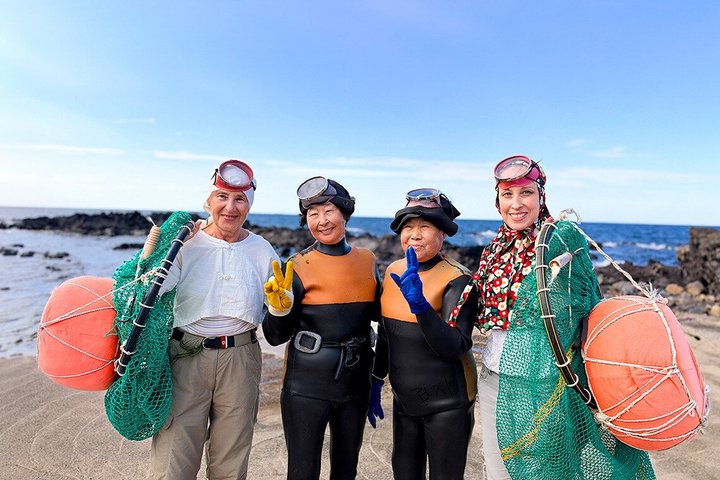
Jeju is South Korea's volcanic island, with Hallasan mountain, lava tubes, waterfalls, coastal cliffs, tangerine groves and the tradition of women divers.
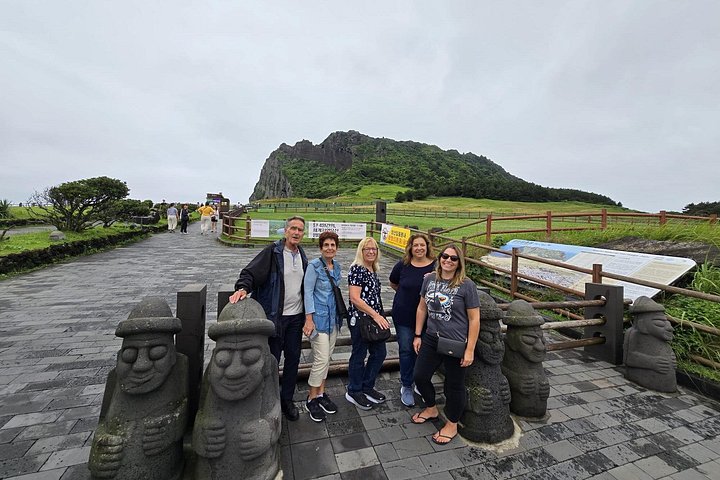
Jeju is a volcanic island off the south coast of South Korea, with Hallasan, the highest peak in the country at 1,947 metres, rising from its centre. The island's volcanic landscapes, including the crater of Seongsan Ilchulbong and the lava tubes of Geomunoreum, are a World Heritage site. Jeju City, on the north coast, is the main town, with Seogwipo on the southern side. Stone walls of black basalt crisscross the fields, and stone statues called dol hareubang stand as guardians.
Top-ranked sights in Jeju: Sangumburi Crater, Teddy Bear Museum, Jeju Folklore & Natural History Museum.