Private Tour of Catholic Rome
- 4 hours
- Free cancellation up to 24h before
- Guided in English
- Instant confirmation
Highlights
Visit some of the most Catholic churches of Rome traveling in a comfortable, air-conditioned Mercedes car or minivan. See St. Peter's, St. John Lateran, St. Mary Major, St. Paul Outside the Walls, the Church of Sant'Andrea delle Fratte, the Church of Sant'Andrea della Valle, the Church of Santa Maria in Cosmedin, the Church of Santa Maria del Popolo, the Church of Saint Eustace, the Church of Santa Croce in Gerusalemme, and more. Explore the magnificent Eternal City with this half-day tour, with round-trip transportation from and to your hotel or address by a private driver. Please note: A tour guide and tickets for attractions are not included in the price.
Inclusions
What's included
- Private tour with a driver
- Hotel pick-up and drop-off inside the Aurelian Walls
- Transport by air-conditioned Mercedes car or minivan
- Fuel surcharge
What's not
- Guide
- Food and drinks
- A tour guide and tickets for attractions are not included in the price
Itinerary
Undeniably the most elegant and cheerful of all Roman piazzas, Piazza Navona was built on the Stadium of Domitian in the 1st Century A.D. and still preserves its outline. The piazza remains a highly popular meeting place for Romans and tourists who drowsily soak up the sun and atmosphere in open air bars dotted around it. Used in ancient times for various athletic games and competitions, although it never witnessed the carnage offered in the Colosseum
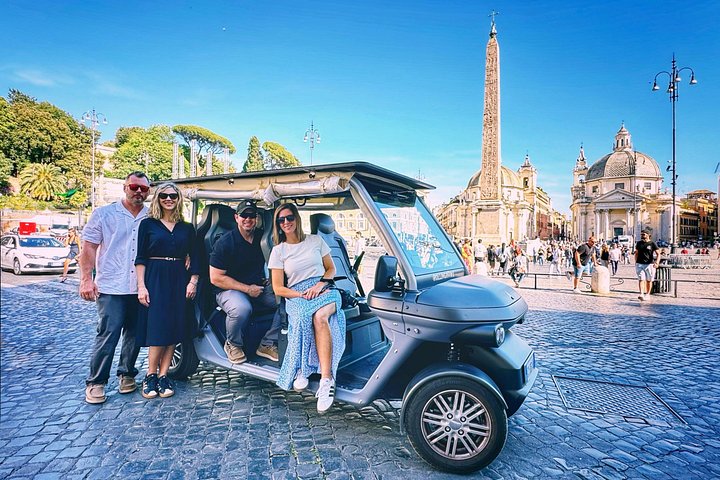
Piazza del Popolo (pictured above) is the urban antechamber among the most beautiful in the world, located at the top of a triangle of streets known as the Trident (via del Babuino - via del Corso - via di Ripetta), and is the most great access to the heart of Rome. The door, through which this "living room" is accessed, is the ancient Flaminia door of the Aurelian Walls, so called because from here came the ancient Via Flaminia that started from the Fontinalis gate of the Servian Walls and headed towards Ponte Milvio. It should be remembered that at the time of Augustus the urban stretch of the Via Flaminia was called "via Lata" (now Via del Corso), while the stretch from the Fontinalis gate to the current height was called "via Lata" in the Middle Ages. Piazza Colonna, while the remaining part, up to and beyond the Porta del Popolo, was the Via Flaminia (which today instead starts beyond the door).
The Basilica di Santa Maria Maggiore (Italian pronunciation: [ˈsanta maˈriːa madˈdʒoːre]; Basilica of Saint Mary Major, Latin: Basilica Sanctae Mariae Maioris),[2] or church of Santa Maria Maggiore, is a Papal major basilica and the largest Catholic Marian church in Rome, Italy. The basilica enshrines the venerated image of Salus Populi Romani, depicting the Blessed Virgin Mary as the help and protectress of the Roman people, which was granted a Canonical coronation by Pope Gregory XVI on 15 August 1838 accompanied by his Papal bull Cælestis Regina
The Cathedral of the Most Holy Savior and of Saints John the Baptist and the Evangelist in the Lateran (Italian: Santissimo Salvatore e Santi Giovanni Battista ed Evangelista in Laterano) – also known as the Papal Archbasilica of Saint John [in] Lateran, Saint John Lateran, or the Lateran Basilica – is the cathedral church of the Diocese of Rome in the city of Rome and serves as the seat of the Roman Pontiff. It is the oldest and highest ranking of the four papal major basilicas, holding the unique title of "archbasilica". It is the oldest public church in the city of Rome, and the oldest basilica of the Western world.[2] It houses the cathedra of the Roman bishop,[3][4] and has the title of ecumenical mother church of the Catholic faithful.
The Parish Basilica of Santa Maria del Popolo (Italian: Basilica Parrocchiale Santa Maria del Popolo) is a titular church and a minor basilica in Rome run by the Augustinian order. It stands on the north side of Piazza del Popolo, one of the most famous squares in the city. The church is hemmed in between the Pincian Hill and Porta del Popolo, one of the gates in the Aurelian Wall as well as the starting point of Via Flaminia, the most important route from the north. Its location made the basilica the first church for the majority of travellers entering the city. The church contains works by several famous artists, such as Raphael, Gian Lorenzo Bernini, Caravaggio, Alessandro Algardi, Pinturicchio, Andrea Bregno, Guillaume de Marcillat and Donato Bramante.
The Aventine Hill is the southernmost of Rome's seven hills. It has two distinct heights, one greater to the northwest and one lesser to the southeast, divided by a steep cleft that provides the base for an ancient roadway between the heights. During the Republican era, the two hills may have been recognized as a single entity.[1] The Augustan reforms of Rome's urban neighbourhoods (vici) recognised the ancient road between the two heights (the modern Viale Aventino) as a common boundary between the new Regio XIII, which absorbed Aventinus Maior, and the part of Regio XII known as Aventinus Minor.[2]
A church was initially planned when Donna Costanza Piccolomini d'Aragona, duchess of Amalfi and descendant of the family of Pope Pius II,[1] bequeathed[when?] her palace and the adjacent church of San Sebastiano in central Rome to the Theatine order for construction of a new church. Since Amalfi's patron was Saint Andrew, the church was planned in his honor. Work initially started around 1590 under the designs of Giacomo della Porta and Pier Paolo Olivieri, and under the patronage of Cardinal Gesualdo.
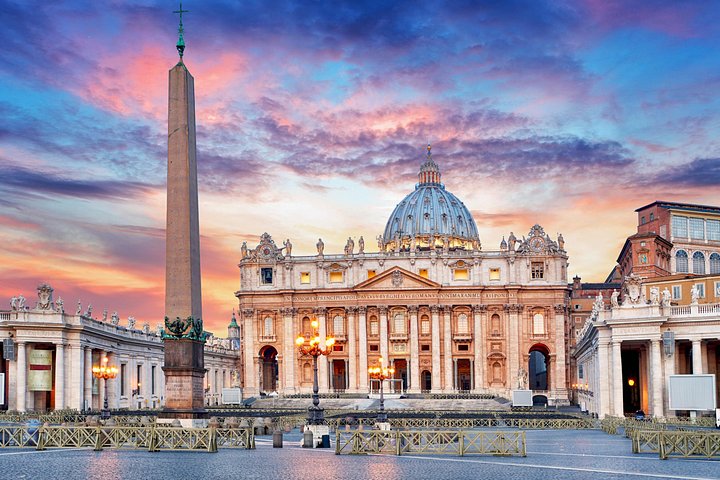
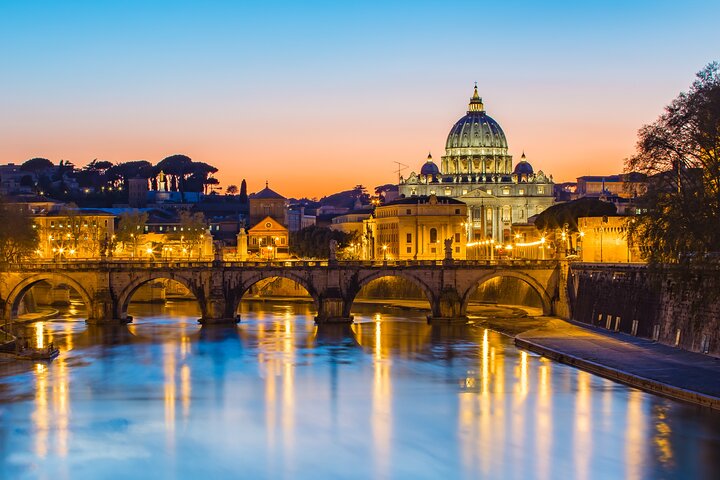
The Papal Basilica of St. Peter in the Vatican (Italian: Basilica Papale di San Pietro in Vaticano), or simply St. Peter's Basilica (Latin: Basilica Sancti Petri), is a church built in the Renaissance style located in Vatican City, the papal enclave which is within the city of Rome. Designed principally by Donato Bramante, Michelangelo, Carlo Maderno and Gian Lorenzo Bernini, St. Peter's is the most renowned work of Renaissance architecture[2] and the largest church in the world.[3] While it is neither the mother church of the Catholic Church nor the cathedral of the Diocese of Rome, St. Peter's is regarded as one of the holiest Catholic shrines. It has been described as "holding a unique position in the Christian world"[4] and as "the greatest of all churches of Christendom".
According to Byzantine historian Andrew Ekonomou, the church was founded in the 6th century during the Byzantine rule of the city and was placed in the centre of the Greek community in Rome. The Greek part of the city was referred to as the 'Schola Graeca'. The church was dedicated to the Virgin Mary, who was greatly adored as Theotokos (Mother of God) in contemporary Constantinople. The name 'Cosmedin' came from the Latinization of the Greek word κοσμίδιον (cosmidion) that derives from the Greek word κόσμος, which means pure or elegant. [1]
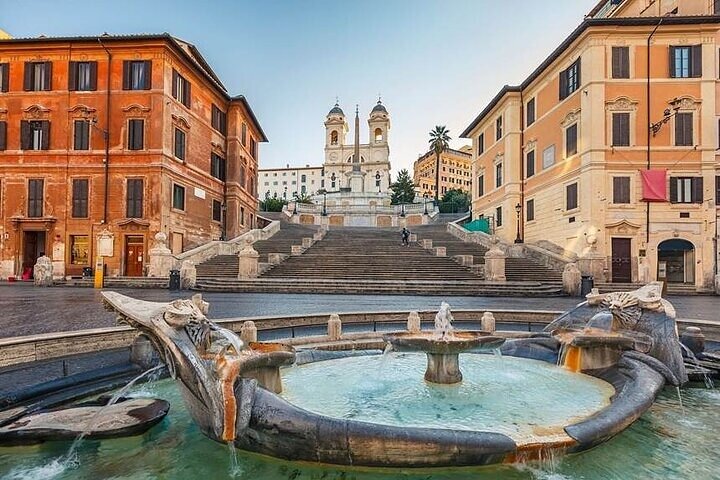
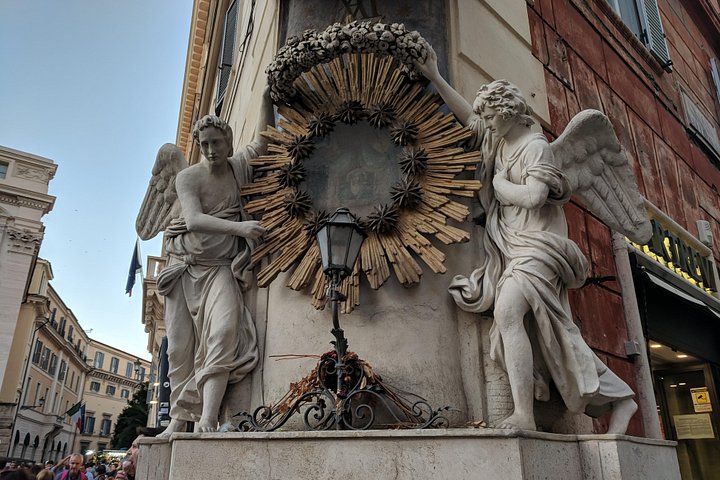
In the middle of the square is the famous Fontana della Barcaccia, dating to the beginning of the baroque period, sculpted by Pietro Bernini and his son, the more famous Gian Lorenzo Bernini. At the right corner of the Spanish Steps rises the house of the English poet John Keats, who lived there until his death in 1821: nowadays it has been changed into a museum dedicated to him and his friend Percy Bysshe Shelley, displaying books and memorabilia of English romanticism. At the left corner there is the Babington's tea room, founded in 1893. The side near Via Frattina is overlooked by the two façades (the main one, designed by Gian Lorenzo Bernini, and the side one created by Francesco Borromini) of the Palazzo di Propaganda Fide, a property of the Holy See. In front of it, actually in a lengthening of Piazza di Spagna named Piazza Mignanelli, rises the Column of the Immaculate Conception, erected in 1856, two years after the proclamation of the dogma.
Cancellation
Free cancellation up to 24 hours before the experience starts, for a full refund.
Know before you go
- Pickup
- Pickup is included for everyone.
- Ticket type
- Mobile or paper ticket accepted
- Operated by
- Cab Rome
- Infants and small children can ride in a pram or stroller
- Service animals allowed
- Public transportation options are available nearby
- Specialized infant seats are available
- Suitable for all physical fitness levels
- Children must be accompanied by an adult
- The duration of transfers are approximate, the exact duration will depend on the time of day and traffic conditions
How it compares in Rome
- Its from-price is 65% below the median of the 8352 experiences we list in Rome.
- It is longer than most of them.
- The operator lists free cancellation on it.
About Rome
Rome layers nearly three thousand years of history into one walkable city, from the Colosseum and Forum to Baroque piazzas and Vatican art.
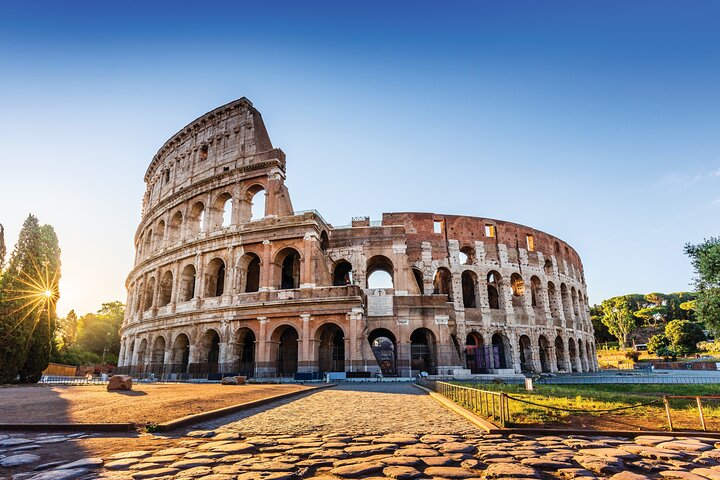
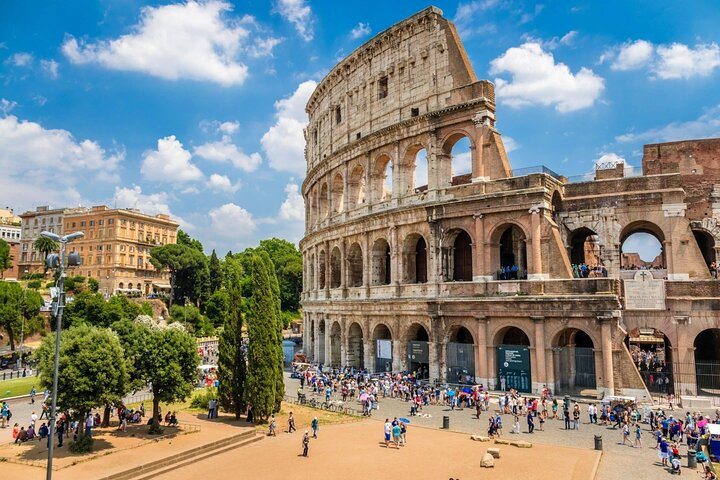
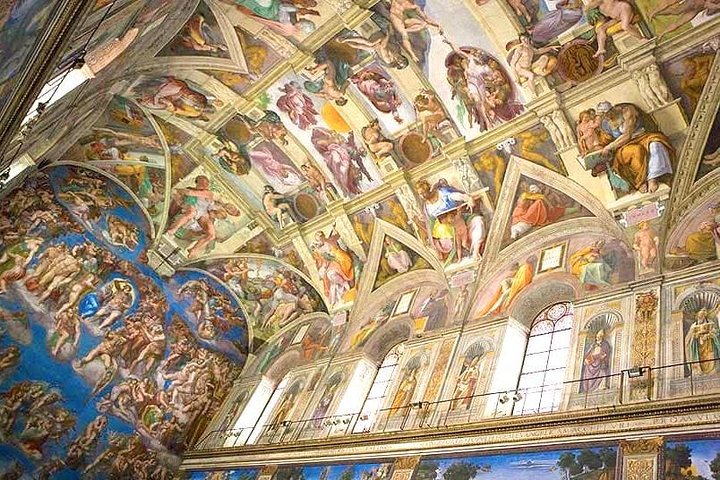
Ancient Rome is still in plain sight. The Colosseum, the Roman Forum and the Palatine Hill sit together at the city's heart, the Pantheon still stands with its open oculus, and fragments of temples and aqueducts turn up between apartment blocks. Across the Tiber, Vatican City holds St Peter's Basilica, the Vatican Museums and Michelangelo's Sistine Chapel ceiling.
Top-ranked sights in Rome: Colosseum, Vatican Museums, Sistine Chapel.
Special offers in Rome
Was/now prices come from the operator, never from us.
 Likely to sell out20% off
Similar experiences
 Free cancellationSkip the line
![Vatican Museums, Sistine Chapel and St. Peter's Basilica Tour]() Likely to sell outFree cancellation
![Skip-the-Line Vatican, Sistine Chapel & St. Peter's | Small Group]() Likely to sell outFree cancellation