Private Pompeii & Ravello Day Trip via Amalfi Coast (Tickets)
- 8–9 hours
- Free cancellation up to 24h before
- 2 languages
- Instant confirmation
Highlights
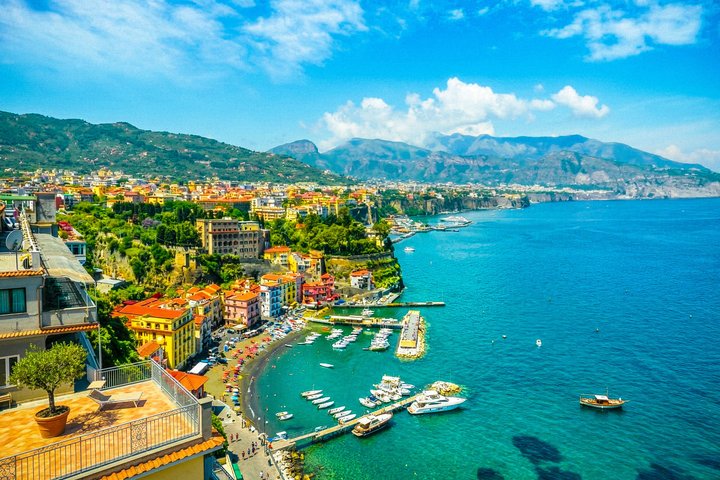
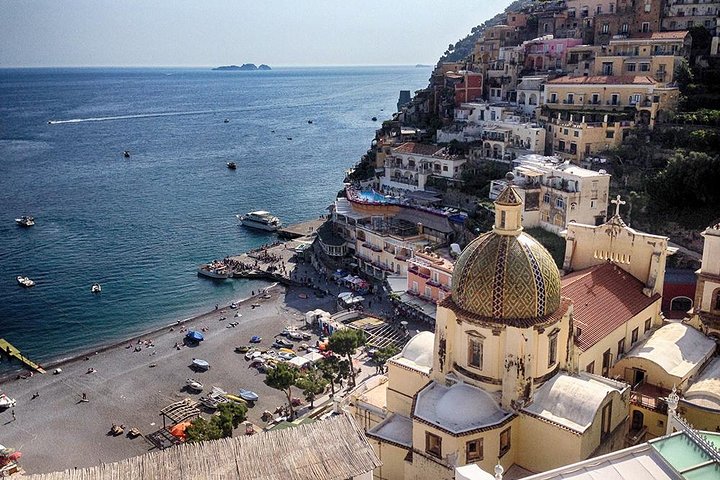
Experience ancient history and breathtaking coastal scenery on this private 9-hour excursion to Pompeii and Ravello via the Amalfi Coast. Enjoy skip-the-line Pompeii tickets and travel in comfort with your own private driver, allowing you to set the pace and focus on what matters: the views, the stories, and the experience. At Pompeii, explore independently or upgrade for a licensed guide—or choose the family-friendly option that brings the ruins to life for younger travelers with interactive activities. Afterward, follow the legendary Amalfi Coast Drive, stopping at panoramic viewpoints before arriving in Ravello, a refined hilltop town known for its villas, gardens, and spectacular terraces high above the sea. This private tour is flexible and can be tailored to your interests throughout the day. Set the pace and customize the day—enjoy scenic stops, longer time in the places you love, and a relaxed experience designed around your interests and travel style.
Inclusions
What's included
- Private Blue Badge Guide - only if you select the Guide in Pompeii option
- Private Transportation with English speaking driver
- Pompeii Express skip-the-line tickets - only if you select the Guide in Pompeii option
- Live commentary on board
What's not
- Admission fees at Pompeii - unless you select the Guide in Pompeii Option
- Private Guide for Pompeii - unless you select the Guide in Pompeii option
- Lunch
Itinerary
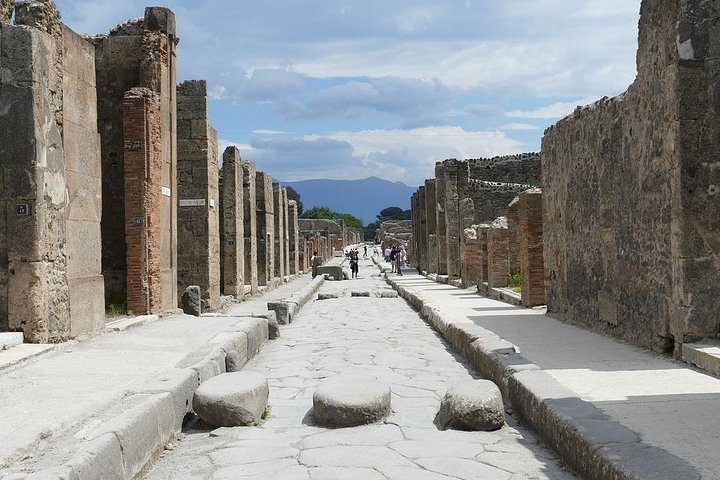
Pompeii is one of the most extraordinary archaeological sites in the world—a Roman city frozen in time by the eruption of Mount Vesuvius in AD 79. Walking its ancient streets, you’ll pass homes, shops, taverns, and bathhouses that still preserve frescoes, mosaics, and everyday details of life two thousand years ago. The scale surprises many visitors: Pompeii is vast, immersive, and richer in detail than most expect, with entire neighborhoods revealing how Romans lived, worked, and entertained themselves. You’ll see the outlines of elegant villas, modest dwellings, bakeries with intact ovens, and even ancient street crossings still marked by stepping stones. Visitors may explore independently or choose to tour with a licensed guide for added context, stories, and interpretation, making the ancient city feel remarkably alive.
Your visit begins at Porta Marina, one of Pompeii’s ancient city gates and the main entrance in Roman times. Passing through this gateway gives you a sense of arrival that would have been familiar to merchants, travelers, and citizens almost 2,000 years ago. From here, you can observe sections of the defensive walls that once enclosed the city, still standing with surprising solidity despite the eruption and centuries of weather. The gate and walls immediately set the tone for the rest of the site, offering a first glimpse of how carefully planned and fortified Pompeii was during the Roman era.
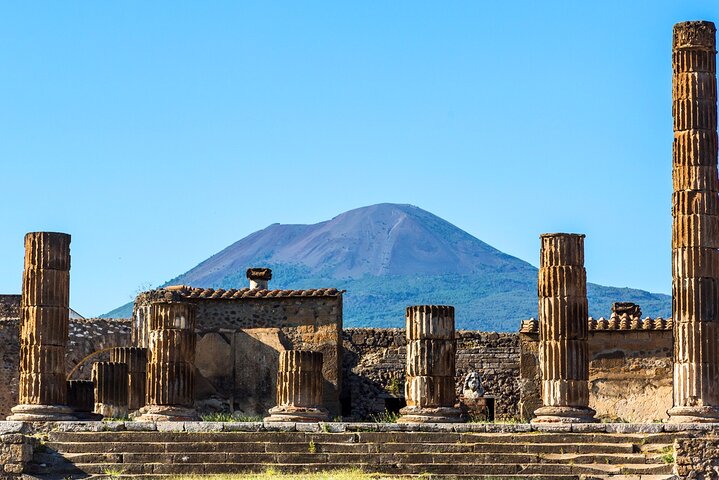
The Temple of Apollo is one of the oldest and most important religious buildings in Pompeii, dating back to the 6th century BC. Located near the Forum, it reflects the strong Greek influence on the city before Roman rule. Dedicated to Apollo, god of the sun, prophecy, and healing, the temple once served as a central place of worship. Visitors can still see the columned portico, altar, and elevated podium, which emphasized the temple’s sacred status. Statues of Apollo and Diana, whose originals are now housed in the Naples Archaeological Museum, once adorned the site. From the temple grounds, views extend toward Mount Vesuvius, highlighting the symbolic link between religion, nature, and daily life in ancient Pompeii. The Temple of Apollo offers insight into Pompeii’s early history and the blend of Greek, Etruscan, and Roman traditions that shaped the city.
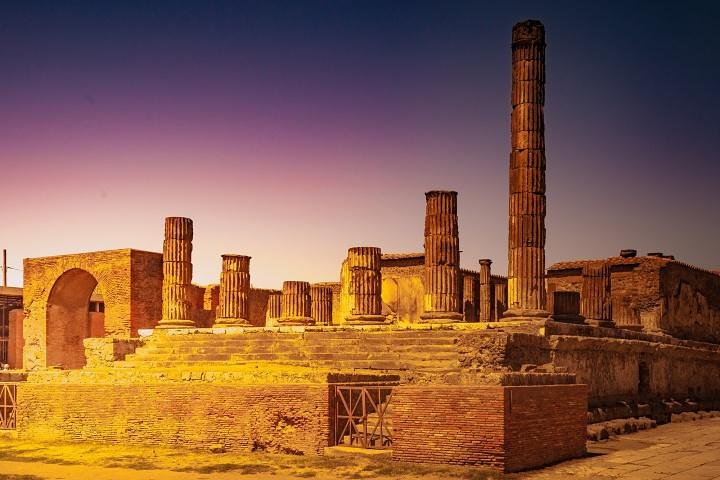
The Forum was the civic heart of Pompeii—the open plaza where politics, religion, markets, and public life came together. Standing in the middle of the square today, you can easily imagine the bustle of ancient citizens moving between temples, administrative buildings, and statues that once honored local elites and Roman emperors. The surrounding colonnades frame a dramatic view of Mount Vesuvius, making it clear how central the volcano was to Pompeii’s landscape long before its eruption changed everything. Even without roofs or frescoes, the Forum gives visitors one of the most powerful impressions of daily life and community in the ancient city.
Just off the Forum lies the Macellum, Pompeii’s principal food market and one of the best-preserved examples of a Roman commercial space. Walking through its porticoes and stalls, visitors can picture merchants selling fish, meat, fruit, and imported delicacies to the city’s residents. Marble counters, storage rooms, and basins still hint at how organized food distribution was in ancient Pompeii. At the rear of the complex, a small shrine once honored the imperial family—showing how commerce and politics intertwined in Roman society. The Macellum offers a vivid sense of everyday life, where shopping and social interaction went hand in hand two thousand years ago.
Among the most elegant bath complexes in Pompeii, the Forum Baths give visitors a close look at how Romans relaxed, socialized, and kept clean. The sequence of changing rooms, warm rooms, and hot plunge pools is still easy to follow, and the vaulted ceilings and stucco decorations have survived remarkably well. Heated floors and clever ventilation systems reveal the advanced engineering behind Roman bathing culture. Step inside and it becomes surprisingly easy to imagine the daily rhythm of Pompeian life—meeting friends, catching up on gossip, or unwinding after work in a ritual shared by all social classes.
One of the grandest private residences in Pompeii, the House of the Faun feels more like a palace than a home. Covering an entire city block, it dazzles visitors with spacious courtyards, columned gardens, and refined details that spoke to immense wealth. The famous bronze “Dancing Faun” once greeted guests at the entrance, while rooms throughout were decorated with high-quality mosaics—including the celebrated “Alexander Mosaic.” Walking through its vast layout offers a glimpse into the luxury and cultural sophistication enjoyed by Pompeii’s elite families.
Beautifully restored and recently reopened to visitors, the House of the Vettii offers one of the most vivid windows into everyday life for wealthy Pompeians. Owned by two prosperous merchants, the residence is filled with colorful frescoes—some playful, some mythological—that decorated nearly every wall. Its elegant layout includes a central garden with statues and fountains, framed by columned walkways and private rooms. As you stroll through the house, you can imagine elegant banquets, business dealings, and family life unfolding beneath these still-brilliant paintings preserved by the eruption of 79 AD.
This large residential and commercial block reveals a lively slice of Pompeian daily life. Named after a tender fresco of a couple dining together, the insula combined elegant homes with bakeries, shops, and workshops. Excavations have uncovered vibrant wall paintings, ovens, counters, and building materials left mid-renovation—evidence that life here was busy and bustling right up until the eruption. Today, visitors explore the site from elevated walkways and ramps that hover above the ruins, offering a privileged, uninterrupted view into rooms, courtyards, and workspaces without disturbing the archaeological layers. From up here, you really see Pompeii not just as a city of grand villas but as a thriving, working community of artisans, merchants, and families.
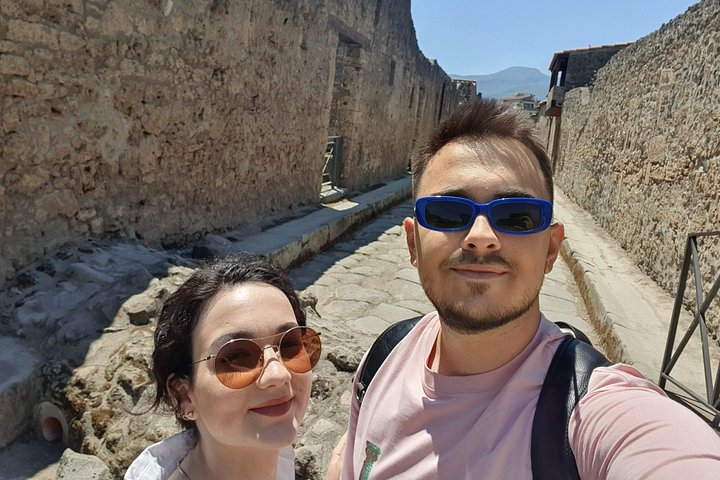
Walking along Via dell’Abbondanza is one of the most vivid ways to imagine Pompeii as a living city. This long central street once hosted shops, bakeries, bars, and workshops, all serving the crowds moving between the Forum and the amphitheater. You’ll notice stepping stones, water fountains, and wide sidewalks that reveal how well-organized and pedestrian-friendly Pompeii was nearly 2,000 years ago. Many building facades still show faded commercial signs and election posters—tiny snapshots of the city’s social and political life. Elevated walkways and ramps along the route allow visitors to observe the architecture, storefronts, and street layout from above, making it easier to understand how dense and dynamic this urban corridor once was. Walking here, you are truly in the heart of ancient Pompeii.
The Teatro Grande is one of Pompeii’s most impressive public buildings, an open-air theatre carved directly into the natural slope of the hill. Here, thousands of spectators once gathered for comedies, dramas, and musical performances in a remarkably well-designed acoustic space that still works today. As you take your seat on the stone cavea, you can easily picture the bustling atmosphere of Roman entertainment, from elite patrons in the best rows to everyday citizens filling the upper tiers. Modern elevated walkways allow visitors to access panoramic viewpoints above the stage, offering a clear sense of scale and allowing you to appreciate the elegant semicircular layout. Moments like this make Pompeii feel suddenly alive, as if the curtain might rise again at any moment.
The Antiquarium serves as Pompeii’s main museum space, offering valuable context for what you see throughout the archaeological park. Inside, thoughtfully curated exhibits display everyday objects, fresco fragments, luxury items, and the dramatic plaster casts that capture the final moments of the eruption. These artifacts tell the story of a sophisticated Roman city—its commerce, religion, cuisine, and social life—before it was abruptly frozen in time by Vesuvius. Clear signage and multimedia elements guide visitors through the city’s rise, destruction, and rediscovery, making it an ideal starting or ending point for your visit. Elevated viewing areas and wide pathways offer comfortable circulation, allowing you to examine pieces up close without feeling rushed.
Cancellation
Free cancellation up to 24 hours before the experience starts, for a full refund.
Reviews
4.9
- 572
- 41
- 33
- 20
- 10
Ratings come from 76 reviews collected by our booking partner. They are travellers' own words, in the order they were written — never reordered to flatter the experience.
Know before you go
- Pickup
- Pickup is included for everyone.
- Ticket type
- Mobile or paper ticket accepted
- Operated by
- Leisure Italy
- Service animals allowed
- Public transportation options are available nearby
- Specialized infant seats are available
- Not recommended for travelers with spinal injuries
- Not recommended for pregnant travelers
- Not recommended for travelers with poor cardiovascular health
- Travelers should have at least a moderate level of physical fitness
- If any group member does not will to walk in Pompeii there are some cafés and gift shops right in front of the ticket office
How it compares in Pompeii
- Its from-price is 27% above the median of the 120 day trips we list in Pompeii.
- Its length is typical for the group.
- By number of reviews it ranks 20 of 120.
- The operator lists free cancellation on it.
About Pompeii
Pompeii is a Roman town near Naples frozen in ash when Mount Vesuvius erupted in AD 79, with streets, villas and frescoes preserved beneath the volcano.
Pompeii was a thriving Roman town when Vesuvius buried it under ash and pumice in AD 79. Excavation, begun in the eighteenth century, has uncovered paved streets with stepping stones, shops, bakeries, bathhouses and the forum. The amphitheatre, among the oldest Roman ones to survive, and the grand House of the Faun show the range of life, and plaster casts of the dead record the final moments of some residents.
Top-ranked sights in Pompeii: Pompeii Archaeological Site, Stabian Baths (Terme Stabiane), Via dell’Abbondanza.
Special offers in Pompeii
Was/now prices come from the operator, never from us.