Nikko 6hr Private Tour with Government-Licensed Guide & Vehicle
- 6 hours
- Free cancellation up to 24h before
- 2 languages
- Instant confirmation
Highlights
This private tour is the ideal way to discover Nikko's UNESCO World Heritage treasures and breathtaking mountain scenery, traveling in a private vehicle with a government-licensed local guide. Nestled in the mountains of Tochigi Prefecture, Nikko has been a sacred center of Shinto and Buddhist worship for over 1,200 years. Marvel at the lavishly carved and gilded Tosho-gu Shrine, the mausoleum of shogun Tokugawa Ieyasu, and wander among towering ancient cedars at Rinno-ji Temple and Futarasan Shrine. Pause at the iconic vermilion Shinkyo Bridge before driving up the dramatic hairpin curves of the Irohazaka road, where the 97-meter Kegon Falls plunges beside the serene, mountain-ringed Lake Chuzenji. With a private vehicle and dedicated guide, you can comfortably reach scattered sights that are hard to reach by public transport, and customize the day to your interests and pace. This flexible Nikko tour offers an unforgettable journey through one of Japan's most beautiful regions.
Inclusions
What's included
- Private vehicle
- Customizable Tour of your choice of 3-4 sites from 'Itinerary' list'
- Licensed Local English Speaking Guide
What's not
- You cannot combine multiple tour groups.
- Guide Entry fees are only covered for sights listed under Itinerary
- Entrance fees, Lunch, and Other personal expenses
Itinerary
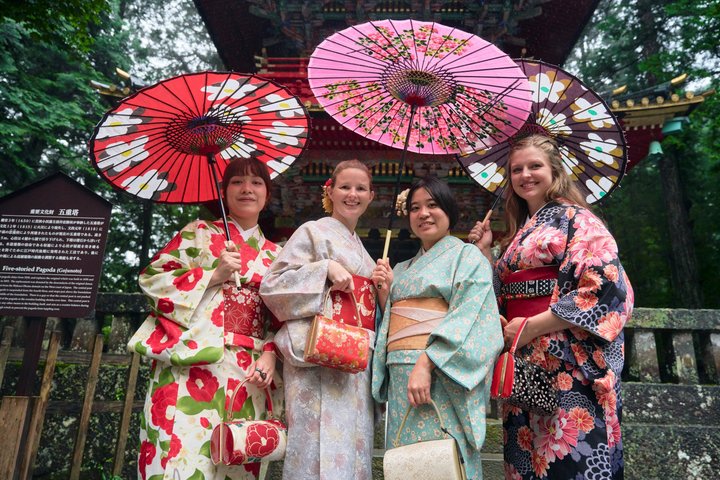
Marvel at Nikko Tosho-gu, the lavishly decorated shrine and mausoleum of Tokugawa Ieyasu, founder of the Edo shogunate. Your government-licensed guide reveals the symbolism behind its gilded carvings, the famous Three Wise Monkeys, the Sleeping Cat, and the soaring five-story pagoda set among towering ancient cedars.
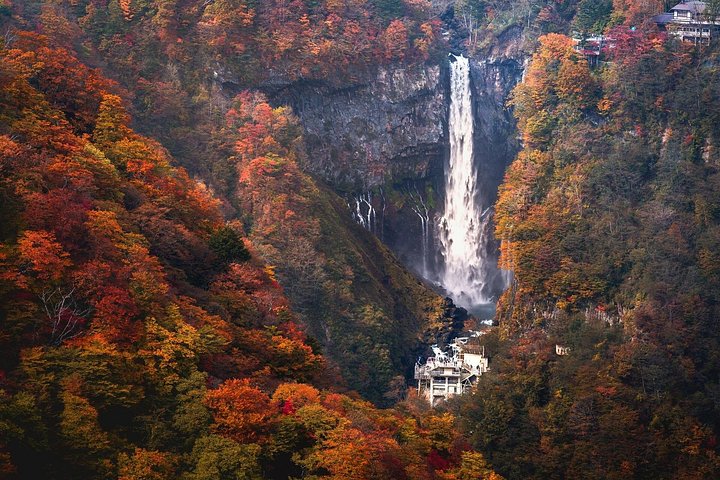
Drive up the dramatic Irohazaka winding road to Kegon Falls, ranked among Japan's three most famous waterfalls, where the outflow of Lake Chuzenji plunges 97 meters down a sheer cliff. It is especially spectacular in autumn when the surrounding maples turn crimson.
Pause beside Lake Chuzenji, a tranquil crater lake formed by an ancient eruption of Mount Nantai and lying around 1,200 meters above sea level. Ringed by forested peaks, it offers crisp mountain air and beautiful reflections, especially vivid during the autumn foliage season.
Stop at Akechidaira Plateau, a scenic lookout reached via the Akechidaira Ropeway, offering a sweeping panorama of Kegon Falls and Lake Chuzenji framed by the cone of Mount Nantai. It is one of the finest viewpoints in the Nikko highlands and is breathtaking during autumn.
“Senjogara” translates to battlefield and here it refers to a mythical battlefield where legends say that the gods of Mount Nantai and Mount Akagi fought once to claim the neighboring lakes as their own. Taking on the incarnation of a serpent and centipede respectively, they fought and intertwined repeatedly, creating this marshland. The battlefield has now changed to a battle of charms as various plants and fauna reside in the vast field, competing to charm the many visitors.
Visit Rinno-ji, Nikko's most important Buddhist temple, founded in the 8th century by the monk Shodo. Admire the Sanbutsudo, its grand main hall enshrining three giant gold-lacquered Buddhist statues, and stroll the serene Shoyoen landscape garden with your guide.
Explore Nikko Futarasan Shrine, dedicated to the deities of the area's three sacred mountains and founded more than 1,200 years ago. Wander its tranquil, cedar-shaded grounds beside Tosho-gu and discover sacred springs and ancient bronze lanterns with your guide.
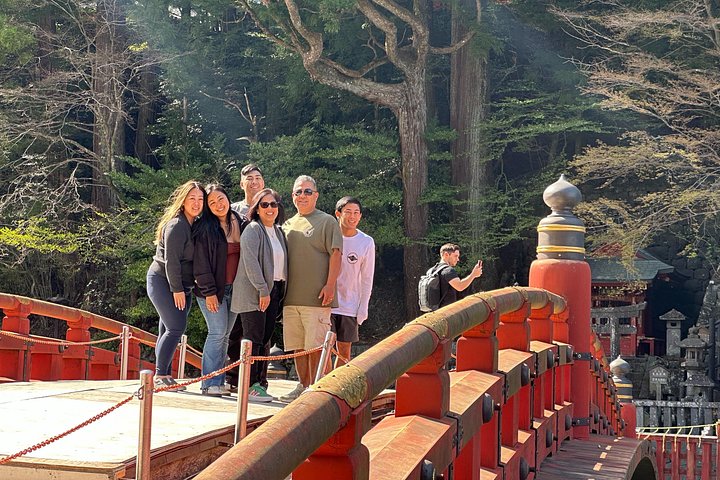
Stop at the sacred Shinkyo Bridge, ranked among Japan's three finest bridges, whose vivid vermilion arch spans the rushing Daiya River at the entrance to Nikko's shrines and temples. It is a classic photo spot framed by forested mountains.
Visit Taiyuin, the ornate mausoleum of Tokugawa Iemitsu, the third shogun and grandson of Ieyasu. Tucked into a quiet cedar grove, its gilded gates and richly carved, dragon-adorned halls are considered among the finest examples of Edo-period craftsmanship.
Tamozawa Imperial Villa (田母沢御用邸, Tamozawa Goyōtei) blends traditional Edo and early modern Meiji Period architecture throughout its 106 rooms. The villa was erected in Nikko in 1899, using parts of a residence that originally stood in Tokyo. Before being moved to Nikko, the building served initially as the Tokyo residence of a branch of the Tokugawa family and was later temporarily used as the Imperial Palace. In Nikko, it was enlarged into a summer residence and retreat for the Imperial Family, but suffered neglect after World War II. In the year 2000, the villa was opened to the public after extensive renovation works.
Kanmangafuchi Abyss (憾満ヶ淵) was formed by an eruption of nearby Mount Nantai. This gorge near central Nikko is only a few hundred meters long and can be enjoyed from a pleasant riverside walking trail. Kanmangafuchi is also known for its row of about 70 stone statues of Jizo, a Bodhisattva who cares for the deceased. This particular group of Jizo statues is alternately called "Bake Jizo" (Ghost Jizo), "Narabi Jizo" (Jizo in a line) or "Hyaku Jizo" (100 Jizo). The statues look out over the river and across to the Nikko Botanical Garden, but the botanical garden cannot be entered from the abyss.
Futarasan Shrine (二荒山神社, Futarasan Jinja) stands next to Toshogu in central Nikko. Much older than its more lavish neighbor, Futarasan Shrine was founded in 782 by Shodo Shonin, the Buddhist monk who introduced Buddhism to Nikko and who also founded nearby Rinnoji Temple. Futarasan Shrine is dedicated to the deities of Nikko's three most sacred mountains: Mount Nantai, Mount Nyoho and Mount Taro. Futarasan is an alternate name of Mount Nantai, the most prominent of the three mountains. The shrine grounds are mostly free to enter except for a small paid area to the left of the offering hall (haiden). The paid area features a small forested garden with a couple more halls, a spring, old sacred trees and closer views onto the main hall (honden) that stands behind the offering hall. Located one kilometer from the shrine grounds, the Shinkyo Bridge also belongs to Futarasan Shrine.
Cancellation
Free cancellation up to 24 hours before the experience starts, for a full refund.
Know before you go
- Pickup
- Pickup is included for everyone.
- Ticket type
- Mobile or paper ticket accepted
- Operated by
- Japan Guide Agency
- Wheelchair accessible
- Infants and small children can ride in a pram or stroller
- Service animals allowed
- Public transportation options are available nearby
- Transportation options are wheelchair accessible
- All areas and surfaces are wheelchair accessible
- Suitable for all physical fitness levels
How it compares in Nikko
- Its from-price is 130% above the median of the 44 experiences we list in Nikko.
- Its length is typical for the group.
- The operator lists free cancellation on it.
About Nikko
Nikko is a mountain town north of Tokyo, home to the lavishly decorated Toshogu Shrine, the red Shinkyo Bridge, Lake Chuzenji and the Kegon waterfall.
Nikko lies in the mountains of Tochigi Prefecture, in a national park of forests, lakes and waterfalls. Its shrines and temples are a World Heritage site, led by Toshogu, the mausoleum of the shogun Tokugawa Ieyasu, whose buildings are covered in gold leaf and carvings, among them the three wise monkeys and the sleeping cat. The red-lacquered Shinkyo Bridge crosses the Daiya River at the town's edge.
Top-ranked sights in Nikko: Nikko National Park, Toshogu Shrine (Nikko Toshogu).
Special offers in Nikko
Was/now prices come from the operator, never from us.

Similar experiences
 Likely to sell outFree cancellation
![Tokyo Narita Airport (NRT) to Tokyo hotel or address - Arrival Private Transfer]() Free cancellation