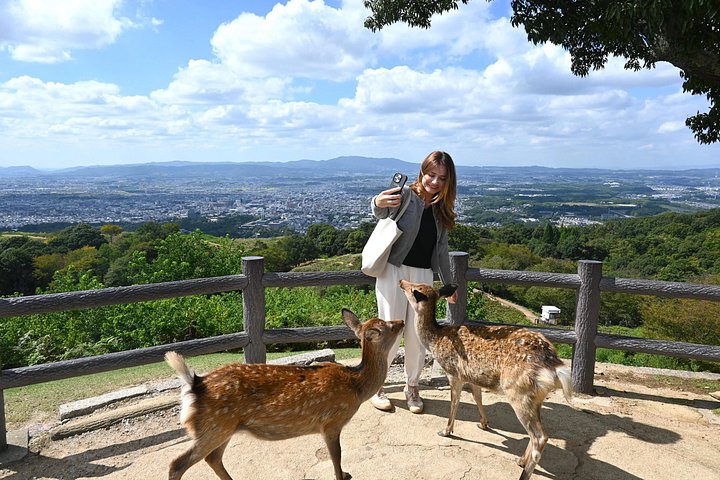
Nara Customized Private Tour in 1 Day with Licensed Guide
- 6 hours
- Free cancellation up to 24h before
- 2 languages
- Instant confirmation
Highlights
Explore Nara with a government-licensed and experienced multilingual guide! Your guide will help you efficiently enjoy a half-day walking tour of Nara and introduce both modern and traditional sides of this dynamic and ancient Japanese city. Nara's proximity to Kyoto and Osaka, and its rich collection of traditional sites, make it an ideal destination for a day trip from either of its larger neighbors. Your private guide can help you efficiently enjoy a half-day walking tour of this ancient Japanese city. Note*1: Please select your must-see spots from a list in the tour information to create your customized itinerary. Note*2: The National Government Licensed Guide Interpreter certification is issued by the Japanese government requires a good knowledge and understanding of Japanese culture and history.
Inclusions
What's included
- Meet up with guide on foot within designated area of Nara
- Licensed Local English Speaking Guide
- Customizable Tour of your choice of 3-4 sites from 'What to expect' list
What's not
- Transportation fees, Entrance fees, Lunch, and Other personal expenses
- Private Vehicle
- You cannot combine multiple tour groups.
- Guide Entry fees are only covered for sights listed under What to Expect.
Itinerary
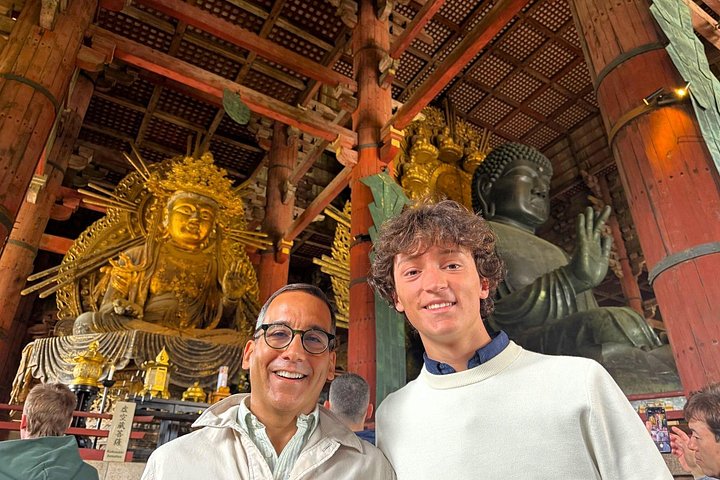
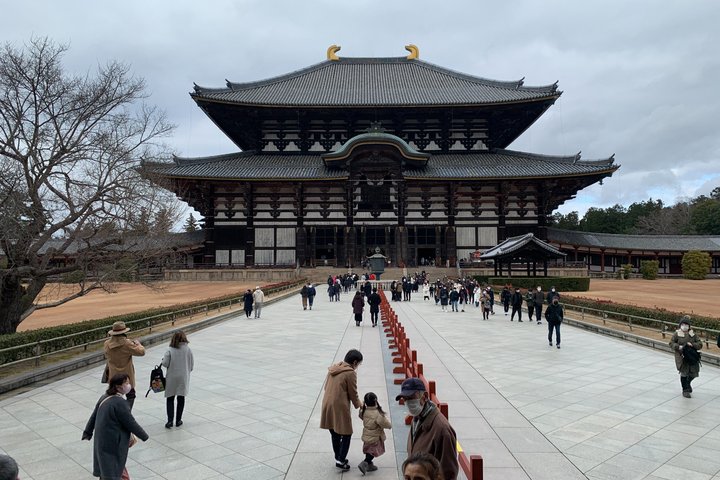
Todaiji (東大寺, Tōdaiji, "Great Eastern Temple") is one of Japan's most famous and historically significant temples and a landmark of Nara. The temple was constructed in 752 as the head temple of all provincial Buddhist temples of Japan and grew so powerful that the capital was moved from Nara to Nagaoka in 784 in order to lower the temple's influence on government affairs. Until recently, Todaiji's main hall, the Daibutsuden (Big Buddha Hall), held the record as the world's largest wooden building, despite the fact that the present reconstruction of 1692 is only two thirds of the original temple hall's size. The massive building houses one of Japan's largest bronze statues of Buddha (Daibutsu). The 15 meters tall, seated Buddha represents Vairocana and is flanked by two Bodhisattvas.
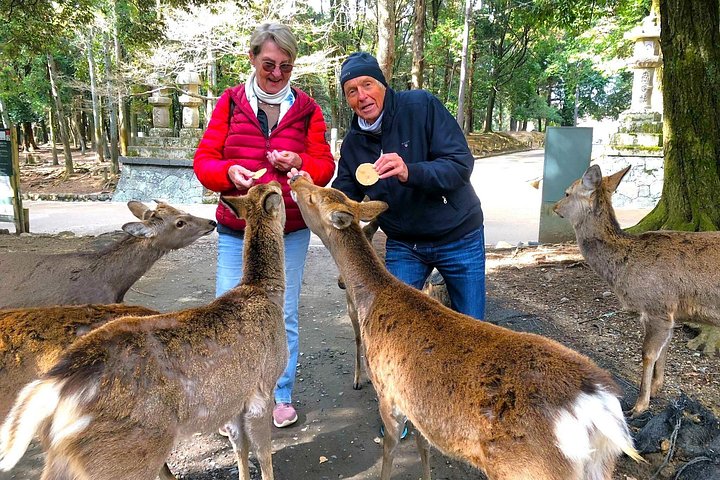
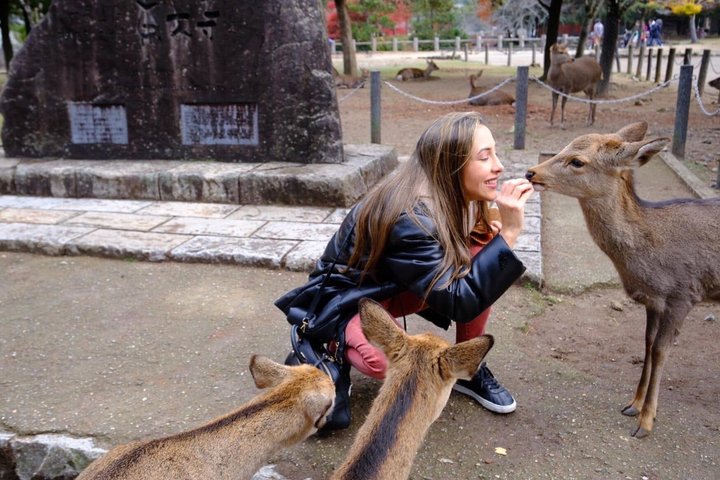
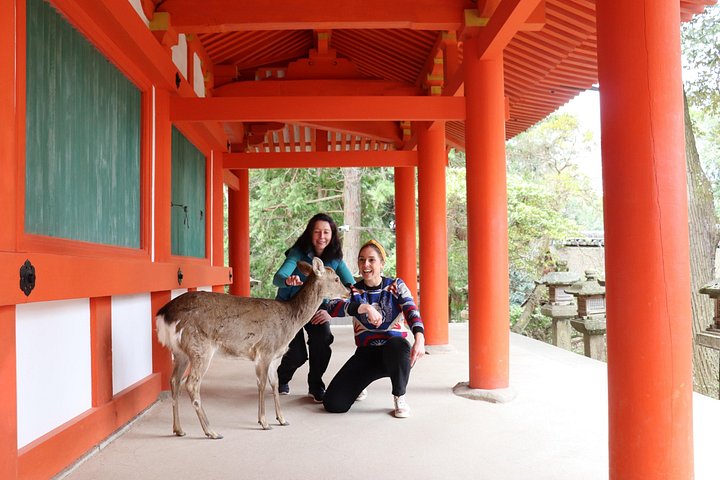
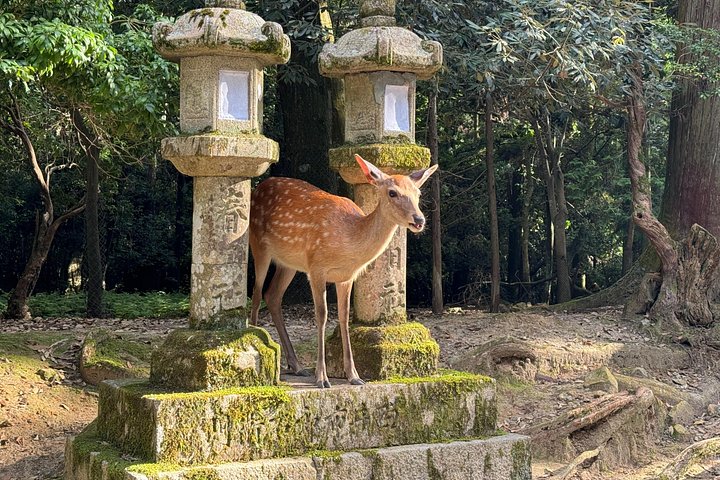
Nara Park (奈良公園, Nara Kōen) is a large park in central Nara. Established in 1880, it is the location of many of Nara's main attractions including Todaiji, Kasuga Taisha, Kofukuji and the Nara National Museum. It is also home to hundreds of freely roaming deer.
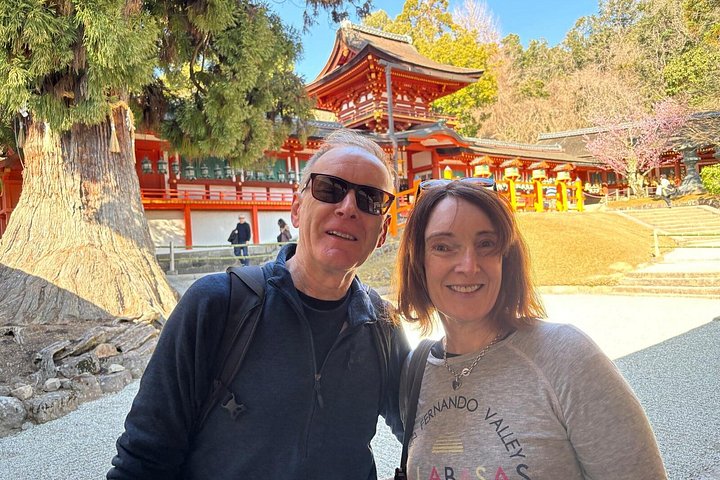
Kasuga Taisha (春日大社) is Nara's most celebrated shrine. It was established at the same time as the capital and is dedicated to the deity responsible for the protection of the city. Kasuga Taisha was also the tutelary shrine of the Fujiwara, Japan's most powerful family clan during most of the Nara and Heian Periods. Like the Ise Shrines, Kasuga Taisha had been periodically rebuilt every 20 years for many centuries. In the case of Kasuga Taisha, however, the custom was discontinued at the end of the Edo Period. Beyond the shrine's offering hall, which can be visited free of charge, there is a paid inner area which provides a closer view of the shrine's inner buildings. Furthest in is the main sanctuary, containing multiple shrine buildings that display the distinctive Kasuga style of shrine architecture, characterized by a sloping roof extending over the front of the building.
Mount Wakakusayama (若草山) is the grass covered mountain behind Nara Park, located between Todaiji Temple and Kasuga Shrine. The mountain is about 350 meters tall and affords unobstructed views over Nara City. Tourists are allowed to climb Mount Wakakusayama all year round except during winter. A small entrance fee is charged. The grassy slope of the mountain is lined by cherry trees that are usually in full bloom around early April. A steep trail leads along the leftmost edge of the slope to a plateau halfway up the mountain with great views over the city. It takes about 15-20 minutes to reach the plateau and many people do not hike farther. An additional 20-30 minutes would get you to the mountain's peak.
Horyuji Temple (法隆寺, Hōryūji) was founded in 607 by Prince Shotoku, who is credited with the early promotion of Buddhism in Japan. Horyuji is one of the country's oldest temples and contains the world's oldest surviving wooden structures. It was designated a world heritage site in 1993. Horyuji's temple grounds are spacious and separated into two main precincts, the Western Precinct (Saiin Garan) and the Eastern Precinct (Toin Garan). Horyuji Temple is 1 hr approx from the Nara park area. Choosing to visit this temple may mean you are unable to visit other areas.
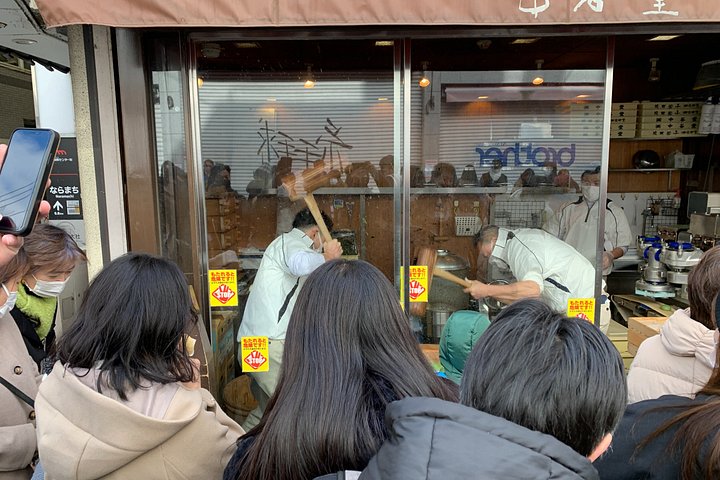
Naramachi (奈良町, literally "Nara Town") is the former merchant district of Nara, where several traditional residential buildings and warehouses are preserved and open to the public. Boutiques, shops, cafes, restaurants and a few museums now line the district's narrow lanes. Many of Naramachi's buildings in the Edo Period and earlier were machiya, long, narrow "townhouses" that served both as shops and as the living quarters of the local merchants. The store fronts of machiya were often kept narrow in order to save on taxes, which used to be calculated on a property's street access rather than its total area. Today, a handful of machiya have been preserved and made open to the public as museums.
Kofukuji (興福寺, Kōfukuji) used to be the family temple of the Fujiwara, the most powerful aristocratic clan during much of the Nara and Heian Periods. The temple was established in Nara at the same time as the capital in 710. At the height of Fujiwara power, the temple consisted of over 150 buildings. The temple features several buildings of great historic value, including a five-storied pagoda and a three-storied pagoda. At 50 meters, the five-storied pagoda is Japan's second tallest wooden pagoda, just seven meters shorter than the five-storied pagoda at Kyoto's Toji Temple. Kofukuji's pagoda is both a landmark and symbol of Nara. It was first built in 730, and was most recently rebuilt in 1426. Neither pagoda can be entered by the public.
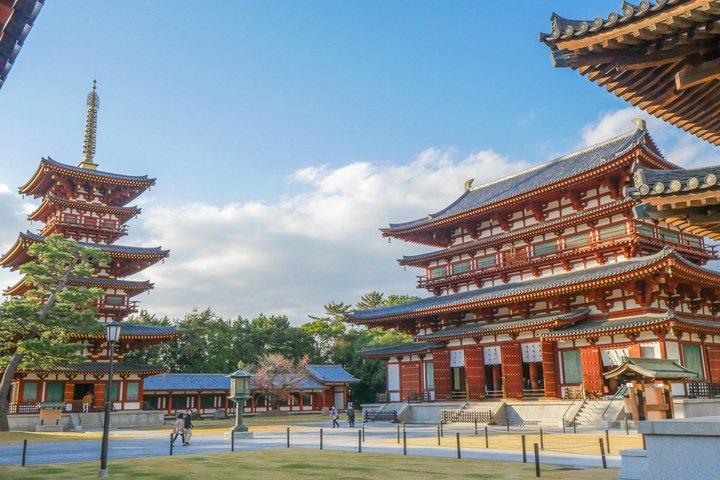
Yakushiji (薬師寺) was constructed by Emperor Tenmu in the late 7th century for the recovery of the emperor's sick wife. One of Japan's oldest temples, Yakushiji has a strictly symmetric layout, with the main hall and lecture hall standing on a central axis, flanked by two pagodas. The main hall was rebuilt in the 1970s after being destroyed by fire and houses a Yakushi trinity, a masterpiece of Japanese Buddhist art. The East Pagoda is the temple's only structure to have survived the many fires that have beset the temple over the years, and dates from 730. It appears to have six stories, but is in fact only truly three-storied, like the West Pagoda.
Shin-Yakushiji Temple (新薬師寺) was founded during the Nara Period (710-794) by an empress for the sake of the ailing emperor. It is devoted to Yakushi Buddha, the patron of medicine in Japanese Buddhism. Shin-Yakushiji means "New Yakushi Temple", because there already existed a Yakushiji Temple. During its heyday, Shin-Yakushiji consisted of a large complex of buildings, but all except for the main hall (Hondo) have since been lost. Inside the main hall there are life size statues of 12 guardian deities surrounding a two meter tall statue of a seated Yakushi Buddha, which are the temple's main objects of worship. The Yakushi statue is made of wood while the guardians are made of clay. Each guardian has a different character and possesses a different weapon, and visitors can spend quite a while admiring them. There are also a few small paths around the temple grounds.
The Nara National Museum (奈良国立博物館, Nara Kokuritsu Hakubutsukan), located in Nara Park, is an art museum which primarily displays Japanese Buddhist art. Established in 1889, the museum retains its original building and is joined by a new wing that is connected to the original building by an underground passage. Both wings display the museum's permanent collection, which includes Buddhist statues, paintings, scrolls and ceremonial objects mainly from Japan. The new wing also houses temporary exhibitions, including an annual exhibition every autumn of treasures from Todaiji Temple. A ticket to the museum gives access to both wings, and English explanations are available throughout the museum.
During most of the Nara Period (710-794), Nara served as the capital of Japan and was known as Heijo-kyo. The Heijo Palace extended about one kilometer wide and one kilometer long and served as the site of the emperor's residence and government offices. For its great historical and cultural importance, the palace site is included as one of the UNESCO World Heritage Sites of Nara.
Toshodaiji (唐招提寺, Tōshōdaiji) was founded in the year 759 by Ganjin, a Chinese priest who was invited to Japan by the emperor in order to train priests and improve Japanese Buddhism. Ganjin's influence in the introduction of Buddhism to Japan was monumental, and his arrival and teaching at Toshodaiji (which roughly translates to "temple of the one invited from Tang China") were important stages in that process. Toshodaiji's main hall (kondo) was re-opened in late 2009 after being renovated over a period of almost ten years, during which the building was dismantled and reconstructed. The temple's lecture hall (kodo) was originally an administrative building located in the Nara Imperial Palace and was later moved to Toshodaiji. Today, it is the only surviving building of the former palace.
Cancellation
Free cancellation up to 24 hours before the experience starts, for a full refund.
Reviews
5.0
- 5236
- 43
- 32
- 21
- 10
Ratings come from 242 reviews collected by our booking partner. They are travellers' own words, in the order they were written — never reordered to flatter the experience.
Showing reviews written in English.
5Touring Nara with Shoko!
Shoko was delightful! Her English was excellent. She was knowledgeable and shared helpful information about the history of the area, the specific shrines, temples, and gardens, etc. throughout our tour in a way that pulled it all together and was digestible. We visited more sites than I had anticipated and throughout the whole day Shoko was engaging, considerate, and insightful. Most importantly, she reached out to me before the tour to craft the day, and then tailored it as needed on the spot. I would highly recommend doing this tour with Shoko.
5Happy Nara day trip with Hiro
Hiro is very friendly and full of energy. We had a great day with Hiro and learned many history about Nara.
5Excellent Tour with Family. Lot of Walking.
Haru was an excellent guide and highly recommend him. He guided our family including three kids with the youngest who is 6. We saw the most important sites in Nara. Our kids adore the deer that were in the wild everywhere and very friendly. Haru took appropriate breaks as there was a lot of walking (almost 14k total steps).
5Amazing Nara tour
Had an amazing day today with Kazu. He took us on a great tour through Nara. We were able to hit all the major sites. The tour was very leisurely and he taught us so much about Nara, Buddhism and shitoism. My son felt like the tour was more a conversation instead of a lecture and was very engaged. Kazu is on my list to recommend to friends for when they visit Nara
5Haru was the best tour...
Haru was the best tour guide we had in Japan, and we went on many tours. He was knowledgeable and thoughtful with boundless energy. When the deer became aggressive in Nara, he was very protective of our family, especially of the little three year old. We will never forget that. His kindness made him one of the major highlights of our Japan trip. Can’t recommend him highly enough!
5Junichi-San was an...
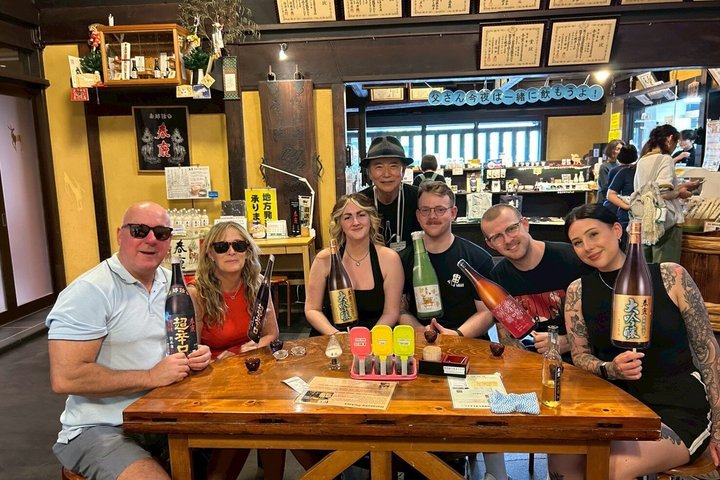
Junichi-San was an absolute pleasure! He went above and beyond to accommodate my wife’s and myself needs / wants for the day. Was extremely easy to communicate and revise our itinerary as needed. Junichi-San was full of information and gave an excellent history lessons throughout the tour. Highly recommend this tour and ask for Junichi! PS: Include the sake stop!
Know before you go
- Pickup
- Pickup is included for everyone.
- Ticket type
- Mobile or paper ticket accepted
- Operated by
- Japan Guide Agency
- Service animals allowed
- Public transportation options are available nearby
- Infants and small children can ride in a pram or stroller
- All areas and surfaces are wheelchair accessible
- Transportation options are wheelchair accessible
- Wheelchair accessible
- Suitable for all physical fitness levels
- This is a walking tour. Pick up is on foot.
How it compares in Nara
- Its from-price is close to the median of the 15 city tours we list in Nara.
- Its length is typical for the group.
- By number of reviews it ranks 1 of 15.
- The operator lists free cancellation on it.
About Nara
Nara, in the Kansai region, was Japan's capital in the eighth century and is now a city of great Buddhist temples and free-roaming deer.
Nara was the capital, Heijo-kyo, from 710 to 784, and its monuments from that age make up a UNESCO World Heritage Site. Todai-ji temple houses a bronze Great Buddha in one of the largest wooden buildings in the world. Around it spreads Nara Park, where more than a thousand sika deer roam freely and bow for crackers sold at stalls.
Top-ranked sights in Nara: Toshodaiji Temple.
Special offers in Nara
Was/now prices come from the operator, never from us.
![Nara: 1.5 Hour Private Kasuga Taisha Shrine Tour - World Heritage]() 30% offFree cancellation