8% offFree cancellation
A private tour — just your group and a Hiroshima-based guide. You set the pace, and you can ask anything. Most Hiroshima tours cover the Peace Park, the Dome and the museum. You can do those on your own. This tour takes you where you can't go alone: ・A working elementary school, 460 m from the hypocenter, where survivors' chalk messages were found under the plaster after 54 years ・The bank that reopened two days after the bomb, and lent its own counters to ten other banks ・The hypocenter itself — outside a clinic still run by the grandson of the doctor who came back that night to treat the injured ・A stone that still carries the shadow of the statue standing in front of it ・A bakery built around a wall that survived the blast The tree that came back the following spring, whose seeds are now planted overseas By the end you'll have met about a dozen survivors of 6 August. Not all of them are people.
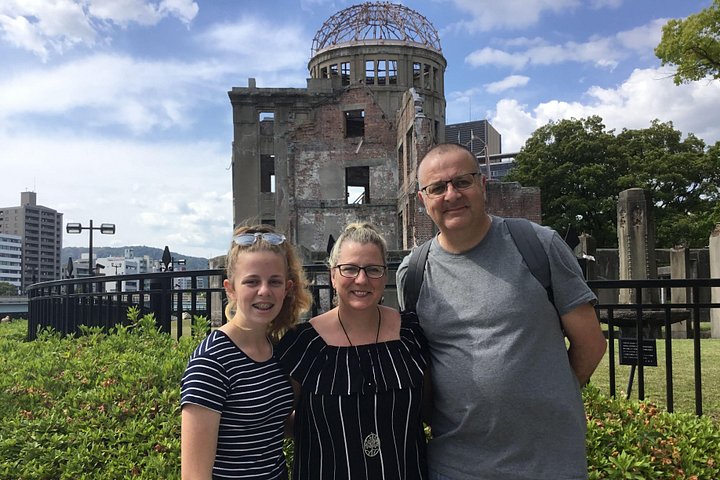
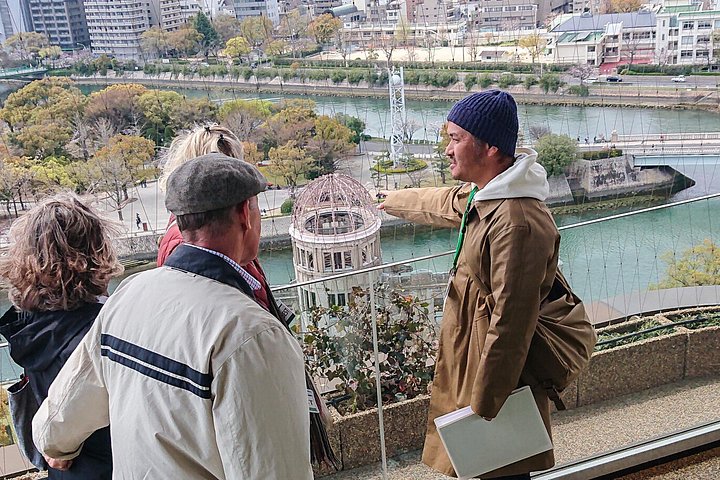
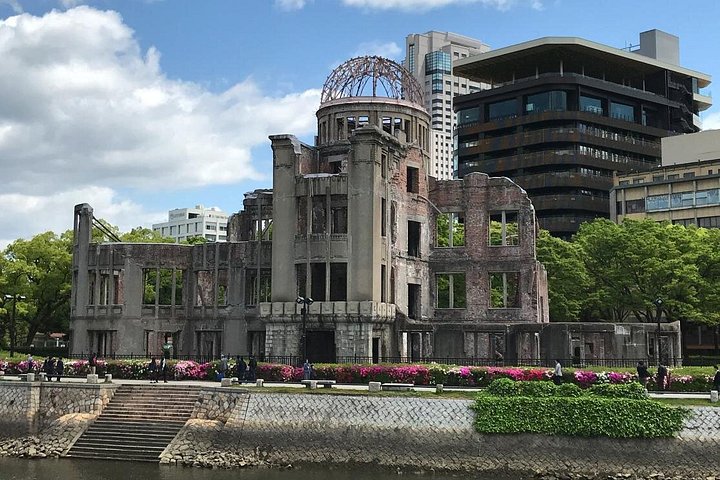
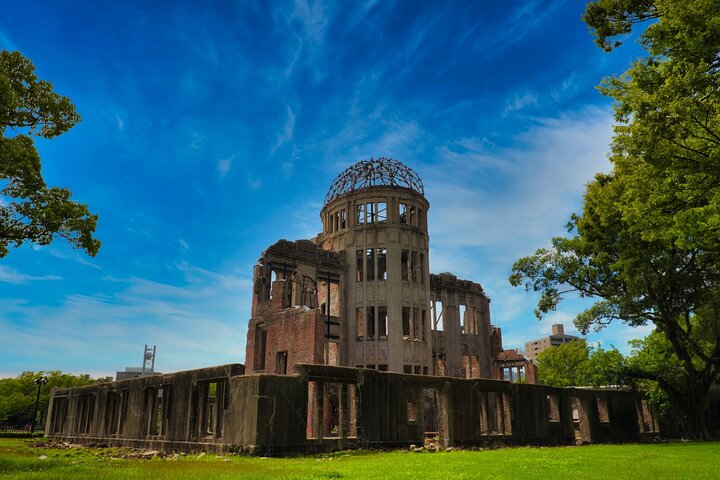
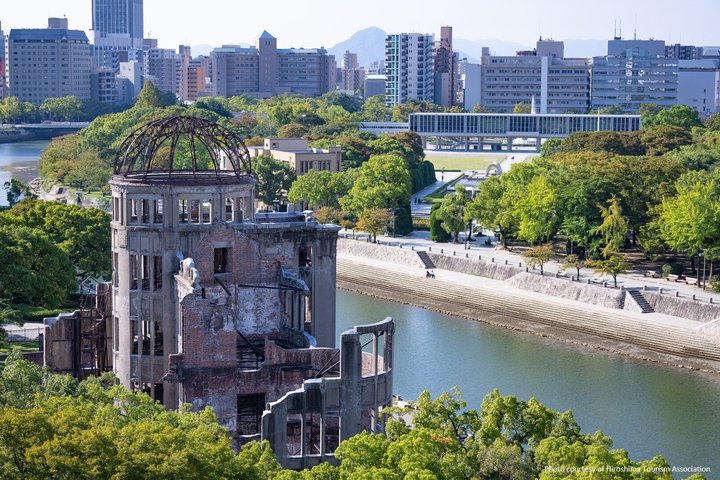
Listening to what happened in 1945 and how the city has revitalized. The bomb dome was constructed in 1915 by construct from Czech Republic. So the building is little bit different from Japanese typical construction. Let's listen to the reason from the guide about why this bomb dome was survived from the atomic bomb, what this building is originally for, and the situation when the bomb attacked the city.
We visit the ground zero of the atomic bomb and discover more about the hospital and those people who used to work here.
Enter a working elementary school that stood 460 metres from the hypocenter. In the days after August 6th, people searching for their families wrote messages to each other in chalk on its burnt walls. The walls were later plastered over — and in 1999, after 54 years, the messages reappeared. Your guide will show you where they were written and tell you what they say.
Step inside a 1936 bank that stood 380 metres from the hypocenter and did not fall. Two days after the bombing it reopened, and lent its own counters to more than ten other banks whose buildings were gone. Customers came with no passbook and no seal, because everything they owned had burned — and were paid out anyway.
Hear from your guide the story of Sadako Sasaki, who experienced the atomic bombing at the age of two and inspired the tradition of folding a thousand paper cranes.
This building used to be the Taisho ya kimono shop where people sell the Japanese traditional clothes. There was only one person who have survived the explosion inside the building even though the place is within 200m from ground zero.
Visiting Peace Memorial Park where all the Japanese come to pray for the peace. The Peace memorial museum was constructed after the World war II in 1954 by the very famous Japanese architect Kenzo Tange. The park has many monument and statues that are related to the bomb event. Each of these has really deep stories, and the guide will explain especially about the places which you would want to know. G7 summit was held in Hiroshima on May in 2023, and presidents from each countries visited this place and pray for the peace. Let's visit this important place and take a look at those precious monuments.
Visit a deeply significant place where the registry of those who lost their lives in the atomic bombing is enshrined.
Stand under a tree that survived the atomic bomb 1.3 kilometres from the hypocenter. The heat stripped every leaf and branch, and burned away half its trunk — everyone assumed it was dead. The following spring, it put out buds. It still produces seeds every year, and saplings grown from them have been sent to schools across Japan and overseas. Your guide ends the tour here.
Free cancellation up to 24 hours before the experience starts, for a full refund.
5.0
Ratings come from 4 reviews collected by our booking partner. They are travellers' own words, in the order they were written — never reordered to flatter the experience.
Hiroshima, on Japan's Seto Inland Sea, is a rebuilt river city whose Peace Memorial Park and museum recall the atomic bombing of 1945.
Hiroshima spreads across the delta of the Ōta River, whose channels, bridges and trams give the city an open feel. The atomic bomb of 6 August 1945 destroyed most of it. The Peace Memorial Park beside the river holds the Atomic Bomb Dome, a ruined building left standing and listed by UNESCO, the Peace Memorial Museum and the Children's Peace Monument.
Top-ranked sights in Hiroshima: Hiroshima Peace Memorial Museum, Hiroshima Peace Memorial Park, Miyajima Island (Itsukushima).
Was/now prices come from the operator, never from us.
Add Ticket Hall to your home screen
Tickets and city guides, one tap away, even offline.
Ticket Hall