Herculaneum & Amalfi Coast Private Tour – Ravello & Beyond
- 8–9 hours
- Free cancellation up to 24h before
- 4 languages
- Private tour
Highlights
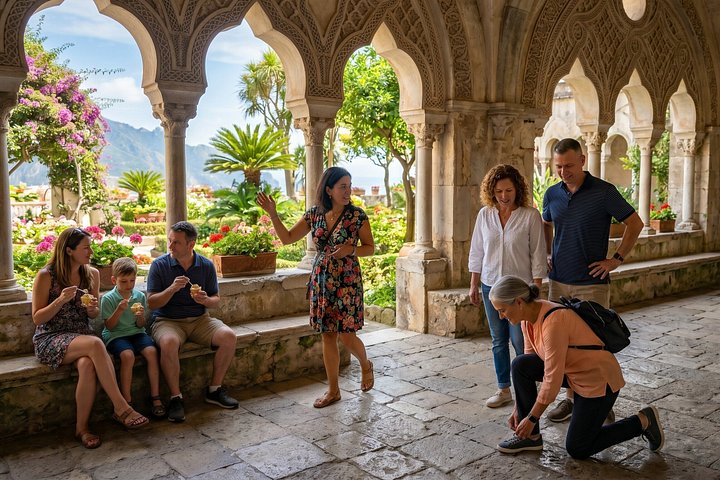
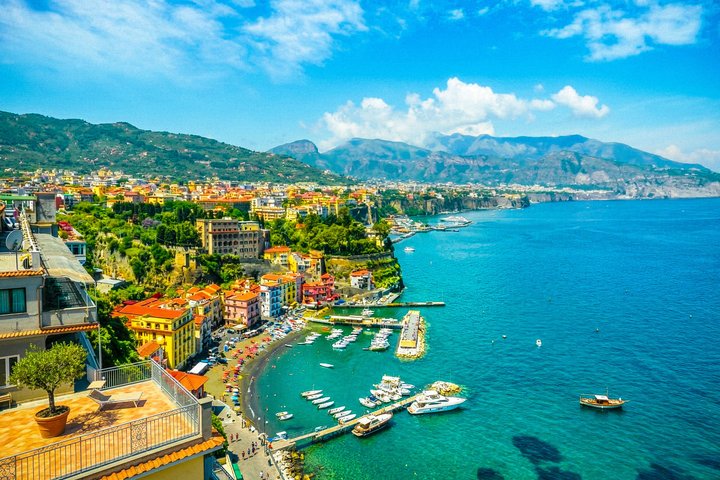
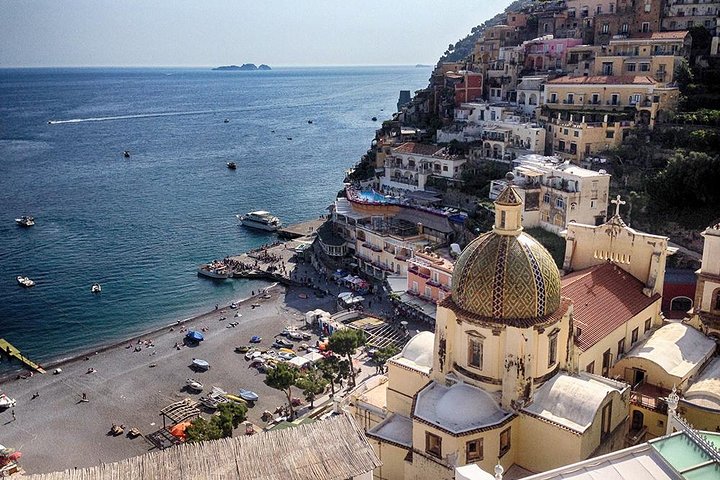
Share the magic of travel with your family on a private 9-hour tour to the Amalfi Coast and Herculaneum. End-to-end transportation and skip-the-line-tickets for an unforgettable experience. Along the Amalfi Coast, the itinerary focuses on Ravello and the quieter towns of Maiori and Minori, offering beautiful views, open spaces, and seaside promenades where families can enjoy relaxed walks, beach time, and gelato stops. You may choose where to stop according to your family’s pace and interests. In Herculaneum, enjoy the undivided attention of a private guide. You can take the family-friendly itinerary, ideal for children ages 6-11. It includes fun activities and games to get kids (and grownups) fired up about history and culture. • Enjoy the personalized experience of a private tour • Travel comfortably in round-trip transportation with live commentary on board • Stress-free experience with included skip-the-line tickets • Relaxed Amalfi Coast experience with beach-friendly towns
Inclusions
What's included
- Mercedes
- Official guide in Herculaneum - If this option is selected
- Live commentary on board
- Skip-the-line tickets in Herculanem - IF this option is selected
What's not
- Lunch
Itinerary
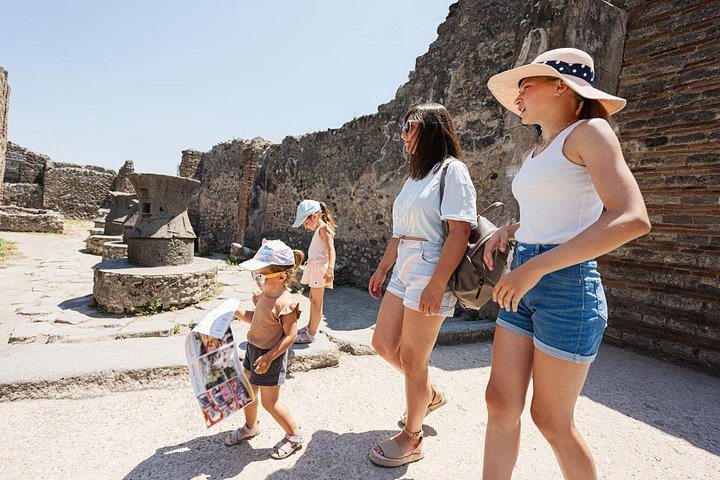
Your private certified guide will introduce you to the History of the ancient Herculaneum. We will take care of purchasing skip-the-line tickets. This unforgettable walking tour will make you discover the highlights of the Archaeological Park: the private homes, the bath-house, the shops, the main street, etc. Marvel at incredible frescoes and mosaics! We will see the remains of fossilized wood. We shall of course see the dramatic skeletons of the victims by the ancient marina. If you are traveling with kids choose the unique and entertaining family experience. This activity comes highly recommended for children between 6 and 11 years old. The “Herculaneum for kids” is led by a licensed guide properly trained to stimulate and interact with your kids with the help of a specific map, funny tools, stickers, and an activity book.
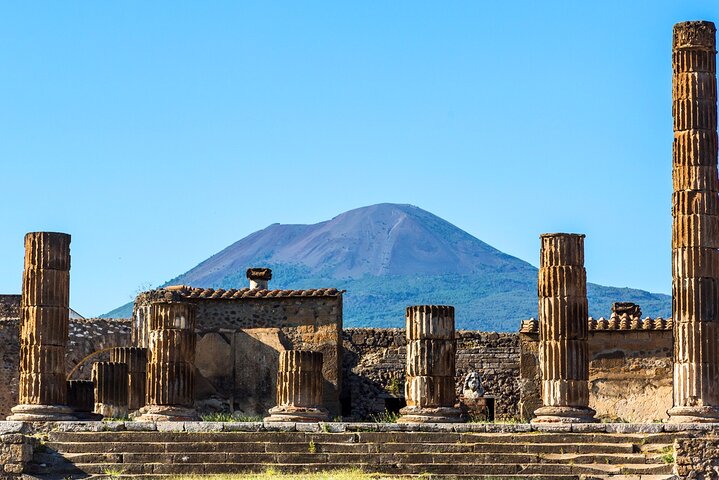
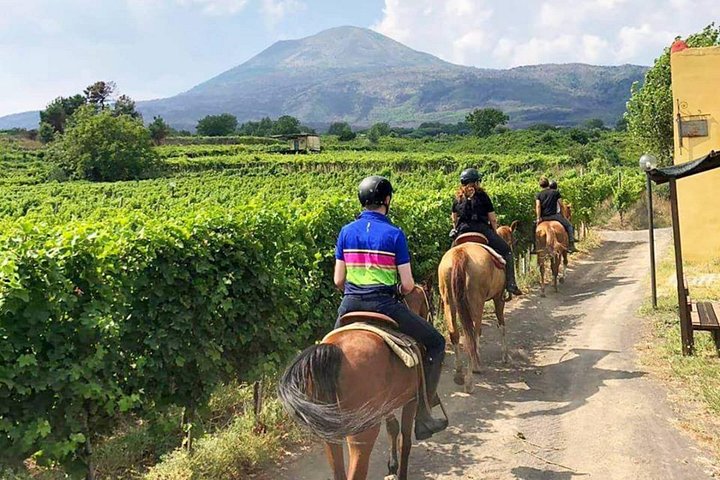
On the way to Herculaneum, people can enjoy views of the Parco Nazionale del Vesuvio, the protected landscape surrounding the volcano that shaped the region’s history. Even from a distance, the crater’s distinctive profile makes an impression—especially on younger travelers who quickly connect the mountain they’re seeing to the ancient city they’re about to explore. Once inside the archaeological site, the volcano is still dramatically visible in the background, creating a striking contrast between modern nature and the ruins below. Paired with insights from your private family guide, these views help visitors grasp the scale of the eruption and understand how deeply Vesuvius continues to define the geography and identity of the area today.
The Antiquarium offers families a thoughtful introduction to daily life in ancient Herculaneum through objects that feel surprisingly familiar—jewelry, coins, writing tools, household items, and even children’s belongings. One of the most striking features here is the survival of charred wood, from furniture to architectural fragments, preserved when the intense heat of the eruption carbonized organic materials instead of burning them to ash. Kids are often fascinated to learn that these blackened pieces are still real wood, nearly two thousand years old. With the help of your official family-friendly guide, the displays become more than just artifacts; they become clues that help young explorers piece together how Roman families lived, worked, and decorated their homes.
The Boat Pavilion is often one of the most surprising stops for families. Inside, you’ll find a remarkably preserved Roman boat that once sailed along the Bay of Naples, along with tools and equipment used by sailors nearly 2,000 years ago. Kids are instantly drawn to the wooden hull—darkened by time but still intact—while adults appreciate how the eruption protected the vessel under layers of volcanic debris. The space also helps everyone imagine Herculaneum as a seaside community connected to trade and travel. With your dedicated family-friendly guide adding context, the exhibit becomes more than just an artifact—it becomes a story of daily life suddenly interrupted.
At the Casa dei Cervi, your private guide brings you into one of the most elegant waterfront homes in ancient Herculaneum. As you walk through its marble floors, colonnaded garden, and rooms once decorated with fine frescoes, it’s easy to imagine the wealthy family who lived here enjoying the sea breeze and their private terrace overlooking the bay. The house takes its modern name from the striking marble statues of stags being attacked by hunting dogs, discovered in the garden and now displayed separately. With your guide explaining architectural details and social customs, the residence becomes more than just a ruin — it becomes a glimpse into the lifestyle, status, and tastes of Herculaneum’s upper class.
At the Palestra, your private guide introduces you to the ancient equivalent of a sports and social club, where young men once trained, exercised, and gathered for events. As you walk through the large open courtyard framed by porticoes, it’s easy to picture athletes running drills, practicing wrestling, or relaxing in the shade after a workout. The vast scale of the structure hints at its importance in daily life, not only for physical training but also for education and civic identity. With your guide helping decode the space and its role in Roman culture, the Palestra transforms from a set of ruins into a lively hub of ancient activity.
At the Casa di Nettuno e Anfitrite, your private guide pauses to draw your attention not to the architecture first, but to the dazzling wall mosaic that gives the house its name. Tiny glass tesserae shimmer in blues and golds, depicting the sea-god Neptune and the nymph Amphitrite surrounded by delicate marine motifs. Even after two thousand years, the colors are startling. Around you, the remains of a private dining room and a richly decorated nymphaeum hint at dinners held to impress guests with good taste and good connections. As your guide points out water channels, garden traces, and decorative details, you begin to see how art, prestige, and everyday domestic life blended together in a Roman seaside home.
The Women’s Baths offer a fascinating glimpse into the routines of personal care and social life in ancient Herculaneum. As you move through the changing room and into the heated spaces, the clever Roman engineering becomes hard to miss: hollow floors and wall pipes once carried hot air to warm the rooms, while marble benches and mosaic floors added a touch of elegance to the experience. The decoration here is surprisingly refined, with geometric patterns, marine themes, and fragments of frescoes that suggest the baths were as much about conversation and relaxation as cleanliness. It’s easy to imagine the quiet hum of daily gossip echoing under the vaulted ceilings as steam drifted through the air.
“Ad Cucumas” is one of those delightful surprises in Herculaneum: an ancient advertisement painted right onto the wall of a tavern, promoting wine by the jug. The text, still legible after two millennia, lists prices for different quantities and shows how everyday commerce was woven into the rhythm of the street. It’s a reminder that ancient Romans didn’t just build temples and villas — they sold drinks, compared bargains, and attracted customers with catchy signage long before paper menus or neon lights. Standing in front of it, you suddenly realize how familiar this little scene feels: the practical concerns of businesses and thirsty passersby haven’t changed all that much.
The Casa del Bicentenario is one of Herculaneum’s most impressive townhouses, revealing how refined Roman urban living could be. Vivid wall paintings, wooden partitions, and marble thresholds suggest rooms arranged for both family life and social display, while a small shrine with delicate frescoes hints at domestic religion. Archival photographs on site link modern excavation to early-20th-century discovery. Set near the ancient shoreline, the house once enjoyed prime seaside views. Excavations here also yielded carbonized wooden writing tablets that recorded property and inheritance disputes, preserving rare traces of the household’s legal affairs and its active role in the civic life of the city.
The Sacello degli Augustali adds a political and religious layer to Herculaneum that many visitors don’t expect. This small temple-like building was dedicated to the imperial cult, where local elites honored the emperor as a living symbol of Rome’s power and unity. Inside, you can still make out fragments of frescoes depicting Hercules alongside members of the imperial family — a clever pairing that linked local mythology with imperial propaganda. Standing here, the ruins feel less like a frozen domestic town and more like a community plugged into the larger machinery of the Roman world. It’s a quiet spot, but one that helps explain how loyalty, status, and civic identity worked in a provincial city.
The Casa del Tramezzo di Legno is instantly memorable for something exceptionally rare at Roman sites: its wooden partition wall. Carbonized by the eruption and preserved almost like a fossil, the folding screen once separated the reception area from the more private quarters of the house. Walking through the rooms, you can still read social choreography in the layout — where guests were welcomed, where business was conducted, and where family life retreated from view. Decorative details, surviving upper-story elements, and traces of furnishings make the space feel surprisingly lived-in. It’s one of those houses that collapses distance between past and present, reminding you that domestic privacy, hospitality, and status mattered to ancient Romans just as much as they do today.
Cancellation
Free cancellation up to 24 hours before the experience starts, for a full refund.
Reviews
5.0
- 56
- 40
- 30
- 20
- 10
Ratings come from 6 reviews collected by our booking partner. They are travellers' own words, in the order they were written — never reordered to flatter the experience.
Know before you go
- Pickup
- Pickup is included for everyone.
- Ticket type
- Mobile or paper ticket accepted
- Operated by
- Leisure Italy
- Service animals allowed
- Public transportation options are available nearby
- Specialized infant seats are available
- Not recommended for travelers with spinal injuries
- Not recommended for travelers with poor cardiovascular health
- Travelers should have at least a moderate level of physical fitness
- Please be aware that one day in not enough to visit all the coast. We normally manage to stop in one or two of the villages on the cost, beside of course Herculaneum. You will be free to decide with the support of your driver where would you prefer to stop and how long for.
- Comfortable walking shoes and sun gear are recommended
How it compares in Pompeii
- Its from-price is 12% above the median of the 120 day trips we list in Pompeii.
- Its length is typical for the group.
- By number of reviews it ranks 57 of 120.
- The operator lists free cancellation on it.
About Pompeii
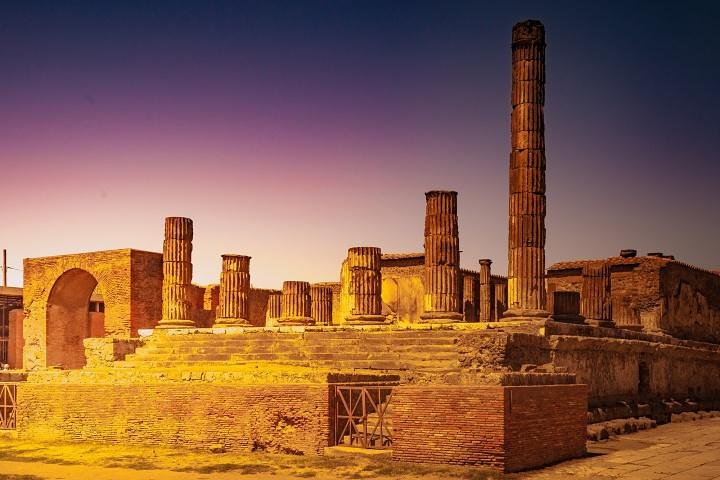
Pompeii is a Roman town near Naples frozen in ash when Mount Vesuvius erupted in AD 79, with streets, villas and frescoes preserved beneath the volcano.
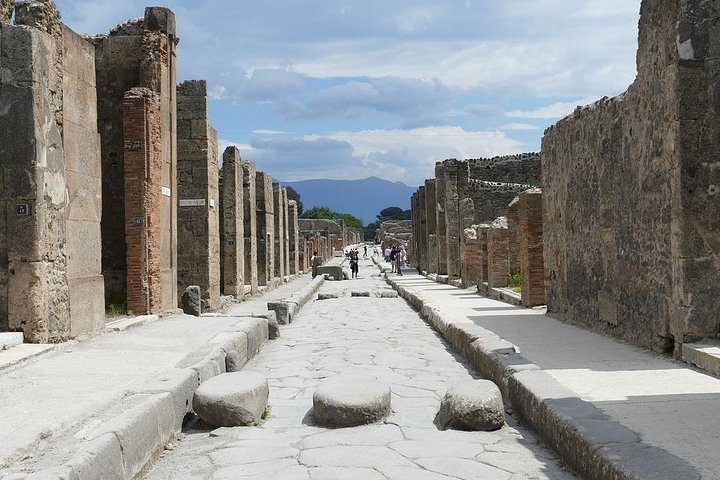
Pompeii was a thriving Roman town when Vesuvius buried it under ash and pumice in AD 79. Excavation, begun in the eighteenth century, has uncovered paved streets with stepping stones, shops, bakeries, bathhouses and the forum. The amphitheatre, among the oldest Roman ones to survive, and the grand House of the Faun show the range of life, and plaster casts of the dead record the final moments of some residents.
Top-ranked sights in Pompeii: Pompeii Archaeological Site, Stabian Baths (Terme Stabiane), Via dell’Abbondanza.
Special offers in Pompeii
Was/now prices come from the operator, never from us.