Half Day Tour in Sendai Kitayama Gozan & Sendai Daikannon Statue
- 6 hours
- Free cancellation up to 24h before
- Guided in English
- Instant confirmation
Highlights
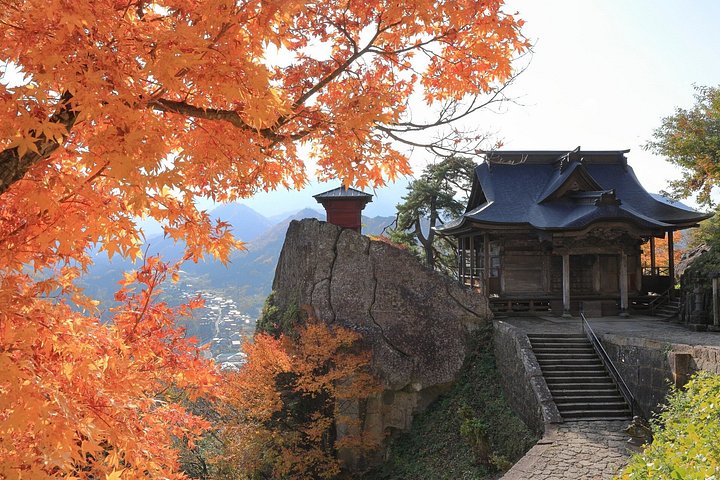
Visit the Five Zen Temples of Kitayama, prominently connected to the historic Date clan, and witness the grandiose majesty of the Sendai Daikannon Statue. Kitayama Gozan, or Five Zen Temples, refers to the line of Buddhist temples built in the Kitayama area of Sendai. This walking tour of these historically significant temples offers you a detailed look into Sendai’s strong Zen Buddhist ties and the legacy of the Date Clan. Though not many tourists visit the area, its history and natural beauty are certainly worthwhile. From the sound of a soft breeze throughout the Zen gardens and flowering plants, to the subtle tranquility of temples, by visiting these residential temples paired with a breathtaking spiritual pilgrimage spot of Sendai Daikannon Statue, you will not just see Japan, but feel how it is experienced.
Inclusions
What's included
- Transportation to and from destinations during tour
- Admission fees at all attractions during tour
What's not
- Lunch
Itinerary
Our first few locations in the Kitayama Gozan pilgrimage include a close-look at a Niōmon gate, an impressive traditional Japanese garden, and a temple known for its lush hydrangea blooms.
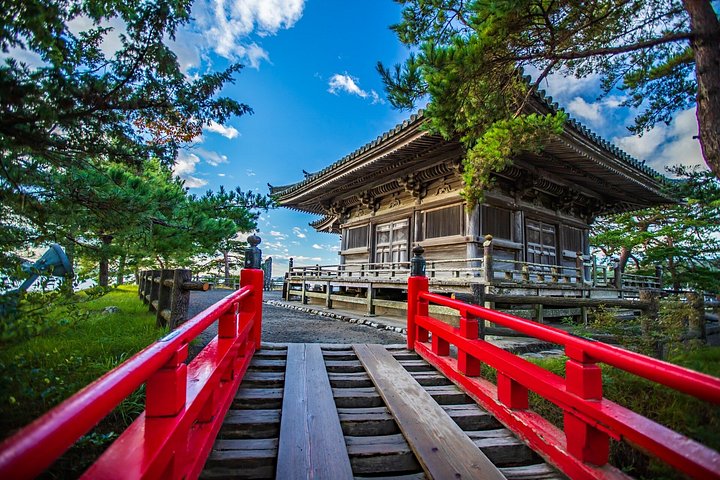
Of particular note is Rinnoji Temple. Rinnoji was not part of the original Kitayama Gozan, five zen temples, but was later added to it – at least in name only – once one of the original temples was moved to a new location. Rinnoji houses an impressive traditional Japanese strolling garden, a gorgeous pagoda, and even has entombed an important historical warrior figure. Your guide will provide you with historic context and offer some interesting tidbits about Zen Buddhism in general while you stroll the garden.
One of the 5 Zen Temples of Kitayama with an impressive hydrangea garden in summer.
Our next locations include Kakuhanji Temple and Aoba Shrine. Both of which are strongly connected to Sendai’s founder, Date Masamune. Kakuhanji has entombed Hoshunin, or Yoshihime, Masamune’s problematic mother known as the Demon Princess of the Ouu. Your guide will give you some interesting information about her life and her tumultuous relationship with the Date Clan, especially with Masamune, despite being its matriarch.
Aoba Shrine is a Shinto shrine dedicated to Date Masamune, enshrining him as a deity here. Most notably there are six structures on the grounds that are Registered Tangible Cultural Properties in Sendai. This shrine is strongly connected to a giant, ornamented festival in May called the Aoba Matsuri. The festival was revived to commemorate the 350th anniversary of Masamune’s death in 1985 and has ever since then offered a colorful and ornate display of reverence for Masamune and the “Date Aesthetic.” Should it be deemed necessary by participants of the tour, we will take a short rest at a nearby park to recharge and hydrate before continuing our pilgrimage.
Here your guide will provide you with information about Date Masamune and his influence on culture and religion during a time where Christianity was persecuted by the Tokugawa shogunate.
Entombed at Komyoji is an important historical figurehead named Hasekura Tsunenaga. Your guide will explain how influential and important he was to Masamune, and how his embassy was one of, if not the first, successful grand expedition sponsored by any feudal lord.
Welcome to Sendai’s Big Buddha! Reaching 100 meters (330 feet) into the sky, Sendai’s Daikannon Statue looks over the city with a watchful, protective eye. Daikannon is the representation of the Japanese Buddhist Bodhisattva, the Goddess of Mercy. This particular statue is the tallest Kannon in Japan and the tenth-tallest statue in the world. She is officially knowns as Sendai Tendou Byakue Daikannon (仙台天道白衣大観音), gaining her name from her white-robbed bodhisattva form. She holds a wish-fulfilling gem in her right hand and in her left, a water flask pours the water of wisdom. You will get a good chance to appreciate her magnitude and presence.
Cancellation
Free cancellation up to 24 hours before the experience starts, for a full refund.
Reviews
5.0
- 52
- 40
- 30
- 20
- 10
Ratings come from 2 reviews collected by our booking partner. They are travellers' own words, in the order they were written — never reordered to flatter the experience.
Know before you go
- Meeting point
- Morinosanka Stained Glass located on the main concourse (2F) inside Sendai Station. Look for your guide holding the SNOW MONKEY RESORTS sign.
- Pickup
- Everyone meets at the starting point; there is no pickup.
- Ticket type
- Mobile or paper ticket accepted
- Group size
- Up to 6 travellers
- Operated by
- Snow Monkey Resorts Tours (Machinovate Japan Ltd.)
- Service animals allowed
- Public transportation options are available nearby
- Not recommended for travelers with spinal injuries
- Not recommended for pregnant travelers
- Not recommended for travelers with poor cardiovascular health
- Suitable for all physical fitness levels
How it compares in Sendai
- Its from-price is 27% below the median of the 58 experiences we list in Sendai.
- Its length is typical for the group.
- By number of reviews it ranks 16 of 58.
- The operator lists free cancellation on it.
About Sendai
Sendai is Tohoku's largest city, a green city of tree-lined avenues, samurai history, grilled beef tongue and the pine islets of Matsushima.
Sendai, in Miyagi Prefecture, was founded in 1601 by the samurai lord Date Masamune, and is known as the City of Trees for the zelkova-lined avenues of Jozenji-dori and Aoba-dori. The ruins of Aoba Castle on a hill above the river have a mounted statue of Masamune and a view over the city, and his mausoleum, Zuihoden, stands among cedars on another hill, its halls in ornate gold and black lacquer.
Top-ranked sights in Sendai: Zuihoden Mausoleum.
Special offers in Sendai
Was/now prices come from the operator, never from us.