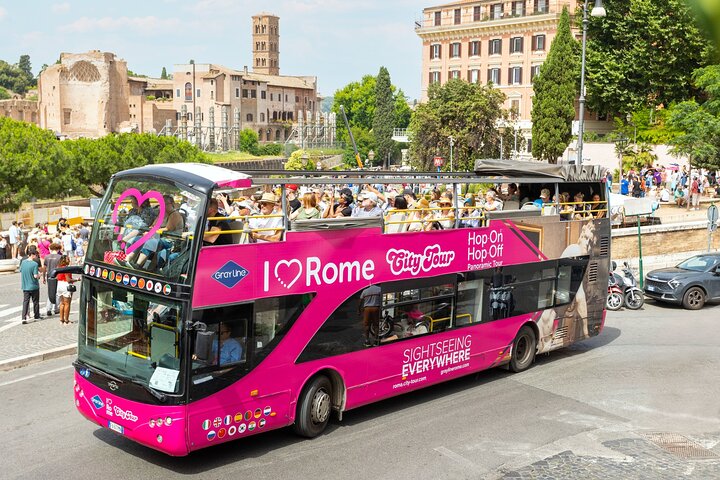
Guided Private Tour in Rome in German
Descriptions come from the operator and are translated automatically.
- 10 hours
- Free cancellation up to 24h before
- Guided in German
- Instant confirmation
Highlights
Rome city tour different in German, we will guide you through Rome, without much talk, by public transport and Schuster's Rappen Experience this beautiful city differently. Without time pressure, relax and experience one of the most beautiful cities in the world. Rome city tour different in German. We will guide you through Rome without much talk, with public transport and Schuster's rapping. Experience this beautiful city differently. Experience one of the most beautiful cities in the world without time pressure. My tour is 10 hours long And we walk about 15 km through Rome. A group is never larger than 6 people Secure your places for 2025 with City Guide Rome in Italy. Discover Rome in German. Planning made easy! Rome is waiting for you – come and write your own story!
Inclusions
What's included
- min.8 Hourly guided tour of Rome
What's not
- Lunch
Itinerary
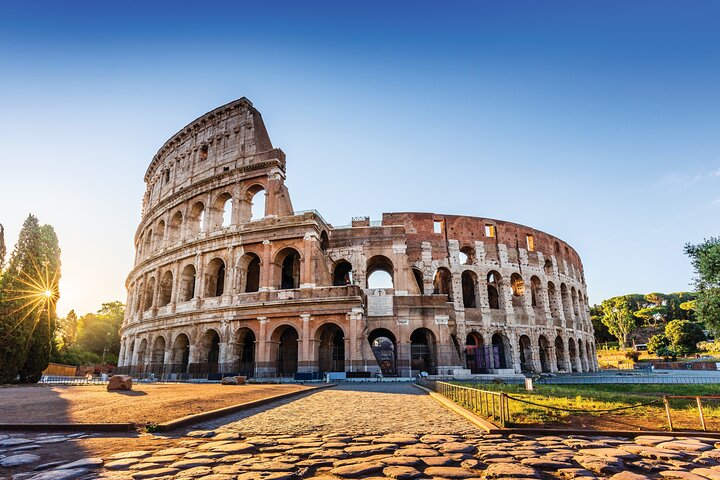
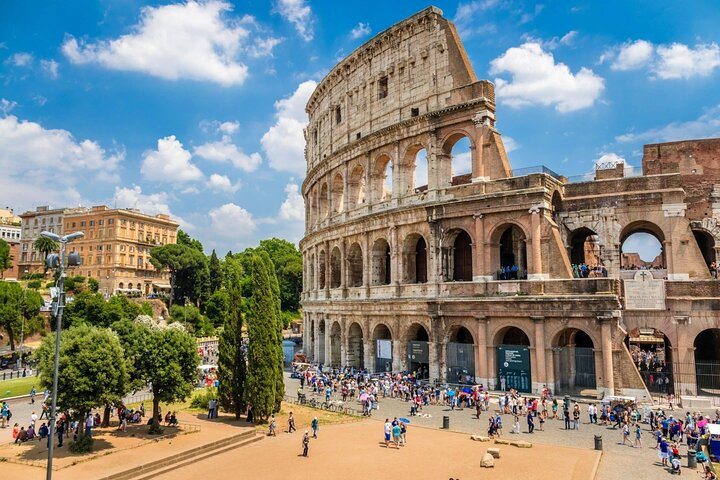
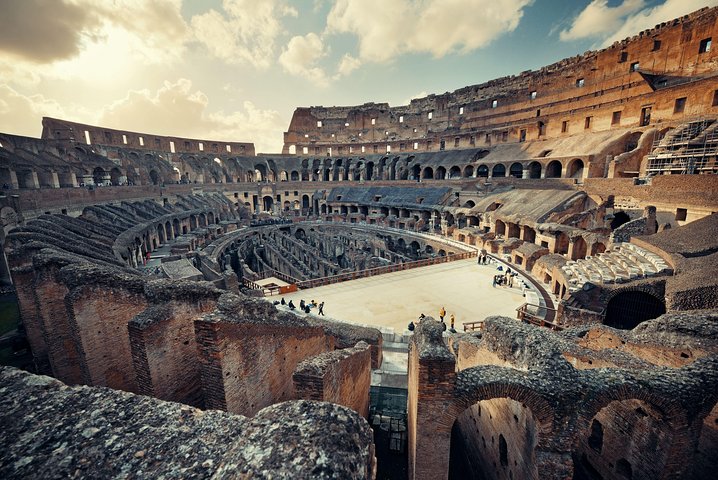
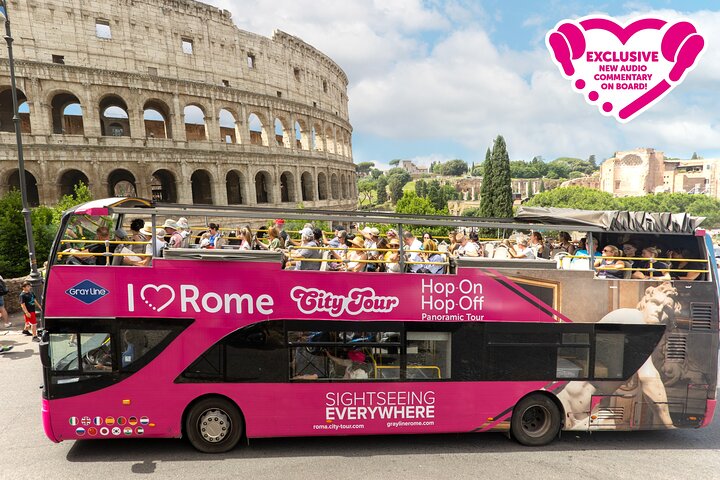
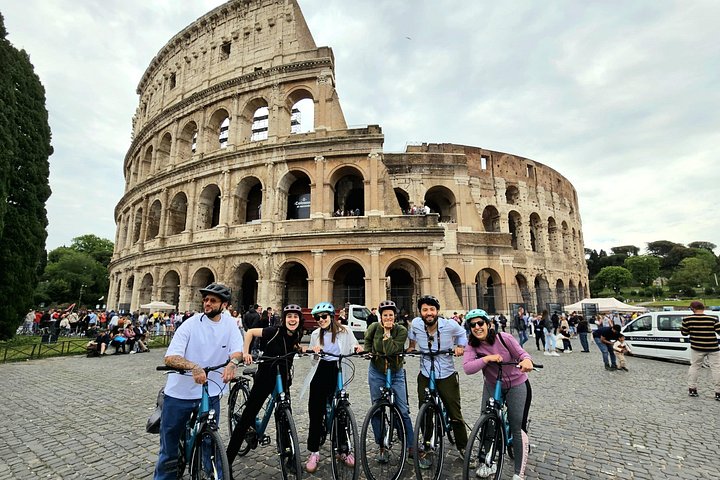
The Colosseum (ancient name: Amphitheatrum Novum or Amphitheatrum Flavium, Italian: Colosseo, Anfiteatro Flavio) is the largest of the amphitheatres built in ancient Rome, the largest enclosed building of Roman antiquity and still the largest amphitheatre ever built in the world. Built between 72 and 80 AD, the Colosseum served as the venue for mostly extremely cruel and brutal events that were organized by members of the imperial family for the entertainment and amusement of the free residents of Rome and the Roman Empire with free admission. Today, the ruins of the building are one of the city's landmarks and at the same time a testament to the high level of architecture of the Romans in ancient times.
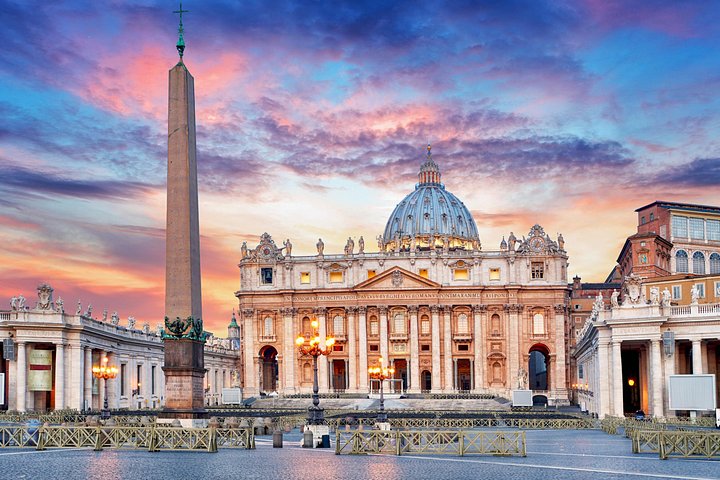
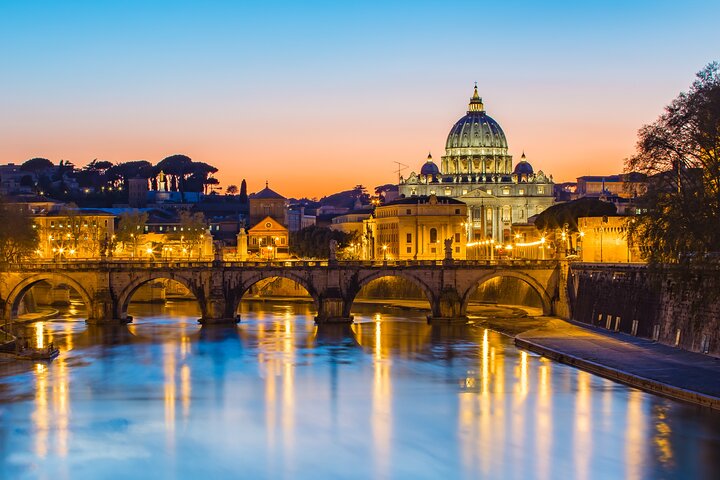
The Basilica of Saint Peter in the Vatican (Italian: San Pietro in Vaticano) in Rome, commonly called St. Peter's Basilica in German-speaking countries because of its size and importance (also Basilica Sancti Petri in Vaticano, St. Peter's Basilica, Vatican Basilica or Templum Vaticanum), is the memorial church of the apostle Simon Peter. It is located on the territory of the independent state of Vatican City and is one of the seven pilgrimage churches of Rome. With a built-up area of 20,139 m²[1] and a capacity of 20,000[2] people, St. Peter's Basilica is the largest of the papal basilicas and one of the largest and most important churches in the world.[
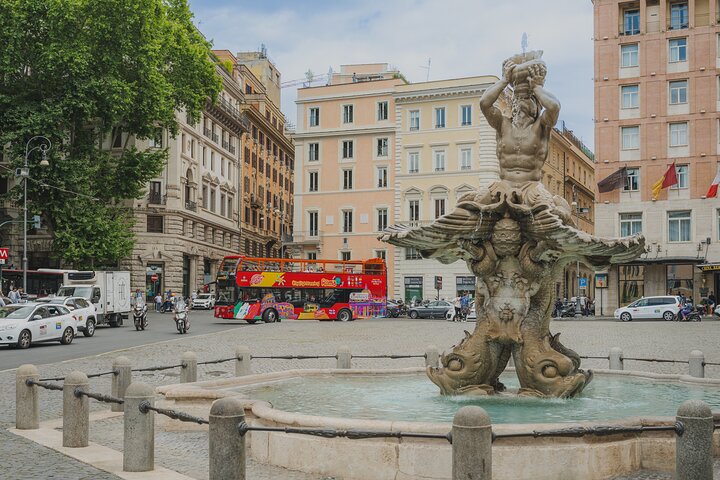
The square was already an important traffic junction in the time of the Roman Republic, as the Via Flaminia met the Porta Fontinalis in the Servian Wall here.[1] In the 15th century, the Venetian cardinal Pietro Barbo, later Pope Paul II, had his palace, the Palazzo Barbo, built on the west side of the square. The Venetian embassy to the Holy See was based there from 1567 to 1797, hence the palace's current name Palazzo Venezia. In 1660, the Palazzo Misciatelli was built to the north, which is now known as the Palazzo Bonaparte, because Letizia Ramolino, the mother of Napoleon Bonaparte, had her retirement home here.
In 46 BC, Julius Caesar built a first, rather provisional stadium for Greek-style games, i.e. athletic competitions, here on the Campus Martius. Emperor Domitian expanded this stadium to a monumental size in 85 AD. It measured 275 by 106 meters and had space for over 30,000 spectators. The ground floor of the outside was surrounded by arcades made of travertine pilasters. No archaeological remains of the second floor have been found. The stadium was decorated with a number of works of art, mainly in Greek style.[1] An excavated torso, the so-called Pasquino, is on display nearby.
The National Monument to Victor Emmanuel II (Italian: Monumento nazionale a Vittorio Emanuele II), colloquially known as the Vittoriano or Altare della Patria ("Altar of the Fatherland"), is a national monument in Rome that was erected in honour of Victor Emmanuel II, the first king of a unified Italy. Designed by Giuseppe Sacconi in 1885, the monument was inaugurated in 1911 and not completed until 1927. It is located on the axis of the Via del Corso in Piazza Venezia next to the Forum of Trajan and is one of the national symbols of Italy. The monument houses the Museo del Risorgimento, which commemorates the unification of Italy in the 19th century.
Via del Corso, or Corso for short, is one of the most famous streets in the old town of Rome, connecting Piazza del Popolo with Piazza Venezia. It is about 1.6 km long.
Capitol (Latin Capitolium and mons Capitolinus, Ancient Greek Καπετώλιον Kapetṓlion, Italian Campidoglio) is the short name form of the Capitoline Hill, the second smallest of the classical seven hills of ancient Rome, where the religious center of power was located.
Only from outsideThe Roman Forum (Roman market place) in Rome is the oldest Roman forum and was the centre of political, economic, cultural and religious life. It lies in a depression between the three city hills of Capitol, Palatine and Esquiline and was the site of many public buildings and monuments. en no visit to this museum
Piazza del Popolo (People's Square, after the church of Santa Maria del Popolo) is one of the most famous squares in Rome. Located in the IV Rione, it has been the square where visitors entered Rome since ancient times, arriving from the north via the Via Flaminia or the Via Cassia.
Castel Sant'Angelo (originally Mausoleum of Hadrian) (Italian: Castel Sant'Angelo or Mausoleo di Adriano) in Rome was originally built as a mausoleum for the Roman Emperor Hadrian (117-138 AD) (Latin: Mausoleum Hadriani) and his successors and was later converted into a castle by various popes. The building has not been used as a castle since 1901. Castel Sant'Angelo has been a museum since February 13, 1906.
The Circus Maximus (Italian: Circo Massimo) was the largest circus in ancient Rome. It had a total length of around 600 metres (including the arena and steps) and a width of 140 metres.[1] According to Dionysius of Halicarnassus, its capacity was 150,000 when it was completed at the time of Augustus,[2] and 250,000 at the time of Pliny the Elder.[3] It was used for chariot races until the 6th century.
The Theatre of Marcellus was a theatre in ancient Rome that still exists today in the form of a residential building. Caesar had already purchased the land to the north of the vegetable market (forum holitorium) in the immediate vicinity of the magnificent Temple of Apollo Sosianus. Augustus had the theatre built there, which was completed in 13 BC and dedicated to his nephew Marcellus, who had died 10 years earlier. For the construction, two smaller temples had to be demolished, which were probably dedicated to Pietas and Diana. Unlike Greek theatres, the Theatre of Marcellus was not built on a mountainside, but stood free as a high-rise structure. The approximately 33-metre-high building made of Roman travertine from the quarries of Tivoli and opus caementicium provided the model for the construction of the later Colosseum. In terms of seats, it was the largest theatre in the city of Rome and offered space for around 10,000 to 15,000 spectators.
Cancellation
Free cancellation up to 24 hours before the experience starts, for a full refund.
Reviews
4.7
- 52
- 41
- 30
- 20
- 10
Ratings come from 3 reviews collected by our booking partner. They are travellers' own words, in the order they were written — never reordered to flatter the experience.
Know before you go
- Meeting point
- Meeting point is the Metro Station pyramid
- Pickup
- Everyone meets at the starting point; there is no pickup.
- Ticket type
- Mobile or paper ticket accepted
- Group size
- Up to 8 travellers
- Operated by
- Frank Klatetzki
- Public transportation options are available nearby
- Suitable for all physical fitness levels
How it compares in Rome
- Its from-price is 49% below the median of the 8352 experiences we list in Rome.
- It is longer than most of them.
- By number of reviews it ranks 3470 of 8352.
- The operator lists free cancellation on it.
About Rome
Rome layers nearly three thousand years of history into one walkable city, from the Colosseum and Forum to Baroque piazzas and Vatican art.
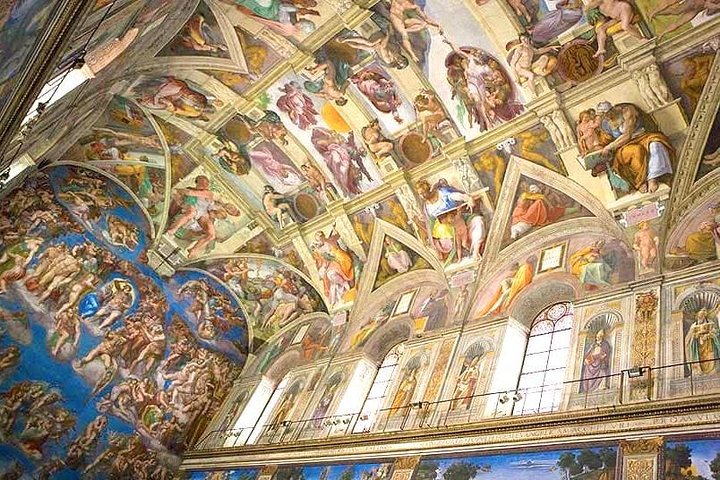
Ancient Rome is still in plain sight. The Colosseum, the Roman Forum and the Palatine Hill sit together at the city's heart, the Pantheon still stands with its open oculus, and fragments of temples and aqueducts turn up between apartment blocks. Across the Tiber, Vatican City holds St Peter's Basilica, the Vatican Museums and Michelangelo's Sistine Chapel ceiling.
Top-ranked sights in Rome: Colosseum, Vatican Museums, Sistine Chapel.
Special offers in Rome
Was/now prices come from the operator, never from us.
 Likely to sell out20% off
Similar experiences
 Free cancellationSkip the line
![Vatican Museums, Sistine Chapel and St. Peter's Basilica Tour]() Likely to sell outFree cancellation
![Skip-the-Line Vatican, Sistine Chapel & St. Peter's | Small Group]() Likely to sell outFree cancellation