15% offFree cancellation
Johannesburg(New York of Africa) in South Africa is the second largest city in Africa, in 2016 there were 4.94 million people living in the City of Johannesburg. Joburg, or Jozi as some prefer to call it, offers visitors an experience as unique and diverse as the city itself. Whether you are on business, in search of a cultural encounter, an adrenaline rush or simply want to relax and unwind for a few days, the city of Johannesburg has everything you’re looking for and more! History. Settlement of Johannesburg began in 1886 when gold was discovered in the Witwatersrand by an Australian prospector named George Harrison. The discovery spurred a feverish gold rush as fortune hunters from all over the world descended on the area. Establishment of Soweto and the history of forced removal Soweto uprising 1976
In the 1980s when Standard Bank was preparing the foundations for its new headquarters in the Johannesburg city centre, builders uncovered the entrance to a long-forgotten mine stope that dates back to the city's very earliest gold-mining days. During the completion of the building the mine stope was preserved and it is now open daily to visitors. The stope is named for Ignatius Phillip Ferreira, a farmer, soldier and prospector who left his hometown of Grahamstown in the Eastern Cape to join the Gauteng gold rush in 1886. He founded one of the area's very first mining camps in July 1886, and just three months later struck gold.
Constitution Hill represents South Africa’s dark past and its bright post-apartheid future. Johannesburg’s most notorious historic prisons (all of them now museums) sit side by side with the home of the Constitutional Court, a symbol of South Africa’s triumphant democracy. The site is located on the ridge between two city neighbourhoods, Hillbrow and Braamfontein, overlooking central Johannesburg.... Historical background Before Constitutional Hill opened its doors as a museum in 2004, the precinct housed a collection of notorious prisons which included the Old Fort, a high-security prison built in the 1890s to house prisoners of war during the Anglo-Boer Wars (1899-1902), the Number Four prison block, a so-called “Native Prison”, and the Women’s Gaol. During the apartheid era the prison complex became a detention centre for political dissidents, striking mineworkers, those deemed “anti-establishment” and those who simply violated the inhuman pass laws of the time. Many ordinary and famous people were incarcerated here during its years as a prison including former president Nelson Mandela and passive resistance leader Mahatma Gandhi, who were both imprisoned for their pro-democracy activism.
Entrepreneur Jonathan Liebmann bought up dozens of rundown industrial warehouses and factories on the eastern edge of the inner city and set about transforming them. He was inspired by his travels to other cities where he had enjoyed the vibrancy of 24/7 urban life The name Maboneng is a Sotho word meaning “place of light”, and the growing precinct aims to transform an area that was once blighted by urban decay and crime into a safe, happening and inspiring place to live, work and play. Frequently compared with trendy, rejuvenated neighbourhoods such as London’s Shoreditch or New York’s Brooklyn, this pioneering precinct draws the inner-city public, as well as the chic, outgoing and partyloving crowds of the city’s northern suburbs. Best Place to be...(Sunday)
Today, Newtown remains resolutely color-blind with artists of all races gathering here. Strategic regeneration projects in downtown Johannesburg have facilitated the development of Newtown as a tourist attraction, residential zone and cultural area.The bridge, which spans the railway tracks which separate the Newtown and Braamfontein neighbourhoods in the Johannesburg city centre took 18 months to build and was completed in 2003. It is the largest cable-stayed bridge in southern Africa Designed by leading architectural firm Dissing and Weitling, the bridge was specially designed to be lightweight –The construction of the bridge was part of a larger city project to rejuvenate and modernise the inner city and inspire both local and foreign visitors to the city, while also providing an easy, convenient and safe way for residents to travel between the two districts on foot or by car. Some of the trendiest places to visit in Johannesburg can be found in Newtown and Braamfontein.
Apartheid museum the first of its kind, illustrates the rise and fall of apartheid...
A stamp battery, or stamp mill, was a piece of equipment used to crush gold-bearing rock brought from underground.
Diepkloof Extension Upper Class Diepkloof is also characterized by Hostels, which were Built to House large numbers of single male migrant workers.
The largest hospital in Africa and the third-largest hospital in the world.
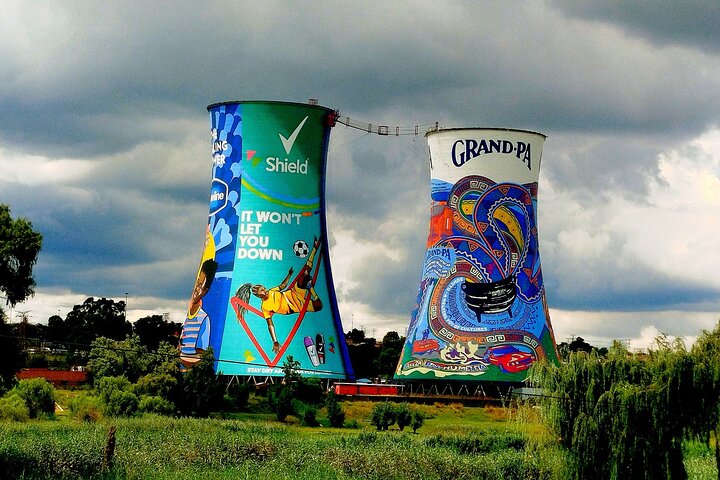
Cooling towers make for one of the world’s most epic bungee jumps.
Vilakazi Street may be the only street in the world that can claim to have had two Nobel Laureates as residents - the late Nelson Mandela and Archbishop Emeritus Desmond Tutu. The true electricity of this street comes from those who now call it home, each with their own beautiful stories.
8115 Vilakazi Street, Soweto, is a small, face-brick house where the Mandela family lived from 1946 to the 1990s. Today the house is a museum celebrating his life through artwork
Commemorates 12-year-old Hector’s ultimate sacrifice on June 16, the first child to die by a police bullet. He is buried in Avalon Cemetery, where many of apartheid’s victims are buried.
Free cancellation up to 24 hours before the experience starts, for a full refund.
5.0
Ratings come from 24 reviews collected by our booking partner. They are travellers' own words, in the order they were written — never reordered to flatter the experience.
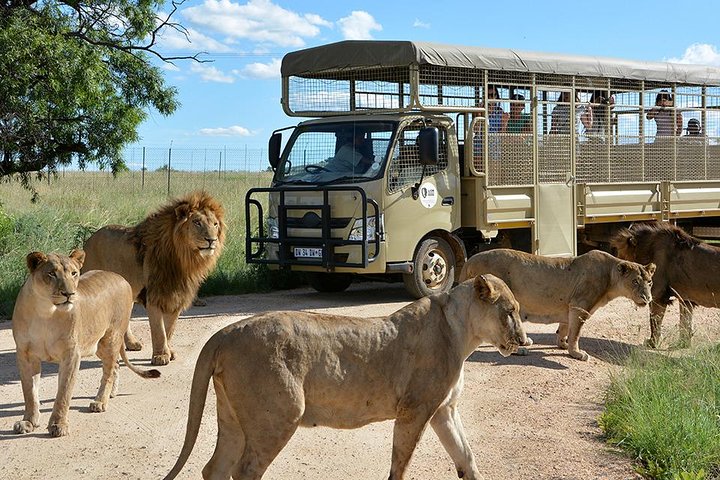
Johannesburg is South Africa's dynamic economic heart, a city of powerful history, vibrant townships and art, where many safari journeys begin.
The Apartheid Museum tells the story of segregation and resistance with great power, and Constitution Hill, a former prison where both Nelson Mandela and Mahatma Gandhi were held, is home to the Constitutional Court. In Soweto, Vilakazi Street is famous as the street where two Nobel Peace Prize laureates, Mandela and Desmond Tutu, once lived, and the Hector Pieterson Memorial recalls the student uprising of 1976.
Top-ranked sights in Johannesburg: Soweto, Mandela House, Apartheid Museum.
Was/now prices come from the operator, never from us.

Add Ticket Hall to your home screen
Tickets and city guides, one tap away, even offline.
Ticket Hall