Jeju Private Half-Day Tour for Cruise Customers
- 4–5 hours
- Free cancellation up to 24h before
- 4 languages
- Instant confirmation
Highlights
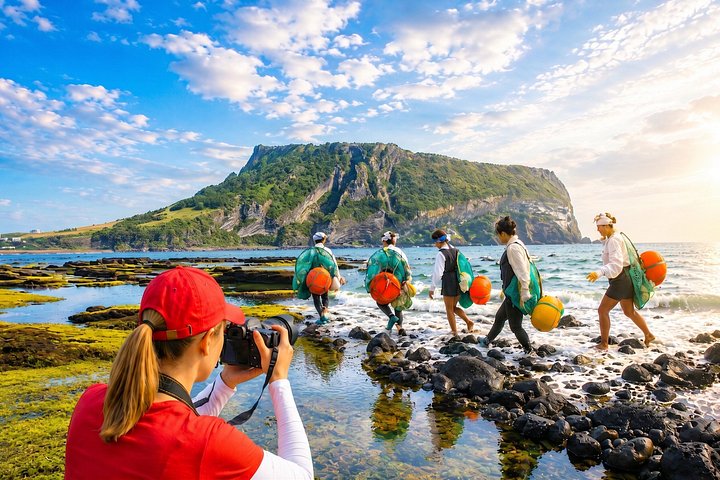
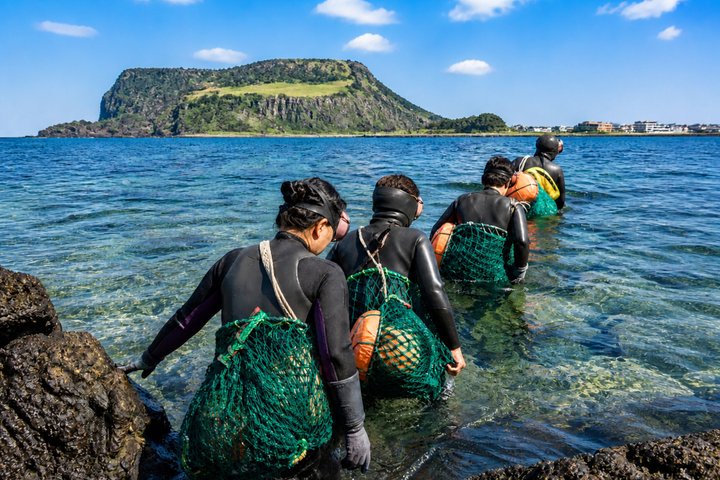
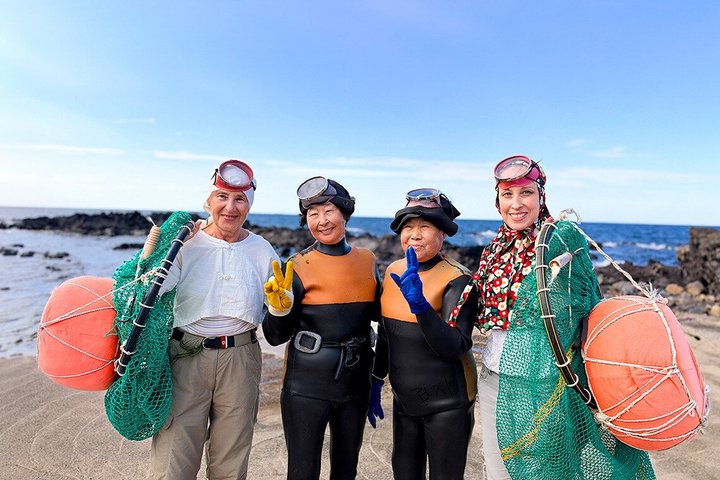
There is an advantage in that customers can take a half-day tour of Jeju's famous places of their choice. This trip is a separate half-day itinerary to the east of Jeju for the many cruise guests visiting Jeju with short stays. If you choose the east side of Jeju, you can enjoy the performance of Jeju female divers at Seongsan Ilchulbong, which is designated by UNESCO. There is a one-time performance only at 2pm every day. Every Monday, the Haenyeobeok Museum and Stone Culture Plateau are closed. So, it is replaced by a beautiful hamdeok beach.
Inclusions
What's included
- Regular Taxi / Jumbo Taxi / Minivan / MINI-BUS , The fuel and parking fees are included in the price
- speak simple english / chinese / japanese / Korean Driver
- we offer pick-up and drop-off services from your located in Jeju
- Insurance included
What's not
- Lunch / Personal Expenses / Food and Drinks
- Gratuities are recommended, but not compulsory
- Jeju Stone Park and Sungsan ilchulbong
Itinerary
The entire village, which preserves the living site of the people of old Jeju, has been designated as an Important Folklore Cultural Heritage. Though it can be considered a folk village of sorts, it differs from regular folk villages in that people still live in it to this day. The village residents act as volunteer guides to offer visitors all sorts of information. The Saw-leaf Zelkova and Japanese hackberry in the center of the village are worth taking time to see.
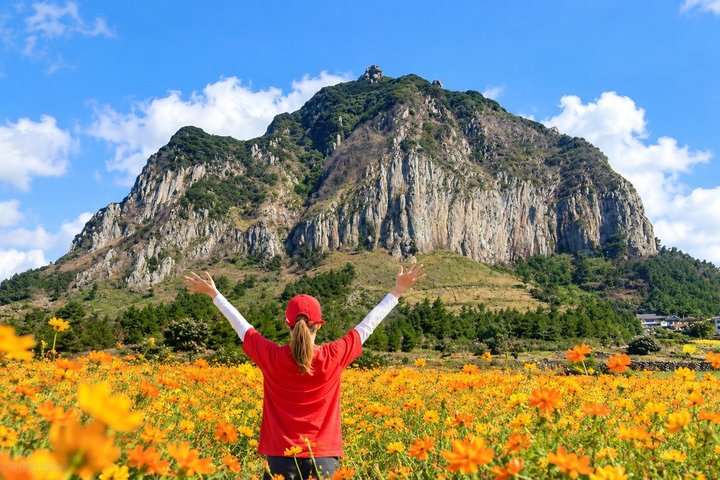
Seongsan Ilchulbong Tuff Cone, a landmark attraction of Jeju, was formed about 5,000 years ago from an eruption of magma on the ocean floor. It is especially famous as a sunrise viewing spot, known to be one of the top ten exquisite sceneries of Jeju Island.Besides viewing the sunrise, Seongsan Ilchulbong Tuff Cone is also known to be an excellent trekking spot. The Seongsan-Ojo Trail connects two villages by crossing the peak. Another popular trail, the Jijil Trail, offers a closer look at the UNESCO-designated geopark as well as Jeju’s local culture. Walking along one of these paths is recommended to really experience the area; walking all the way to the summit offers views of both the vast volcanic crater in the center and the blue ocean surrounding the area. To complete your trip, head to Seongsanpo Port to watch haenyeo (female divers) at work.
Jeju haenyeo are the strong mothers of Jeju and the spiritual pillars of Jeju residents. Also, the life of the Jeju haenyeo community is a model that humanity should aim for. Jeju haenyeo formed a merit-based community and democratically decided through discussions. She not only cared for the elderly and infirm, such as Halmang Badang and Geseok, and raised funds with her material profits to contribute to society, such as villages and schools. She also came up with various contraptions to coexist with the sea, such as beach sweeping, gold snatching, and dialysis. Jeju haenyeo culture was recognized for its value and was registered as a UNESCO Intangible Cultural Heritage of Humanity on November 30, 2016 (local time).
The total length of Manjanggul Lava Tube is about 7.4km. It is a lava tube that is partially multilayered. The main tunnel’s width is 18m and its height is 23m. It is one of the largest lava tubes in the world. There are many lava tubes in the world, but Manjanggul Lava Tube has a significant meaning in that it was formed thousands of years ago, and it is very well preserved. Therefore, it is very valuable to researchers and scientists. Due to the sinking of the ceiling, there are 3 entrances. The one that tourists can use is the second entrance and they are only allowed to go as far as 1km into it. There are various cave formations in Lava Tunnel in Manjanggul Lava Tube, such as stalactites, stalagmites, flowstones, lava tubes, lava shelves, and lava rafts. In particular, the lava column that is located at the end of the tourist area is about 7.6m high and is known as the highest lava column in the world.
Gwangchigi Beach boasts one of the most pristine and spectacular views along Jeju's coastline. In the distance is Seongsan Sunrise Peak, a UNESCO World Natural Heritage site and jewel of Jeju Island. In the area are many trendy cafes and restaurants, as well as travel accommodations and fun things to do with the family, like the Aquaplanet Aquarium. It is also where Olle walking trails 1 and 2 connect.
Cancellation
Free cancellation up to 24 hours before the experience starts, for a full refund.
Reviews
4.7
- 510
- 41
- 30
- 21
- 10
Ratings come from 12 reviews collected by our booking partner. They are travellers' own words, in the order they were written — never reordered to flatter the experience.
Know before you go
- Pickup
- Pickup is included for everyone.
- Ticket type
- Mobile or paper ticket accepted
- Operated by
- Jeju Taxi Tour Namyang Travel
- Suitable for all physical fitness levels
- Every Monday, the Haenyeobeok Museum and Stone Culture Plateau are closed. So, it is replaced by a beautiful beach.
- Manjanggul Cave, a World Natural Heritage site, will reopen on May 3, 2026.
How it compares in Jeju Island
- Its from-price is 308% above the median of the 120 experiences we list in Jeju Island.
- It is shorter than most of them.
- By number of reviews it ranks 39 of 120.
- The operator lists free cancellation on it.
About Jeju Island
Jeju Island is a volcanic island off South Korea's south coast, with a crater peak, lava tubes, waterfalls, tangerine orchards and women divers.
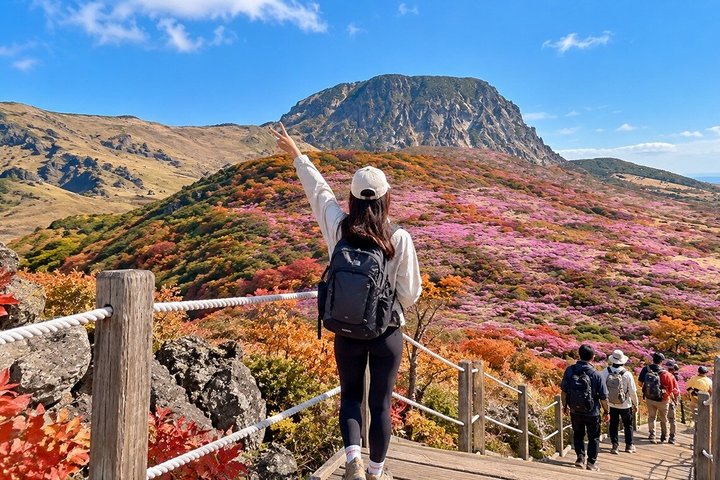
Jeju is a volcanic island off the south coast of South Korea, dominated by Hallasan, the highest mountain in the country at 1,947 metres, whose crater holds a small lake. The island's lava tubes and cones are a World Heritage Site, and Seongsan Ilchulbong, a tuff cone rising from the sea at the eastern tip, is a popular place to watch the sunrise. Jeju City is the main town in the north, and Seogwipo lies on the south coast.