Mtskheta deep history tour: ancient sites & sacred monasteries
- 10–12 hours
- Free cancellation up to 24h before
- 2 languages
- Instant confirmation
Highlights
Imagine opening a forgotten chronicle, where stone walls remember kings, monks, and vanished kingdoms. While many visitors see only the surface of Georgia’s spiritual heart, this journey follows a quieter, older path into the deep history of Mtskheta, where legends and faith were forged. The route begins at Armazi Fortress, once the pagan stronghold of the ancient Iberian Kingdom. Its ruins, set above the valley, feel like remnants of a fallen realm. From here, the story moves into the limestone silence of Shio-Mgvime, a 6th-century cave monastery carved into cliffs, where ascetic monks lived apart from the world, much like guardians of a hidden order. The day continues to Zedazeni Monastery, concealed in forested hills and rarely reached by regular tours. Surrounded by ancient trees and sweeping views of the Aragvi valley, the atmosphere is timeless and cinematic. This is not a tour of highlights, but a journey through sacred landscapes that feel untouched by time.
Inclusions
What's included
- Private transportation
- Bottled water
- Professional guide
- Entrance fee
- Air-conditioned vehicle
What's not
- Lunch
- Gratuities
- Booster seat
Itinerary
Jvari Cross Monastery is the silent sentinel of Georgia’s spiritual history. Perched on a rocky mountaintop, this 6th-century masterpiece marks the exact spot where Saint Nino erected a wooden cross in the 4th century, signaling the kingdom's conversion to Christianity. A rare example of early medieval tetraconch architecture, the cathedral remains virtually unchanged by time, its yellowed stone harmonizing with the rugged landscape. Inside, the base of the original miraculous cross still stands under the dome. From the monastery walls, you are met with a breathtaking view of the Mtkvari and Aragvi rivers merging below—a sacred geography that has inspired pilgrims for generations. This UNESCO site is not just a viewpoint but a place of profound reflection, offering a visceral connection to the dawn of one of the world's oldest Christian nations. Its simple, austere lines represent the peak of early Georgian design, free from unnecessary decoration.
Svetitskhoveli Cathedral is the spiritual heart of Georgia and an 11th-century architectural masterpiece. Built on the site where the Seamless Robe of Jesus is buried, it remains one of the holiest locations in Christendom. As you walk through the monumental nave, you step into a history spanning nearly two millennia, from the 4th-century foundations of the Georgian Church to the royal tombs of medieval kings. This UNESCO World Heritage site is famous for its intricate stone carvings, vibrant frescoes, and the "Life-Giving Pillar" said to have been raised by miraculous grace. Unlike typical tourist stops, this is a living pilgrimage site where the air is thick with incense and centuries of prayer. It stands as a timeless guardian of Georgian identity, offering a profound connection to the Golden Age of the Caucasus. For the discerning traveler, it is a place to witness the intersection of divine legend and sophisticated medieval engineering.
Samtavro Monastery stands as a pivotal site of Georgian Christianity, built on the "Upper Church" grounds where Saint Nino first lived and prayed under a bramble bush in the 4th century. The current 11th-century transfiguration church is a masterpiece of medieval masonry, housing the sacred tombs of King Mirian III and Queen Nana, the first Christian monarchs of Georgia. Beyond its ancient royal connections, Samtavro is a site of modern pilgrimage, home to the relics of the beloved Saint Gabriel (Urgebadze), whose presence draws faithful from across the globe. Travelers will witness a complex that includes the main cathedral, a small 4th-century chapel, and a three-story bell tower. The interior is rich with frescoes and a profound sense of continuity, serving as a functional nunnery that maintains the spiritual traditions of the early church. It is a place of deep sanctity, offering a quiet, introspective contrast to the grand scale of Svetitskhoveli.
At Armaztsikhe, also known as Bagineti, you step onto the literal foundations of the Georgian state. This archaeological site served as the acropolis of the ancient Iberian Kingdom, a sacred space where royal power and pagan worship intertwined long before Christianity. Travelers wander through excavated ruins of royal baths, wine cellars, and massive stone walls of a fortress that once guarded a vital artery of the Caucasus. You will see footprints of temples dedicated to the moon and sun, offering a rare window into the sophisticated pre-Christian civilization of the region. Unlike restored cathedrals, Bagineti is raw and visceral—a place where the layers of the first millennium BC are exposed to the sky. This hidden gem provides the necessary context to understand how a pagan stronghold evolved into one of the world's most enduring Christian nations.
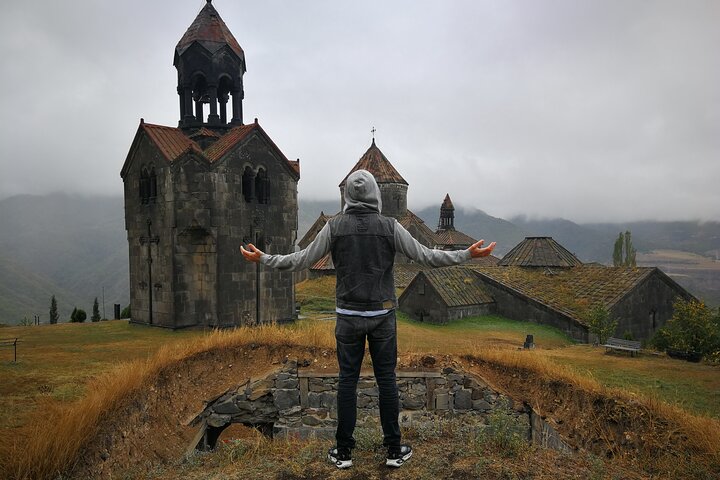
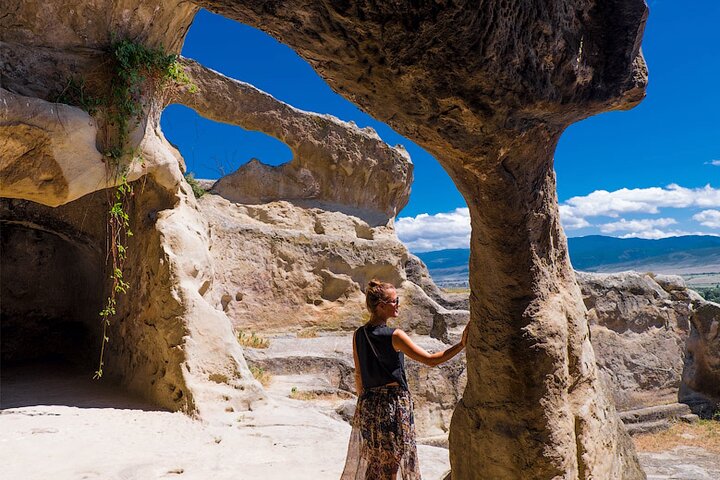
Tucked within a dramatic limestone canyon, Shio-Mgvime stands as a profound testament to the 6th-century ascetic spirit. This is where the narrative of Georgian monasticism breathes through the very rock. Travelers will wander through a complex where history is carved into the cliffs, visiting the dark, silent caves once inhabited by thousands of monks who sought divine solitude in this remote wilderness. The centerpiece is the Church of St. John the Baptist, a structure of stark, ancient beauty that has survived centuries of invasions. You will feel the weight of time while standing before the deep cave-well of St. Shio, the monastery’s founder, who spent his final years in total isolation. Surrounded by vertical ochre cliffs and the whispering forest, this site offers a rare glimpse into the early Christian desert traditions, blending rugged natural beauty with a sacred, unyielding serenity that defines the soul of Orthodox Georgia.
Perched on a strategic crag where the Aragvi valley narrows, Bebris Tsikhe stands as the ancient guardian of Mtskheta’s northern gate. Known historically as the "Elder's Fortress," these ruins offer a visceral connection to the defensive grit of the medieval Kingdom of Iberia. Travelers will explore the multi-layered stone masonry, where 9th-century foundations support later medieval reinforcements. The recent preservation of the towering walls allows you to trace the footprint of the citadel’s three-cornered towers, which once monitored the vital mountain passes. Walking among the sun-bleached stones, you feel the strategic importance of this stronghold, which protected the holy city from northern incursions for centuries. With the river rushing below and the mountains framing the horizon, Bebris Tsikhe is a place where history feels weathered, grand, and enduringly silent.
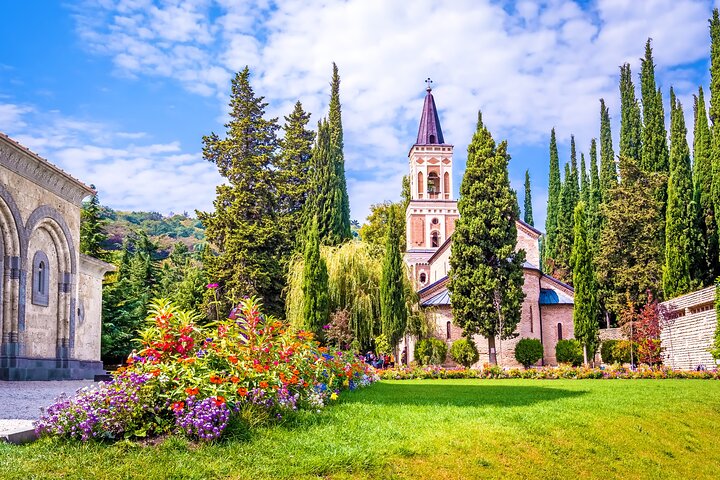
Rising above the mist, Zedazeni Monastery is a hidden gem that remains untouched by the typical tourist trail. Founded in the 6th century by Saint John, one of the thirteen Assyrian Fathers, this remote sanctuary was built directly upon the ruins of the ancient pagan idol Zadeni. Travelers will journey through dense, emerald forests to reach this silent peak, where the air is thin and the history is thick. You will see the modest stone basilica and the miraculous spring, surrounded by the crumbling walls of a once-mighty fortress. The site offers an unparalleled perspective of the Caucasus, providing a space for quiet contemplation far from the crowds. This is a place for the true explorer, where the echoes of ancient chants and the rustle of the forest create a profound sense of isolation. It serves as a powerful reminder of the early monks' desire to find the divine in the most rugged and inaccessible heights of the Georgian landscape.
Cancellation
Free cancellation up to 24 hours before the experience starts, for a full refund.
Reviews
5.0
- 52
- 40
- 30
- 20
- 10
Ratings come from 2 reviews collected by our booking partner. They are travellers' own words, in the order they were written — never reordered to flatter the experience.
Know before you go
- Pickup
- Pickup is included for everyone.
- Ticket type
- Mobile or paper ticket accepted
- Operated by
- Friendly.ge: Transfers & Tours in Georgia
- Specialized infant seats are available
- Not recommended for travelers with spinal injuries
- Not recommended for travelers with poor cardiovascular health
- Public transportation options are available nearby
- Suitable for all physical fitness levels
- A dress code is required to enter places of worship and selected museums. No shorts or sleeveless tops allowed. Knees and shoulders MUST be covered for both men and women. You may risk refused entry if you fail to comply with these dress requirements
- Archaeological sites like the Armazi Fortress and the paths around Shio-Mgvime involve walking on original stone, gravel, and unpaved dirt trails.
- Reaching certain viewpoints at Zedazeni and the ruins of Armazi requires walking on steeper, unlevel ground.
How it compares in Tbilisi
- Its from-price is 43% below the median of the 633 day trips we list in Tbilisi.
- Its length is typical for the group.
- By number of reviews it ranks 252 of 633.
- The operator lists free cancellation on it.
About Tbilisi
Tbilisi, Georgia's capital, spills along a river gorge beneath a fortress, mixing balconied old houses, sulphur baths and bold modern landmarks.
The old town gathers along the Mtkvari River, its narrow streets lined with carved wooden balconies, churches and wine bars. Abanotubani, the bath district, is crowned by brick domes over sulphur springs, and the walls of Narikala Fortress overlook it all, reached by cable car or a steep walk. The Mother of Georgia statue stands on the ridge holding a sword and a bowl of wine.
Top-ranked sights in Tbilisi: Metekhi Church, Narikala Fortress, Tbilisi Old Town (Dzveli Tbilisi).
Special offers in Tbilisi
Was/now prices come from the operator, never from us.
 22% offFree cancellation



Similar experiences
 Free cancellation