Travnik & Jajce Day Tour from Sarajevo
- 10–12 hours
- Free cancellation up to 24h before
- 10 languages
- Instant confirmation
Highlights
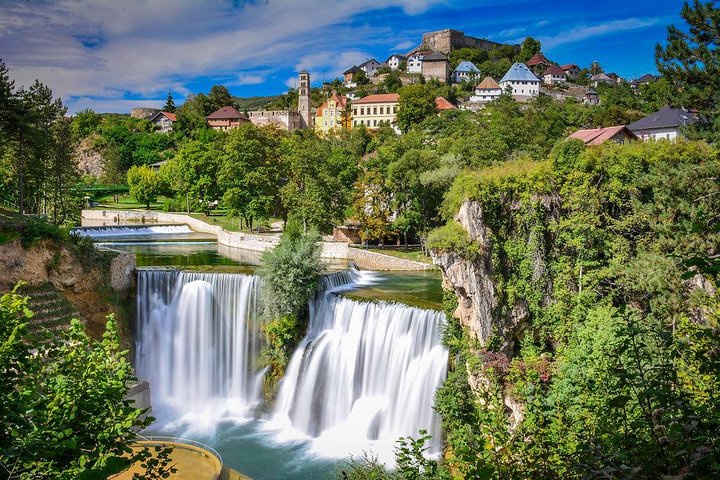
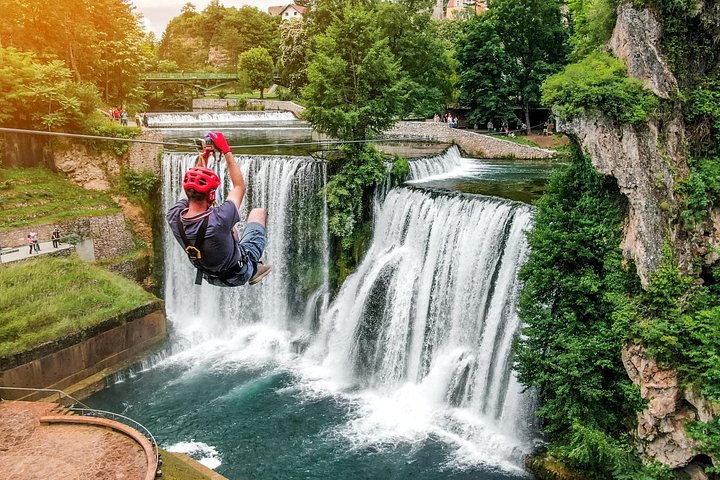
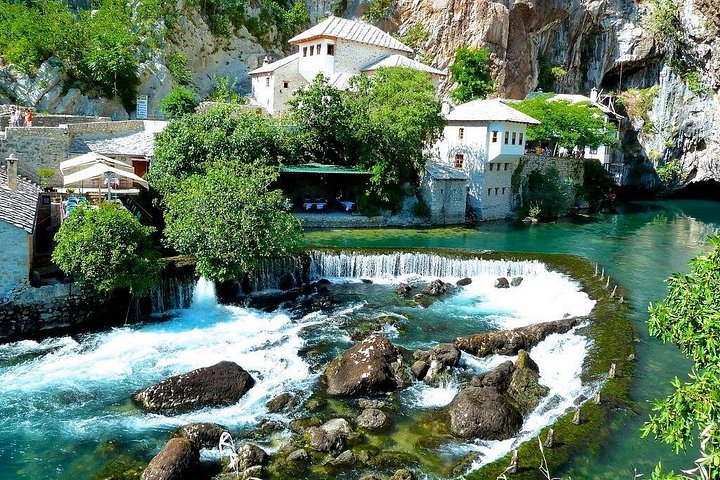
Discover the best of Bosnia's history and culture on this full-day tour with Balkland. You'll explore the old capitals of the Bosnian Kingdom and visit the charming city of Travnik, filled with stunning architecture dating back to the Ottoman Empire. Try the delicious national dish of Bosnia, ćevapi, and enjoy a visit to Jajce, known as an "open air museum," with its historic wooden watermills and stunning Pliva Lakes. Along the way, our knowledgeable guide will provide insight into the region's rich history and culture, making for a truly immersive experience. With transportation provided by our reliable and experienced drivers, this comfortable and convenient tour is the perfect way to explore the area.
Inclusions
What's included
- WiFi on board
- Bottled water
- All Fees and Taxes
- Air-conditioned vehicle
- Chocolate bar or Chips
What's not
- Lunch
- Dinner
- 18 years old and above
- Personal expenses and any items not mentioned in the itinerary.
Itinerary
Plava Voda, a national monument in Travnik, Bosnia and Herzegovina, is a place of enchantment and cultural significance. It encompasses the Derventa cemetery, the Lutvina Kahva café, and the monumental tomb of mufti Mehmed Efendi and his wife Ajiša. This captivating site, recognized as a national monument, invites you to explore its historical charm and immerse yourself in its cultural heritage.
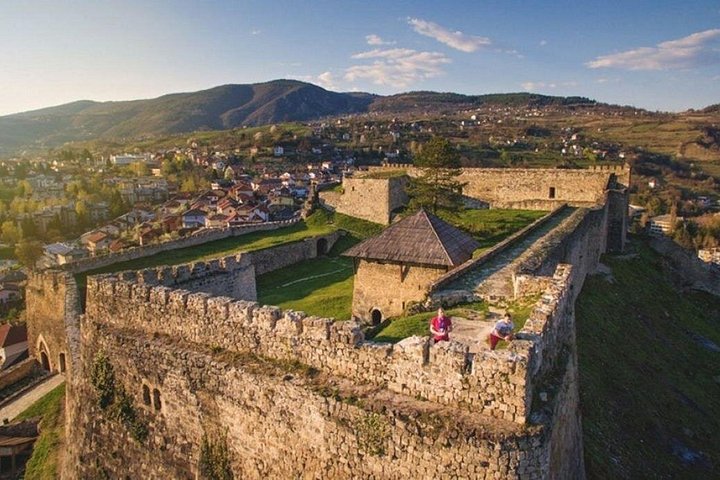
The medieval fortress known as "Old Town" in Travnik is a remarkable historical site that transports you back in time. Perched atop a hill, this fortress offers a glimpse into the city's rich past. Explore its well-preserved walls, towers, and winding streets as you marvel at the architectural wonders of the Ottoman era. Admire the intricate details of the fortress, from its ancient stone structures to the panoramic views it offers. Immerse yourself in the captivating history and culture as you wander through this fascinating fortress, a true gem of Travnik.
Built in the 16th century during Ottoman rule, Šarena Džamija is known for its beautiful architecture and intricate ornamentation. It is considered a masterpiece of Ottoman architecture and is an important cultural and historical landmark for the city.
The Nobel Prize-winning author Ivo Andrić was born on a beautiful autumn day, October 9th, 1892 in the charming neighborhood of Zenjak in Travnik. His birthplace, lovingly reconstructed, was opened as a memorial museum on August 30th, 1974 as an annex to the Regional Museum of Travnik. Visitors can delight in a permanent exhibition showcasing the life and literary works of this esteemed Nobel Prize winner.
Zavičajni muzej Travnik was established in 1950. Initially, various buildings in Travnik were used to accommodate exhibits and collections, including the Austro-Hungarian Prison, the Velika Nadbiskupska Gimnazija (Great Archbishop's Gymnasium), the Zadužbina braće Fufić building, the Varoška Mosque, and the Elči Ibrahim-paša Madrasa. Since 1972, it has been housed in a building constructed in 1928 for medical and health purposes, funded by the Rockefeller Foundation. The permanent exhibition in this building was opened for visitors in 1975.
The Church of St. John the Baptist (Crkva sv. Ivana Krstitelja) in Travnik is a Catholic church. It was built in the mid-19th century and is a place of worship for the Catholic community in the region. The church showcases architectural elements of the Catholic tradition and features beautiful interior decorations, including religious artwork and a sacred altar. Visiting the Church of St. John the Baptist allows travelers to experience the Catholic heritage and spirituality of Travnik.
The Vizier's grave, located in Travnik, Bosnia and Herzegovina, is a significant historical site. It is a beautifully crafted Ottoman-style mausoleum that serves as the final resting place of a prominent vizier from the Ottoman era. The grave stands as a reminder of the region's Ottoman influence and offers visitors a chance to appreciate the architectural beauty and historical significance of the site.
Hadzi Ali Beg's Mosque in Travnik, Bosnia and Herzegovina, is a historic Ottoman-style mosque. It serves as a significant religious landmark, reflecting the Islamic heritage of the region. The mosque's architectural beauty and cultural importance make it a worthwhile visit for travelers seeking to explore Travnik's rich history.
The Catacomb of Jajce is a historical underground tunnel system. Also built during the medieval period, the Catacombs of Jajce are a popular tourist attraction and an important cultural and historical landmark for the town. Visitors can explore the tunnels and learn about its history.
The Fortress of Jajce stands as a testament to Bosnia's medieval history. As the former capital of the Bosnian kingdom, Jajce held great significance, being the residence of the last two kings. Beneath the fortress lies the Coronation Church of St. Mary, where the final Bosnian king was crowned. Perched on a hill, the castle provides breathtaking panoramic views of the town and its surroundings. Serving as a popular tourist destination, the fortress is not only a cultural and historical landmark but also offers visitors the opportunity to delve into its rich history by exploring its interior.
The AVNOJ Museum in Jajce holds great significance as the founding place of Yugoslavia (1943 – 1992). This museum is dedicated to commemorating the historic event of the second session of AVNOJ (Anti-Fascist Council of the People's Liberation of Yugoslavia) and the heroic partisan resistance movement during World War II. Within its exhibits, you will find artifacts and original items from the AVNOJ session, showcasing the decisions that established the Republic of Yugoslavia. This event not only re-established the state status of Bosnia but also laid the foundation for the independent countries of the Western Balkans that exist today. The AVNOJ Museum is a captivating cultural and historical attraction, symbolizing the rich heritage of the region.
The Mithra Temple in Jajce serves as a captivating reminder of the ancient civilization of the Roman Empire, affirming the rich history of this region in Europe from the beginning of the new era. Dedicated to the worship of the Indo-Iranian god Mithra, this unique temple was constructed in the 3rd century AD by Roman soldiers. It stands as one of the best-preserved Mithraic icons in the Balkans, showcasing the religious practices and cultural influences of that time. The Mithra Temple holds significant cultural and historical importance, offering visitors a glimpse into the past and adding to the town's diverse attractions.
Cancellation
Free cancellation up to 24 hours before the experience starts, for a full refund.
Reviews
5.0
- 54
- 40
- 30
- 20
- 10
Ratings come from 4 reviews collected by our booking partner. They are travellers' own words, in the order they were written — never reordered to flatter the experience.
Know before you go
- Meeting point
- Sarajevo City Hall is a famous landmark located in the old town, just before the last station of the tram. There is a small parking area in front of the City Hall where our vehicle will be parked. Our guide will be waiting for you with a Balkland sign to help you get started on your tour.
- Pickup
- Pickup is offered, or you can meet at the starting point.
- Ticket type
- Mobile or paper ticket accepted
- Operated by
- Balkland
- Public transportation options are available nearby
- Specialized infant seats are available
- Suitable for all physical fitness levels
- Remaining hours on total duration will spend on travel
How it compares in Sarajevo
- Its from-price is 52% above the median of the 114 day trips we list in Sarajevo.
- Its length is typical for the group.
- By number of reviews it ranks 49 of 114.
- The operator lists free cancellation on it.
About Sarajevo
Sarajevo, capital of Bosnia and Herzegovina, lies in a mountain-ringed valley where Ottoman bazaars meet Austro-Hungarian boulevards.
Sarajevo follows the Miljacka River through a long valley with steep green hills on either side. Baščaršija, the old Ottoman bazaar, has copper workshops, tea houses and the Sebilj, a wooden fountain, and the Gazi Husrev-beg Mosque dates from the 1530s. West of it, the streets turn to Austro-Hungarian façades and cafés, so that a mosque, a Catholic cathedral, an Orthodox church and a synagogue all stand within a short walk.
Top-ranked sights in Sarajevo: Sarajevo Tunnel (Tunel Spasa), Sarajevo Olympic Bobsleigh and Luge Track, Latin Bridge (Latinska Ćuprija).
Special offers in Sarajevo
Was/now prices come from the operator, never from us.