Jakarta Social and Political Walk
- 2h 30m
- Free cancellation up to 24h before
- Guided in English
- Mobile ticket
Highlights
Discover Indonesia's social and political landscape on this immersive walking tour in Jakarta. Delve into the formation of the Indonesian state and gain insights into its diverse cultures and ongoing challenges. This unique experience combines storytelling with critical discussions, encouraging participants to engage thoughtfully with current issues affecting the region. Perfect for those passionate about politics and global affairs, this tour invites you to explore Indonesia beyond the surface. - Duration: 2.5 hours of interactive storytelling - Small Group size for an intimate experience - Conducted in English by knowledgeable guides - Ideal for travelers interested in social and political dynamics
Inclusions
What's included
- Political scientist
Itinerary
We begin with Indonesia’s unfinished decolonization story. The monument commemorates the incorporation of West Papua (formerly West Irian) into Indonesia during the 1960s—a defining moment of the Sukarno era and a significant chapter in the country's postcolonial nation-building project.
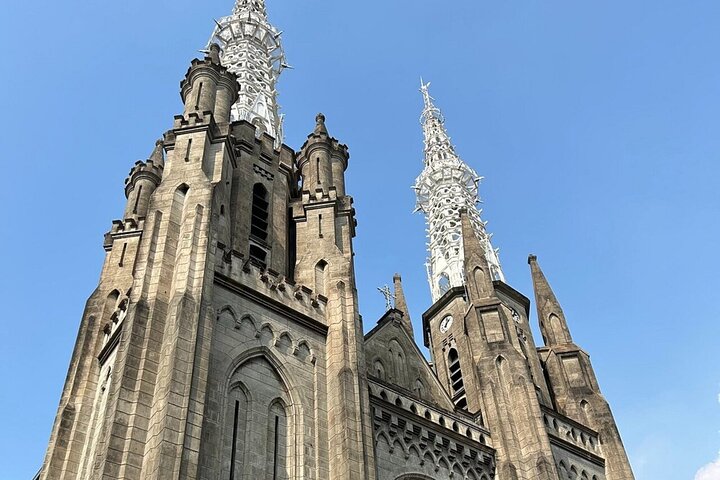
The Cathedral represents Indonesia’s formal commitment to religious diversity under Pancasila, the state ideology. Its prominent location in the political center underscores the inclusion of religious minority communities within the national framework and reflects the state’s vision of unity amid diversity.
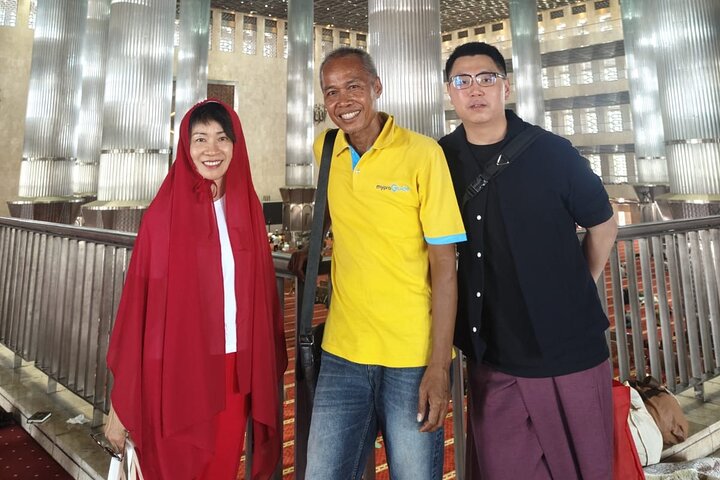
As Southeast Asia’s largest mosque, Istiqlal represents Indonesia’s identity as the world’s largest Muslim-majority democracy. At the same time, it stands as a symbol of the country’s religious pluralism and its ongoing effort to maintain social harmony. It also reflects the presence of state-engaged Islam—institutionally supported, regulated, and integrated into national identity within Indonesia’s secular framework.
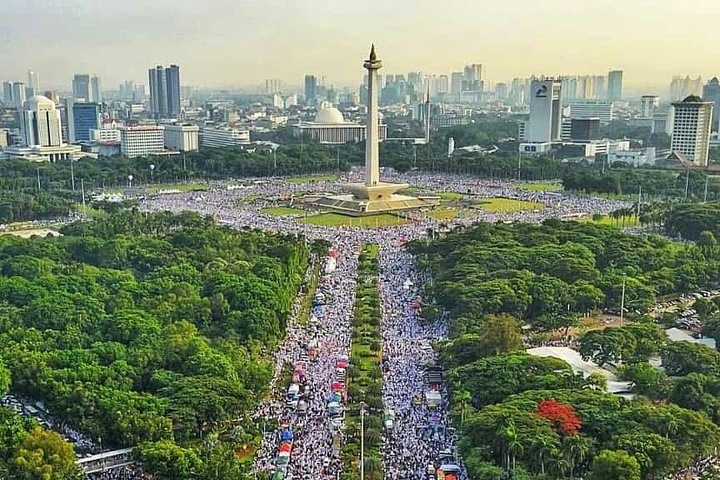
National Monument (Monas) stands as the symbolic epicenter of Indonesian nationalism and the monumental statecraft envisioned by Sukarno. Its construction commemorates Indonesia’s independence from Dutch colonial rule and embodies the broader struggle for national sovereignty.
Originally a colonial governor’s residence, the Merdeka Palace later became the seat of the Indonesian presidency. It has borne witness to the revolutionary leadership of Sukarno, the highly centralized rule of Suharto, and the democratic reforms that followed the 1998 political transition.
Depicting Arjuna from the Mahabharata, the statue reflects how classical epics continue to shape modern political symbolism, particularly through ideals of wisdom, discipline, and moral leadership. Its presence also highlights the enduring influence of mythological and mystical references in public culture, as well as the historically strong role of Javanese cultural frameworks in Indonesian political life, where charismatic authority has often played a significant part in shaping leadership and legitimacy.
Cancellation
Free cancellation up to 24 hours before the experience starts, for a full refund.
Reviews
5.0
- 51
- 40
- 30
- 20
- 10
Ratings come from 1 reviews collected by our booking partner. They are travellers' own words, in the order they were written — never reordered to flatter the experience.
Know before you go
- Meeting point
- At the entrance of Jakarta Bookhive.
- Pickup
- Everyone meets at the starting point; there is no pickup.
- Ticket type
- Mobile or paper ticket accepted
- Group size
- Up to 25 travellers
- Operated by
- Planetwonk
- Wheelchair accessible
- Infants and small children can ride in a pram or stroller
- Service animals allowed
- Public transportation options are available nearby
- Specialized infant seats are available
- Suitable for all physical fitness levels
How it compares in Jakarta
- Its from-price is 45% below the median of the 45 city tours we list in Jakarta.
- It is shorter than most of them.
- By number of reviews it ranks 31 of 45.
- The operator lists free cancellation on it.
About Jakarta
Jakarta is Indonesia's largest city, on the north coast of Java, with old Dutch Batavia, tall towers, mosques, markets and endless street food.
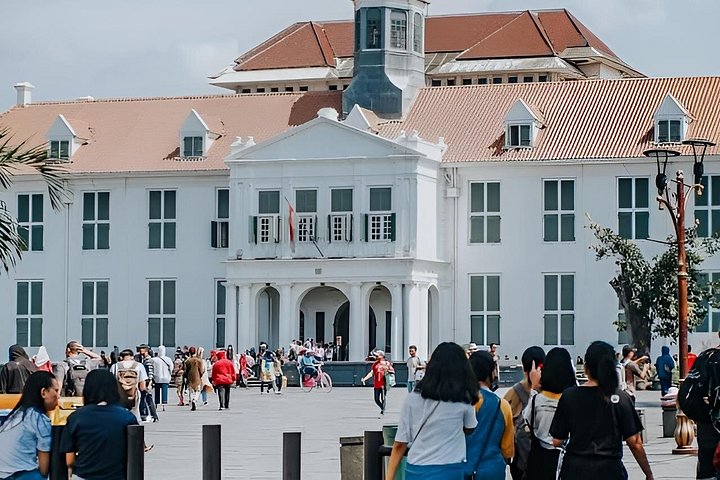
Jakarta began as the Dutch trading port of Batavia, and the old town, Kota Tua, still has colonial buildings around Fatahillah Square, including the former town hall that now houses a history museum. Nearby, the harbour of Sunda Kelapa has wooden schooners moored at the quay. The National Monument, topped with a gilded flame, stands in Merdeka Square in the centre.
Top-ranked sights in Jakarta: Indonesia National Monument (Monas), Sunda Kelapa (Jakarta Old Port), Glodok (Jakarta Chinatown).
Special offers in Jakarta
Was/now prices come from the operator, never from us.